

876Σ
Vacheron Constantin
Ref. 43050/000P-8806
Mercator
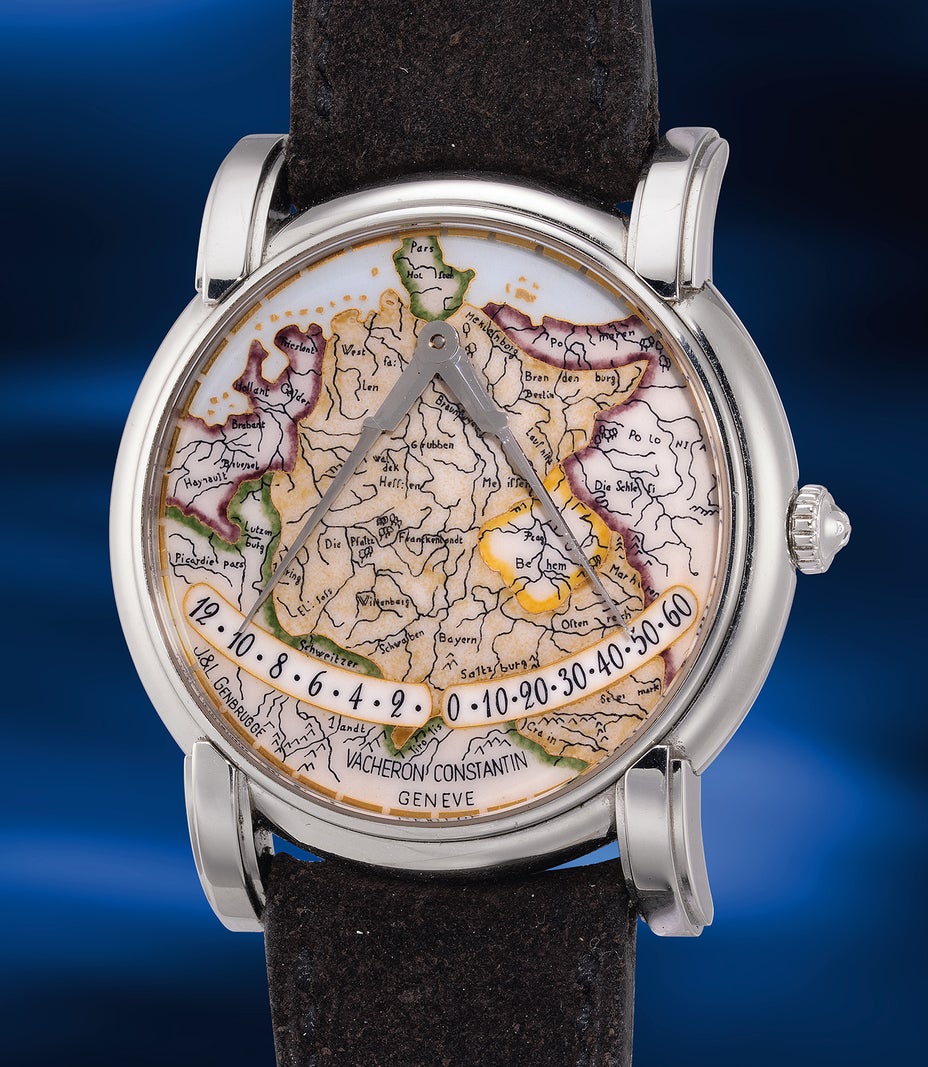
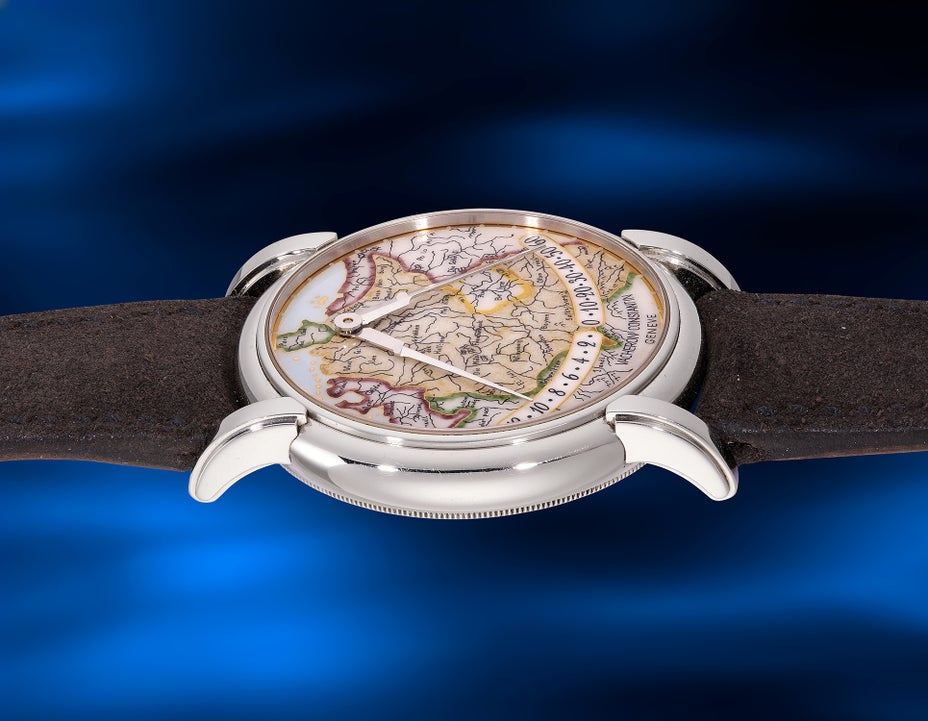
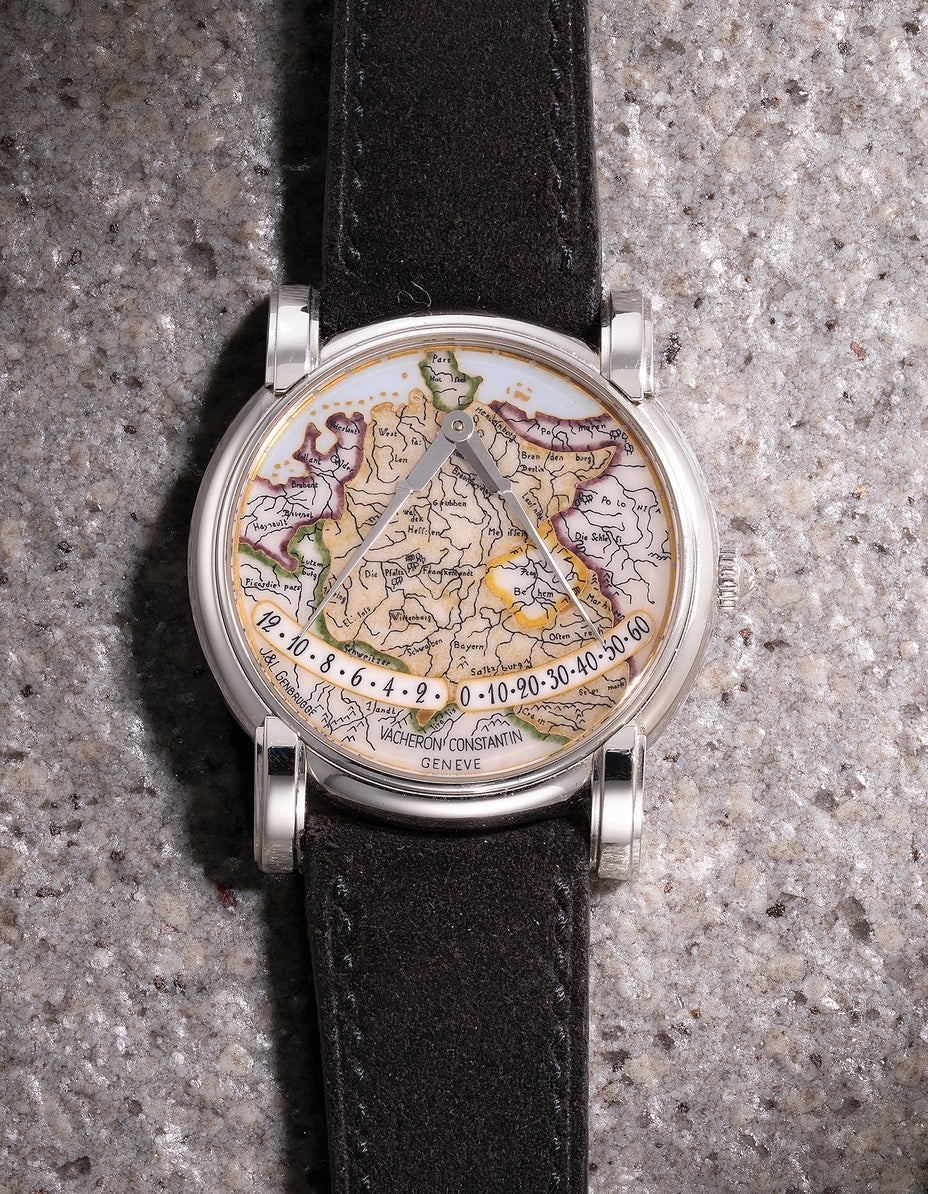
An extremely rare and intricate limited edition platinum wristwatch with retrograde hours and minutes, polychrome champlevé enamel dial depicting Germany, warranty and presentation box, one of 10 pieces made
- Estimate
- HK$240,000 - 480,000€27,200 - 54,500$30,800 - 61,500
HK$723,900
Lot Details
- Manufacturer
- Vacheron Constantin
- Year
- Circa 2000
- Reference No
- 43050/000P-8806
- Movement No
- 709’024
- Case No
- 701’451
- Model Name
- Mercator
- Material
- Platinum
- Calibre
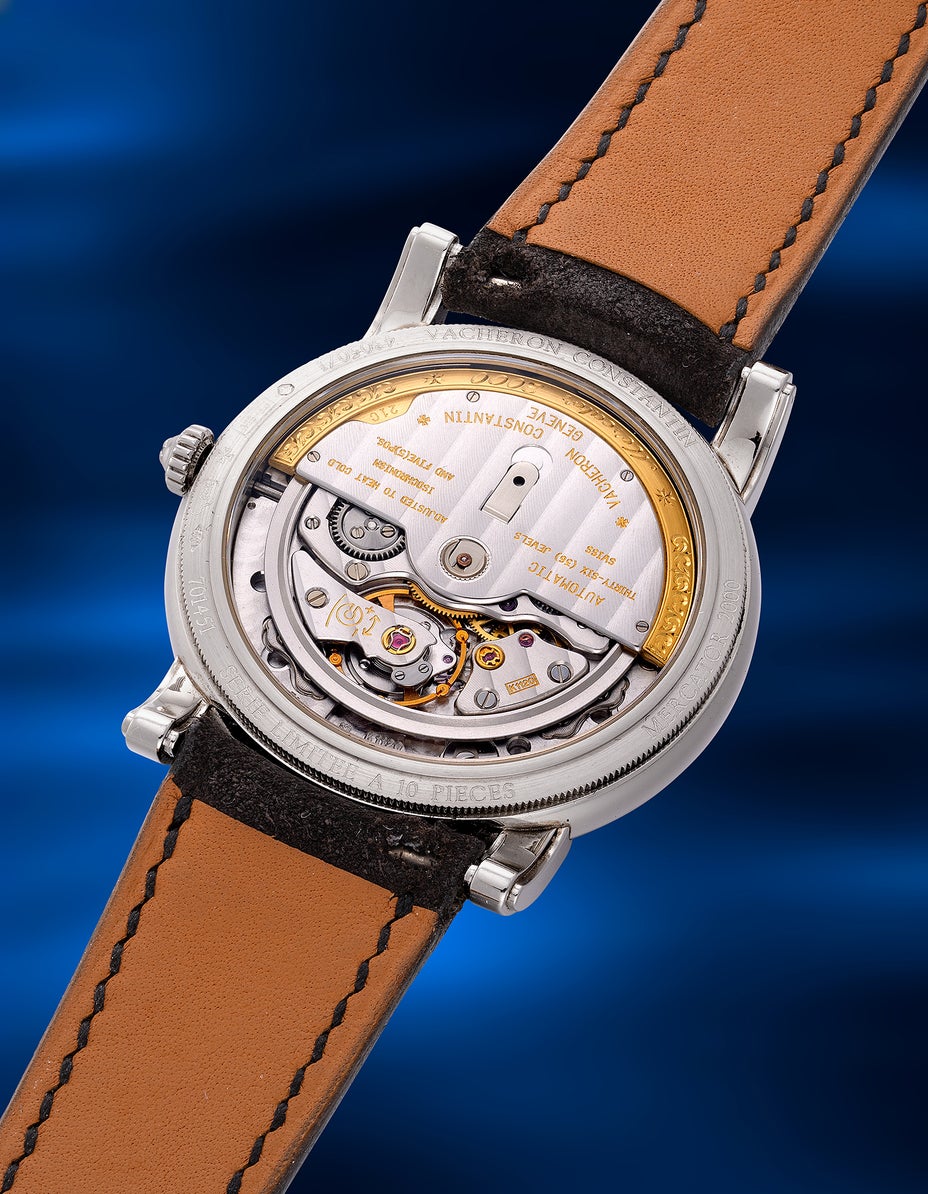
- Automatic, cal. 1120, 36 jewels
- Bracelet/Strap
- Leather
- Clasp/Buckle
- 18K white gold Vacheron Constantin deployant clasp
- Dimensions
- 36mm diameter
- Signed
- Case, dial, movement and clasp signed
- Accessories
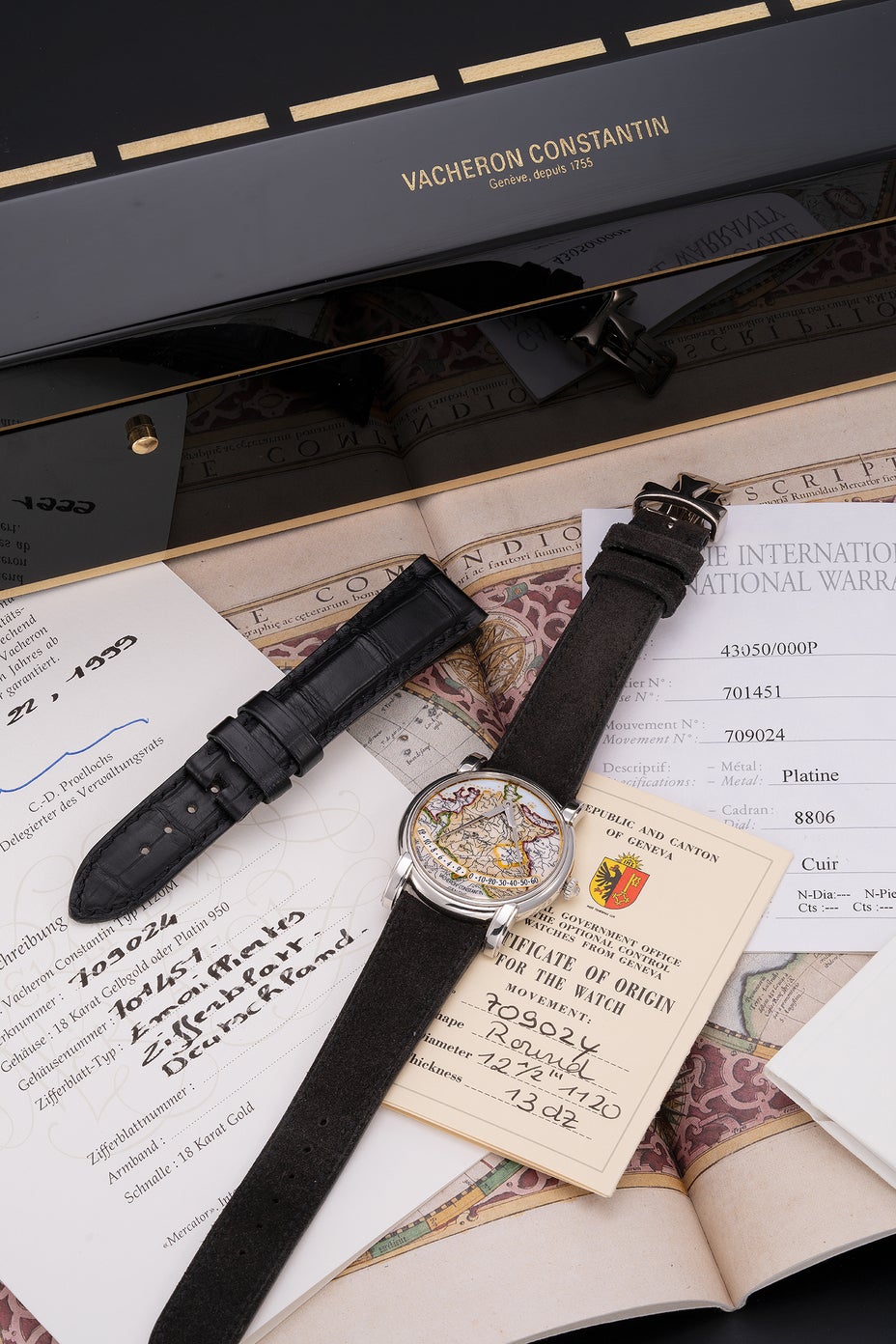
- Accompanied by warranty stamped Gerhard D. Wempe May 2000, Geneva seal certificate, instruction manual, product literature, additional crocodile strap, fitted presentation box and outer packaging.
Specialist
Full-Cataloguing
Catalogue Essay
Conceived in 1994 to honor the 400th anniversary of Gerardus Mercator's passing, the Mercator collection released by Vacheron Constantin revolutionized watchmaking with its dual retrograde display—an audacious technical statement that remains impressive decades later.
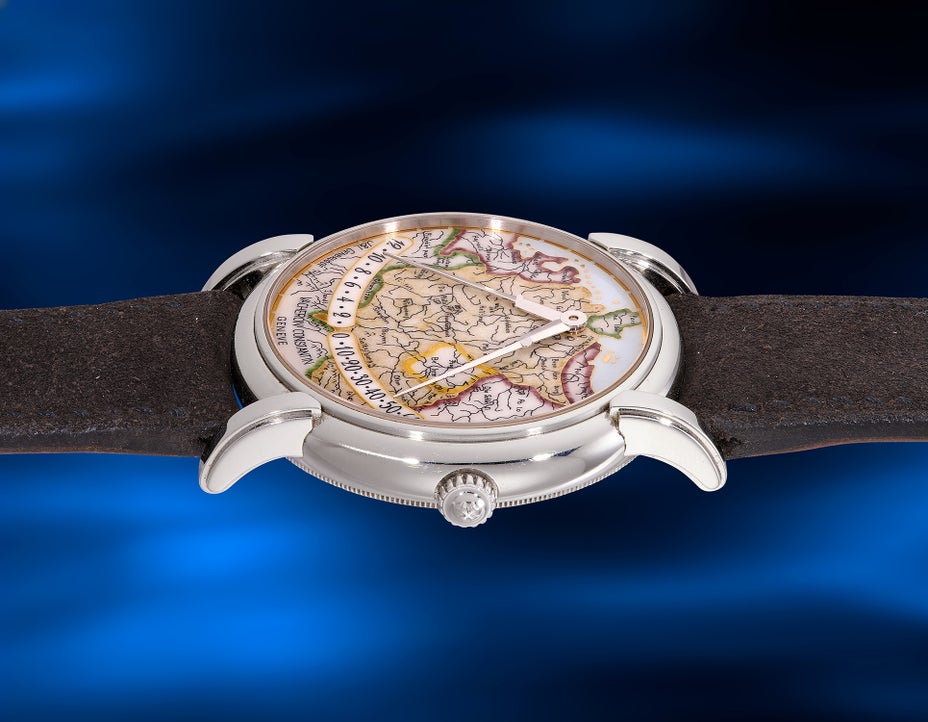
Encased in platinum, this particular example features a polychrome champlevé enamel dial depicting Germany and neighboring regions, one of only 10 pieces ever created and this is the 4th one to appear publicly. The intricate process begins with carving geographical details into an 18k gold base, followed by more than thirty kiln firings at temperatures reaching 900°C (1650°F). Master enamellers painstakingly apply colors with marten-hair brushes, layering green, yellow, and purple vitreous enamel, with each layer requiring individual firing and polishing. The twelve-day creation process yields only two dials monthly, with many lost to the medium's brittleness during gradual cooling.
The mechanical artistry matches the dial's splendor. Vacheron Constantin's ultra-thin Caliber 1120, measuring just 2.45mm in thickness, was radically modified to power twin retrograde hands shaped like compass needles. These hands sweep across arched scales before snapping back instantaneously—the hours completing their journey every twelve hours and the minutes every sixty. The complexity of the complication is heightened by its off-center placement, requiring the hands to operate on a different axis than the crown.
Presented with its original accessories, this Mercator represents a pivotal moment when Vacheron Constantin merged Renaissance cartography with micromechanical innovation.
Encased in platinum, this particular example features a polychrome champlevé enamel dial depicting Germany and neighboring regions, one of only 10 pieces ever created and this is the 4th one to appear publicly. The intricate process begins with carving geographical details into an 18k gold base, followed by more than thirty kiln firings at temperatures reaching 900°C (1650°F). Master enamellers painstakingly apply colors with marten-hair brushes, layering green, yellow, and purple vitreous enamel, with each layer requiring individual firing and polishing. The twelve-day creation process yields only two dials monthly, with many lost to the medium's brittleness during gradual cooling.
The mechanical artistry matches the dial's splendor. Vacheron Constantin's ultra-thin Caliber 1120, measuring just 2.45mm in thickness, was radically modified to power twin retrograde hands shaped like compass needles. These hands sweep across arched scales before snapping back instantaneously—the hours completing their journey every twelve hours and the minutes every sixty. The complexity of the complication is heightened by its off-center placement, requiring the hands to operate on a different axis than the crown.
Presented with its original accessories, this Mercator represents a pivotal moment when Vacheron Constantin merged Renaissance cartography with micromechanical innovation.
Vacheron Constantin
Swiss | 1755The world's oldest watch brand in continuous operation since its founding in 1755, Vacheron Constantin was the first watch company to manufacture movements with interchangeable parts beginning in 1839. Vacheron's watches are admired for their Latin-influenced case designs, well-balanced proportions and exquisitely finished movements of the highest quality. The Geneva-based manufacturer is known for their highly complicated masterpieces, including the King Farouk Grand Complication made in 1935, the Tour de l'Ile that was the most complicated serially produced wristwatch when introduced in 2005 and the 57260 — the world’s most complicated watch — made in 2015.
Key vintage models include minute repeating wristwatches such as the references 4261, chronographs such as the references 4178 and 6087 and the oversized Cioccolotone models such as ref. 4737. Collectors also appreciate Vacheron's Chronometer Royal pocket and wristwatches, as well as the '222,' the brand's first luxury sports watch produced from 1977 through 1984.
Browse MakerKey vintage models include minute repeating wristwatches such as the references 4261, chronographs such as the references 4178 and 6087 and the oversized Cioccolotone models such as ref. 4737. Collectors also appreciate Vacheron's Chronometer Royal pocket and wristwatches, as well as the '222,' the brand's first luxury sports watch produced from 1977 through 1984.