85
Usher & Cole
Minute Repeater with Perpetual Calendar
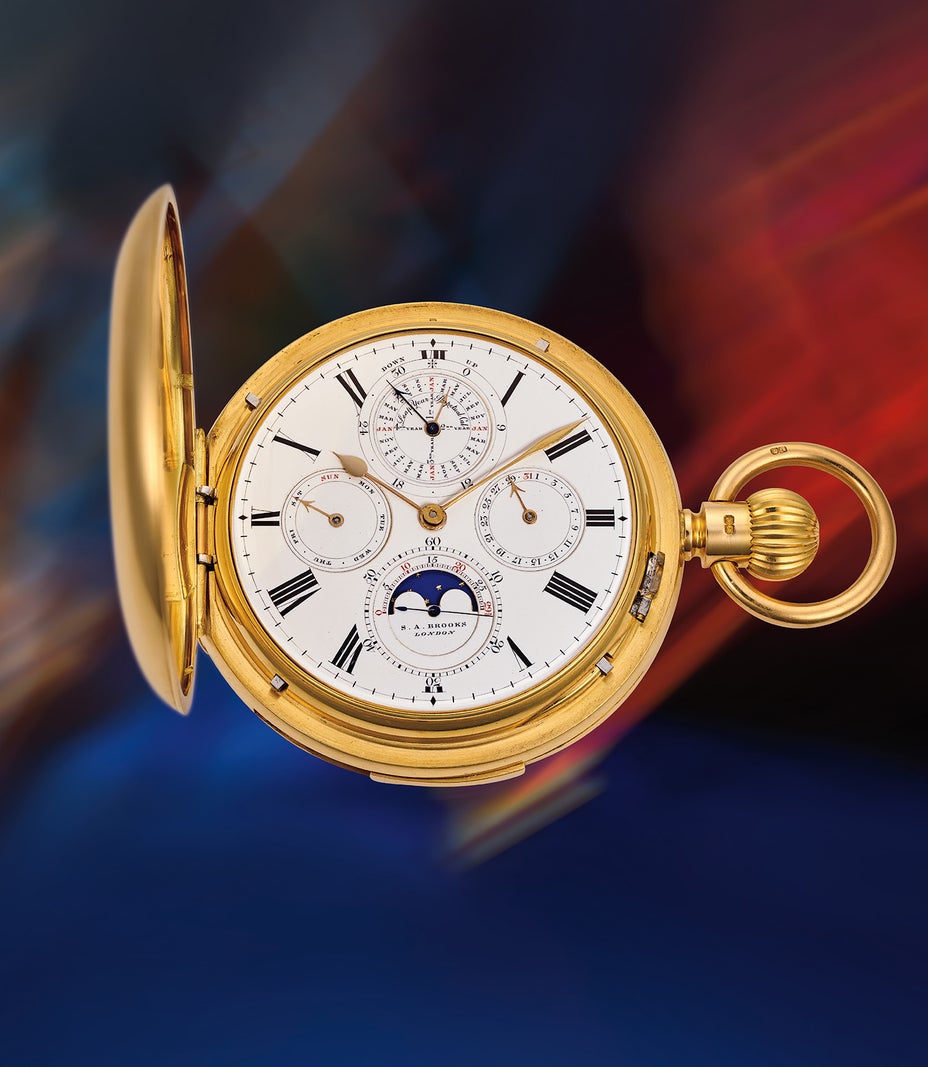
A very fine, extremely rare, and impressive yellow gold minute repeating perpetual calendar hunter-cased pocket watch with moon phase, power reserve, and leap year indication, with champlevé enamel coat of arms and monogram
Estimate
$40,000–80,000
Sold For
$57,150
Manufacturer
Usher & Cole
Year
1887
Movement No
24993
Model Name
Minute Repeater with Perpetual Calendar
Material
18K yellow gold
Calibre
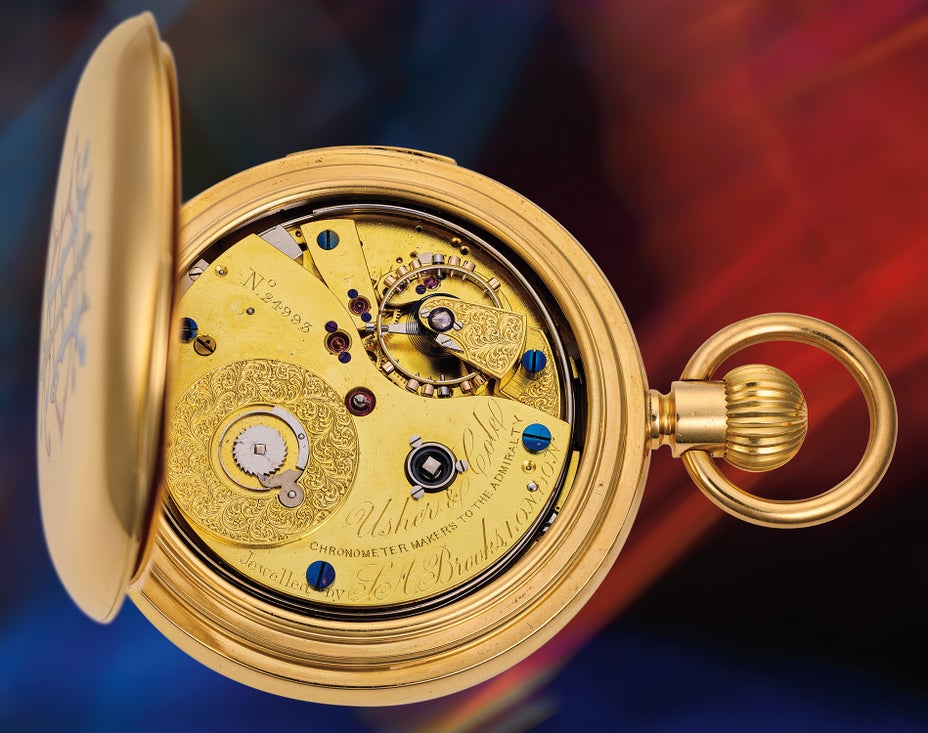
Manual, gilt brass three quarter plate 21’’’ English lever movement, 26 jewels (diamond endstone)
Dimensions
61mm Diameter
Signed
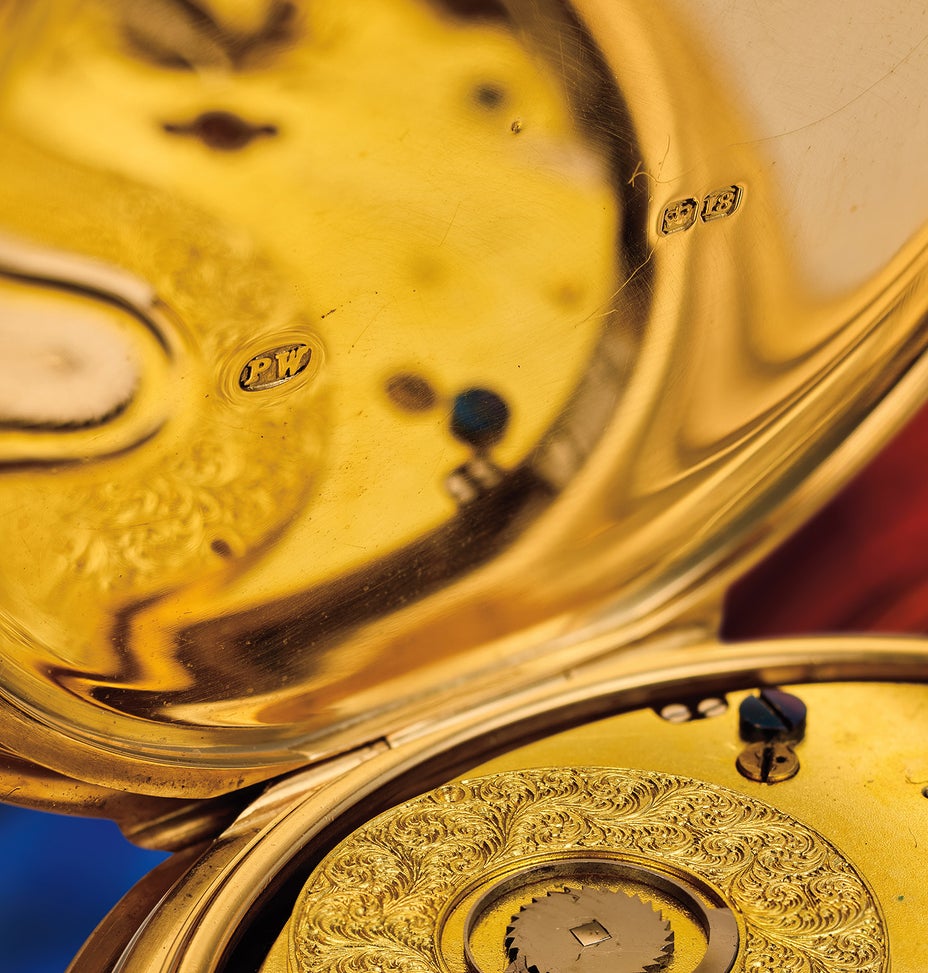
Dial signed S.A. Brooks. Movement signed “Usher & Cole Chronometer Makers to the Admiralty” and “Jewelled by S.A. Brooks London”. Case with London hallmarks for 18K gold, 1887, and sponsor’s mark for Phillip Woodman & Sons.
Full-Cataloguing
Established in 1861 by Joseph Usher and his apprentice, Richard Wright Cole, the firm of Usher & Cole primarily produced chronometers for the British Admiralty, and their name found its way, for the most part, onto the dials and mechanisms of marine chronometers. They submitted a number of successful watches at the Kew Observatory trials. Usher (1832 – 1903) was a noted springer and timer, per his obituary in 1903, who was “also a recognized expert in complicated watch mechanism.”
Immediately breathtaking for its sheer size, the present pocket watch is a grande complication, an extremely rare occurrence for Usher & Cole who produced very few complicated timepieces. It features a perpetual calendar mechanism with moon phases, leap year indication, and power reserve, as well as a minute repeater.
As is usual with British timepieces of the era, an entire ecosystem of British watchmaking is contained within the four-body bassine et filet case. Each component was manufactured by the most skilled craftsmen of the era. The white enamel dial, still in incredible condition after nearly 150 years, was made by Frederick Willis, while the case was made by Philip Goodman & Sons, which also made number 26’518. Weighing an impressive 264 grams (over half a pound), the polished 18K yellow gold four-bodied case, made in a time where all cases were crafted by hand, measures 61mm in diameter with all the attributes of a quality English case: turning pendant, 5-knuckle joints, and a raised push piece.
The movement was supplied by Swiss expatriate watchmaker, Nicole Nielsen, one of the most respected makers of complicated movements of the era. Exquisite details, such as mirror polished steel bridges, jewels set within screwed-in gold settings, and beautiful blued steel screws, make the movement absolutely captivating to behold.
The final member of this cadre of craftsmen is S.A. Brooks, the jeweler and retailer featured on both the movement and dial. Though the most prominent name on this particular piece, it is the most mysterious. It likely refers to Samuel Augustus Brooks, who provided and affixed the jewels for this timepiece. According to the records of the Worshipful Company of Clockmakers, the present timepiece was sold to S.A. Brooks on July 25th, 1888 for 170 pounds sterling.
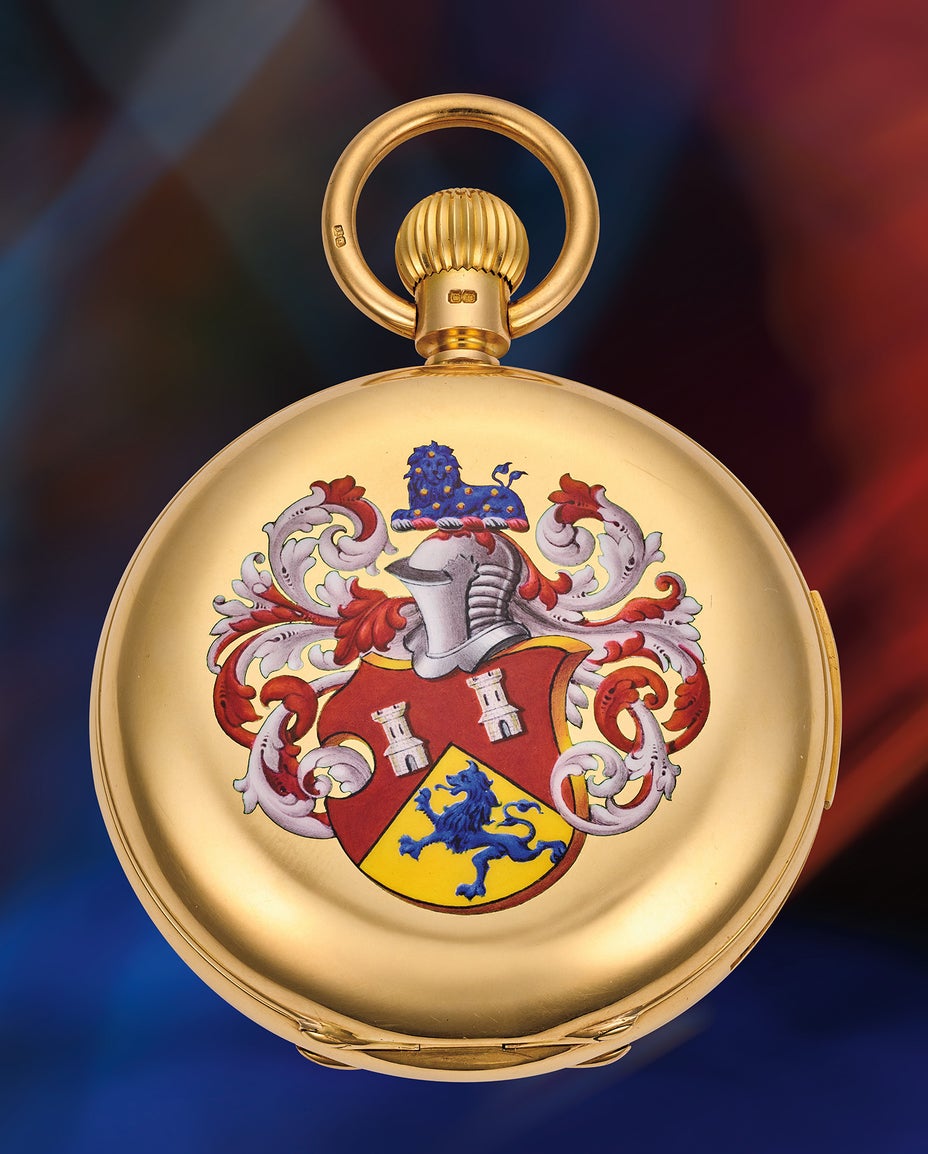
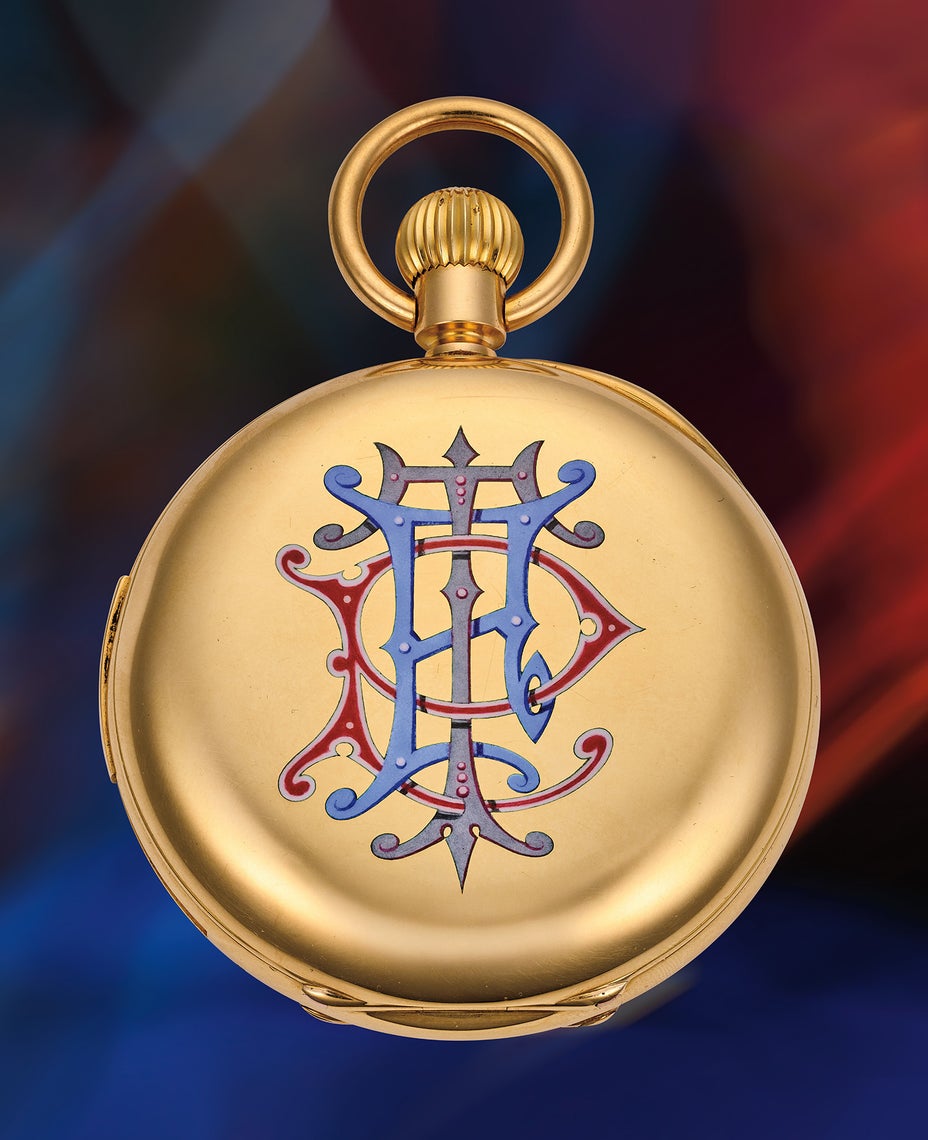
The College of Arms has identified the champlevé enamel coat of arms emblazoned on the case to be that of the Penton family, first awarded in 1698. Their research shows that the monogram FTP likely belongs to Frederick Thomas Penton, a career soldier and Member of Parliament from Sussex.
Immediately breathtaking for its sheer size, the present pocket watch is a grande complication, an extremely rare occurrence for Usher & Cole who produced very few complicated timepieces. It features a perpetual calendar mechanism with moon phases, leap year indication, and power reserve, as well as a minute repeater.
As is usual with British timepieces of the era, an entire ecosystem of British watchmaking is contained within the four-body bassine et filet case. Each component was manufactured by the most skilled craftsmen of the era. The white enamel dial, still in incredible condition after nearly 150 years, was made by Frederick Willis, while the case was made by Philip Goodman & Sons, which also made number 26’518. Weighing an impressive 264 grams (over half a pound), the polished 18K yellow gold four-bodied case, made in a time where all cases were crafted by hand, measures 61mm in diameter with all the attributes of a quality English case: turning pendant, 5-knuckle joints, and a raised push piece.
The movement was supplied by Swiss expatriate watchmaker, Nicole Nielsen, one of the most respected makers of complicated movements of the era. Exquisite details, such as mirror polished steel bridges, jewels set within screwed-in gold settings, and beautiful blued steel screws, make the movement absolutely captivating to behold.
The final member of this cadre of craftsmen is S.A. Brooks, the jeweler and retailer featured on both the movement and dial. Though the most prominent name on this particular piece, it is the most mysterious. It likely refers to Samuel Augustus Brooks, who provided and affixed the jewels for this timepiece. According to the records of the Worshipful Company of Clockmakers, the present timepiece was sold to S.A. Brooks on July 25th, 1888 for 170 pounds sterling.
The College of Arms has identified the champlevé enamel coat of arms emblazoned on the case to be that of the Penton family, first awarded in 1698. Their research shows that the monogram FTP likely belongs to Frederick Thomas Penton, a career soldier and Member of Parliament from Sussex.