
8Σ︎
Urwerk
Atomic Mechanical Control
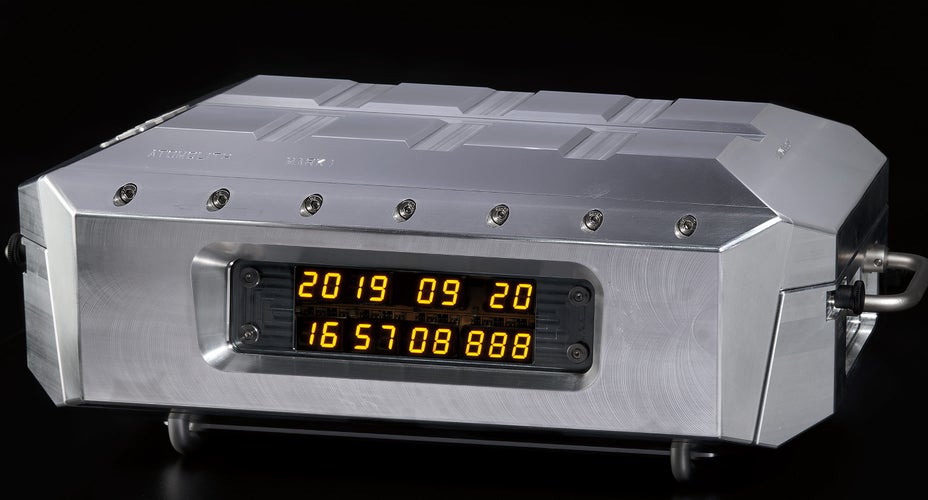
A unique, extremely rare, and historically innovative Atomic Master Clock with paired titanium wristwatch with power reserve and oil change indicator, with certificate of origin
Estimate
$1,000,000–2,000,000
Sold For
$2,900,000
Manufacturer
Urwerk
Year
2018
Movement No
Wristwatch #001
Model Name
Atomic Mechanical Control
Material
Wristwatch: PVD-coated titanium
Clock: Aluminium case
Bracelet/Strap
Crocodile
Clasp/Buckle
PVD coated Urwerk clasp
Dimensions
Wristwatch 45mm x 54mm
Clock 45 cm x 30 cm x 18 cm, 35kg
Signed
Case, dial, movement, clasp signed.
Accessories
Accompanied with Urwerk Certificate of Origin and carrying case.
Full-Cataloguing
The history of horology is intricately linked with the evolution of technology. With their AMC, the innovative independent brand, Urwerk, has created a revolutionary timepiece system that is a milestone in 21st century horology. A tour-de-force of modern watchmaking excellence, Urwerk devoted ten years of research and development to create this masterful work of art that is a marriage between two approaches to chronometry fusing traditional horology and atomic physics to produce two autonomous but linked systems that achieve high performance precision timing with a margin of error of one second in 317 years. Comprised of an atomic master clock and a standalone mechanical wristwatch, the master clock automatically winds, sets, and extraordinarily regulates the wristwatch to improve its timekeeping. It is one of only less than a handful of timepieces ever created that is capable of this remarkable feat.
To the uninitiated, one would think this is the first attempt to have a watch that can be synchronized through a base unit. However, the inspiration for this AMC project is, in part, due to the master horologist Abraham-Louis Breguet.
In 1795, Breguet outlined his desire to create a timepiece that could be set, wound and regulated without the wearer having to do anything to the watch, including opening the case back, and in 1798 he presented his first Sympathique Clock at the Exposition Nationale des Produits de l’Industrie in Paris. A technological marvel, the system featured a master clock with pocket watch, which could be attached to the clock and it would be automatically wound and adjusted. Using an ingenious docking system, the pocket watch was placed in a special cradle on top of the clock. Three prongs in the cradle attached to the pocket watch and the clock acted as a master timekeeper, which then achieved two of three necessary requirements for horology: winding, setting and regulating. The inventor of so many horological “firsts” including the tourbillon, Breguet was most proud of the Sympathique clock. Unfortunately, it’s believed Breguet’s system was unable to do all three at one time and research indicates he created five or six unique pieces with each only accomplishing two of the three functions.
In humanity’s continuous march towards improving timekeeping accuracy, the next “quantum leap” in this highly specialized field would not occur for approximately another 130 years with the development of atomic timing, which was examined by Nobel Physicist Isidor Isaac Rabi. During the 1930s and 1940s, he and his team began discussions on atomic timing with the American National Bureau of Standards, however the research was halted due to the demands of World War II. It was not until 1949 that Harold Lyons and his colleagues built the first atomic clock for the National Institute of Standards and Technology at the U. S. Department of Commerce. Post- war industrialization recognized the need and benefit of extremely accurate timekeeping, and by 1955 Louis Essen at the UK National Physical Laboratory built an atomic clock that was accurate enough for time standardization. These clocks used the transition frequency in microwaves or electron transition of the electromagnetic spectrum of atoms as a timekeeping standard. The extremely high oscillation rate of atoms and the regularity with which they oscillate can yield a theoretical accuracy today several orders of magnitude better than a quartz-regulated timekeeper.
Today, Urwerk’s AMC is at the cutting edge of atomic timekeeping and is an incredibly complex yet easy to use system that achieved what Breguet began in 1795, but could not fully realize. To have an independent mechanical watch, which when docked with a master clock achieve all three timing feats: regulate the rate of the watch, exactly synchronize the minutes and seconds to the master clock, and winding of the watch.
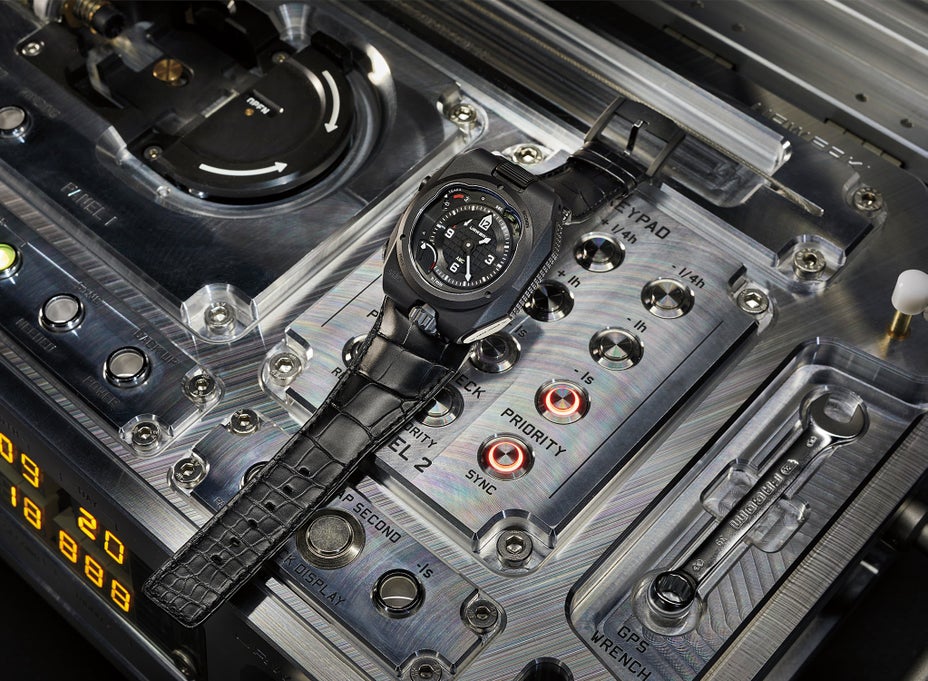
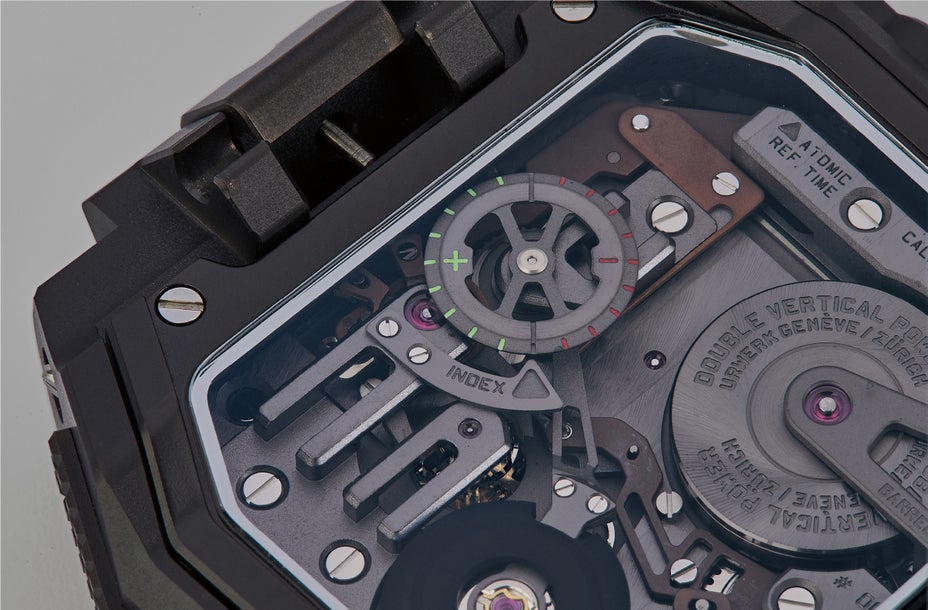
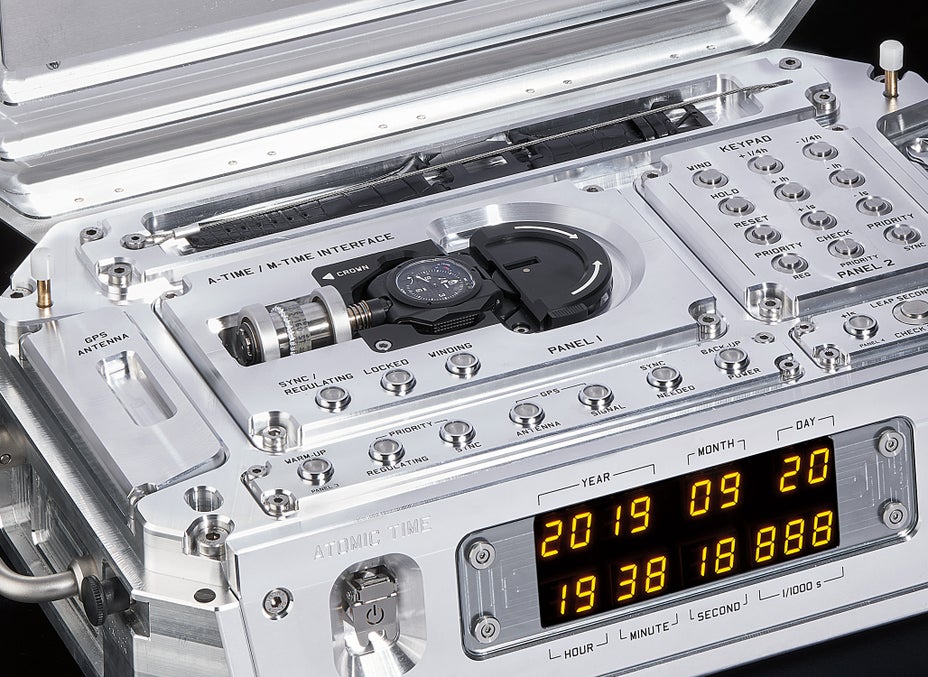
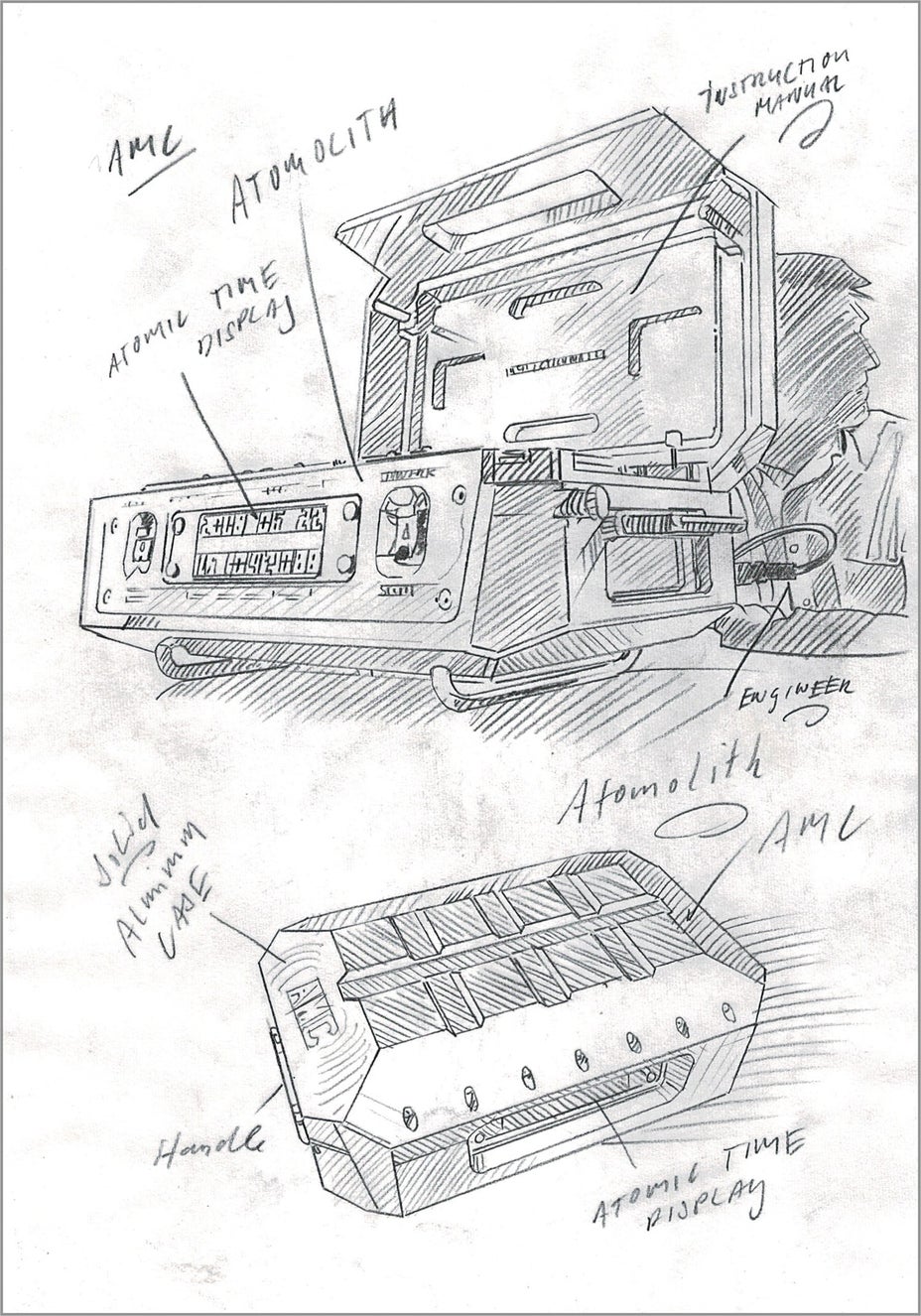
Developed by Urwerk, the standalone atomic clock, referred to as the “Atomolith”, weighs over 77 lbs and is housed in a stunning machined aluminum case. It features a GPS synchronization unit and indicates the thousandth seconds, seconds, minutes, hours, day, month, and year. The atom is regulated by Rhubidium ions that oscillate at a rate of 429 quadrillion beats per second – a remarkable capability in accuracy considering the Atomolith can ft easily on a small table or desk. When the wristwatch, removed from its strap, is docked to the clock, the watch’s time will be corrected at a, accounting for changes in temperature, air pressure and humidity. Most impressively, the watch’s escapement is adjusted to beat more accurately through an entirely mechanical sensor within the watch that compares the timing of the clock to that of its own escapement. The clock therefore serves as the wristwatch’s own “watchmaker”, where its microadjustments, when performed regularly, merge the chronometric performance of the watch to that of the clock, leading to more precise timekeeping.
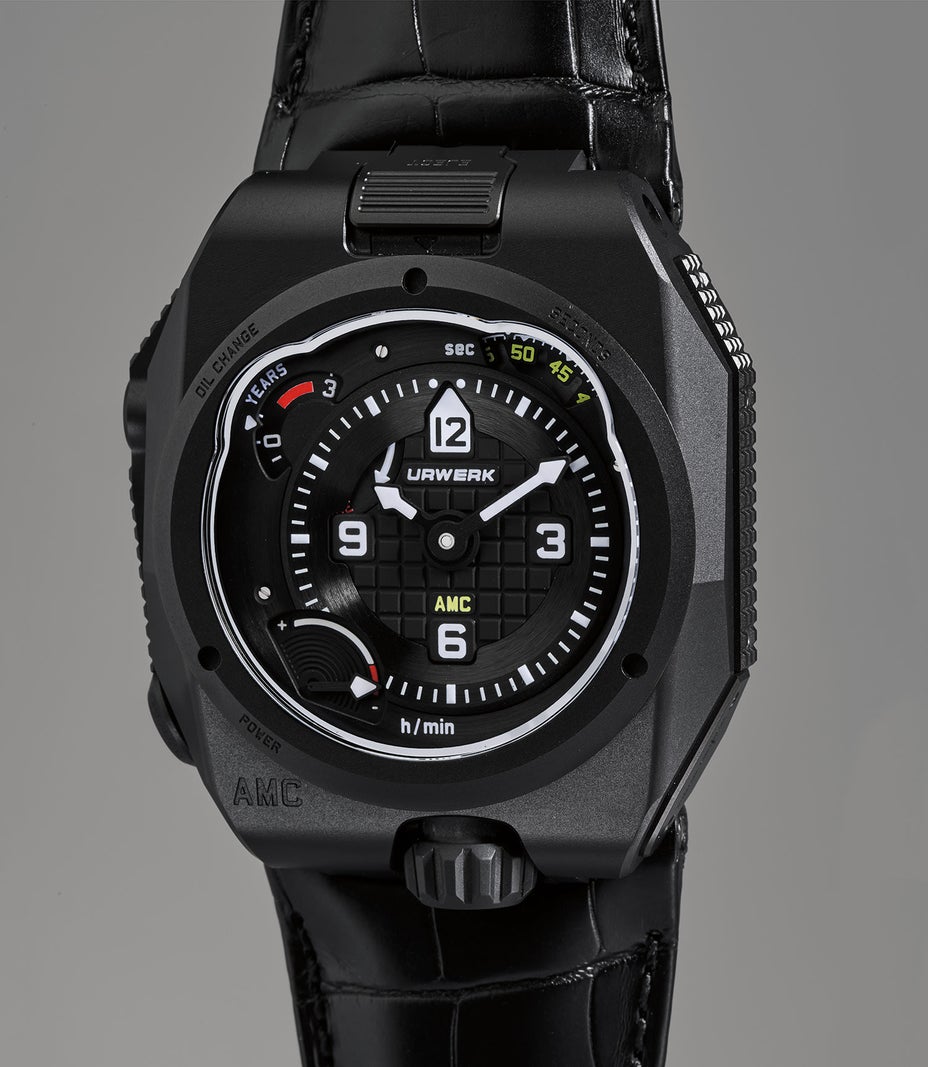
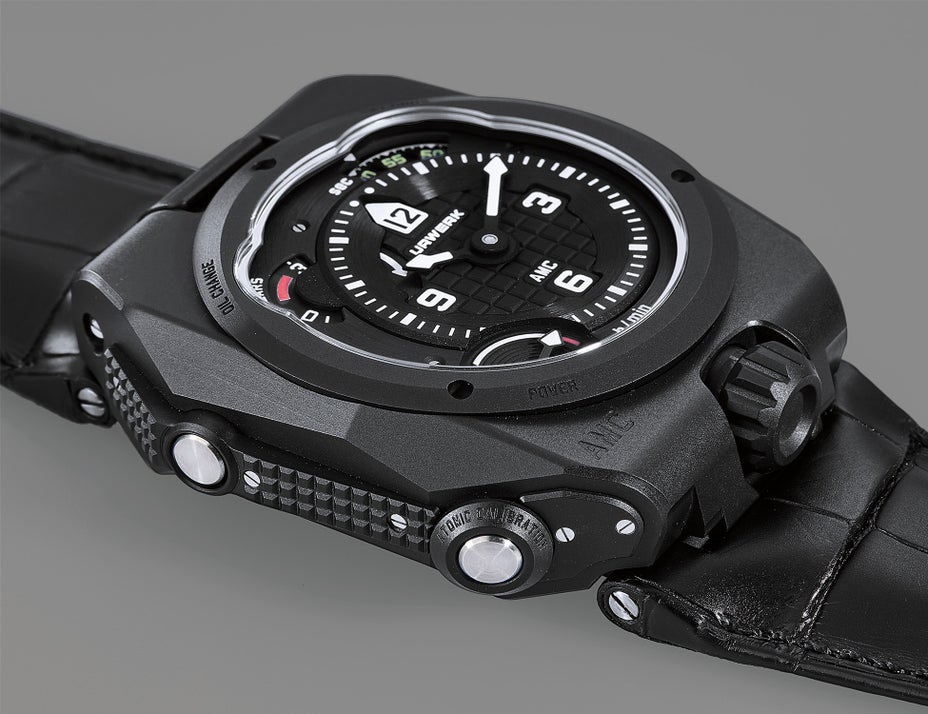
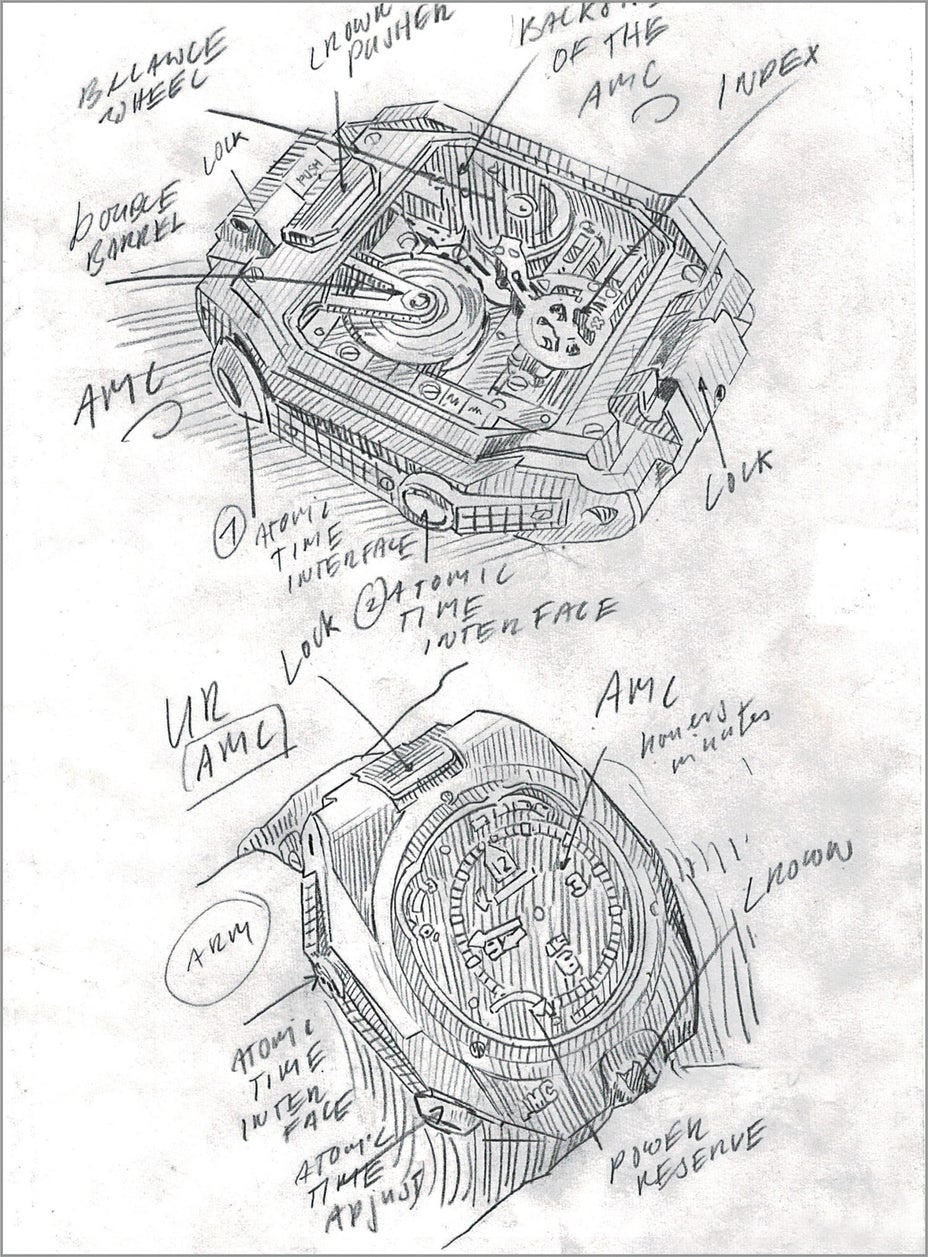
The wristwatch known as the AMC / Mobile Unit was specifically made for this project, fully designed and manufactured in-house by Urwerk. It features a bold case clearly inspired by the groundbreaking case designs Urwerk watches are known for. The watch indicates the seconds, hours, and minutes and features a power reserve with two stacked barrels for four days of energy, along with an Oil Change indicator, that when operated for a total of a four year period, rotates until the end of the fourth year indicating the wristwatch needs to be returned to the factory for servicing. Designed with ergonomics in mind, an ingenious aspect of the wristwatch is its quick release system, with the watch being ejected via a button at the 12 position so that it can easily be set in the atomic clock.
At the time Urwerk released the Atomic Master Clock at Baselworld 2018, they stated that three unique pieces would be produced. The movement of this wristwatch is engraved 001, and it is the first time this wonderous timekeeper is being offered on the market. Urwerk has created a fascinating 21st century timepiece that is the synthesis of centuries of innovations in timekeeping – one that can be considered one of the most important timepieces ever created.
To the uninitiated, one would think this is the first attempt to have a watch that can be synchronized through a base unit. However, the inspiration for this AMC project is, in part, due to the master horologist Abraham-Louis Breguet.
In 1795, Breguet outlined his desire to create a timepiece that could be set, wound and regulated without the wearer having to do anything to the watch, including opening the case back, and in 1798 he presented his first Sympathique Clock at the Exposition Nationale des Produits de l’Industrie in Paris. A technological marvel, the system featured a master clock with pocket watch, which could be attached to the clock and it would be automatically wound and adjusted. Using an ingenious docking system, the pocket watch was placed in a special cradle on top of the clock. Three prongs in the cradle attached to the pocket watch and the clock acted as a master timekeeper, which then achieved two of three necessary requirements for horology: winding, setting and regulating. The inventor of so many horological “firsts” including the tourbillon, Breguet was most proud of the Sympathique clock. Unfortunately, it’s believed Breguet’s system was unable to do all three at one time and research indicates he created five or six unique pieces with each only accomplishing two of the three functions.
In humanity’s continuous march towards improving timekeeping accuracy, the next “quantum leap” in this highly specialized field would not occur for approximately another 130 years with the development of atomic timing, which was examined by Nobel Physicist Isidor Isaac Rabi. During the 1930s and 1940s, he and his team began discussions on atomic timing with the American National Bureau of Standards, however the research was halted due to the demands of World War II. It was not until 1949 that Harold Lyons and his colleagues built the first atomic clock for the National Institute of Standards and Technology at the U. S. Department of Commerce. Post- war industrialization recognized the need and benefit of extremely accurate timekeeping, and by 1955 Louis Essen at the UK National Physical Laboratory built an atomic clock that was accurate enough for time standardization. These clocks used the transition frequency in microwaves or electron transition of the electromagnetic spectrum of atoms as a timekeeping standard. The extremely high oscillation rate of atoms and the regularity with which they oscillate can yield a theoretical accuracy today several orders of magnitude better than a quartz-regulated timekeeper.
Today, Urwerk’s AMC is at the cutting edge of atomic timekeeping and is an incredibly complex yet easy to use system that achieved what Breguet began in 1795, but could not fully realize. To have an independent mechanical watch, which when docked with a master clock achieve all three timing feats: regulate the rate of the watch, exactly synchronize the minutes and seconds to the master clock, and winding of the watch.
Developed by Urwerk, the standalone atomic clock, referred to as the “Atomolith”, weighs over 77 lbs and is housed in a stunning machined aluminum case. It features a GPS synchronization unit and indicates the thousandth seconds, seconds, minutes, hours, day, month, and year. The atom is regulated by Rhubidium ions that oscillate at a rate of 429 quadrillion beats per second – a remarkable capability in accuracy considering the Atomolith can ft easily on a small table or desk. When the wristwatch, removed from its strap, is docked to the clock, the watch’s time will be corrected at a, accounting for changes in temperature, air pressure and humidity. Most impressively, the watch’s escapement is adjusted to beat more accurately through an entirely mechanical sensor within the watch that compares the timing of the clock to that of its own escapement. The clock therefore serves as the wristwatch’s own “watchmaker”, where its microadjustments, when performed regularly, merge the chronometric performance of the watch to that of the clock, leading to more precise timekeeping.
The wristwatch known as the AMC / Mobile Unit was specifically made for this project, fully designed and manufactured in-house by Urwerk. It features a bold case clearly inspired by the groundbreaking case designs Urwerk watches are known for. The watch indicates the seconds, hours, and minutes and features a power reserve with two stacked barrels for four days of energy, along with an Oil Change indicator, that when operated for a total of a four year period, rotates until the end of the fourth year indicating the wristwatch needs to be returned to the factory for servicing. Designed with ergonomics in mind, an ingenious aspect of the wristwatch is its quick release system, with the watch being ejected via a button at the 12 position so that it can easily be set in the atomic clock.
At the time Urwerk released the Atomic Master Clock at Baselworld 2018, they stated that three unique pieces would be produced. The movement of this wristwatch is engraved 001, and it is the first time this wonderous timekeeper is being offered on the market. Urwerk has created a fascinating 21st century timepiece that is the synthesis of centuries of innovations in timekeeping – one that can be considered one of the most important timepieces ever created.
Urwerk
Swiss | 1997The Swiss firm's name "Urwerk" is a play on the German word meaning clockwork. "Ur" is an ancient Sumerian city in which the populace used sundials for timekeeping, while "werk" is German for creation. The company started by Felix Baumgartner and Martin Frei is known for their innovative avant-garde designs inspired by space travel. With their own take on time indication, like many of their contemporaries, their futuristic timepieces are rooted in high-end traditional watchmaking. Their signature floating method of time indication using rotating satellites traces back to a watch made in 1656. Producing only 150 watches per year, they have impressed connoisseurs with their innovativeness and cutting-edge technical prowess.