
1012
Swiss
“Bouquets de Chine”
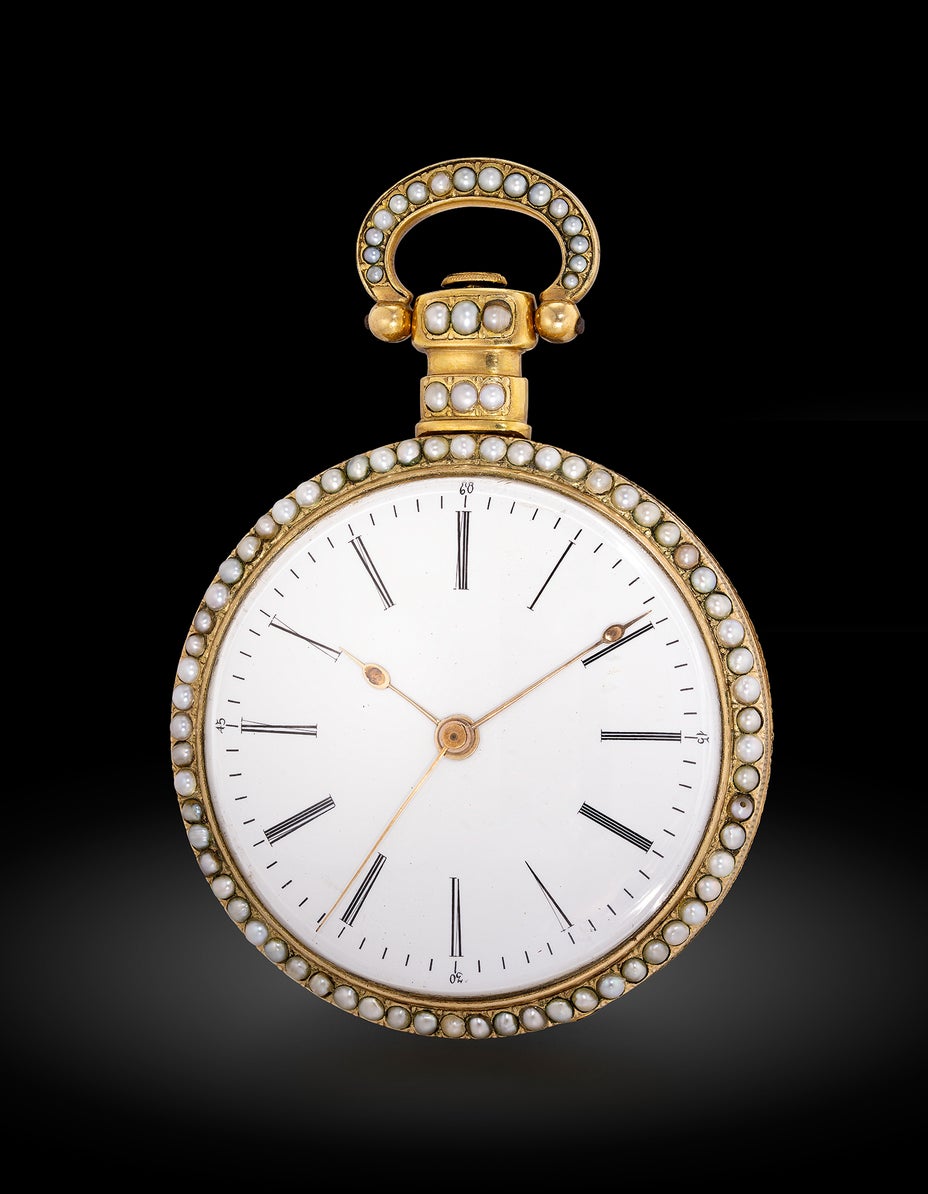
A very finely decorated and well-preserved silver gilt and pearl-set open faced pocket watch with miniature enamel painting depicting bouquets de Chine, white enamel dial and duplex escapement, made for the Chinese market
Estimate
HK$80,000–160,000
€8,900–17,800
$10,300–20,500
Sold For
HK$101,600
Manufacturer
Swiss
Year
Circa 1830
Case No
52’133, 170
Model Name
“Bouquets de Chine”
Material
Silver gilt, pearls and enamel
Calibre
Manual, duplex escapement
Dimensions
55mm diameter
Signed
Case numbered
Full-Cataloguing
In Chinese culture, flowers carry profound symbolic significance. Their shapes, characteristics, and fragrances are seen as deeply spiritual, reflecting the essence of the Chinese people. This cultural importance is conveyed through poems and proverbs, with specific flowers embodying particular meanings; for example, the lotus symbolizes purity, the chrysanthemum represents perseverance and the plum blossom signifies integrity.
The peony, celebrated for its lush forms, vibrant colors, and intoxicating fragrance, is regarded as the most important flower in China. It symbolizes wealth, nobility, prosperity and happiness, earning it the title "Queen of Flowers". In Chinese homes, flower paintings are often displayed for good luck, while in offices, they are believed to attract business success.
The rich symbolism associated with flowers made them an ideal subject for exquisite timepieces, often crafted for esteemed patrons, including the Emperor. The significance of each flower would be well understood by China’s elite, serving as a flattering reflection of their own wealth and power.
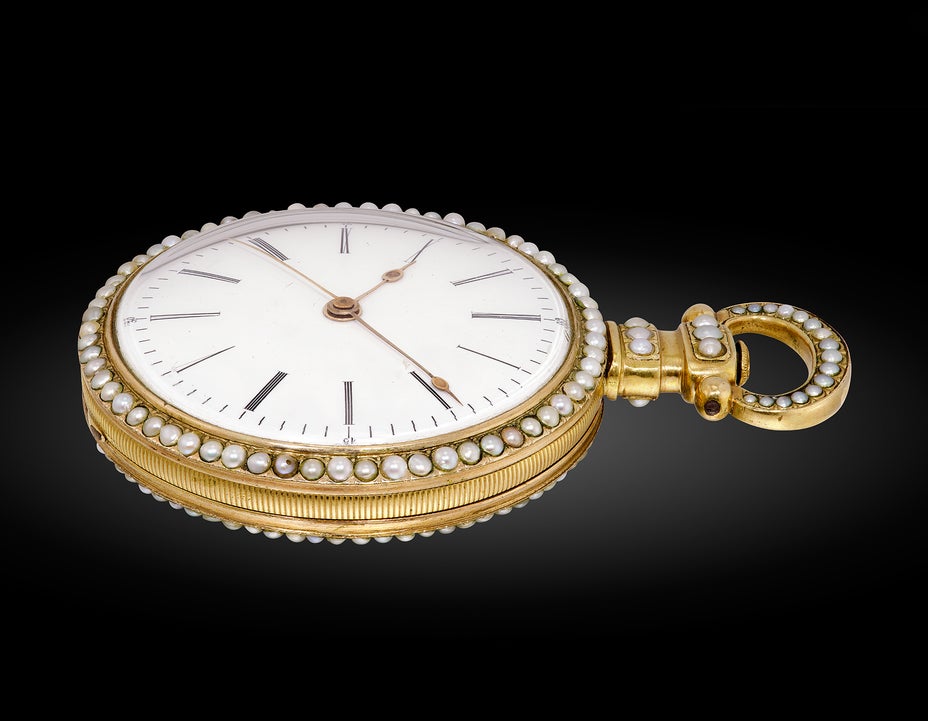
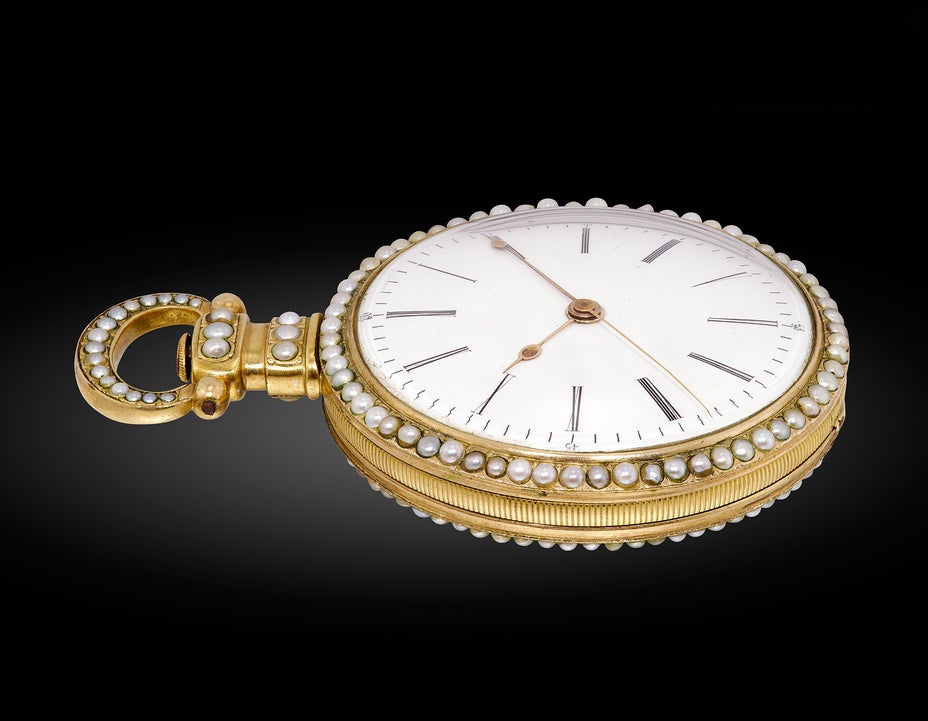
Typically featuring a complete miniature painting on the enamel panel, this Swiss watch represents a rare gem, showcasing a beautifully painted enamel depiction of a summer blossom against a striking green background. Encased in a silver gilt "Empire" style case, the bezel, pendant, and bow are adorned with large half-pearls, complemented by a sprung cuvette.
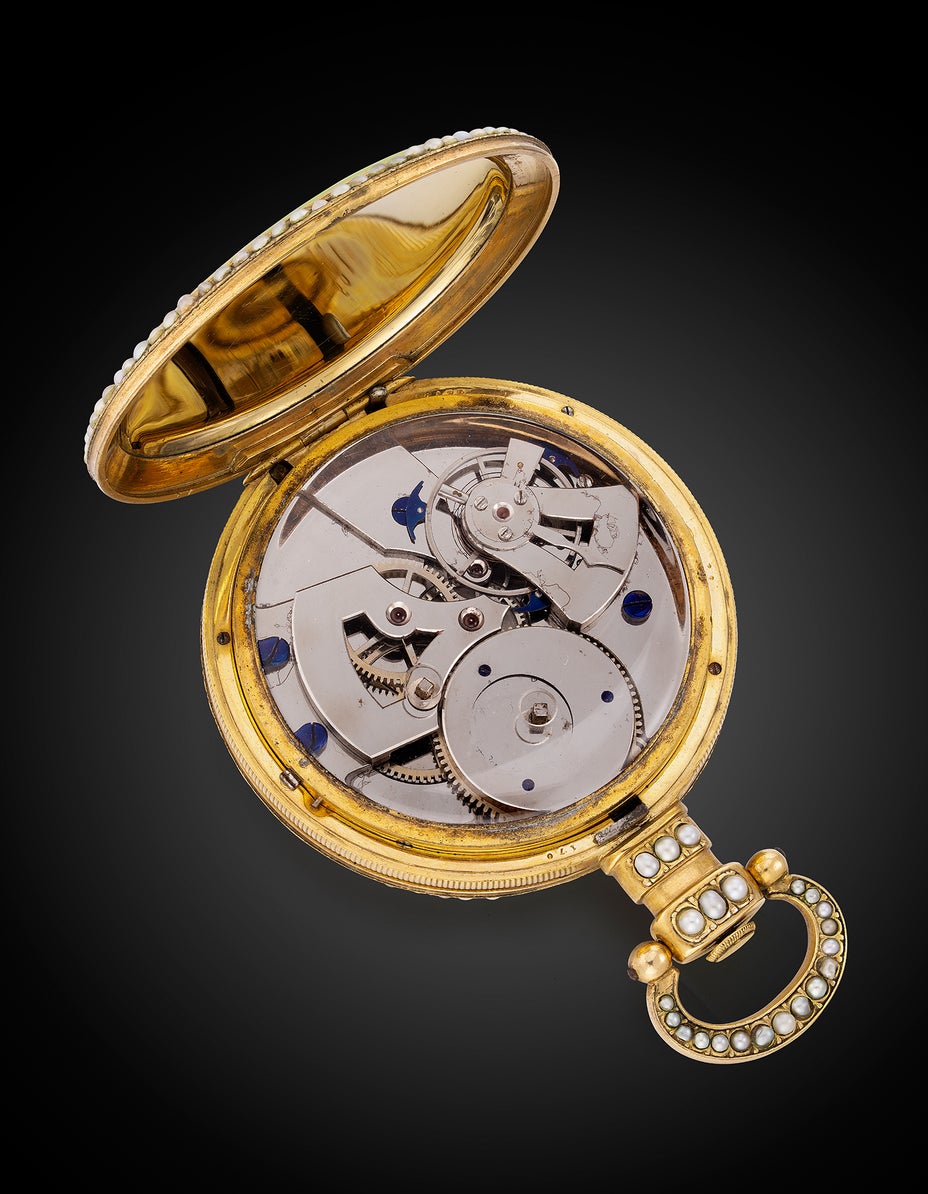
Further enhanced by a fluted design on the caseband, the movement is finished with a very rare mirror polish, featuring a duplex Jacot escapement, with all screws blued. Remarkably well-preserved for its age, the numbers inside the case remain crisp and legible. Kept in the same collection for over 30 years, this timepiece stands as an important piece of history in early Swiss watchmaking and its impact on Eastern culture.
The peony, celebrated for its lush forms, vibrant colors, and intoxicating fragrance, is regarded as the most important flower in China. It symbolizes wealth, nobility, prosperity and happiness, earning it the title "Queen of Flowers". In Chinese homes, flower paintings are often displayed for good luck, while in offices, they are believed to attract business success.
The rich symbolism associated with flowers made them an ideal subject for exquisite timepieces, often crafted for esteemed patrons, including the Emperor. The significance of each flower would be well understood by China’s elite, serving as a flattering reflection of their own wealth and power.
Typically featuring a complete miniature painting on the enamel panel, this Swiss watch represents a rare gem, showcasing a beautifully painted enamel depiction of a summer blossom against a striking green background. Encased in a silver gilt "Empire" style case, the bezel, pendant, and bow are adorned with large half-pearls, complemented by a sprung cuvette.
Further enhanced by a fluted design on the caseband, the movement is finished with a very rare mirror polish, featuring a duplex Jacot escapement, with all screws blued. Remarkably well-preserved for its age, the numbers inside the case remain crisp and legible. Kept in the same collection for over 30 years, this timepiece stands as an important piece of history in early Swiss watchmaking and its impact on Eastern culture.