US import tariffs: Non-US origin lots in this sale (including watches and timepieces with Swiss-made or non-US made movements) will be subject to special tariffs upon import to the USA, currently ranging from 10% to 39% on the total invoice price (hammer price plus buyer’s premium). Buyers are responsible for paying any applicable tariffs, duties, taxes and charges when importing their purchased lots. Due to the evolving nature of international trade regulations, we recommend clients consult with their local customs office or advisor for up-to-date information on the applicable tariffs.
127
Seiko
Ref. 4520-8020
Astronomical Observatory Chronometer
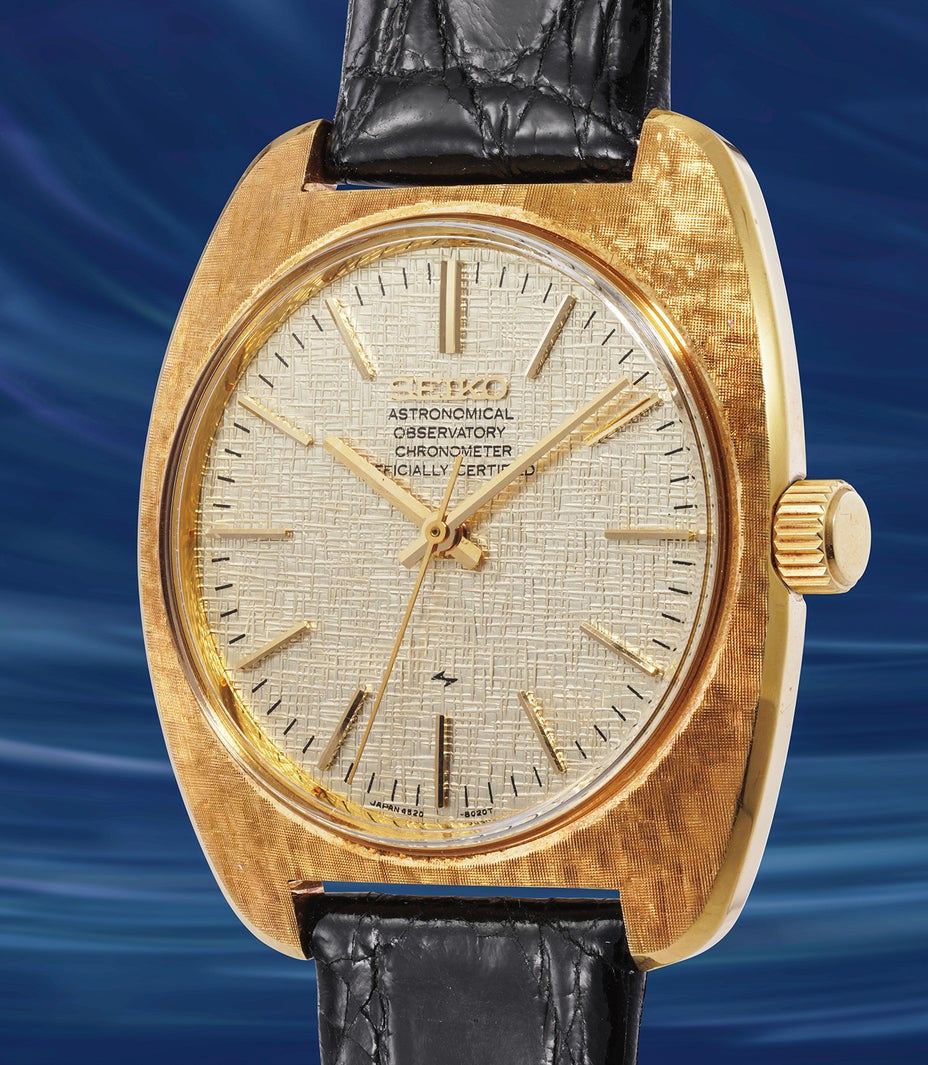
A historically important and extremely well-preserved yellow gold cushion-shaped observatory chronometer wristwatch with center seconds and "linen-finished" case
Estimate
CHF15,000–30,000
€16,200–32,400
$18,800–37,700
Sold For
CHF101,600
Manufacturer
Seiko
Year
Circa 1970
Movement No
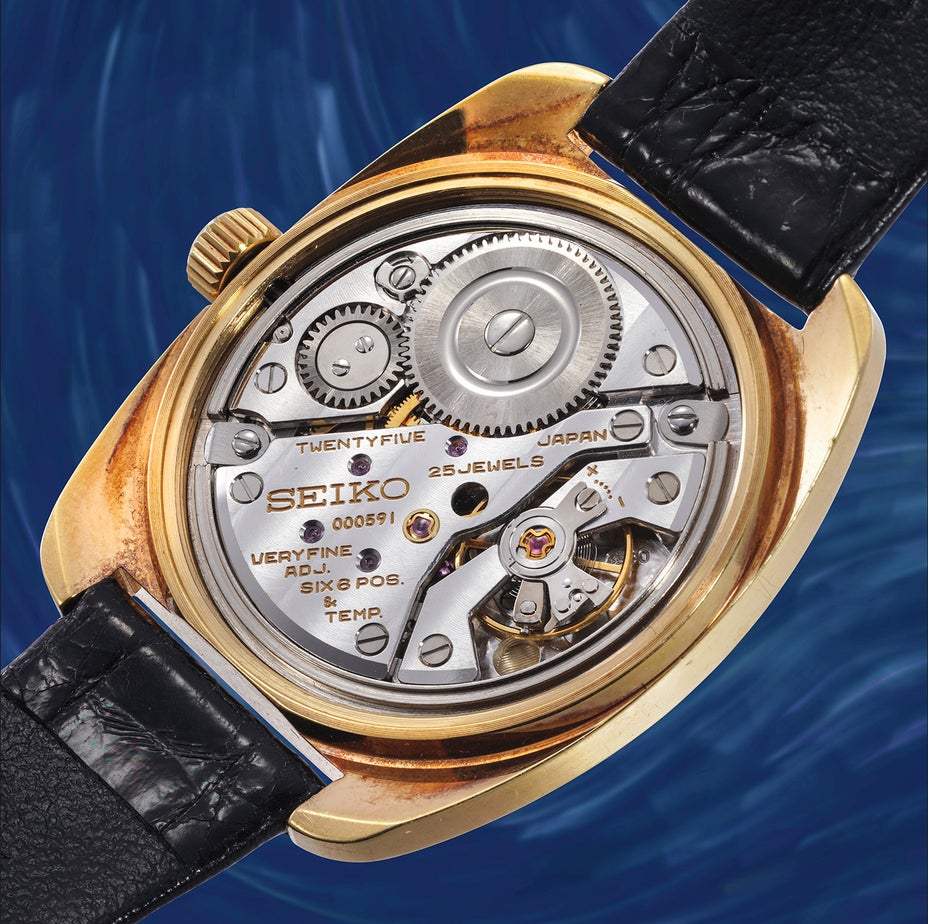
000'591
Reference No
4520-8020
Case No
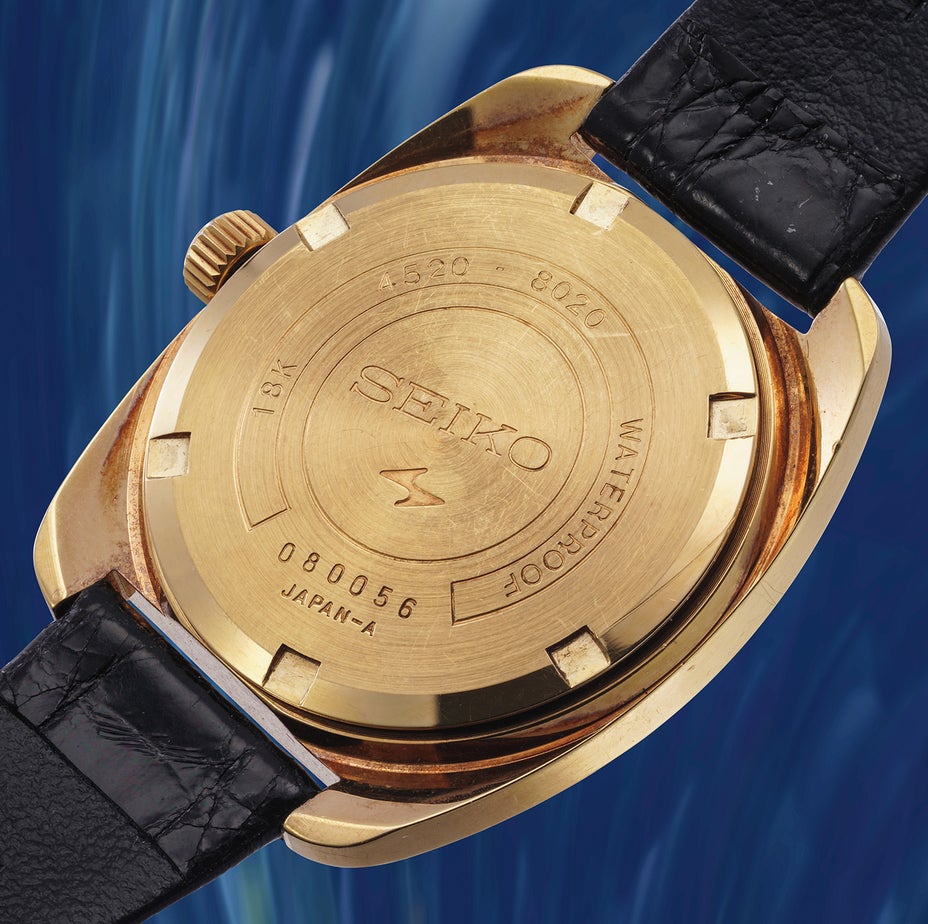
080'056
Model Name
Astronomical Observatory Chronometer
Material
18k yellow gold
Calibre
Manual, cal. 4580, 25 jewels
Bracelet/Strap
Leather
Clasp/Buckle
18K yellow gold Seiko pin buckle
Dimensions
36mm diameter
Signed
Case, dial, movement and buckle signed
Full-Cataloguing
A very rare and historically significant yellow gold wristwatch with center seconds and observatory chronometer certification, this reference defines the absolute pinnacle of mechanical wristwatch precision, thus making it one of the most important references in chronometric history.
In the mid-1960s, Seiko emerged as a formidable contender in the prestigious Swiss observatory chronometer competitions, challenging the dominance of traditional European watchmakers. Determined to prove the precision of Japanese horology, Seiko's engineers at the Suwa Seikosha and Daini Seikosha factories developed movements capable of exceptional accuracy. By the end of the decade, their efforts culminated in remarkable results at the Neuchâtel and Geneva Observatory trials, where Seiko calibers secured top placements in the wrist chronometer category. The present Astronomical Observatory Chronometer stands as a testament to this golden era, embodying Seiko's pioneering spirit and technical prowess that forever altered the landscape of fine watchmaking. The watch is crafted in a distinctive linen-textured 18K yellow gold case. The solid gold caseback is original to the watch, bearing a serial number indicating its 36,000bph 4580A movement was cased up in October 1970, making it one of the final of three batches of movements that were submitted to the Neuchatel Observatory, passing the stringent 45 day Observatory Chronometer test.
Detailed analysis of the Observatory Chronometer test results of another example of the reference has shown that remarkably, these movements were typically as accurate as the Seiko Quartz Astron that was introduced to the public at the same time the 4520-8020’s went on sale. Priced at ¥180,000 upon release—equivalent to several months' salary for the average Japanese worker—the Astronomical Observatory Chronometer was positioned as an elite timepiece, reserved for connoisseurs who appreciated its blend of Japanese craftsmanship and scientific rigor.
As one of only 226 wristwatches - and the sole reference from any brand - certified to Observatory Chronometer standards commercially released following the final Neuchatel trials of 1967, this Seiko Astronomical Observatory Chronometer is exceedingly rare on the secondary market. Its appearance at auction marks a unique opportunity to acquire a milestone in Seiko's ascent to global prominence.
In the mid-1960s, Seiko emerged as a formidable contender in the prestigious Swiss observatory chronometer competitions, challenging the dominance of traditional European watchmakers. Determined to prove the precision of Japanese horology, Seiko's engineers at the Suwa Seikosha and Daini Seikosha factories developed movements capable of exceptional accuracy. By the end of the decade, their efforts culminated in remarkable results at the Neuchâtel and Geneva Observatory trials, where Seiko calibers secured top placements in the wrist chronometer category. The present Astronomical Observatory Chronometer stands as a testament to this golden era, embodying Seiko's pioneering spirit and technical prowess that forever altered the landscape of fine watchmaking. The watch is crafted in a distinctive linen-textured 18K yellow gold case. The solid gold caseback is original to the watch, bearing a serial number indicating its 36,000bph 4580A movement was cased up in October 1970, making it one of the final of three batches of movements that were submitted to the Neuchatel Observatory, passing the stringent 45 day Observatory Chronometer test.
Detailed analysis of the Observatory Chronometer test results of another example of the reference has shown that remarkably, these movements were typically as accurate as the Seiko Quartz Astron that was introduced to the public at the same time the 4520-8020’s went on sale. Priced at ¥180,000 upon release—equivalent to several months' salary for the average Japanese worker—the Astronomical Observatory Chronometer was positioned as an elite timepiece, reserved for connoisseurs who appreciated its blend of Japanese craftsmanship and scientific rigor.
As one of only 226 wristwatches - and the sole reference from any brand - certified to Observatory Chronometer standards commercially released following the final Neuchatel trials of 1967, this Seiko Astronomical Observatory Chronometer is exceedingly rare on the secondary market. Its appearance at auction marks a unique opportunity to acquire a milestone in Seiko's ascent to global prominence.