

301
Rufino Tamayo
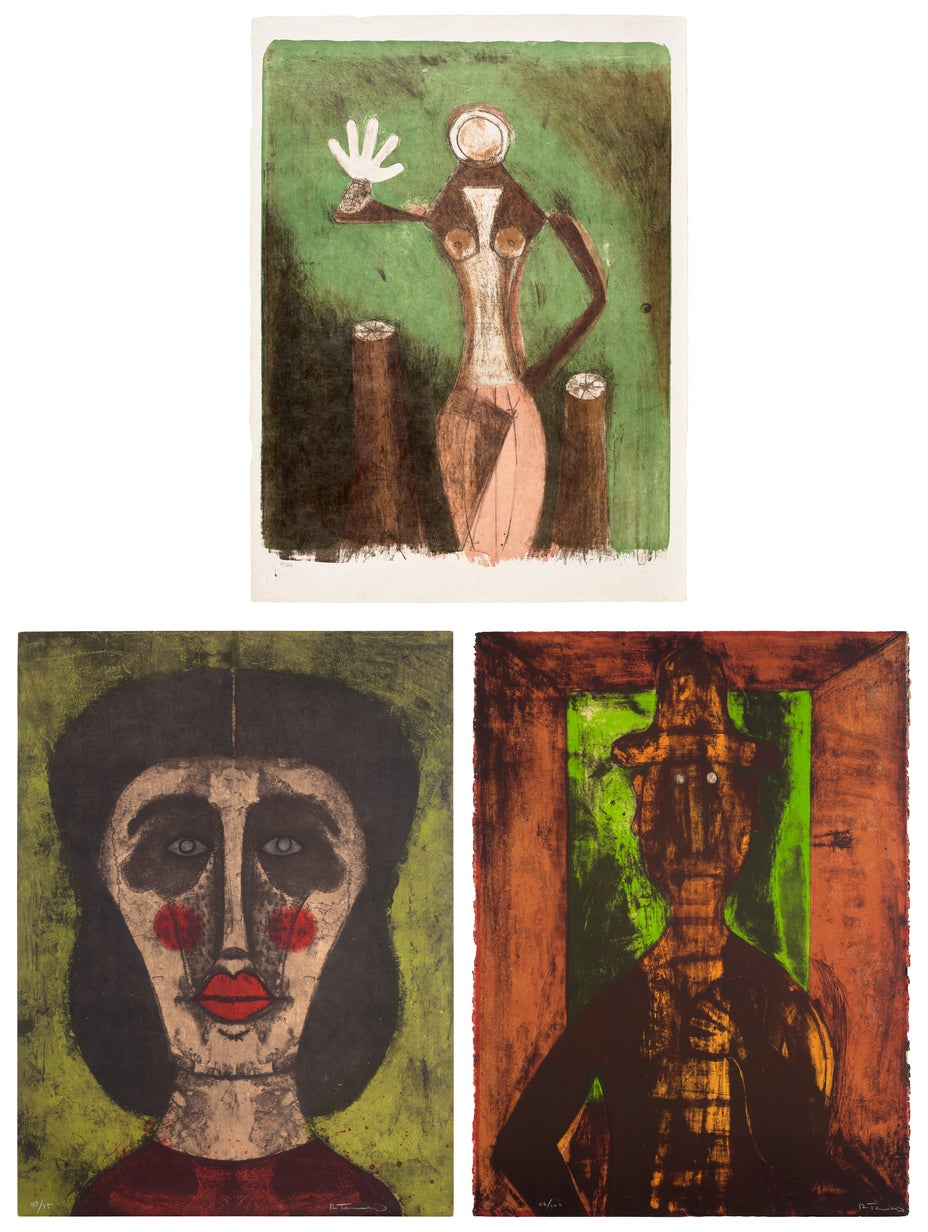
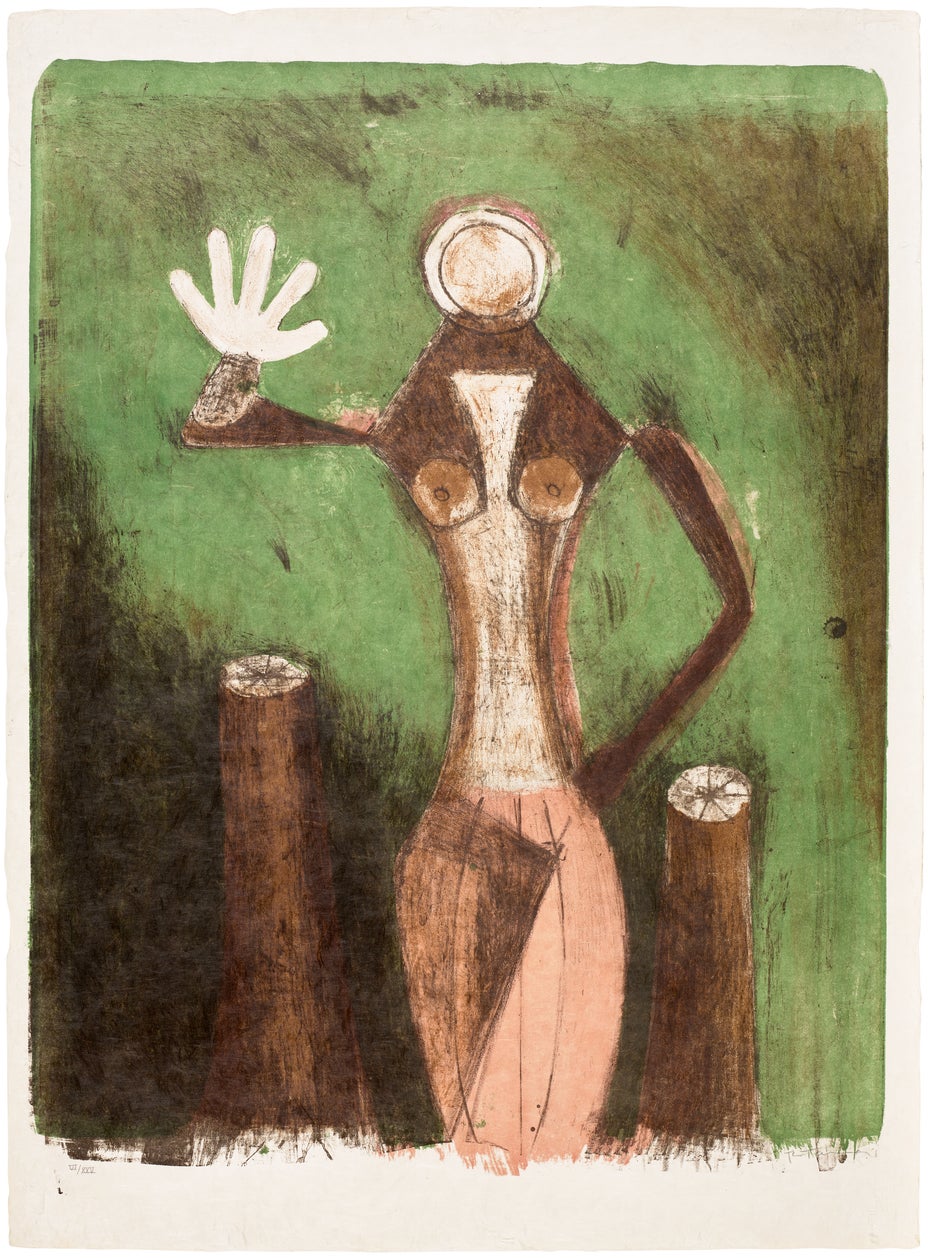
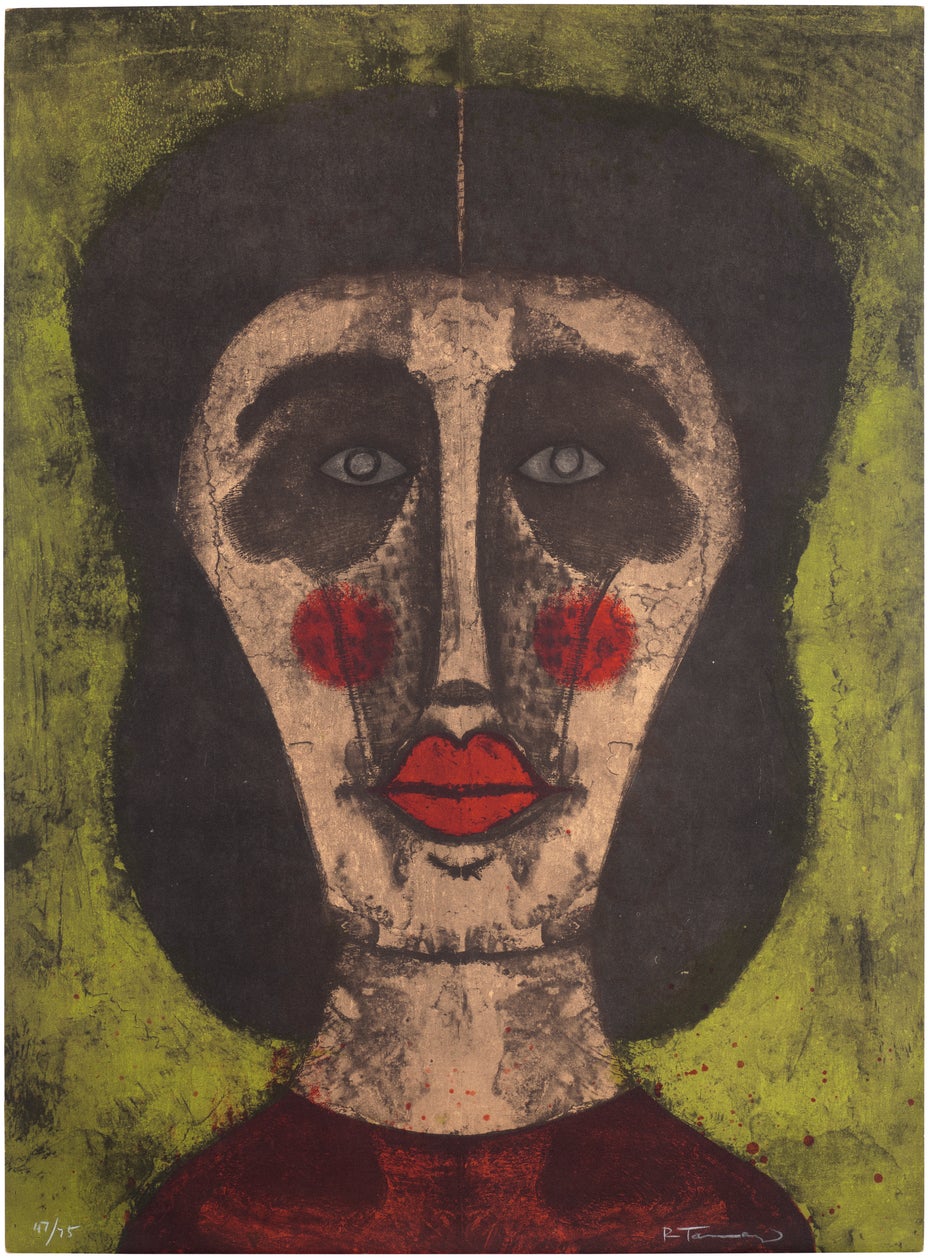
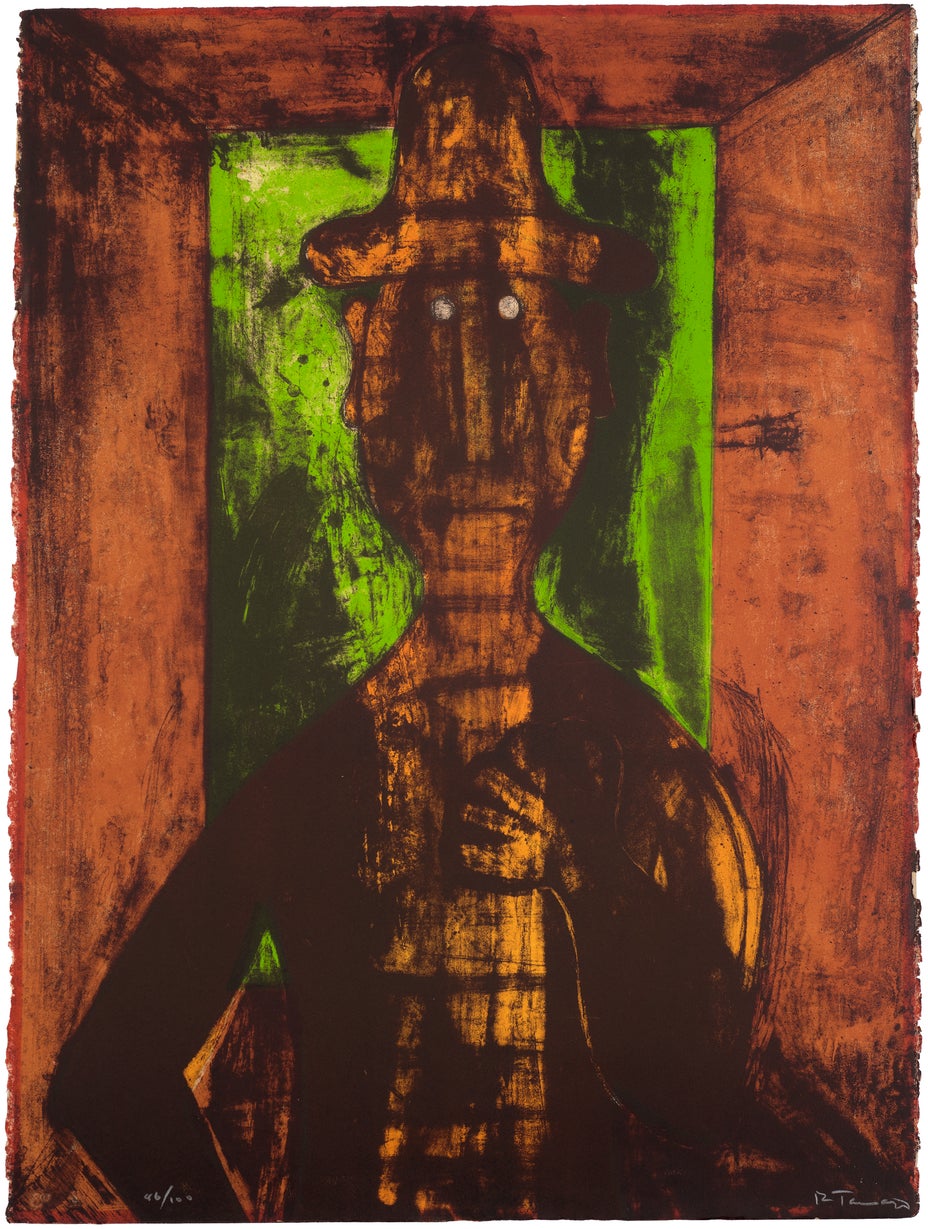
Mujer en lila (Woman in Lilac); Cabeza de mujer (Head of a Woman); and Hombre en fondo verde (Man on Green Background) (P. 113; 114; 287)
- Estimate
- £2,000 - 3,000‡
£4,902
Lot Details
Three lithographs in colours, one on Japon nacré paper, two on Guarro paper, the full sheets.
1969; 1973; 1980
one I. 69 x 53.1 cm (27 1/8 x 20 7/8 in.); S. 77.2 x 56.8 cm (30 3/8 x 22 3/8 in.)
two S. approx. 76 x 57 cm (29 7/8 x 22 1/2 in.)
Mujer en lila (Woman in Lilac) signed and numbered XI/XXV in pencil (from the edition of 25 in Roman numerals, there was also an edition of 150), published by Touchstone Publishers, New York, printed in France; Cabeza de mujer (Head of a Woman) signed and numbered 47/75 in white crayon (there were also 10 artist's proofs), published by Ediciones Polígrafa, S.A., Barcelona, printed in Spain; and Hombre en fondo verde (Man on Green Background) signed and numbered 46/100 in white crayon (there were also 25 in Roman numerals), published by the artist, printed in the United States, all unframed.
Specialist
Full-Cataloguing
Literature
Rufino Tamayo
Mexican | B. 1899 D. 1991Born in Oaxaca, Mexico, Rufino Tamayo was an incredibly prolific artist working until his death at the age of 91. Half-European and half-Zapotec Indian, Tamayo produced work that was defined by his mestizo, or mixed-blood, heritage. Through his studies, Tamayo was exposed to every artistic school of his time including Fauvism, the classical French school, Cubism and Abstract Expressionism, all of which contributed to his style as it developed throughout his life.
Tamayo reacted strongly against the Mexican muralists who dominated the art scene during his coming of age. Instead, his work is firmly grounded in realism while taking creative liberties in color and composition. His art emulates a unique blend of Cubism and Surrealism, joined with a deep understanding of Mexican culture.
Browse ArtistTamayo reacted strongly against the Mexican muralists who dominated the art scene during his coming of age. Instead, his work is firmly grounded in realism while taking creative liberties in color and composition. His art emulates a unique blend of Cubism and Surrealism, joined with a deep understanding of Mexican culture.