

This Lot is to be Sold with No Reserve
2
Rolex
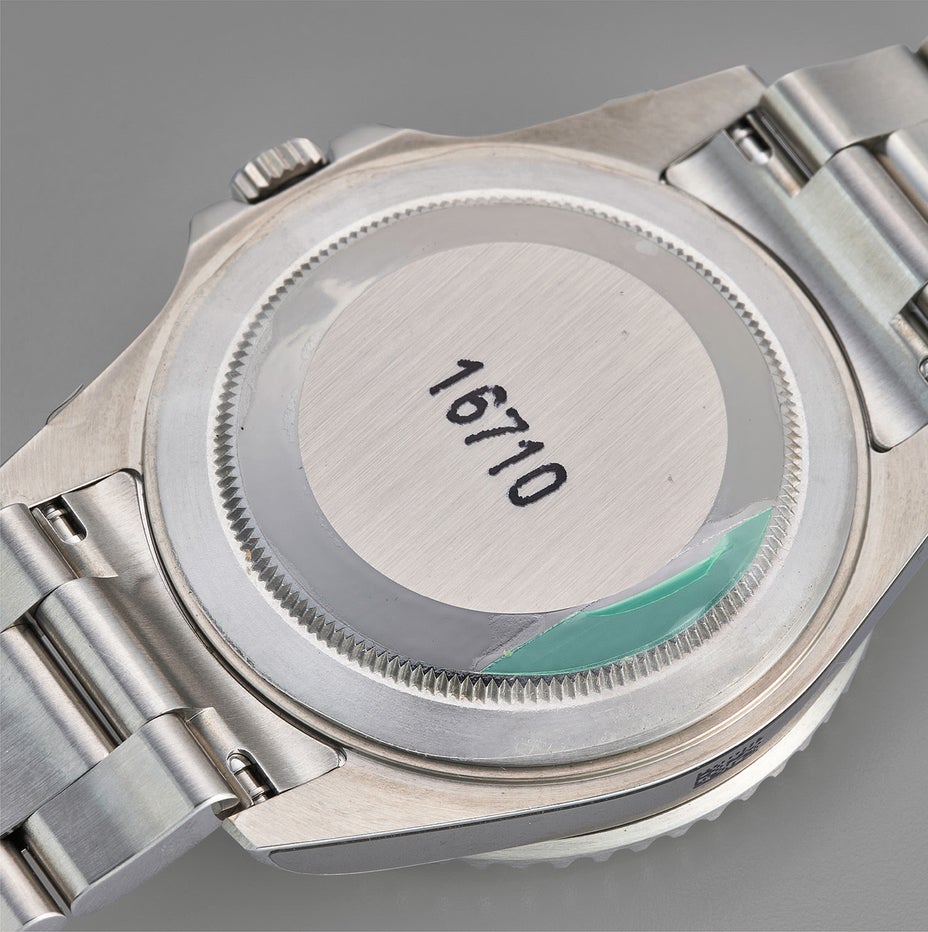
Ref. 16710B
GMT-Master II
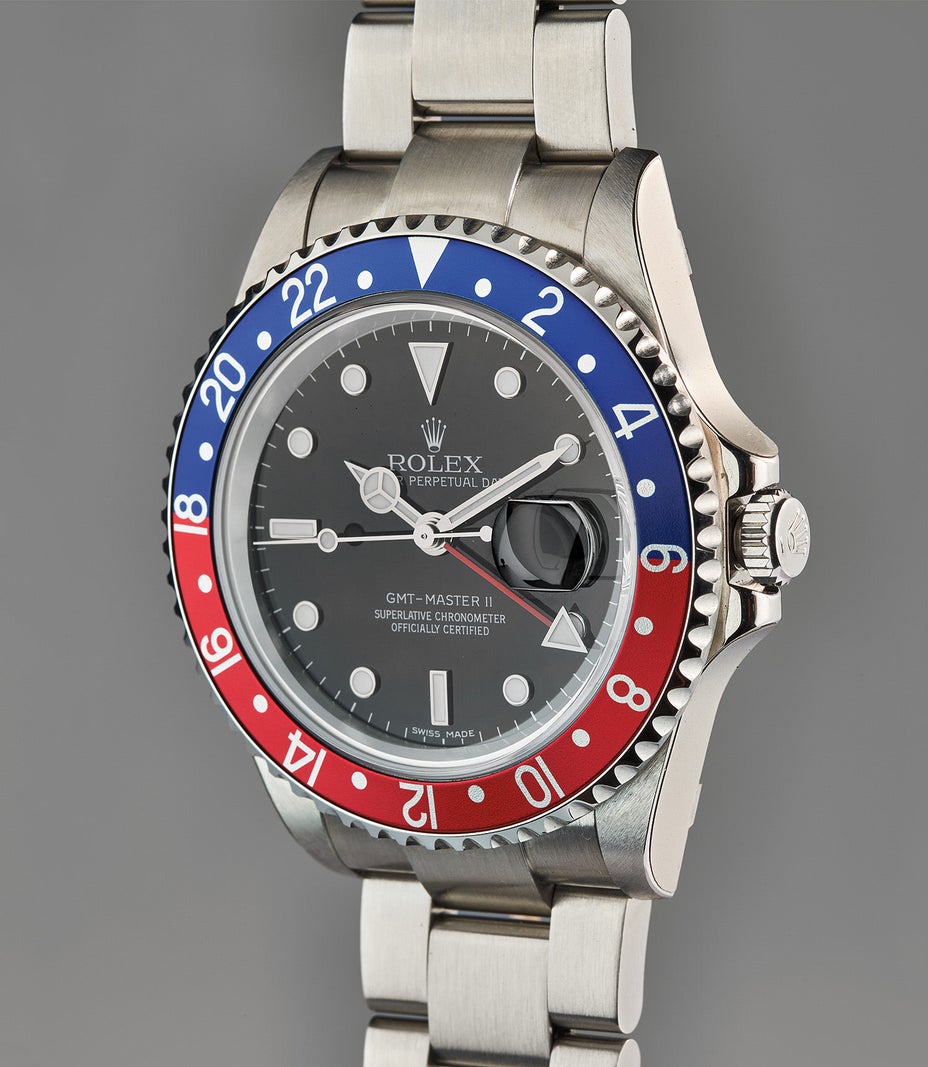
A rare, new old stock, and exceptional stainless steel dual time wristwatch with rare dial type, bracelet, original guarantee and presentation box
- Estimate
- $8,000 - 16,000•
$30,000
Lot Details
- Manufacturer
- Rolex
- Year
- Circa 2007
- Reference No
- 16710B
- Case No
- M317'121
- Model Name
- GMT-Master II
- Material
- Stainless steel
- Calibre
- Automatic, cal. 3186, 31 jewels
- Bracelet/Strap
- Stainless steel Rolex Oyster bracelet, max length 200mm
- Clasp/Buckle
- Stainless steel Rolex clasp, stamped 78790A, EOS
- Dimensions
- 40mm Diameter
- Signed
- Case, dial, movement, and clasp signed
- Accessories
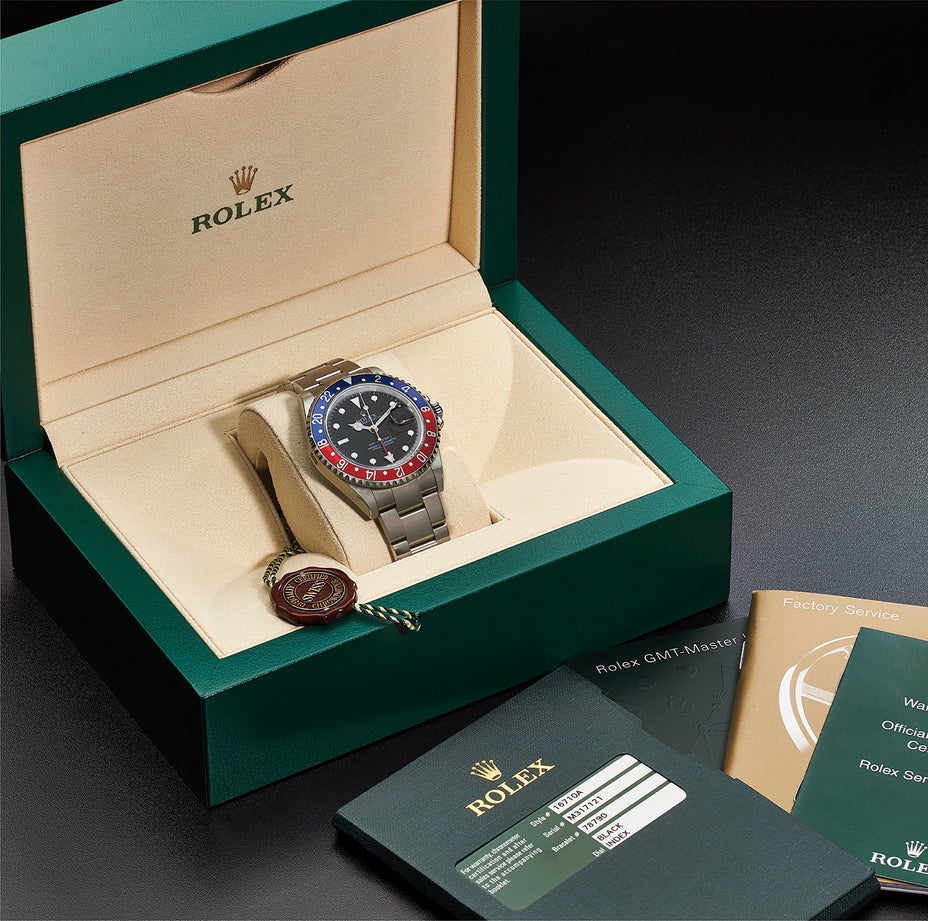
- Accompanied by Rolex green leather presentation box, Rolex guarantee dated March 19, 2008 and stamped O. C. Tanner, hang tag, Rolex envelope, product literature, and outer packaging.
Specialist
Full-Cataloguing
Catalogue Essay
Rolex’s GMT-Master was one of the most revolutionary timepieces available when it was first released in 1954. The famed reference 6542 with Bakelite bezel set the standard for all other dual-time wristwatches that followed. Introduced at the dawn of the “Jet Age” and developed in collaboration with Pan-Am airlines, it featured an historic innovation that permitted travelers to simultaneously tell time at both their “home” and “local” destination. The model is so cherished by watch collectors and enthusiasts that sixty-five years after it was first introduced, it remains one of the brand’s top selling wristwatches. The GMT-Master evolved over the decades with design changes including the use of a metallic bezel in place of the fragile Bakelite bezel and the addition of crown guards. A major upgrade came with the introduction of the GMT-Master II in 1983, employing for the first time a quick-set hour hand that could easily be moved forwards and backwards.
The present reference 16710 is one of the rarest of all GMT-Master II models due to several elements. A transitional model that preceded the use of ceramic bezels for the GMT Master II line, it’s fitted with what’s known as an “error dial”, or “stick” dial, and at the same time, features an upgraded caliber 3186 movement. The nickname “error dial” comes from a slight change in the script signature, with the “II” in the GMT-Master II text at 6 o’clock lacking the top and bottom horizontal lines for the Roman numeral “II” as was most often used. The caliber 3186 was an upgraded caliber with a Parachrom hairspring, and while it was for use in the new model GMT-Master 116710, these calibers were also found on late examples of the 16710 M series.
The present M series reference 16710 remains absolutely unused and is particularly attractive with its pristine case, rare “error” dial, caliber 3186 movement, and original red and blue “Pepsi” bezel—a complete watch for the connoisseur who seeks an uncommon and rare modern sports watch.
The present reference 16710 is one of the rarest of all GMT-Master II models due to several elements. A transitional model that preceded the use of ceramic bezels for the GMT Master II line, it’s fitted with what’s known as an “error dial”, or “stick” dial, and at the same time, features an upgraded caliber 3186 movement. The nickname “error dial” comes from a slight change in the script signature, with the “II” in the GMT-Master II text at 6 o’clock lacking the top and bottom horizontal lines for the Roman numeral “II” as was most often used. The caliber 3186 was an upgraded caliber with a Parachrom hairspring, and while it was for use in the new model GMT-Master 116710, these calibers were also found on late examples of the 16710 M series.
The present M series reference 16710 remains absolutely unused and is particularly attractive with its pristine case, rare “error” dial, caliber 3186 movement, and original red and blue “Pepsi” bezel—a complete watch for the connoisseur who seeks an uncommon and rare modern sports watch.
Rolex
Swiss | 1905Founded in 1905 England by Hans Wilsdorf and Alfred Davis as Wilsdorf & Davis, it soon became known as the Rolex Watch Company in 1915, moving its headquarters to Geneva in 1919. Like no other company, the success of the wristwatch can be attributed to many of Rolex's innovations that made them one of the most respected and well-known of all luxury brands. These innovations include their famous "Oyster" case — the world's first water resistant and dustproof watch case, invented in 1926 — and their "Perpetual" — the first reliable self-winding movement for wristwatches launched in 1933. They would form the foundation for Rolex's Datejust and Day-Date, respectively introduced in 1945 and 1956, but also importantly for their sports watches, such as the Explorer, Submariner and GMT-Master launched in the mid-1950s.One of its most famous models is the Cosmograph Daytona. Launched in 1963, these chronographs are without any doubt amongst the most iconic and coveted of all collectible wristwatches. Other key collectible models include their most complicated vintage watches, including references 8171 and 6062 with triple calendar and moon phase, "Jean Claude Killy" triple date chronograph models and the Submariner, including early "big-crown" models and military-issued variants.
Browse Maker