23
Rolex
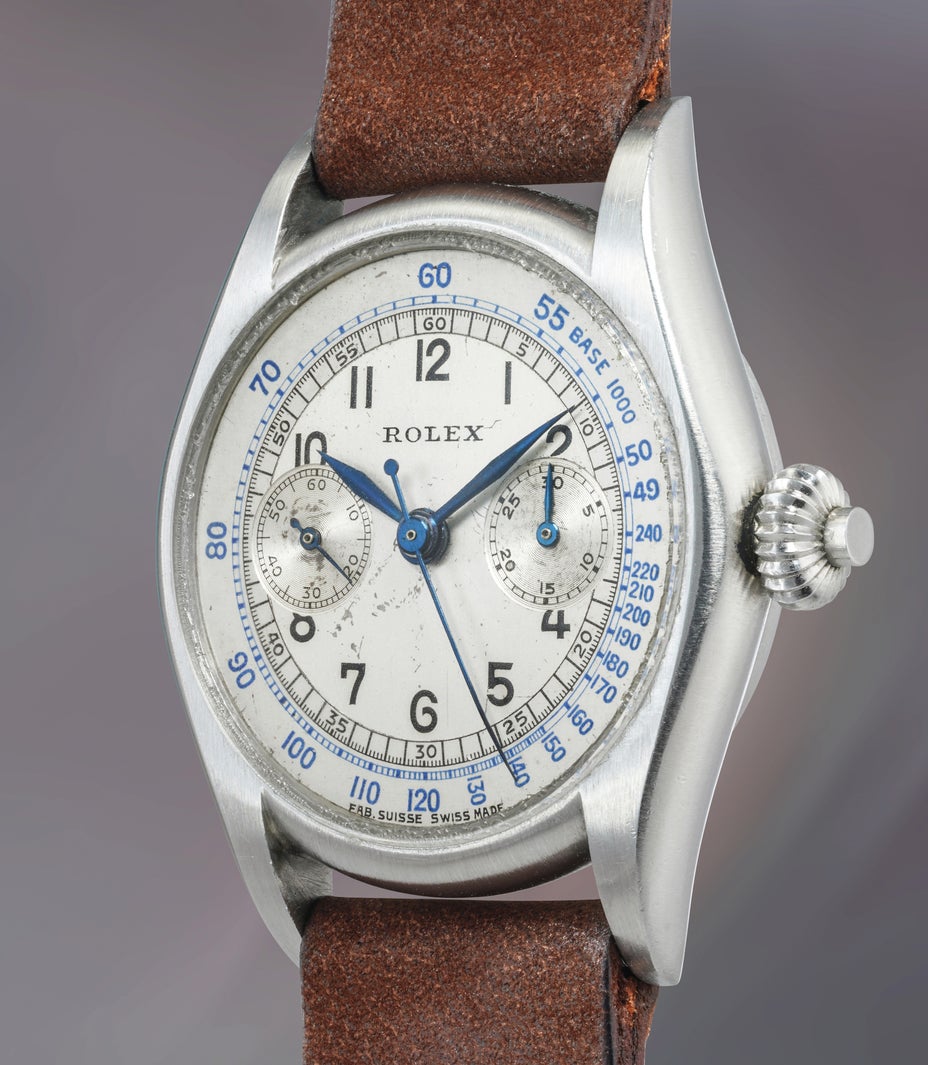
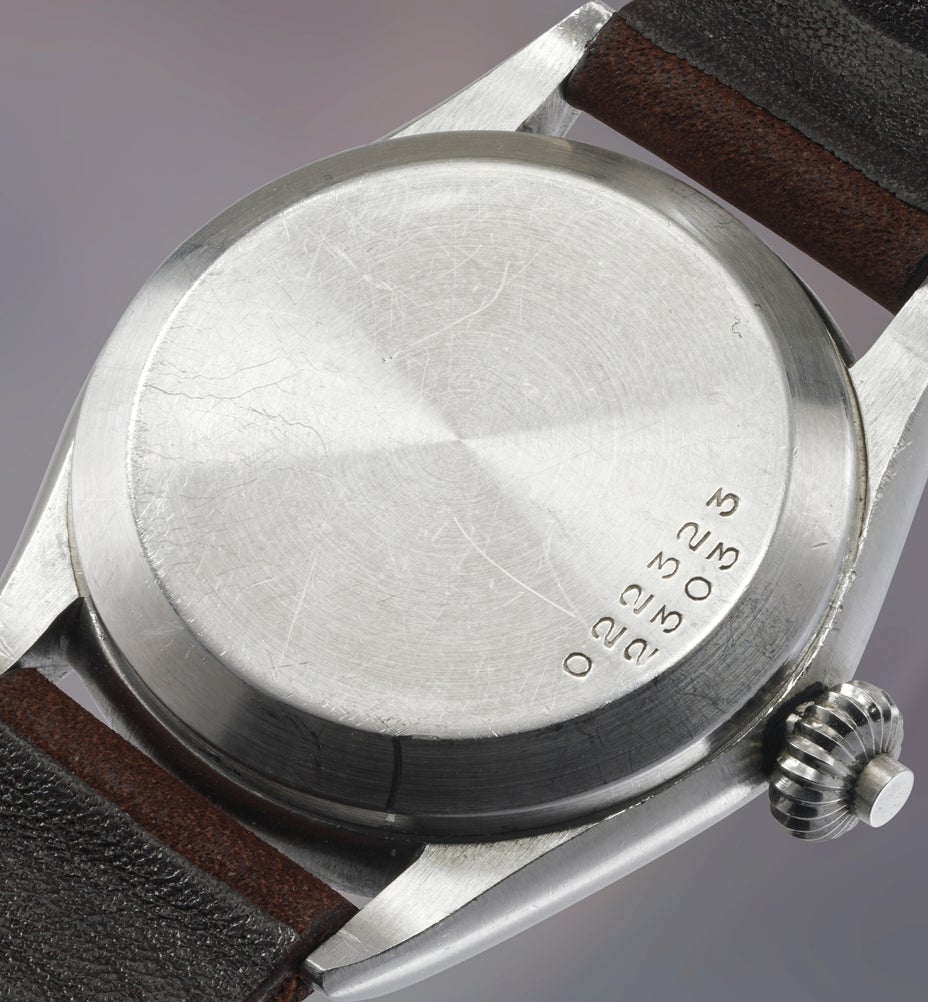
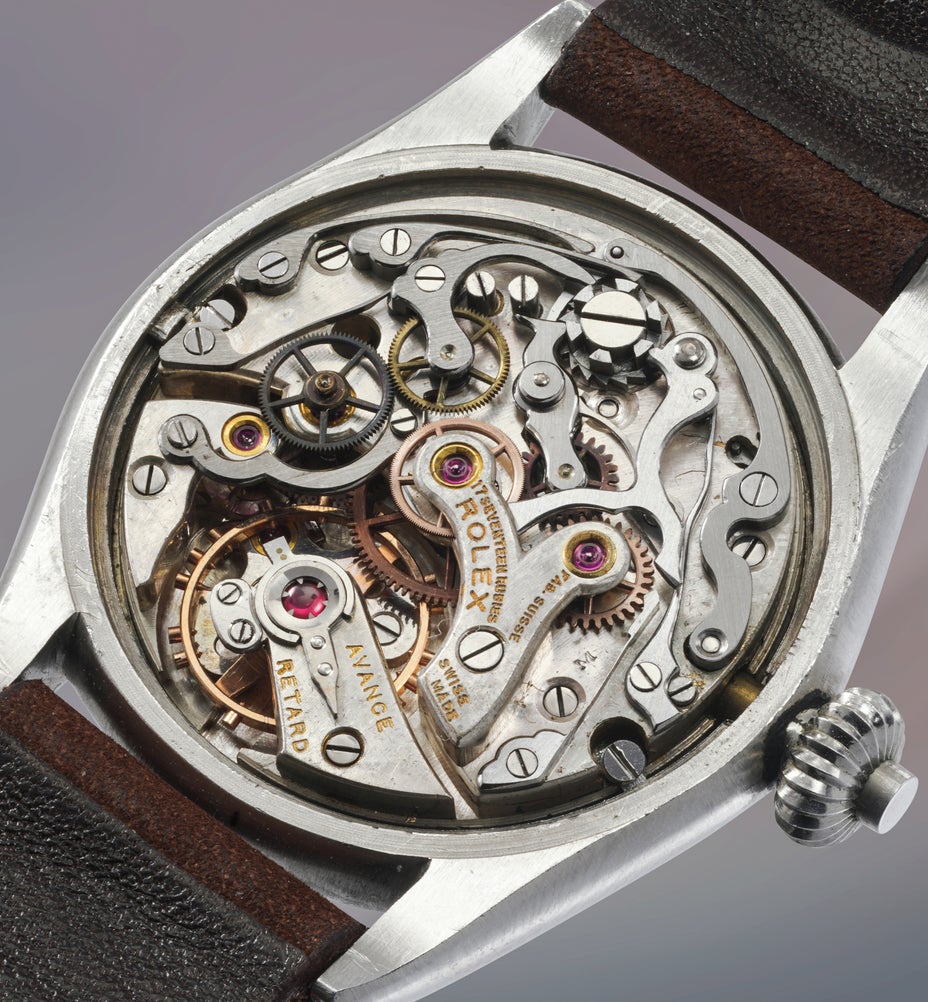
Ref. 2303
A rare, early and attractive single button chronograph wristwatch
Full-Cataloguing
- Single button chronograph
- Foundational reference in the history of the Cosmograph Daytona
- Preserved in overall exceptional condition
Please see the Archivio Pucci Papaleo digital archive record here.
When it was introduced in the early 1930s, Reference 2303 was promoted as “the smallest chronograph in the world.” The model was offered in stainless steel, 14K yellow gold, and 18K yellow gold.
The single-button chronograph is regarded as one of the most complex and sophisticated achievements in mechanical timekeeping, made all the more remarkable by the exceptionally small size of the movement. Unlike the more conventional chronograph, which uses two buttons to control the start, stop, and reset functions, the single-button system performs all three operations through a single pusher, positioned either in the case band or integrated into the crown. It is a fundamental and foundational model in the history and development of the Rolex chronograph, as it represents how the brand initially experimented with different design, proportions and chronograph functions before later transitioning to a definitive design with its larger case, screw down pushers and the three counters of the Cosmograph Daytona.
The present watch is preserved in exceptionally attractive condition with only very light signs of wear to the case and to the dial - this is especially impressive when one considers the age of the timepiece.
Rolex
Swiss | 1905Founded in 1905 England by Hans Wilsdorf and Alfred Davis as Wilsdorf & Davis, it soon became known as the Rolex Watch Company in 1915, moving its headquarters to Geneva in 1919. Like no other company, the success of the wristwatch can be attributed to many of Rolex's innovations that made them one of the most respected and well-known of all luxury brands. These innovations include their famous "Oyster" case — the world's first water resistant and dustproof watch case, invented in 1926 — and their "Perpetual" — the first reliable self-winding movement for wristwatches launched in 1933. They would form the foundation for Rolex's Datejust and Day-Date, respectively introduced in 1945 and 1956, but also importantly for their sports watches, such as the Explorer, Submariner and GMT-Master launched in the mid-1950s.
One of its most famous models is the Cosmograph Daytona. Launched in 1963, these chronographs are without any doubt amongst the most iconic and coveted of all collectible wristwatches. Other key collectible models include their most complicated vintage watches, including references 8171 and 6062 with triple calendar and moon phase, "Jean Claude Killy" triple date chronograph models and the Submariner, including early "big-crown" models and military-issued variants.