1120
Rolex
Ref. 1016
Explorer
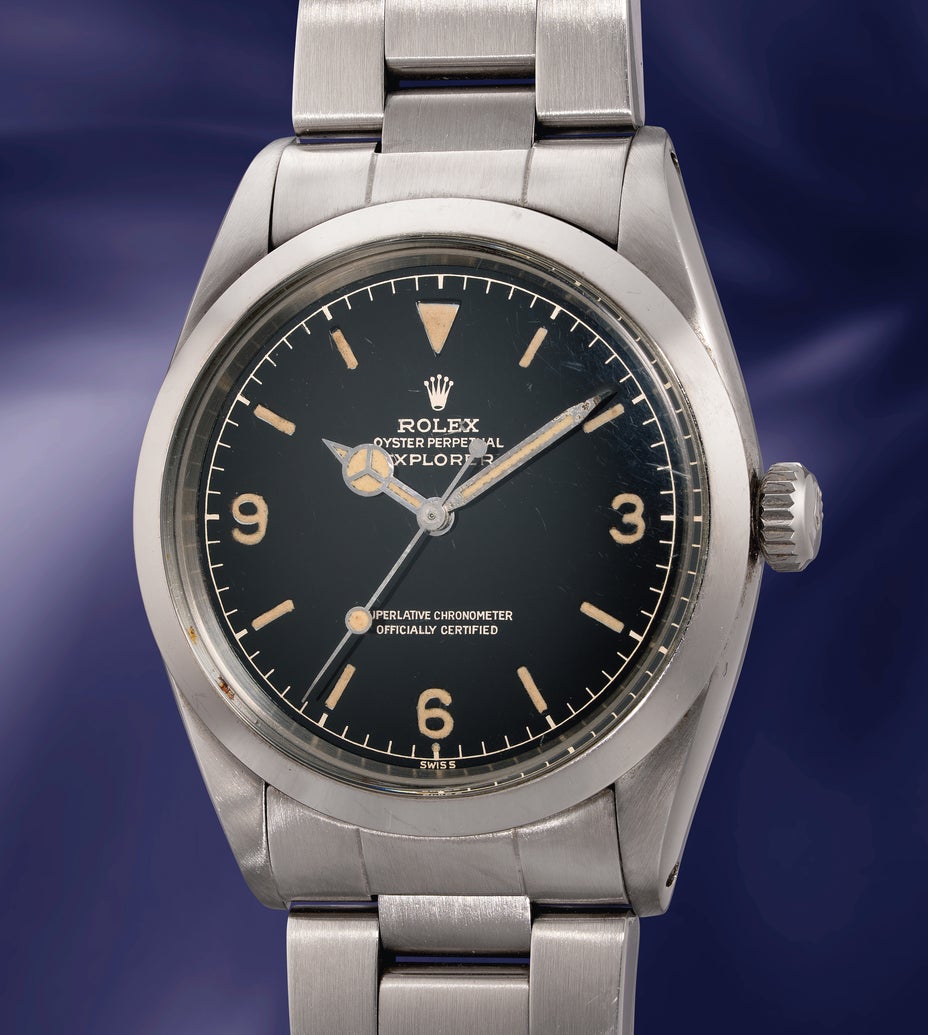
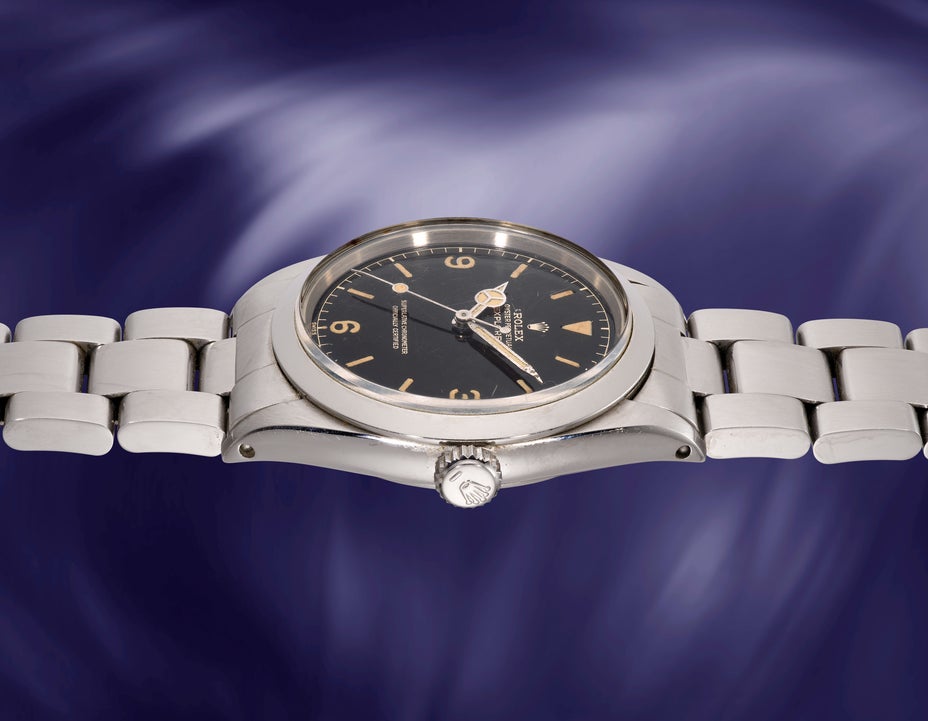
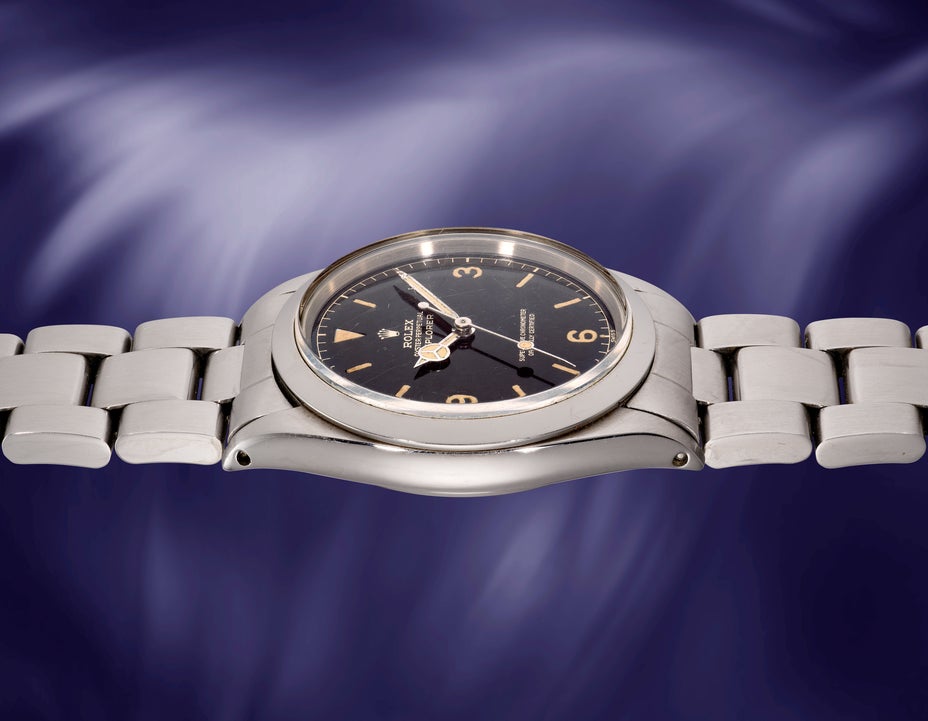
An early and highly attractive stainless steel wristwatch with “glossy gilt” black lacquered “exclamation” dial and bracelet
Full-Cataloguing
- Well-preserved glossy gilt black lacquered exclamation mark dial
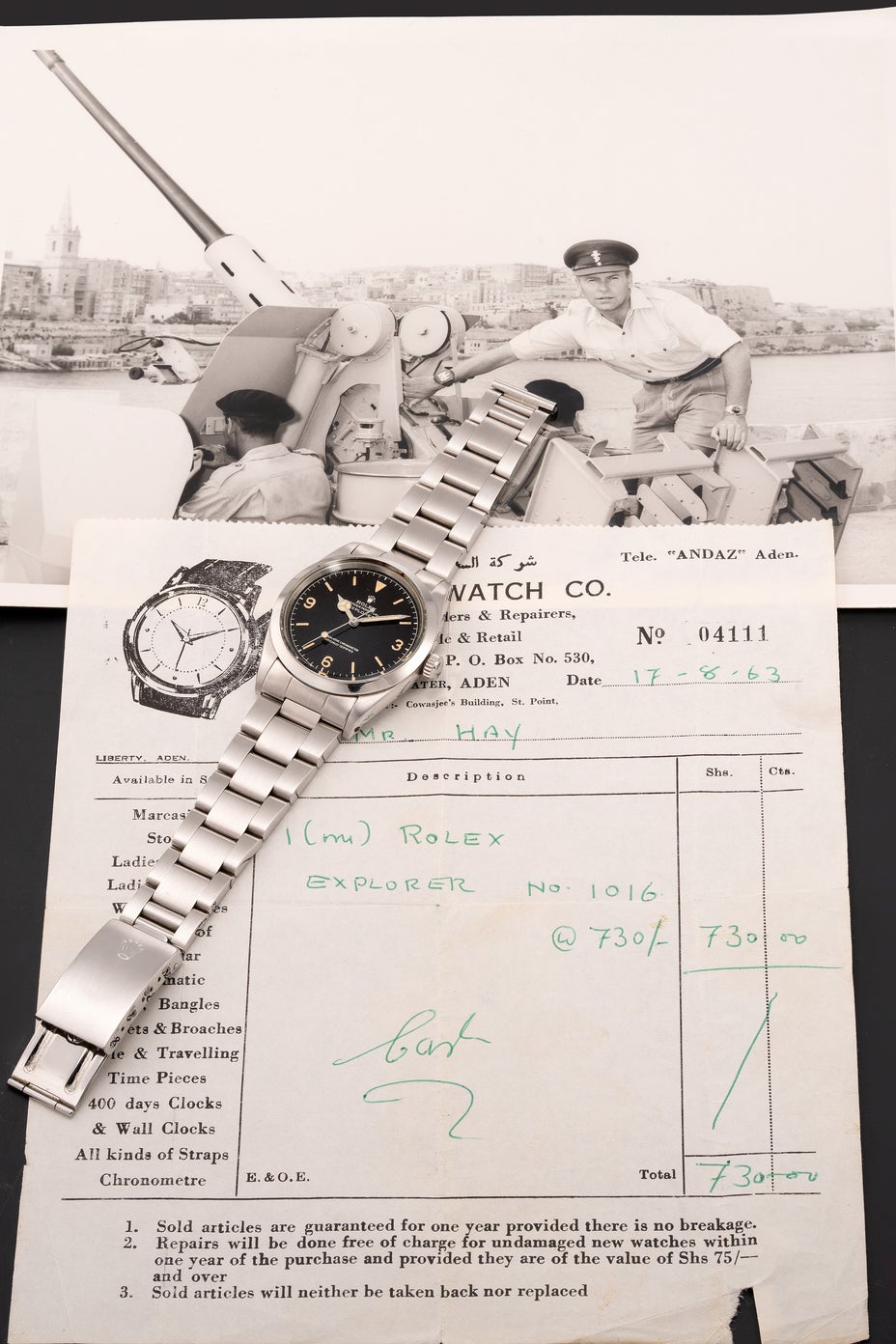
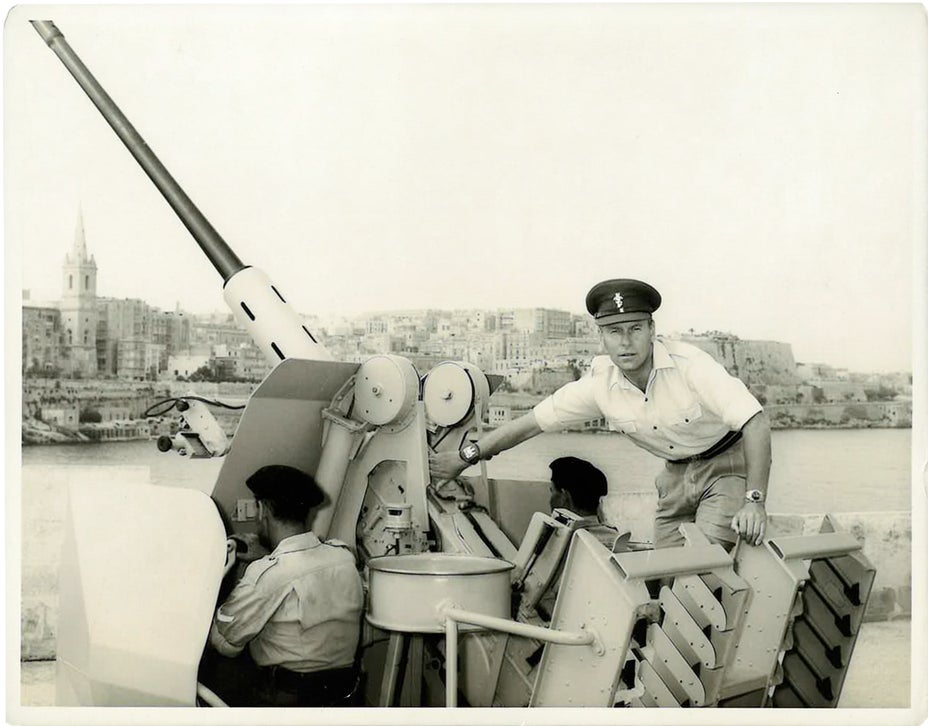
- Accompanied by original purchase receipt in Yemen and photograph of the original owner with the watch while serving the British Army in 1969
What makes the 1016 from circa 1961 truly rare is the paper trail and the photographs that still travel with it. Purchased by Leonard Campbell Hay, a solider from the British Army specialist corps of the Royal Electrical and Mechanical Engineers (REME) while serving, an original 1963 hand written purchase receipt from Arabian Watch Co. Aden survives. Period black and white photograph shows Leonard wearing the watch on his wrist during postings far from home in Malta in 1969.
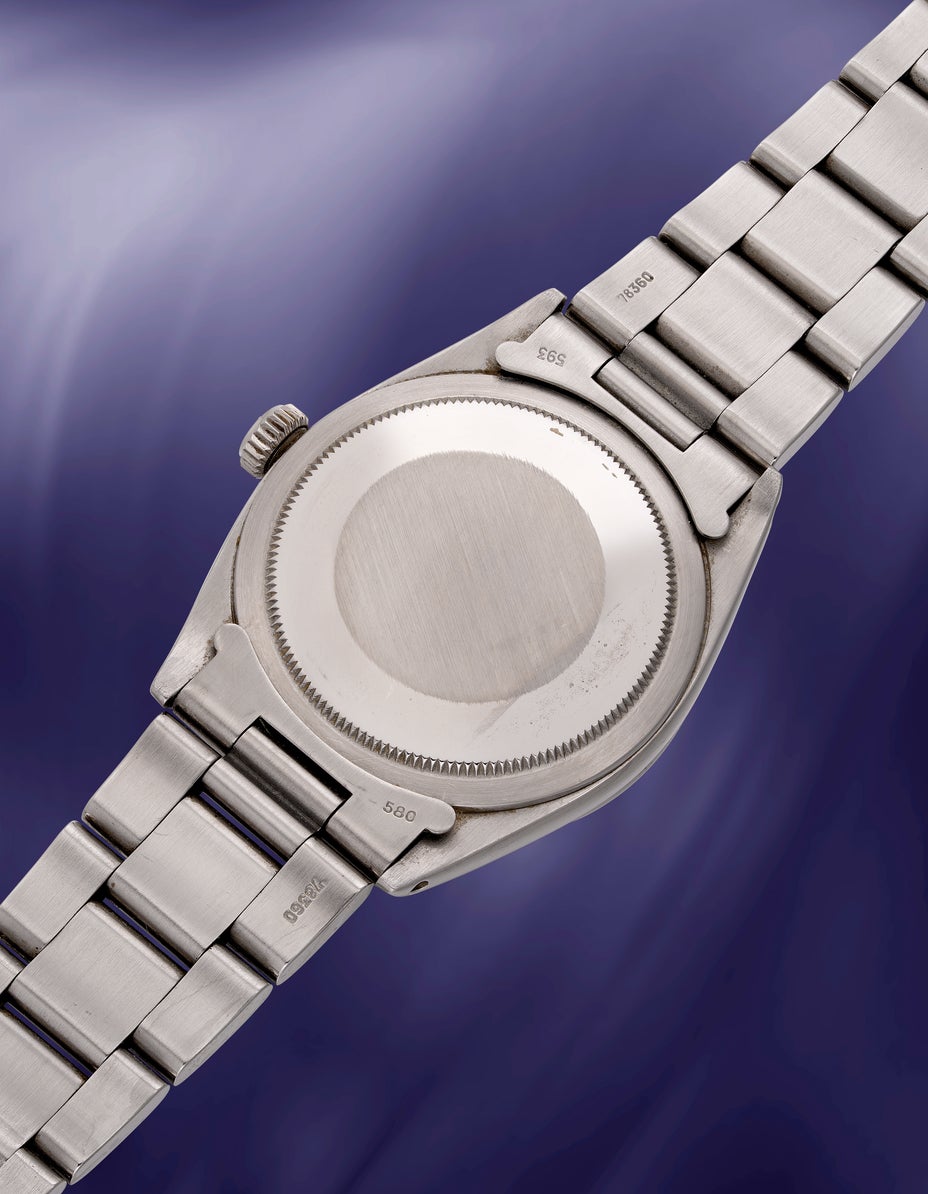
The 1016 was introduced in early 1960s with early examples featuring black lacquered dial with gilt texts. While these glossy examples of the reference can be broken up into two main categories with the earliest featuring a chapter ring and later examples featuring a dial without. The present example belongs to the rare and one of the earliest variants featuring a chapter ring and an exclamation dial signifying its luminous material to be in tritium. Furthermore, it is powered by the original cal. 1560 with later examples bearing the cal. 1570. Stamped II.62 inside the caseback with a 745’038 serial, the present example from circa 1961 boasts an attractive dial that still carries the charming gloss of black and the gilt printing remains sharp. The small luminous “exclamation mark” at six o’clock remains a quiet evidence of its early tritium era.
The watch did not sit in a drawer. It served. Most tool watches of this age arrive anonymous and stripped of its story, the present 1016 was protected and passed down with its documents intact, it has become something rarer, an heirloom that still carries the weight of a real life.
Rolex
Swiss | 1905Founded in 1905 England by Hans Wilsdorf and Alfred Davis as Wilsdorf & Davis, it soon became known as the Rolex Watch Company in 1915, moving its headquarters to Geneva in 1919. Like no other company, the success of the wristwatch can be attributed to many of Rolex's innovations that made them one of the most respected and well-known of all luxury brands. These innovations include their famous "Oyster" case — the world's first water resistant and dustproof watch case, invented in 1926 — and their "Perpetual" — the first reliable self-winding movement for wristwatches launched in 1933. They would form the foundation for Rolex's Datejust and Day-Date, respectively introduced in 1945 and 1956, but also importantly for their sports watches, such as the Explorer, Submariner and GMT-Master launched in the mid-1950s.
One of its most famous models is the Cosmograph Daytona. Launched in 1963, these chronographs are without any doubt amongst the most iconic and coveted of all collectible wristwatches. Other key collectible models include their most complicated vintage watches, including references 8171 and 6062 with triple calendar and moon phase, "Jean Claude Killy" triple date chronograph models and the Submariner, including early "big-crown" models and military-issued variants.