9
Rolex
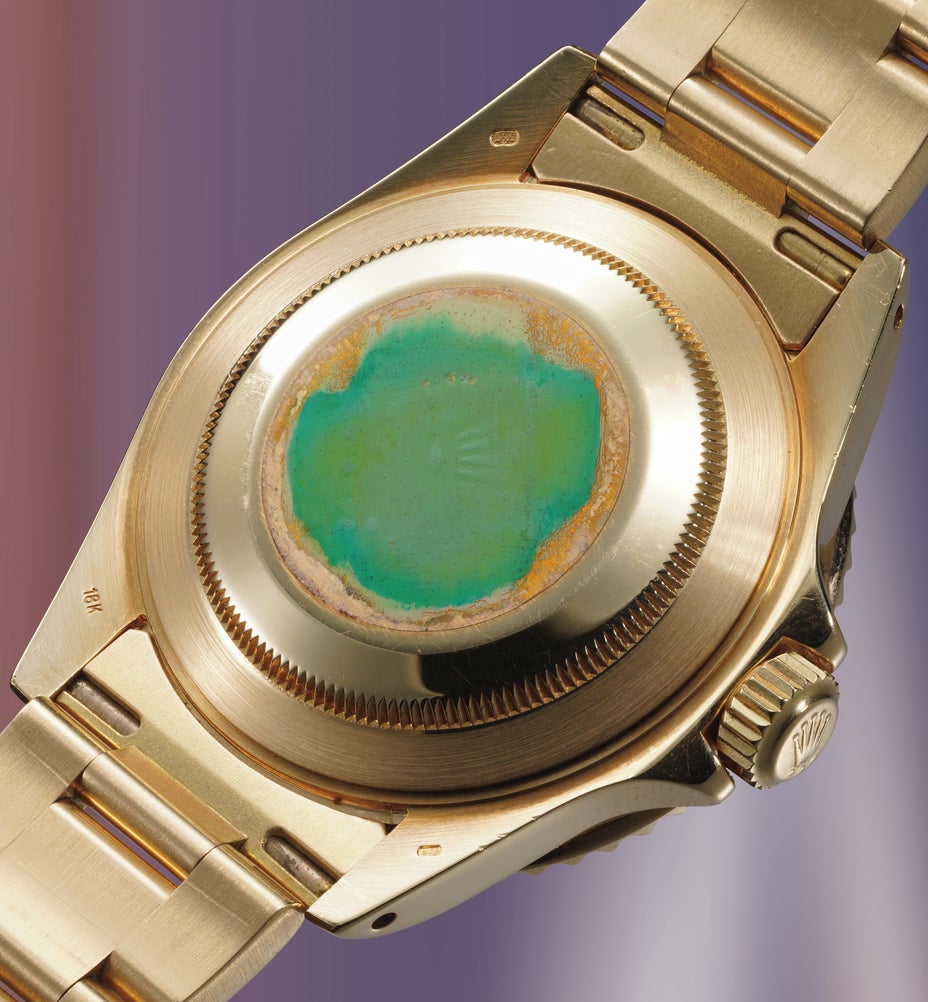
Ref. 16618, caseback stamped 16610 to the inside
Submariner
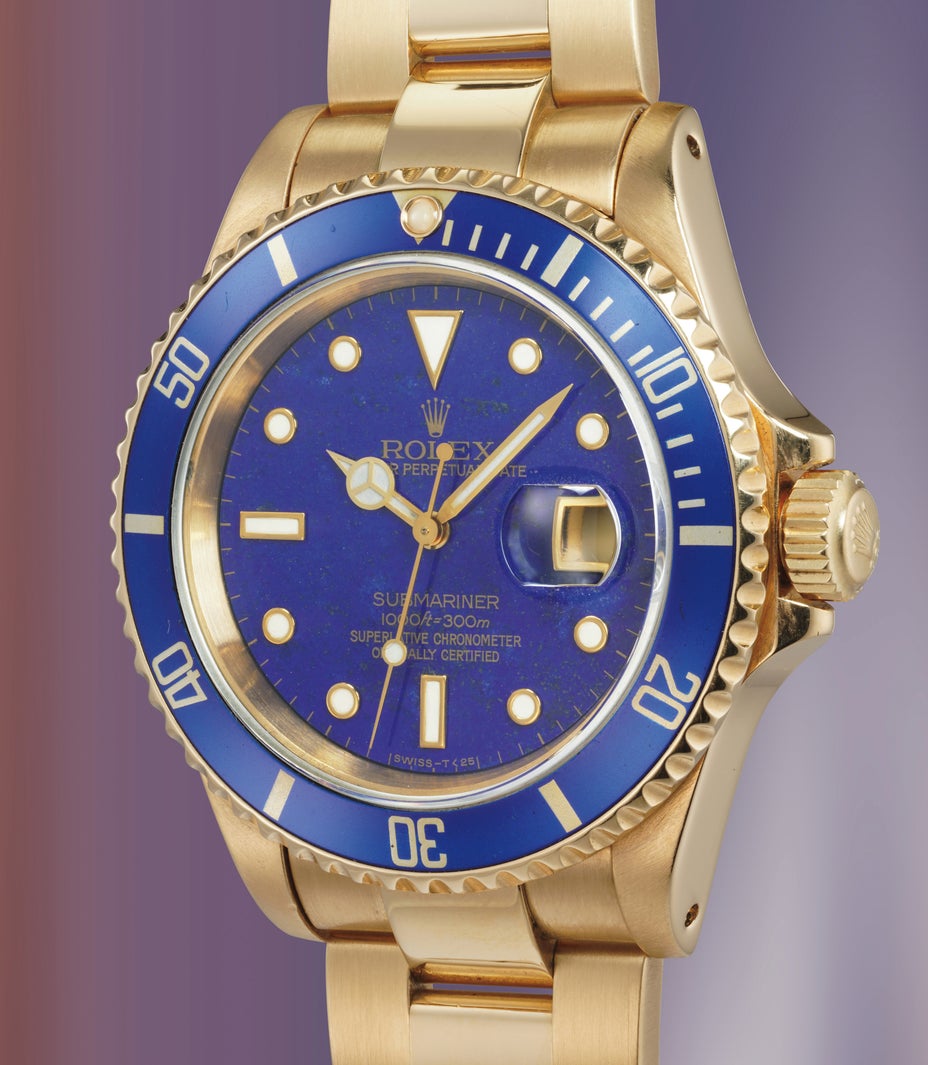
A superb, uncommon and breathtakingly attractive yellow gold automatic diver's wristwatch with center seconds, date, revolving bezel, lapis lazuli dial, bracelet, warranty and box
Full-Cataloguing
- Automatic, center seconds, date, revolving bezel
- Very uncommon and attractive example with lapis lazuli dial
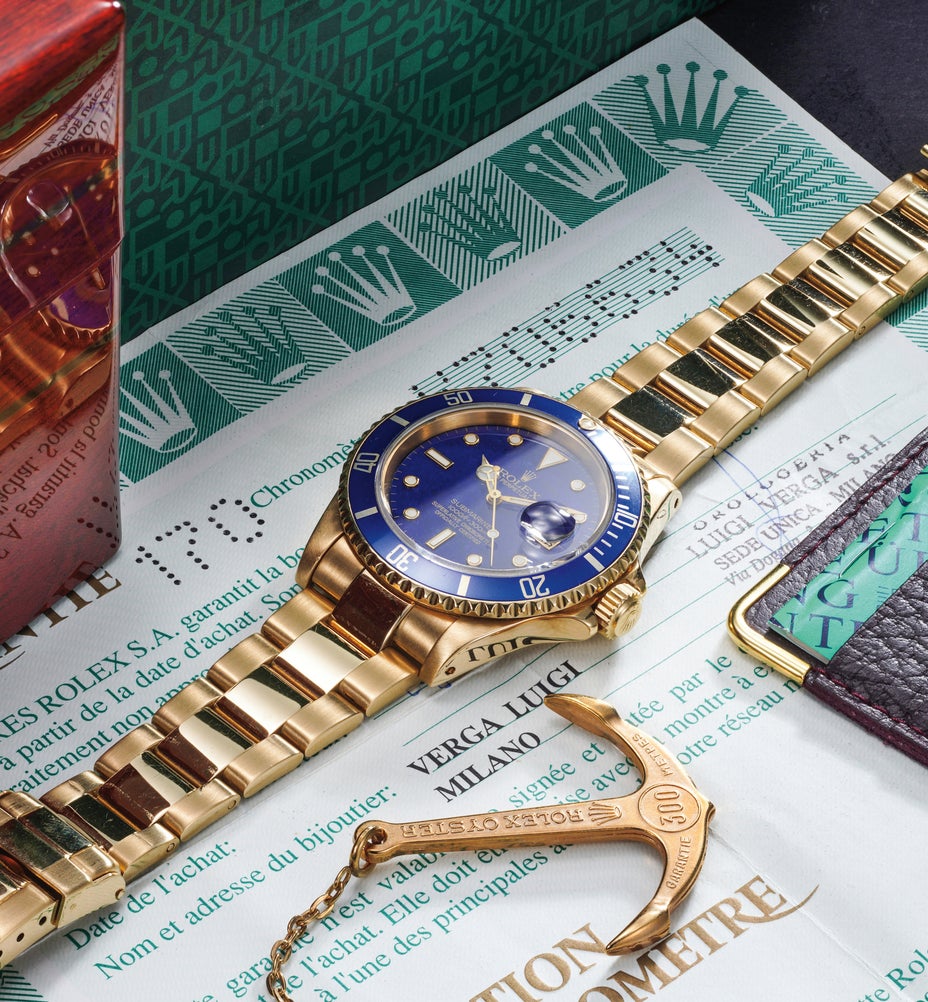
- Offered with its original accessories
Rolex can most probably be credited with inventing the “multi activity watch”: a practical timepiece in steel targeting a specific profession - divers, pilots, race car drivers, cave explorers… - which could be worn day in day out on any occasion. It is thus unsurprising that they upped their own ante by creating an uber exclusive version of certain models in yellow gold.
The present Submariner reference 16618 in gold, part of the earlier production, is bewildering in its sheer opulence, and yet a detail elevates the watch to new collecting peaks: its incredible lapis lazuli dial, instead of the usually found blue or black metal dial.
Lapis lazuli is a semi-precious stone that has been prized since antiquity for its deep blue hue. The manufacturing process consists of milling this stone to a thickness of less than 1mm to create a dial. The process being so complex and the rejection rate so high that it is believed that about only 20% of the dials made it into a production piece. It is therefore of no surprise that these models are incredibly rare and show up on the international auction market sporadically.
The Submariner was created to serve divers’ needing a reliable companion in their explorations of the seabed but it is most certain that the present watch spent most of its life on a sundeck, given its remarkable condition of preservation: not only the dial is absolutely intact, but the case showcases strong finish and proportions, even retaining the green Rolex sticker to the back.
The presence of its original accessories - with the warranty showing it was sold by Verga in 1999 - is the final icing on the cake.
Rolex
Swiss | 1905Founded in 1905 England by Hans Wilsdorf and Alfred Davis as Wilsdorf & Davis, it soon became known as the Rolex Watch Company in 1915, moving its headquarters to Geneva in 1919. Like no other company, the success of the wristwatch can be attributed to many of Rolex's innovations that made them one of the most respected and well-known of all luxury brands. These innovations include their famous "Oyster" case — the world's first water resistant and dustproof watch case, invented in 1926 — and their "Perpetual" — the first reliable self-winding movement for wristwatches launched in 1933. They would form the foundation for Rolex's Datejust and Day-Date, respectively introduced in 1945 and 1956, but also importantly for their sports watches, such as the Explorer, Submariner and GMT-Master launched in the mid-1950s.
One of its most famous models is the Cosmograph Daytona. Launched in 1963, these chronographs are without any doubt amongst the most iconic and coveted of all collectible wristwatches. Other key collectible models include their most complicated vintage watches, including references 8171 and 6062 with triple calendar and moon phase, "Jean Claude Killy" triple date chronograph models and the Submariner, including early "big-crown" models and military-issued variants.