166
Rolex
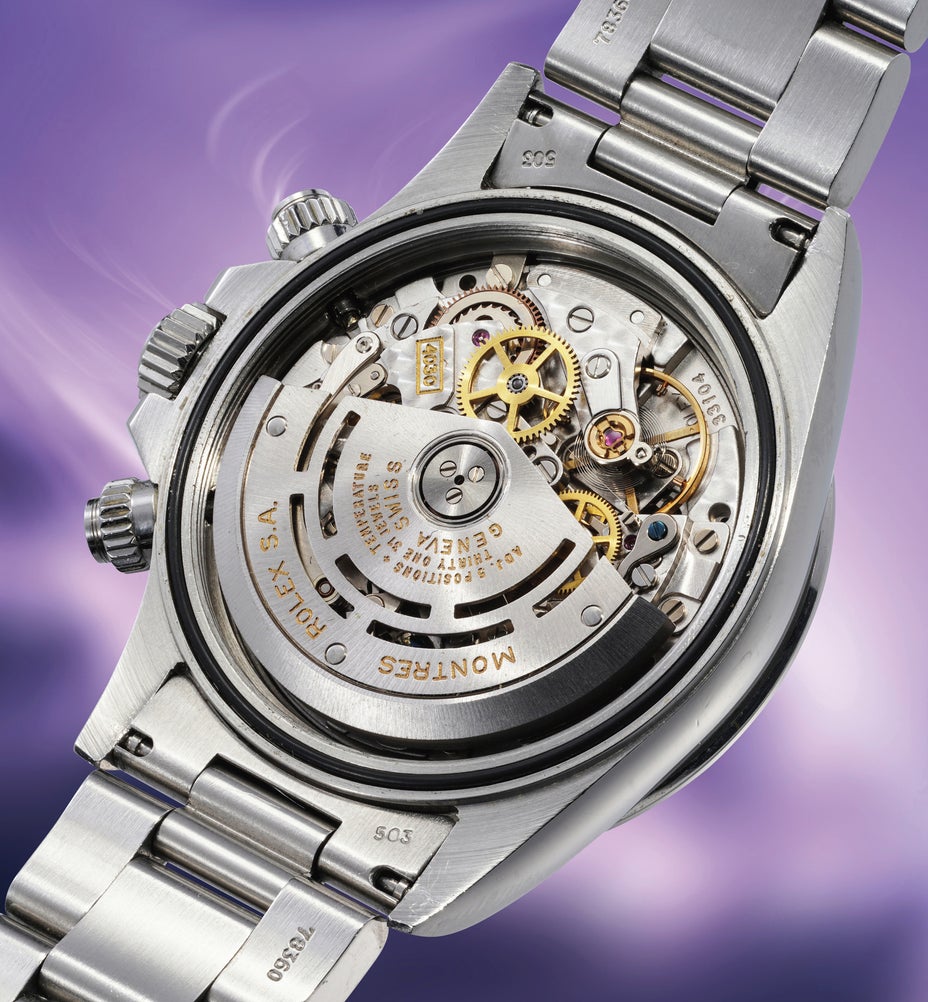
Ref. 16520, inside caseback stamped 16500
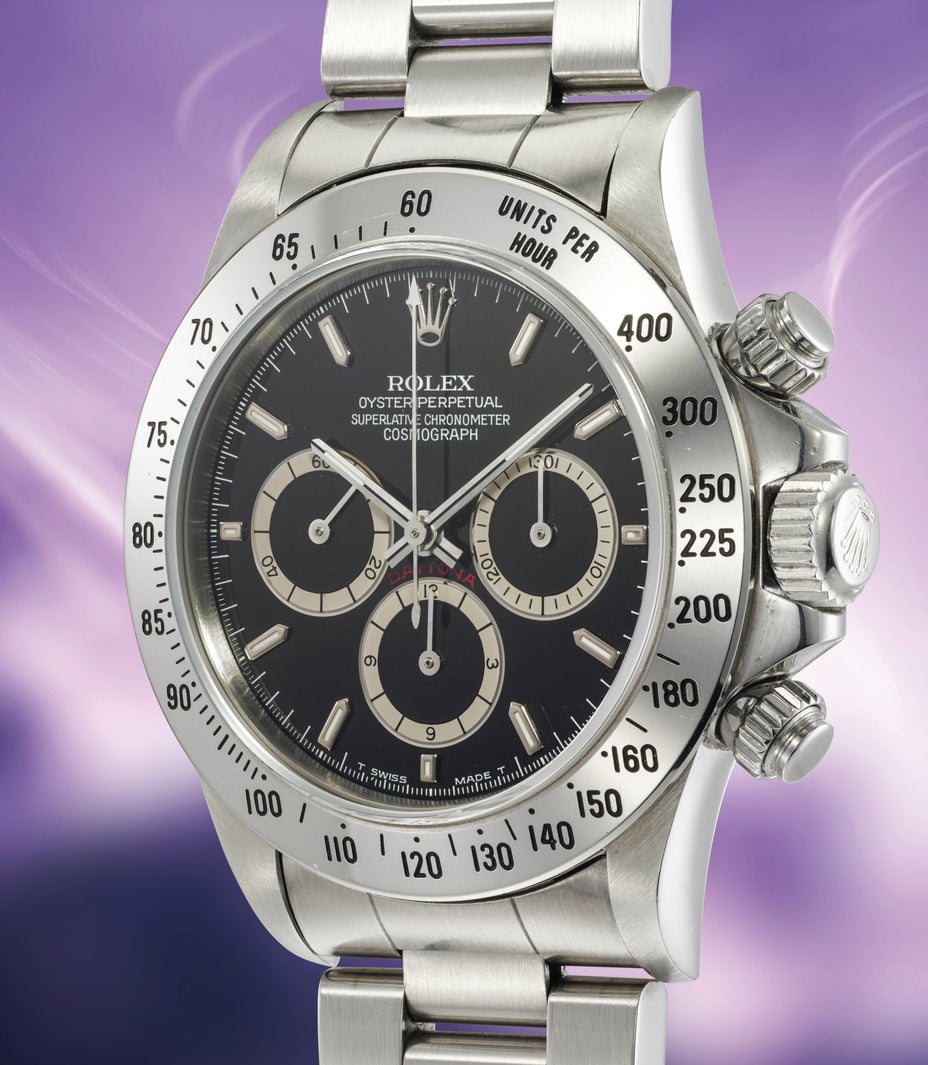
Cosmograph Daytona "4-liner"
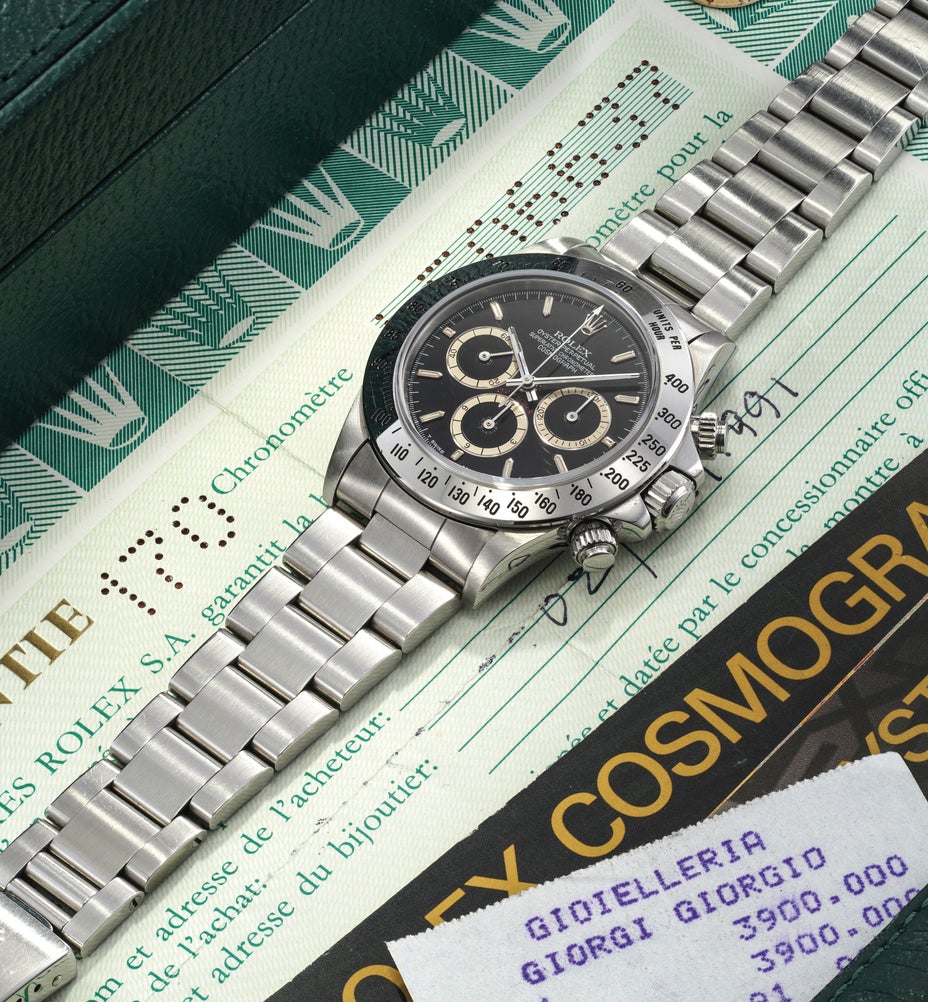
A remarkably well preserved, early and very uncommon stainless steel automatic chronograph wristwatch with 4-liner dial, bracelet, Warranty, original fiscal receipt and and box
Full-Cataloguing
- Chronograph
- Very early specimen with 4-liner dial
- Unpolished and incredibly well preserved
- Offered with its full set of original accessories, including original fiscal receipt and even the wrapping paper with the name of the retailer
Reference 16520—famously the first automatic Daytona, powered by a modified Zenith El Primero movement—was in production from 1988 to circa 2000. In the early 1990s, the model settled into its best-known 5-line variation, but early specimens feature notably different details.
The present watch, for example, sports a 4-line dial, usually found on specimens with L serial numbers, and indeed defined by the four lines of text, rather than the commonly seen five, at 12 o’clock. This dial represents the second variation of the model, with earlier specimens featuring a “Floating” 5-line dial, while later specimens settled into the “standard” 5-line dial—first maintaining the “inverted six” seen on the 4-line and Floating dials, and eventually trading it for a right-side-up 6.
Beyond the rarity, intellectual intrigue, and modified aesthetics of the watch, this specific example is distinguished by its incredibly attractive condition, sporting an unpolished case and unmolested dial.
Rolex
Swiss | 1905Founded in 1905 England by Hans Wilsdorf and Alfred Davis as Wilsdorf & Davis, it soon became known as the Rolex Watch Company in 1915, moving its headquarters to Geneva in 1919. Like no other company, the success of the wristwatch can be attributed to many of Rolex's innovations that made them one of the most respected and well-known of all luxury brands. These innovations include their famous "Oyster" case — the world's first water resistant and dustproof watch case, invented in 1926 — and their "Perpetual" — the first reliable self-winding movement for wristwatches launched in 1933. They would form the foundation for Rolex's Datejust and Day-Date, respectively introduced in 1945 and 1956, but also importantly for their sports watches, such as the Explorer, Submariner and GMT-Master launched in the mid-1950s.
One of its most famous models is the Cosmograph Daytona. Launched in 1963, these chronographs are without any doubt amongst the most iconic and coveted of all collectible wristwatches. Other key collectible models include their most complicated vintage watches, including references 8171 and 6062 with triple calendar and moon phase, "Jean Claude Killy" triple date chronograph models and the Submariner, including early "big-crown" models and military-issued variants.