135
Rolex
Ref. 6238
Pre-Daytona
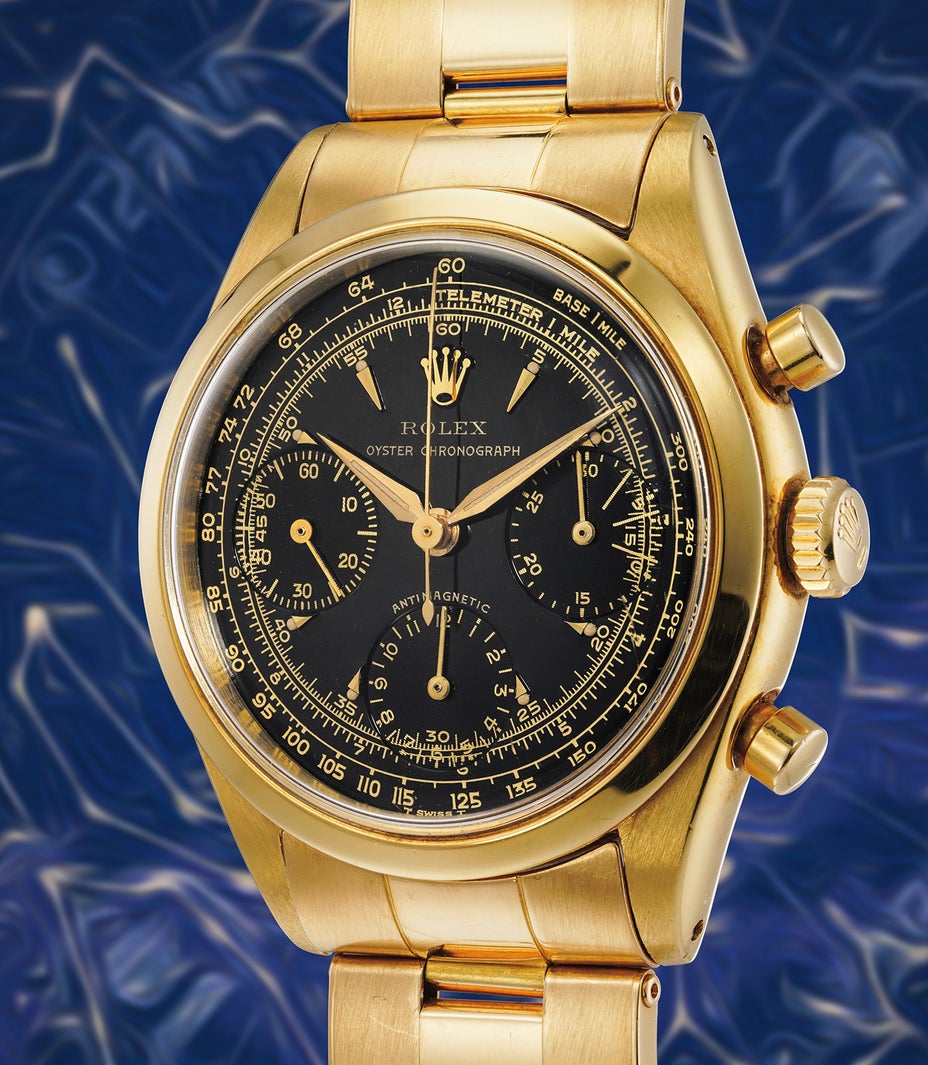
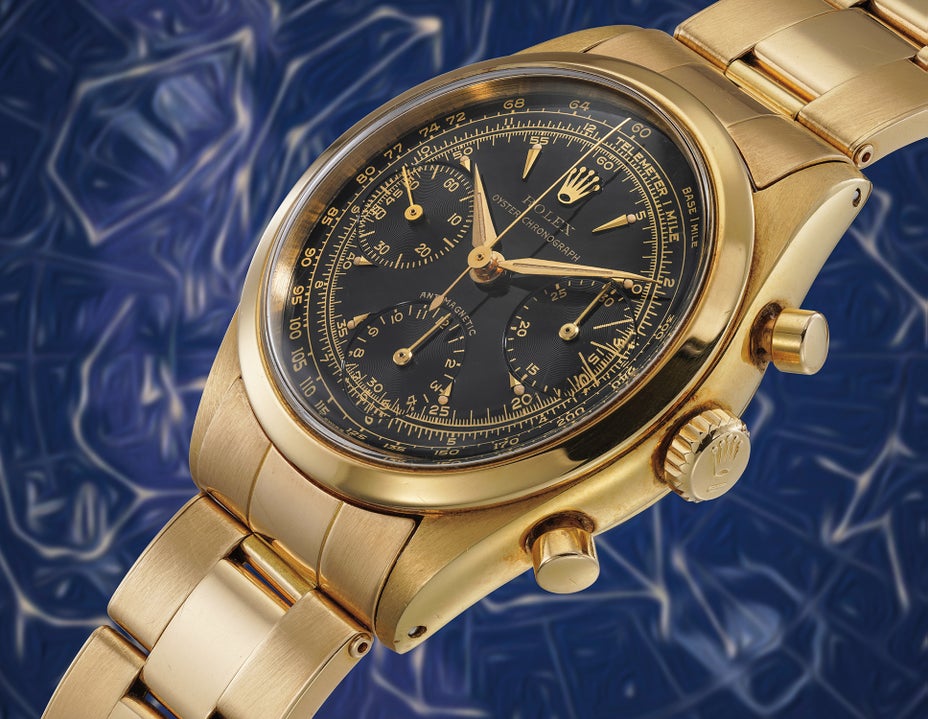
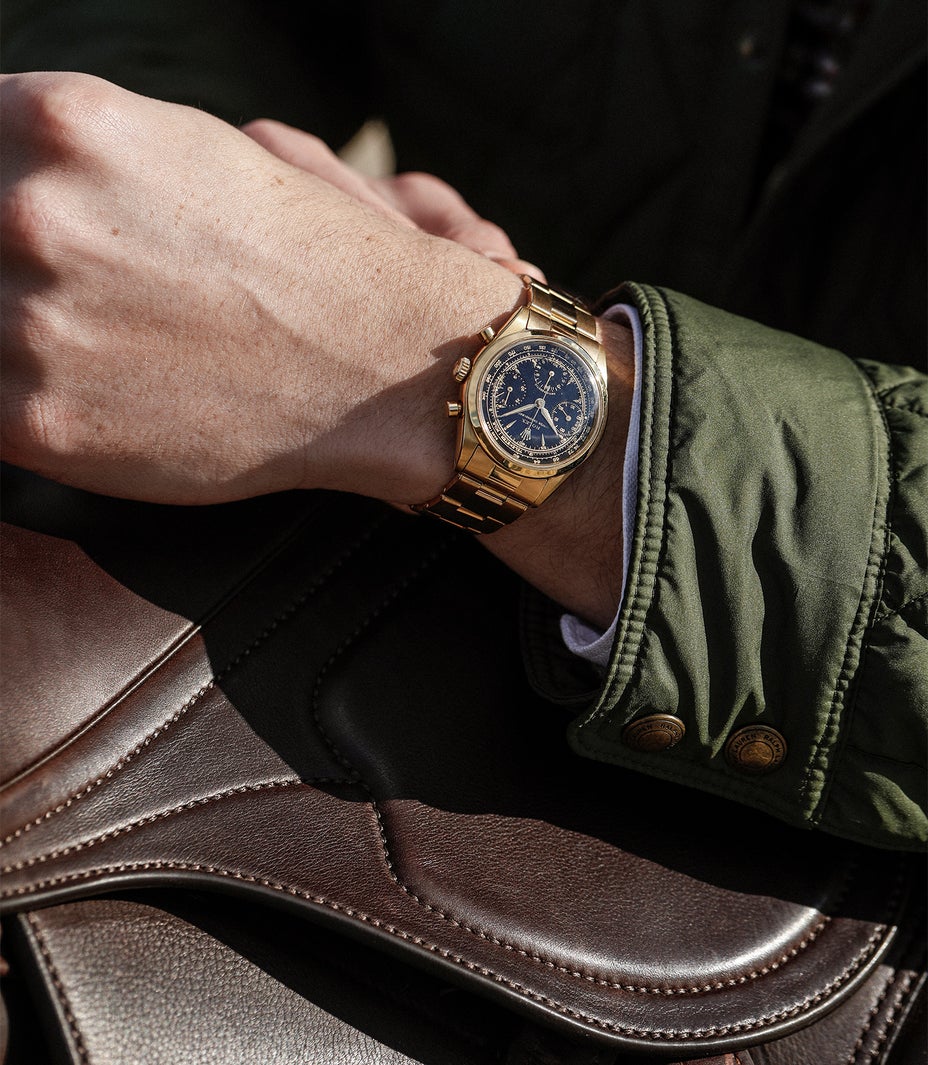
An extremely rare, well-preserved and highly attractive yellow gold chronograph wristwatch with black glossy lacquer dial and bracelet
Full-Cataloguing
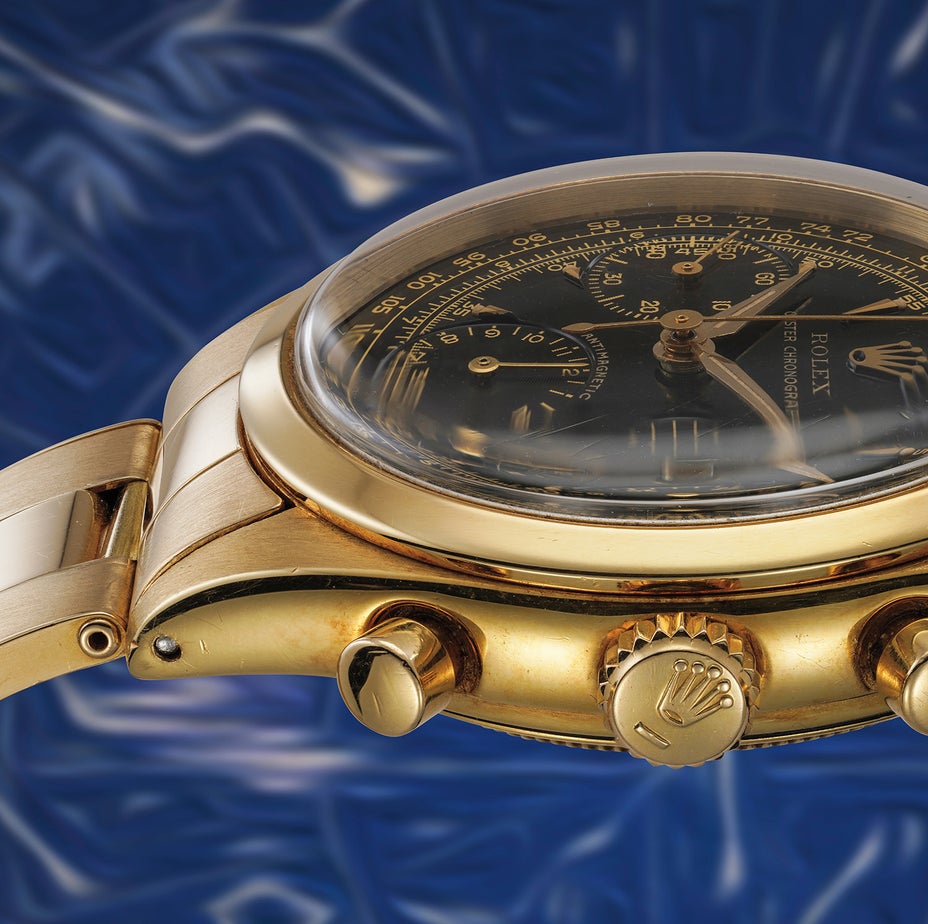
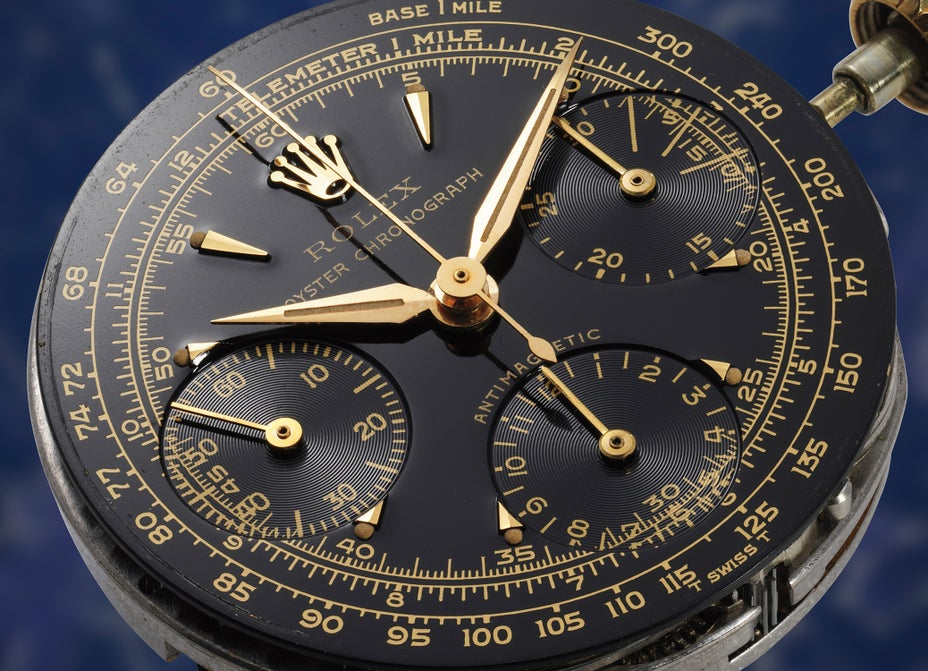
An absolutely superlative example, the present lot bewitches the beholder with its exceptionally well-preserved black glossy dial; while most black glossy vintage Rolex dials tend to age with clouding, bubbling or patina - more or less strong according to its conservation history of course - the present one arrives to us in an astounding condition, fully maintaining its glossy sheen. The "transitional" dial, which is correct for the serial number, furthermore features full luminous dots that display a warm patina, matching the hands. With a serial number that dates the timepiece to approximately 1964, it was during this period that Rolex started to switch from "Swiss" dials, to those displaying "T Swiss T" to reflect the addition of tritium on the dials.
The case is also preserved in splendid condition; the lug holes retain a good distance from the edge of the lugs, the numbers between the lugs are crisp and visible, as well as the hallmarks beneath the lugs.
On a graphical level, the dial design is simply a masterpiece: the telemeter and tachometer scales frame the extremely balanced dial already bearing the three-counter architecture which will be a signature trait of the Cosmograph Daytona.
Rolex
Swiss | 1905Founded in 1905 England by Hans Wilsdorf and Alfred Davis as Wilsdorf & Davis, it soon became known as the Rolex Watch Company in 1915, moving its headquarters to Geneva in 1919. Like no other company, the success of the wristwatch can be attributed to many of Rolex's innovations that made them one of the most respected and well-known of all luxury brands. These innovations include their famous "Oyster" case — the world's first water resistant and dustproof watch case, invented in 1926 — and their "Perpetual" — the first reliable self-winding movement for wristwatches launched in 1933. They would form the foundation for Rolex's Datejust and Day-Date, respectively introduced in 1945 and 1956, but also importantly for their sports watches, such as the Explorer, Submariner and GMT-Master launched in the mid-1950s.
One of its most famous models is the Cosmograph Daytona. Launched in 1963, these chronographs are without any doubt amongst the most iconic and coveted of all collectible wristwatches. Other key collectible models include their most complicated vintage watches, including references 8171 and 6062 with triple calendar and moon phase, "Jean Claude Killy" triple date chronograph models and the Submariner, including early "big-crown" models and military-issued variants.