910
Rolex
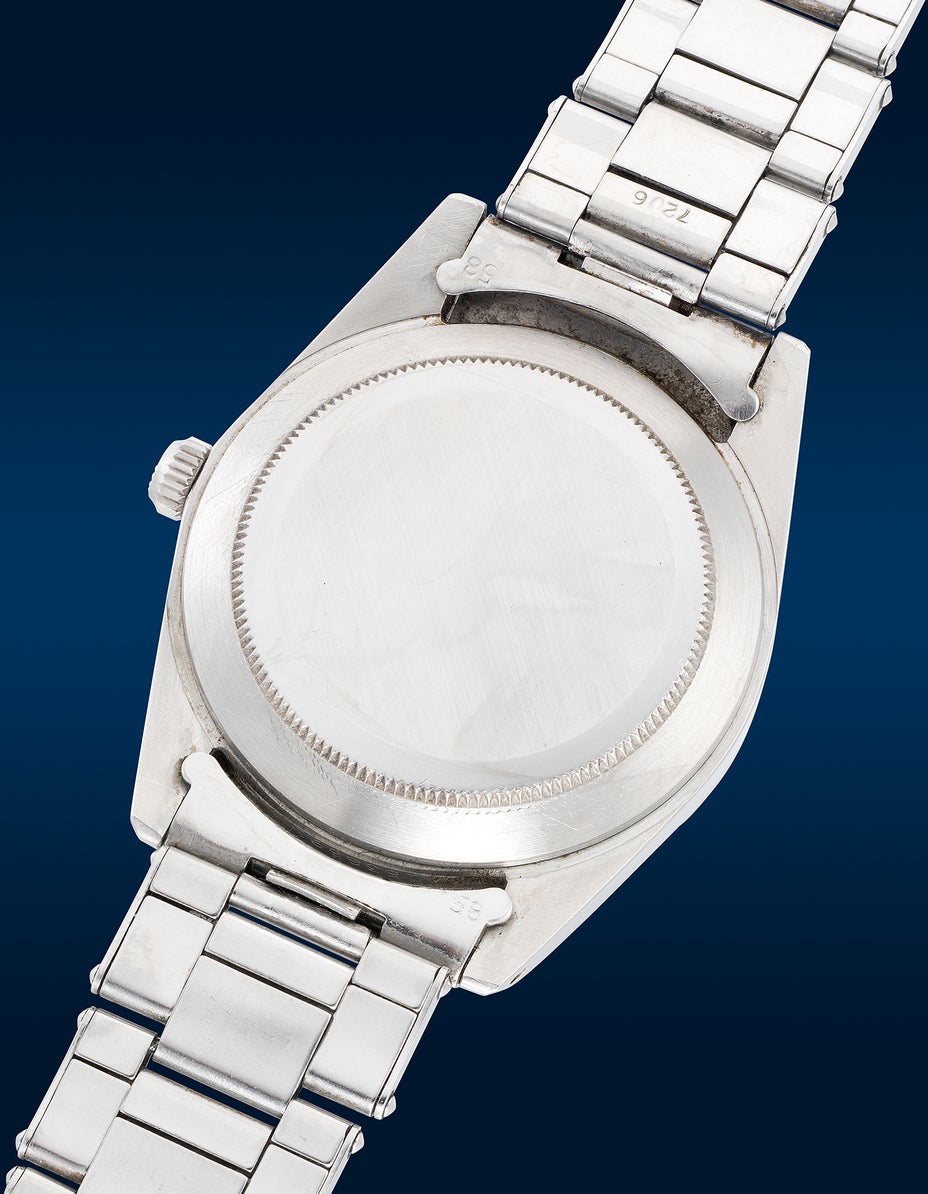
Ref. 1019, inside caseback stamped 1019, II.67
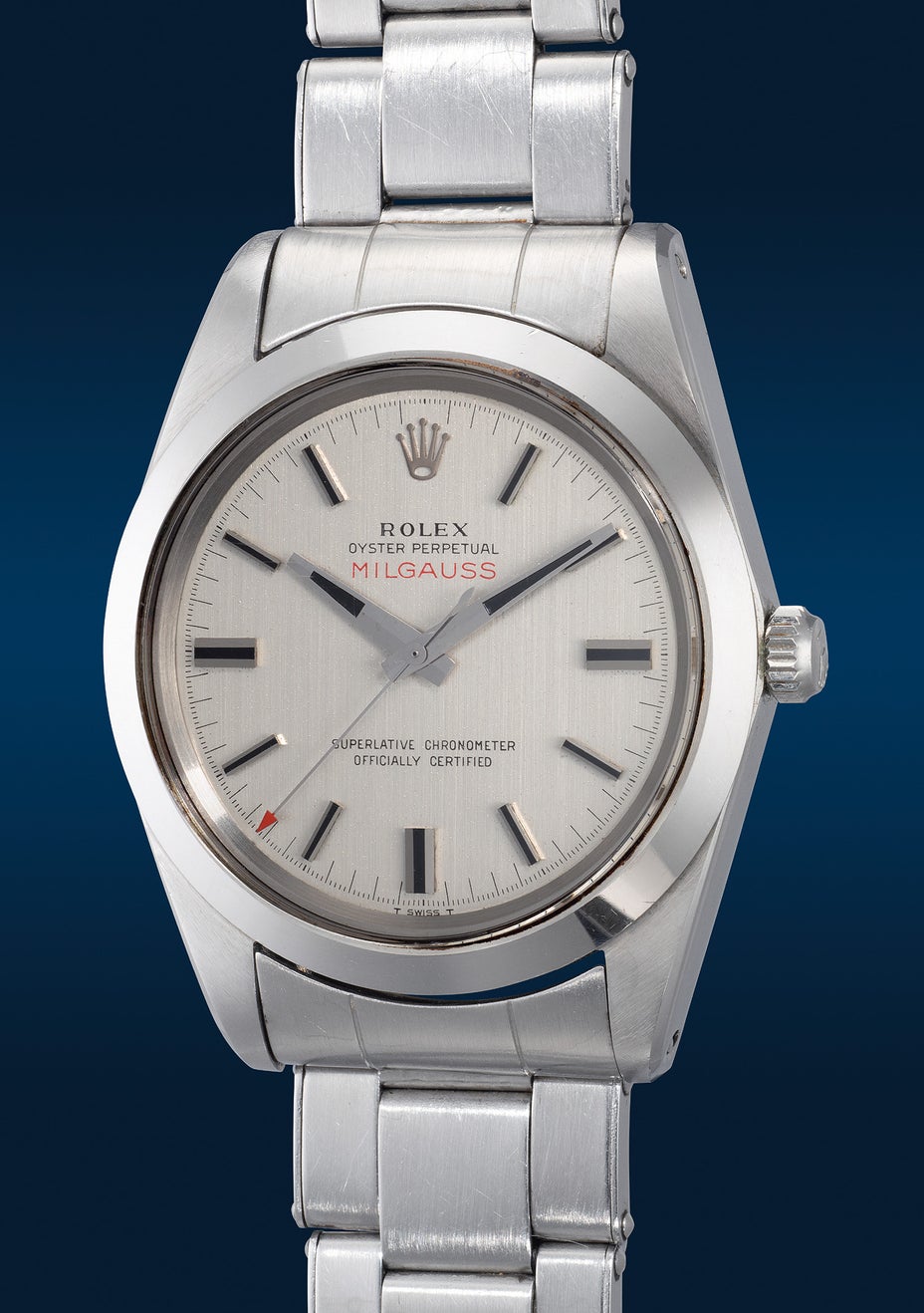
Milgauss "CERN"
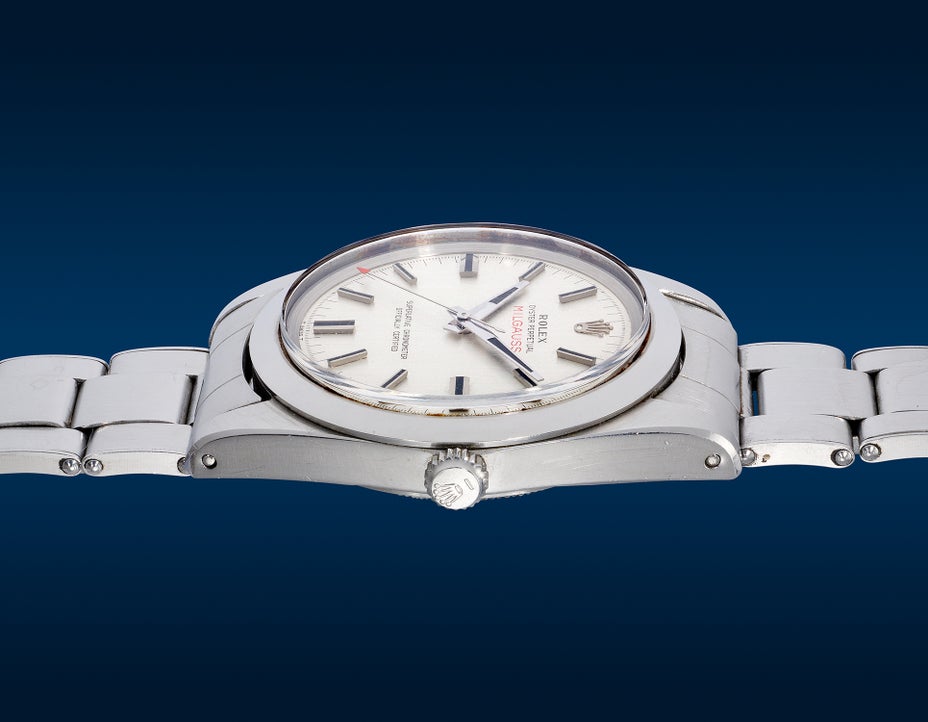
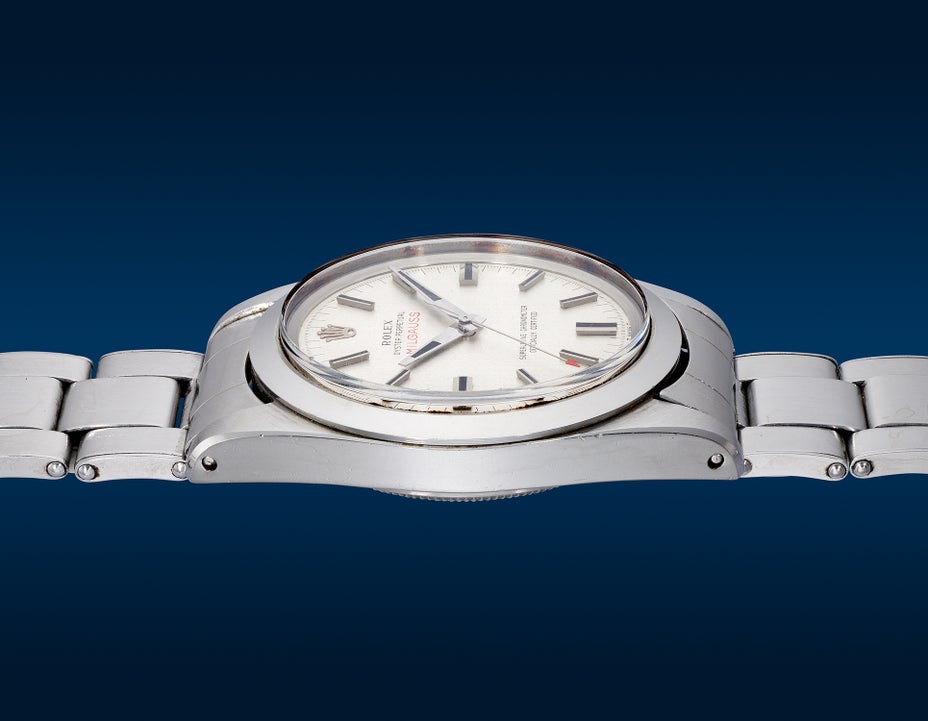
An unusual and very rare stainless steel anti-magnetic wristwatch with center seconds, non-luminous "CERN" dial and bracelet
Full-Cataloguing
In 1960, the ref. 1019 was introduced as the successor to the references 6541 and 6543. It enjoyed a relatively long production run of 28 years, making it one of the enduring models in the Rolex lineup. While this Milgauss retained its inner Faraday Cage to protect the movement from electromagnetic waves, the design also underwent a fresh and modern update, featuring a smooth bezel and a modified dial layout.
However, this particular example of the ref. 1019 takes things a step further with a highly unusual and distinctive appeal. In very limited quantities, some models were fitted with black inserts on the hour markers and hands instead of the usual luminescent material. This configuration, known as a "CERN" dial, is believed to have been created in collaboration with CERN and designed without tritium luminescence. This choice was made to avoid interference with sensitive radioactivity sensors in laboratory environments, making it a true “tool watch” in the Rolex watchmaking history.
Rolex
Swiss | 1905Founded in 1905 England by Hans Wilsdorf and Alfred Davis as Wilsdorf & Davis, it soon became known as the Rolex Watch Company in 1915, moving its headquarters to Geneva in 1919. Like no other company, the success of the wristwatch can be attributed to many of Rolex's innovations that made them one of the most respected and well-known of all luxury brands. These innovations include their famous "Oyster" case — the world's first water resistant and dustproof watch case, invented in 1926 — and their "Perpetual" — the first reliable self-winding movement for wristwatches launched in 1933. They would form the foundation for Rolex's Datejust and Day-Date, respectively introduced in 1945 and 1956, but also importantly for their sports watches, such as the Explorer, Submariner and GMT-Master launched in the mid-1950s.
One of its most famous models is the Cosmograph Daytona. Launched in 1963, these chronographs are without any doubt amongst the most iconic and coveted of all collectible wristwatches. Other key collectible models include their most complicated vintage watches, including references 8171 and 6062 with triple calendar and moon phase, "Jean Claude Killy" triple date chronograph models and the Submariner, including early "big-crown" models and military-issued variants.