130Ο︎
Rolex
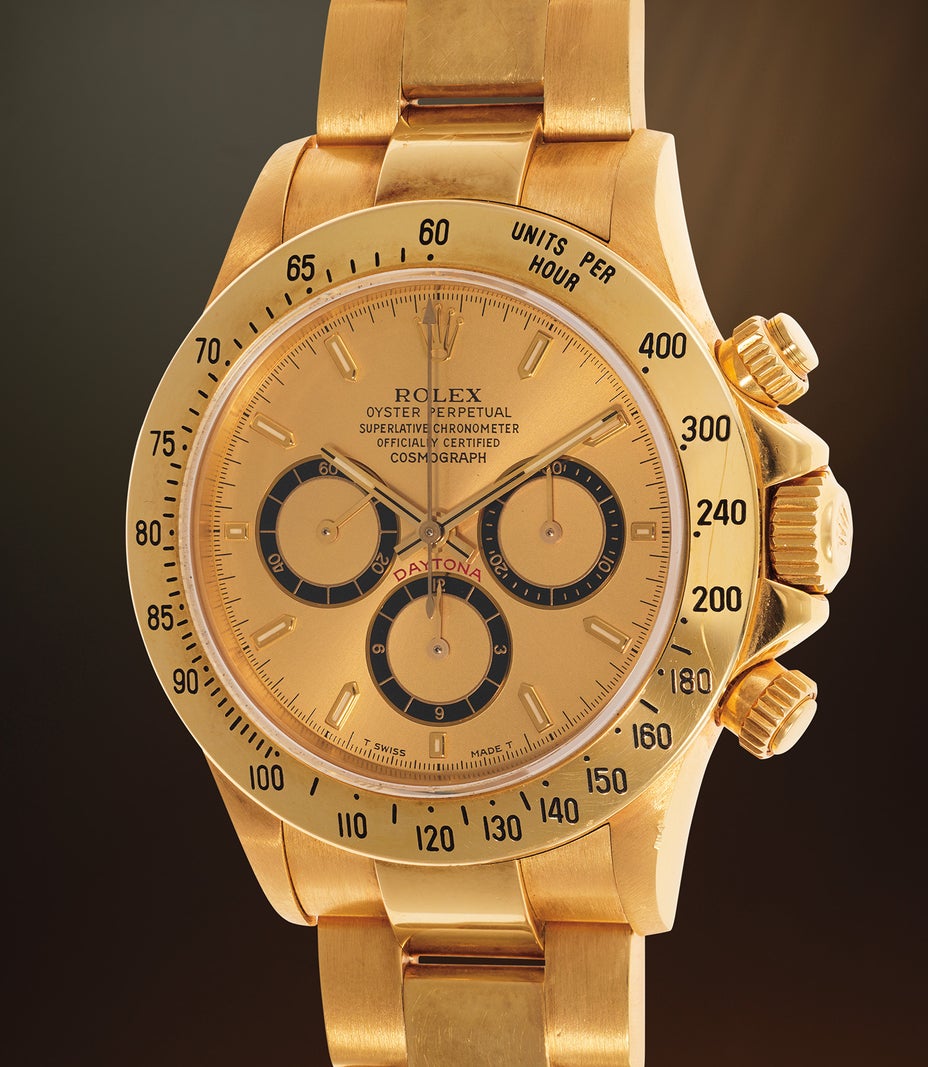
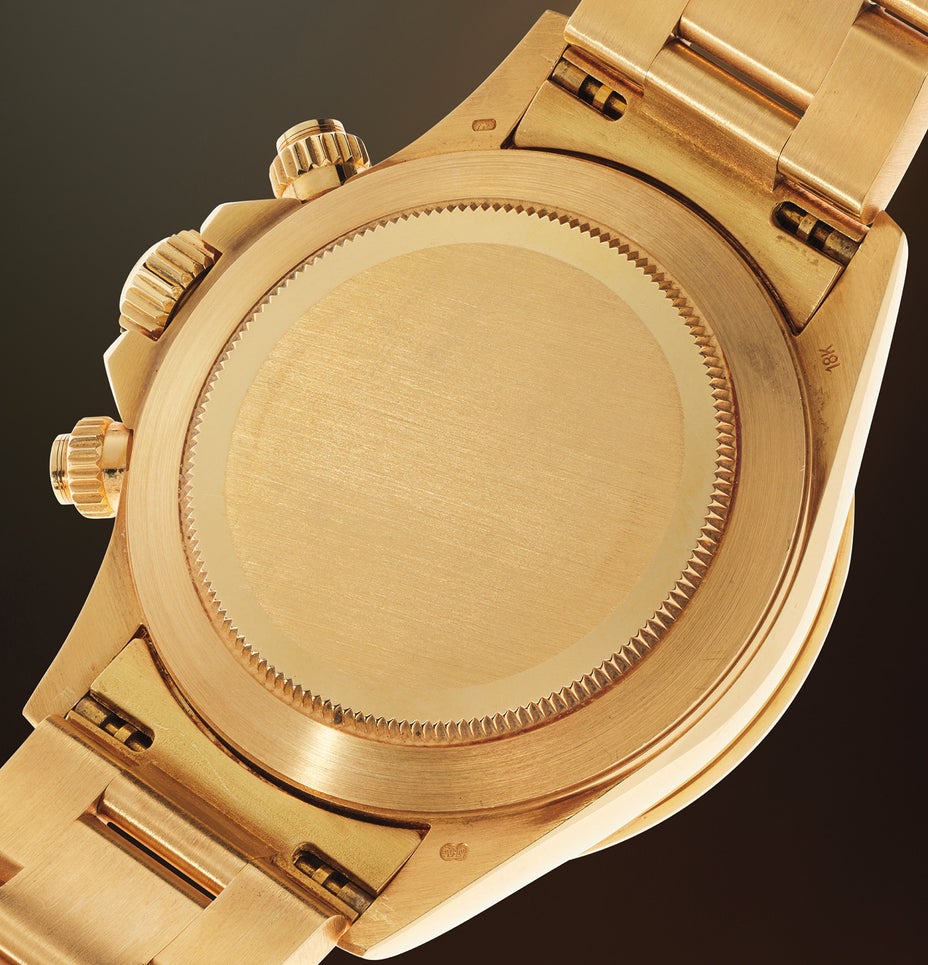
Ref. 16528; inside caseback stamped 16500
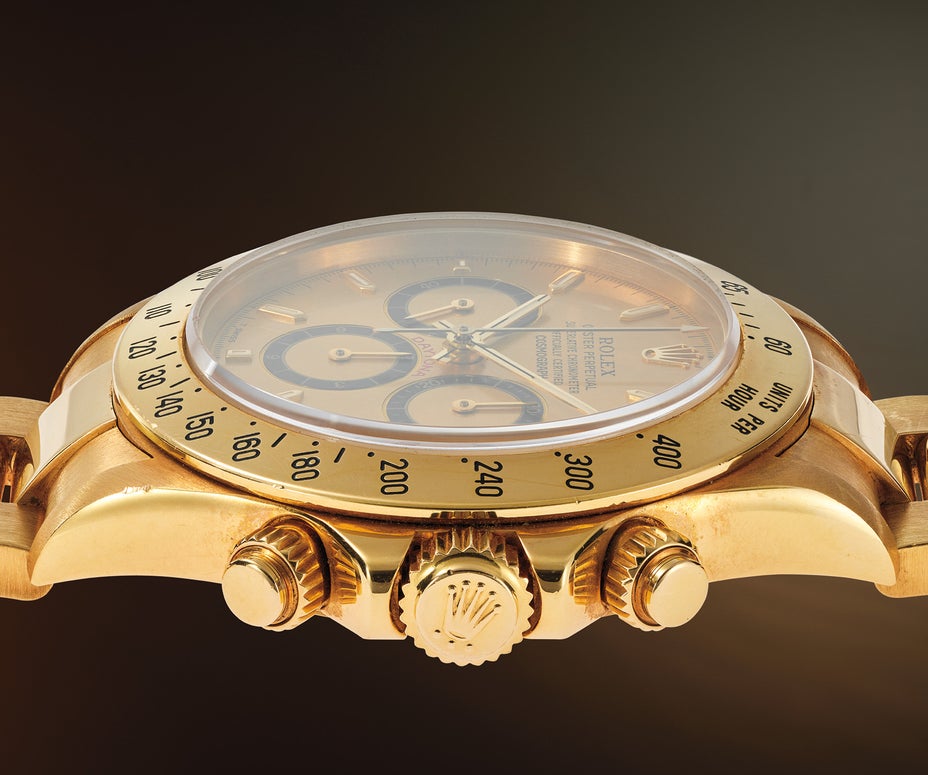
Cosmograph Daytona
A most likely unpolished and highly attractive yellow gold chronograph wristwatch with so-called ‘inverted 6’ dial and bracelet
Full-Cataloguing
The model was available in steel (16520), in steel and gold (16523), and the present all-gold version reference 16528. By the 1990s, both Rolex as a company and the public perception of the brand had evolved past the original “professional watches company” image and fully embraced the luxury market.
Powered by the cal. 4030, a Rolex modified Zenith El Primero movement, it was the most reliable self-winding chronograph movement available in the market at the time. Early examples of the reference featured the rare and desirable “inverted 6” dial, such as the present lot. The most probably unpolished case has developed a rosy patina from lack of wear and use, and the monochromatic gold livery offers a warmth and flamboyance highly desired by collectors.
Rolex
Swiss | 1905Founded in 1905 England by Hans Wilsdorf and Alfred Davis as Wilsdorf & Davis, it soon became known as the Rolex Watch Company in 1915, moving its headquarters to Geneva in 1919. Like no other company, the success of the wristwatch can be attributed to many of Rolex's innovations that made them one of the most respected and well-known of all luxury brands. These innovations include their famous "Oyster" case — the world's first water resistant and dustproof watch case, invented in 1926 — and their "Perpetual" — the first reliable self-winding movement for wristwatches launched in 1933. They would form the foundation for Rolex's Datejust and Day-Date, respectively introduced in 1945 and 1956, but also importantly for their sports watches, such as the Explorer, Submariner and GMT-Master launched in the mid-1950s.
One of its most famous models is the Cosmograph Daytona. Launched in 1963, these chronographs are without any doubt amongst the most iconic and coveted of all collectible wristwatches. Other key collectible models include their most complicated vintage watches, including references 8171 and 6062 with triple calendar and moon phase, "Jean Claude Killy" triple date chronograph models and the Submariner, including early "big-crown" models and military-issued variants.