19
Rolex
Ref. 1016
Explorer "Albino"
An extremely early, so far unique and collectible stainless steel wristwatch with center seconds, exclamation mark white dial and bracelet
Full-Cataloguing
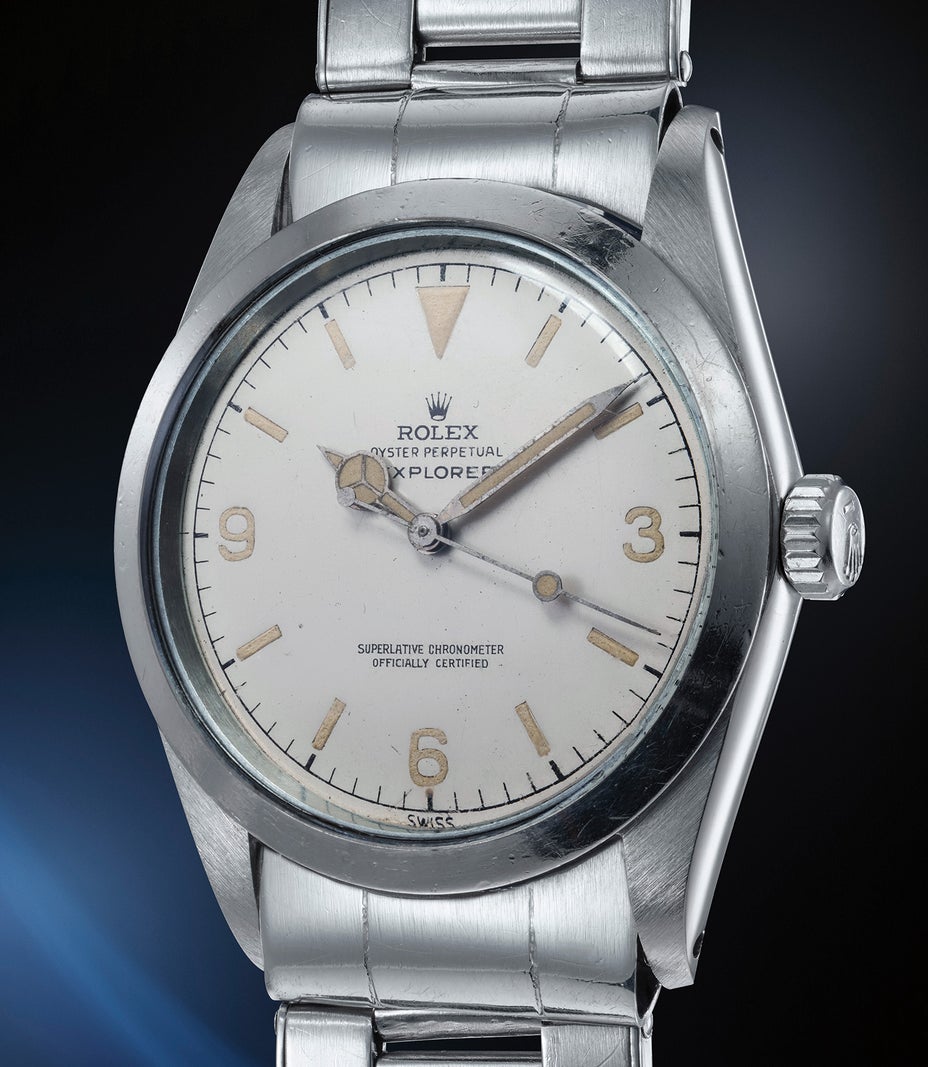
The present piece is without a doubt one of the most collectible and intriguing - both aesthetically and intellectually as well - specimens of this reference, reuniting three very attractive features under the same case.
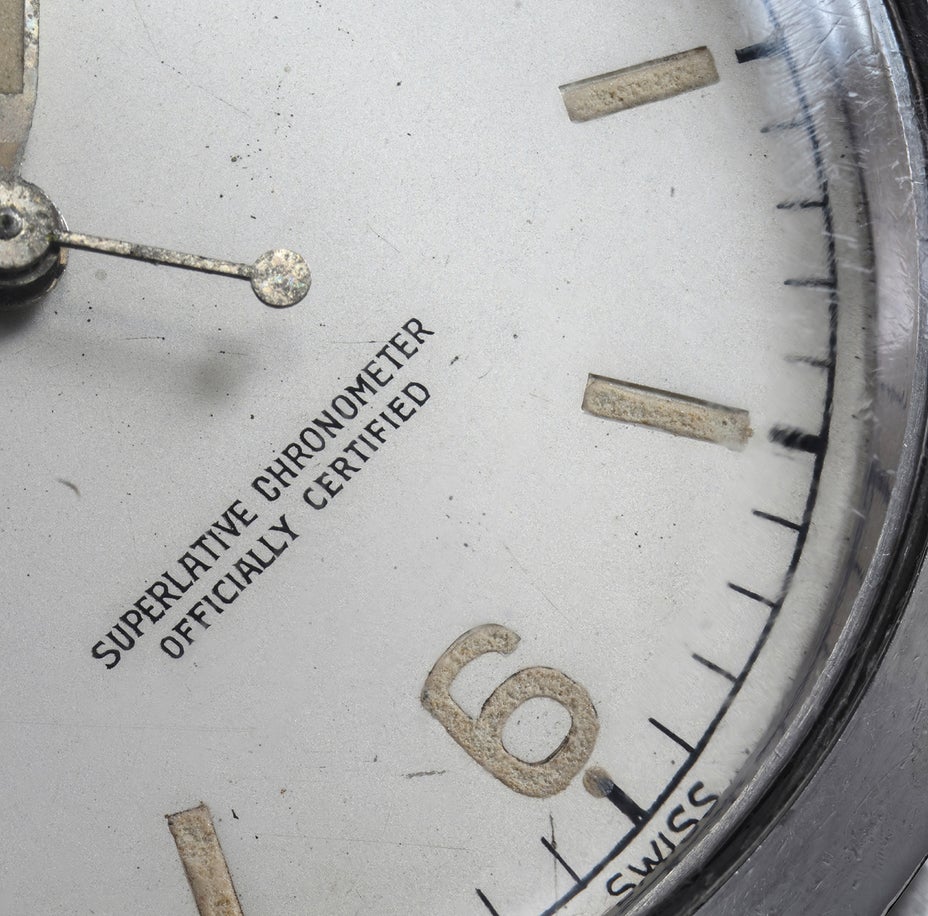
First and foremost, the most apparent and striking trait of the watch is its Albino dial. Rolex is known to have made in absurdly scarce quantities white dial versions of its tool watches. Not only such Albino pieces are indeed enormously rare - with a number of examples in the low single digits known for most vintage references - but furthermore they feature a completely foreign aesthetic impact. So ingrained is in our mind the concept of Explorers with black dials, that the brain struggle to accepts what it is beholding. While the color of the dial is undoubtedly the star of the show, it shall not deter the connoisseur from analysing the dial further, as it holds a second, more subtle surprise which makes this Explorer the only one of its kind known so far: it is an “Exclamation mark” dial, featuring a luminous dot under the numeral at 6 (the name “exclamation mark” comes from the aesthetic effect of such dot under the baton numeral found at 6 on most Rolex dials).
Finally, a further layer of intellectual intrigue comes from the fact that this is one of the earliest specimens of reference 1016, which was introduce only a couple years before production of this watch. All this considered, it is without a doubt that the present piece is one of the most intellectually and aesthetically intriguing 1016 to ever appear at auction.
Rolex
Swiss | 1905Founded in 1905 England by Hans Wilsdorf and Alfred Davis as Wilsdorf & Davis, it soon became known as the Rolex Watch Company in 1915, moving its headquarters to Geneva in 1919. Like no other company, the success of the wristwatch can be attributed to many of Rolex's innovations that made them one of the most respected and well-known of all luxury brands. These innovations include their famous "Oyster" case — the world's first water resistant and dustproof watch case, invented in 1926 — and their "Perpetual" — the first reliable self-winding movement for wristwatches launched in 1933. They would form the foundation for Rolex's Datejust and Day-Date, respectively introduced in 1945 and 1956, but also importantly for their sports watches, such as the Explorer, Submariner and GMT-Master launched in the mid-1950s.
One of its most famous models is the Cosmograph Daytona. Launched in 1963, these chronographs are without any doubt amongst the most iconic and coveted of all collectible wristwatches. Other key collectible models include their most complicated vintage watches, including references 8171 and 6062 with triple calendar and moon phase, "Jean Claude Killy" triple date chronograph models and the Submariner, including early "big-crown" models and military-issued variants.