166
Rolex
Ref. 5512; inside caseback stamped 5512 and III.62
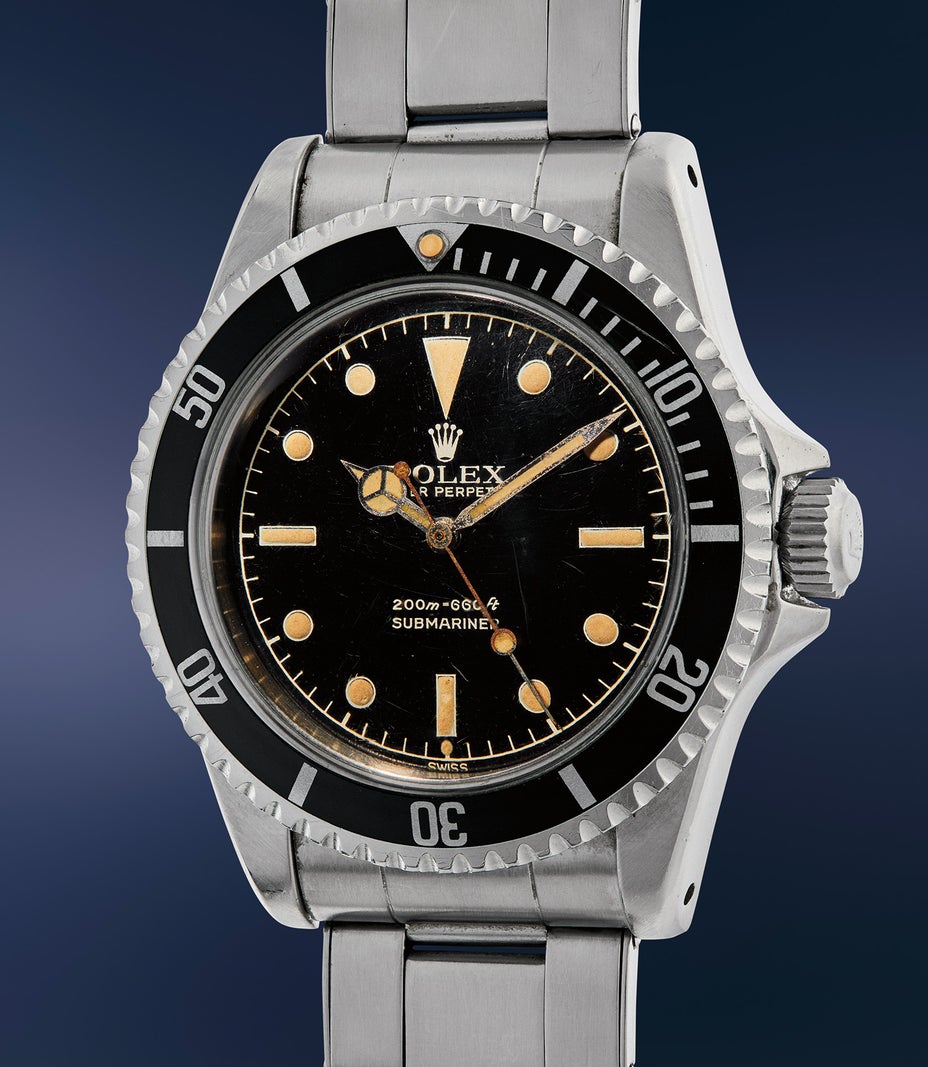
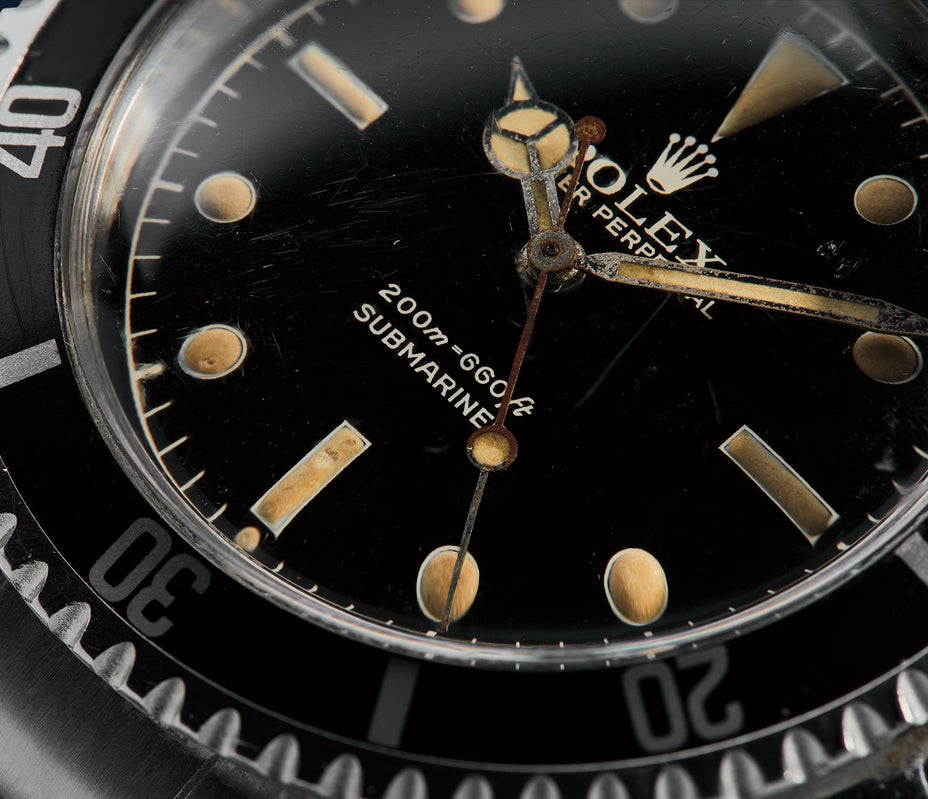
Ref. 5512 "Exclamation Mark, Pointed Crown Guards"
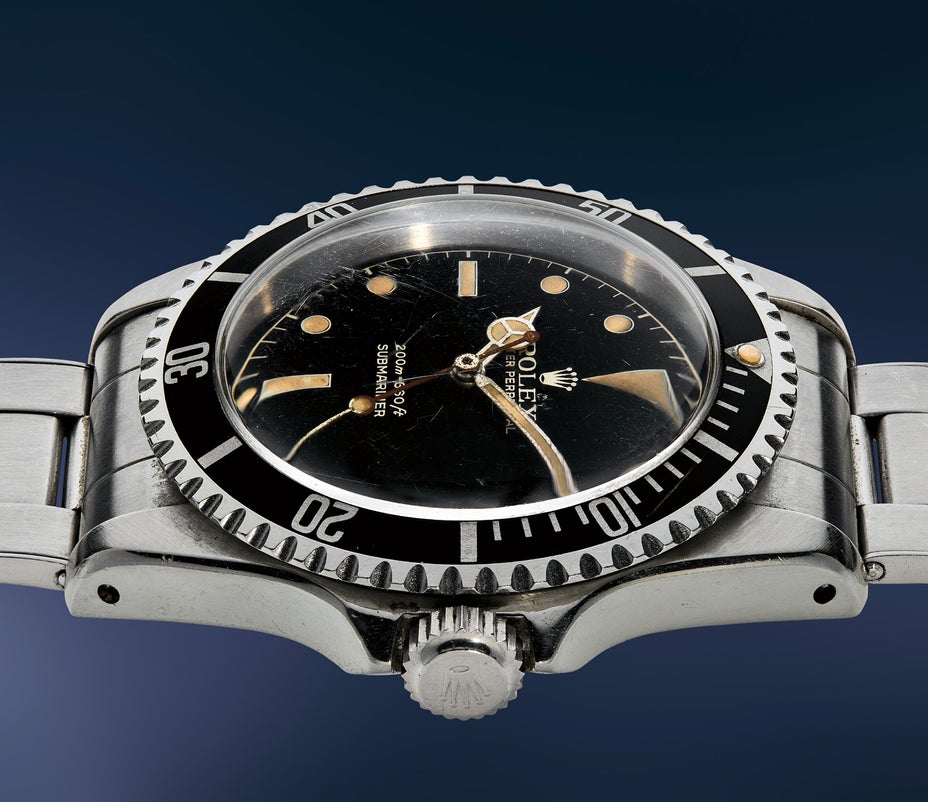
An attractive and compelling stainless steel diver's wristwatch with center seconds, glossy "exclamation mark" dial with chapter ring, pointed crown guards, and bracelet
Full-Cataloguing
Like many intricacies of collecting vintage Rolex wristwatches, the various iterations of crown guards have developed their own nicknames and followings as the design evolved. The earliest were square-shaped, of which it is estimated very few exist. It is speculated that criticism of the bulky square crown guard prompted Rolex to modify the cases they had in stock, giving rise to the “eagle beak” crown guard. Finally, Rolex produced cases with unobtrusive pointed crown guards (sometimes abbreviated by collectors as PCG), as found on the present example. These early Submariners were fitted with stunning black glossy dials and featured either two or four lines of text at 6 o’clock with gilt printing in either silver or gold (or both). By the late-1960s, the crown guards were changed to a rounder design that is still in use today.
The highlight of this example is without a doubt its stunning, nearly perfectly preserved glossy “exclamation mark” dial, featuring an incredibly smooth and shiny surface. These dials were produced only for a short period of time in around 1962 and are defined by the minuscule dot of luminous material present under the 6 o’clock hour marker. Scholars debate that this aesthetic quirk indicated a less radioactive material on the dial (the early 60s was when concerns about radioactive material in dials prompted producers to lower the radiation levels eventually switching from radium to tritium).
Reuniting the aesthetic pleasure of watch collecting with its most intellectual aspect, the present glossy, gilt 5512 with exclamation dial and pointed crown guards is without a doubt a gem for the avid collector of fine and uncommon timepieces.
Rolex
Swiss | 1905Founded in 1905 England by Hans Wilsdorf and Alfred Davis as Wilsdorf & Davis, it soon became known as the Rolex Watch Company in 1915, moving its headquarters to Geneva in 1919. Like no other company, the success of the wristwatch can be attributed to many of Rolex's innovations that made them one of the most respected and well-known of all luxury brands. These innovations include their famous "Oyster" case — the world's first water resistant and dustproof watch case, invented in 1926 — and their "Perpetual" — the first reliable self-winding movement for wristwatches launched in 1933. They would form the foundation for Rolex's Datejust and Day-Date, respectively introduced in 1945 and 1956, but also importantly for their sports watches, such as the Explorer, Submariner and GMT-Master launched in the mid-1950s.
One of its most famous models is the Cosmograph Daytona. Launched in 1963, these chronographs are without any doubt amongst the most iconic and coveted of all collectible wristwatches. Other key collectible models include their most complicated vintage watches, including references 8171 and 6062 with triple calendar and moon phase, "Jean Claude Killy" triple date chronograph models and the Submariner, including early "big-crown" models and military-issued variants.