79
Rolex
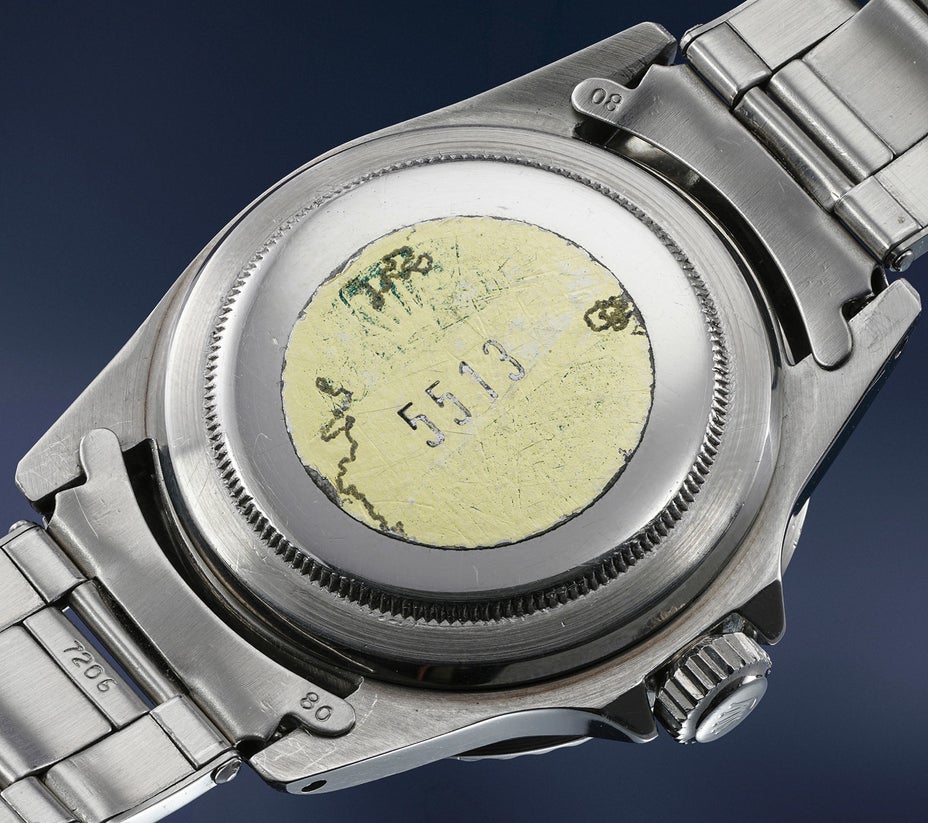
Ref. 5513, inside caseback stamped III.63
"Explorer Submariner Underline"
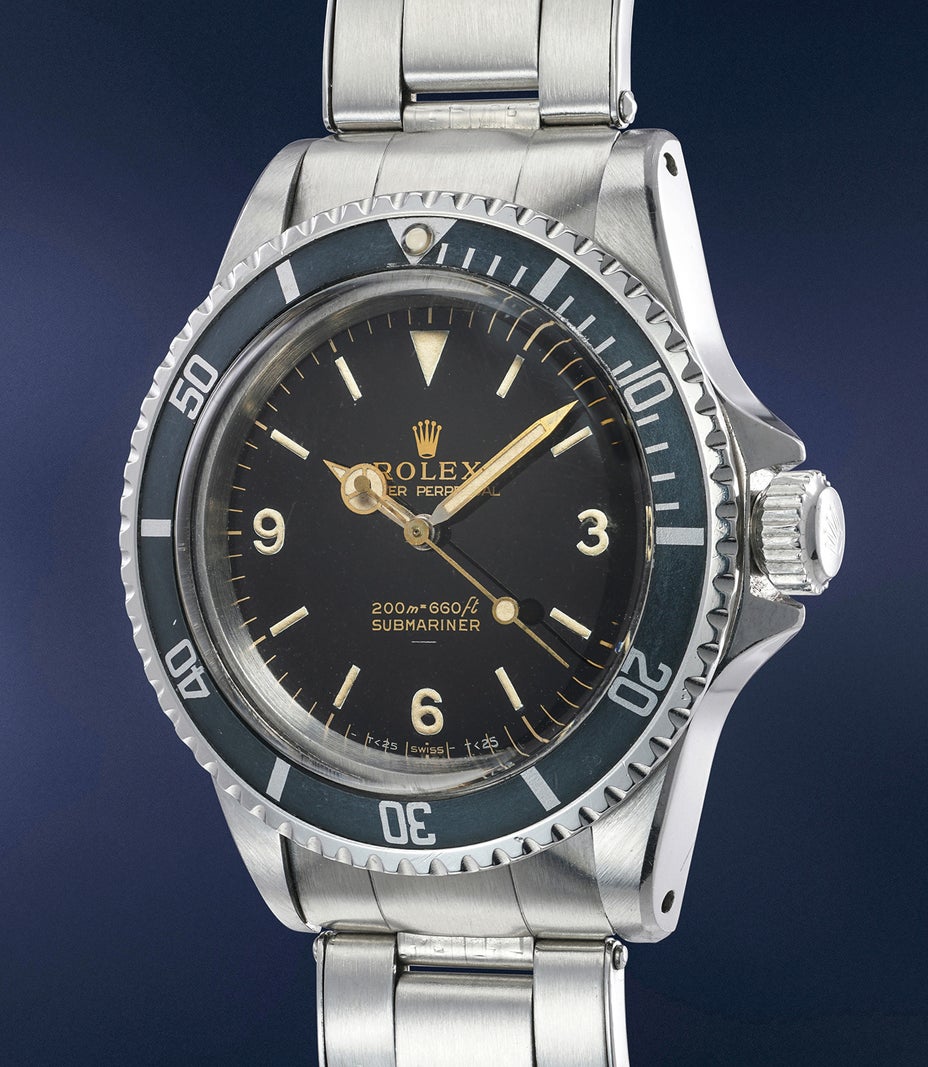
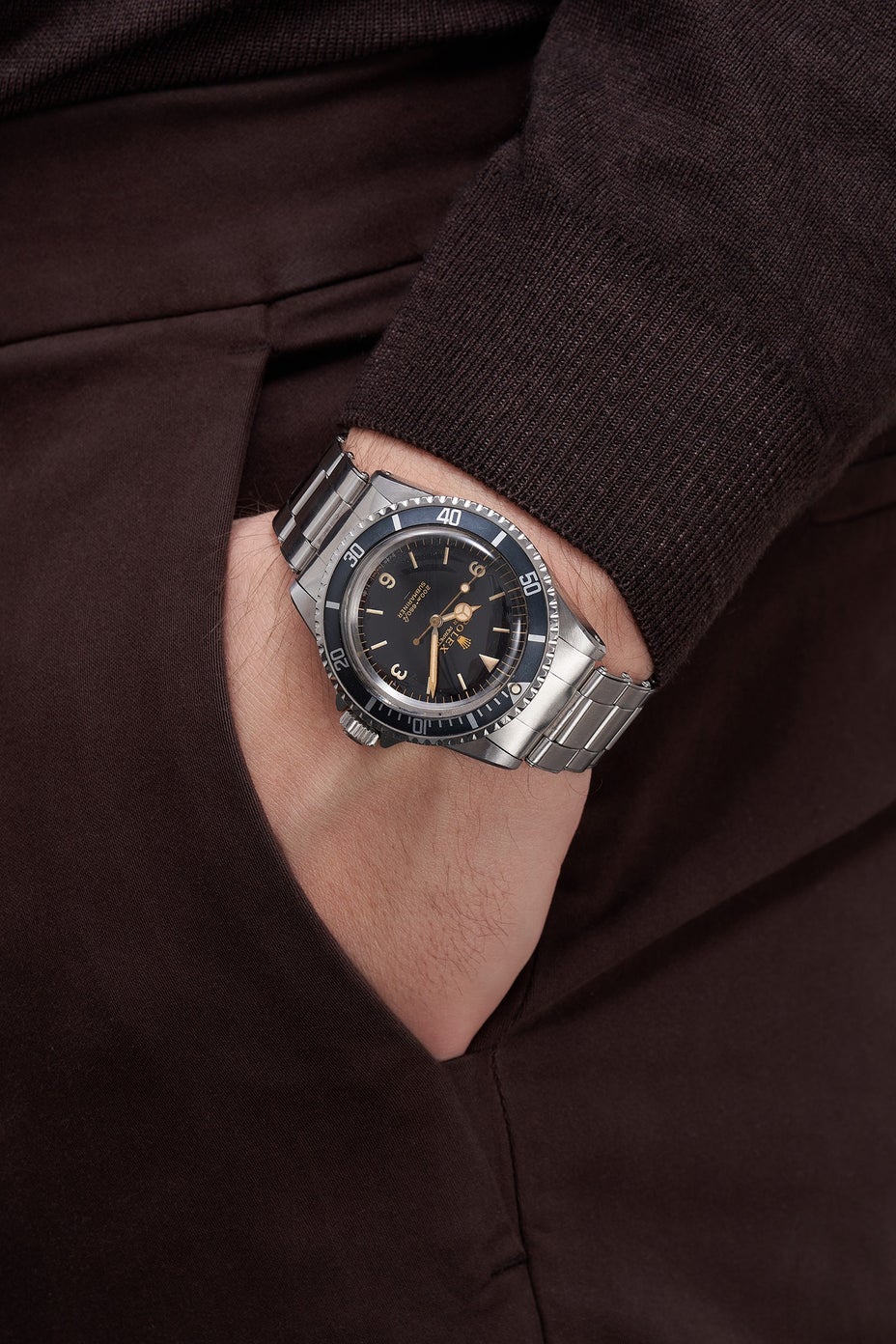
A highly rare and attractive stainless steel wristwatch with black lacquer "Explorer Underline" dial and bracelet
Full-Cataloguing
Early examples of the reference were fitted with “glossy” lacquered dials with a short production span of approximately four years. In 1967, Rolex replaced its “glossy” lacquered dials with the more common matte dial. Admired and praised by collectors, these early examples are highly sought after and rare with varying dial examples commanding more than others.
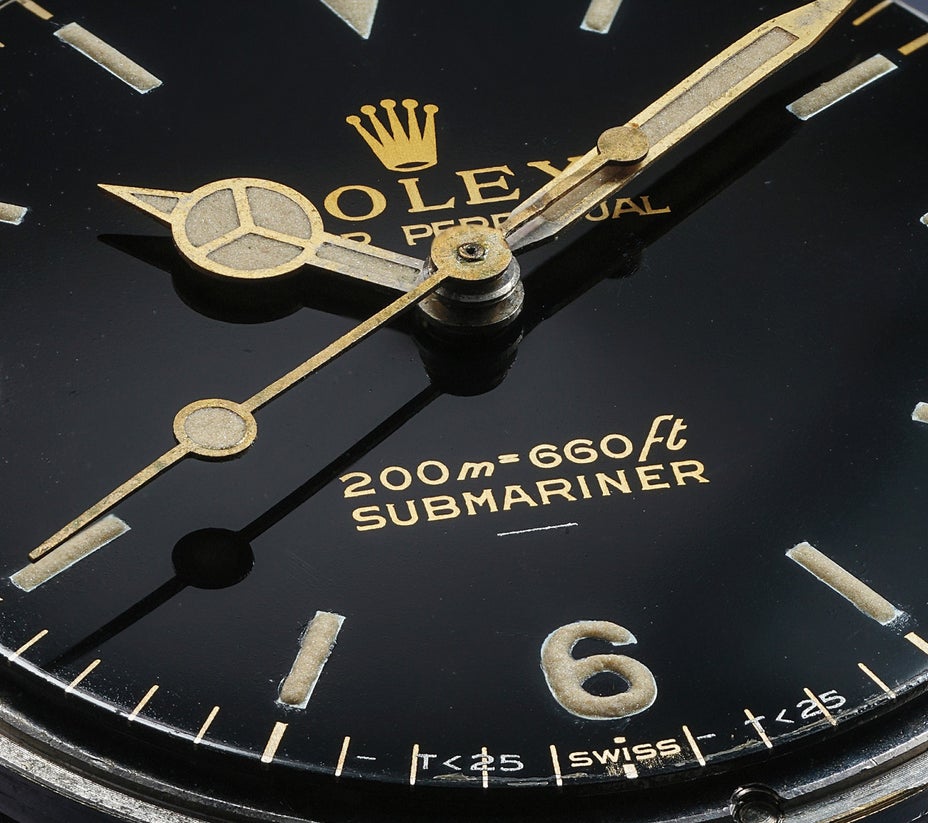
The present watch is not just a very attractive reference 5513 but has a number of exclusive features that makes it amongst the most collectible of all Submariners. The most striking feature is the so-called “Explorer dial” or “3-6-9 dial”. While the vast majority of Submariners were fitted with regular round hour markers (for 1, 2, 4, 5, 7, 8, 10 and 11) and rectangular batons (for 3, 6 and 9), the present watch bears this extremely rare dial configuration with thin batons (for 1, 2, 4, 5, 7, 8, 10 and 11) and Arabic numerals (for 3, 6 and 9). The only common numeral style both versions feature is the typical triangular marker at 12.Mostly seen on the Explorer I, hence its name, this type of dial also appears on "Big Crown" Submariners, references 6200, 6538 and 5510 and the later references 5512 and 5513 with crown guards. In production for only the first half of the 1960s, references 5512 and 5513 with explorer dials are incredibly hard to find and sought-after.
When analyzing this watch closer, one can spot another extremely exciting detail: an underline underneath the depth rating, as well as double "-T<25" graphics flanking swiss at 6 o'clock. The now nicknamed "underline" was used in the early 1960s to indicate a transition from radium to tritium on the dial. The watch itself is preserved in excellent and attractive condition, still retaining the original Rolex sticker on its case back and further stamped III.63 inside. The present timepiece is a rare example sure to attract true Rolex aficionados worldwide.
Rolex
Swiss | 1905Founded in 1905 England by Hans Wilsdorf and Alfred Davis as Wilsdorf & Davis, it soon became known as the Rolex Watch Company in 1915, moving its headquarters to Geneva in 1919. Like no other company, the success of the wristwatch can be attributed to many of Rolex's innovations that made them one of the most respected and well-known of all luxury brands. These innovations include their famous "Oyster" case — the world's first water resistant and dustproof watch case, invented in 1926 — and their "Perpetual" — the first reliable self-winding movement for wristwatches launched in 1933. They would form the foundation for Rolex's Datejust and Day-Date, respectively introduced in 1945 and 1956, but also importantly for their sports watches, such as the Explorer, Submariner and GMT-Master launched in the mid-1950s.
One of its most famous models is the Cosmograph Daytona. Launched in 1963, these chronographs are without any doubt amongst the most iconic and coveted of all collectible wristwatches. Other key collectible models include their most complicated vintage watches, including references 8171 and 6062 with triple calendar and moon phase, "Jean Claude Killy" triple date chronograph models and the Submariner, including early "big-crown" models and military-issued variants.