120
Rolex
Ref. 1625
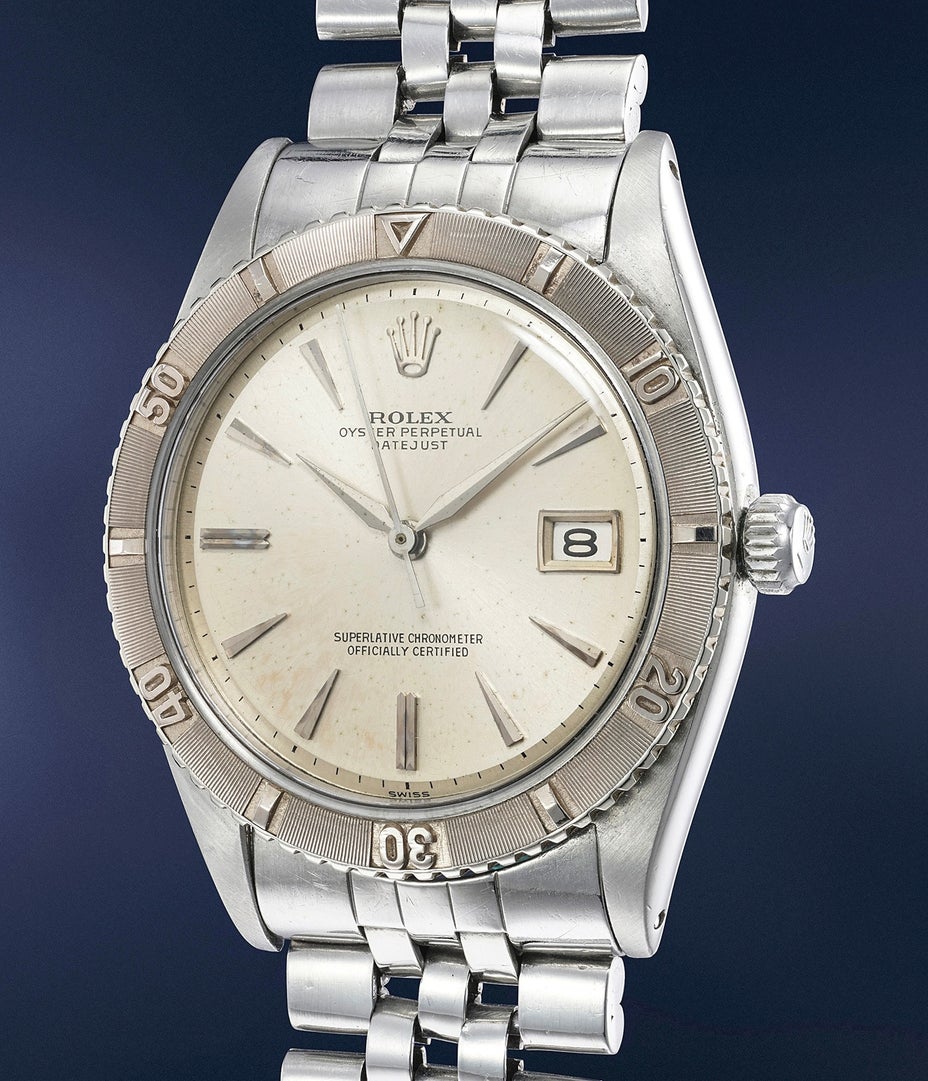
Datejust Turnograph
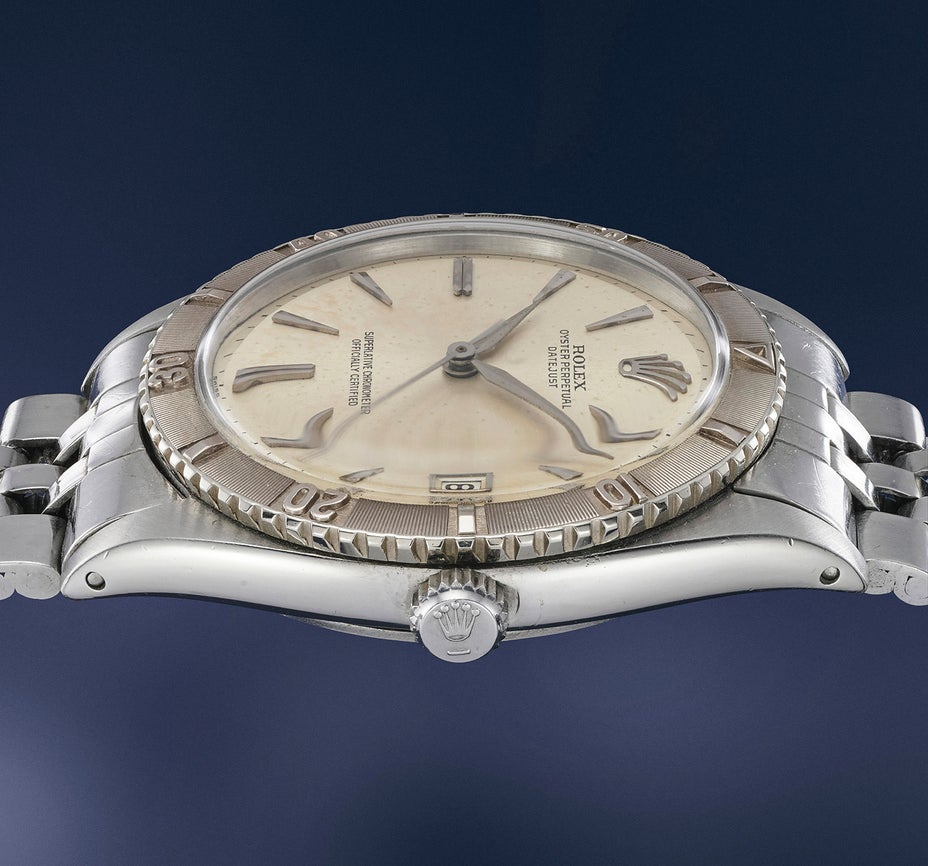
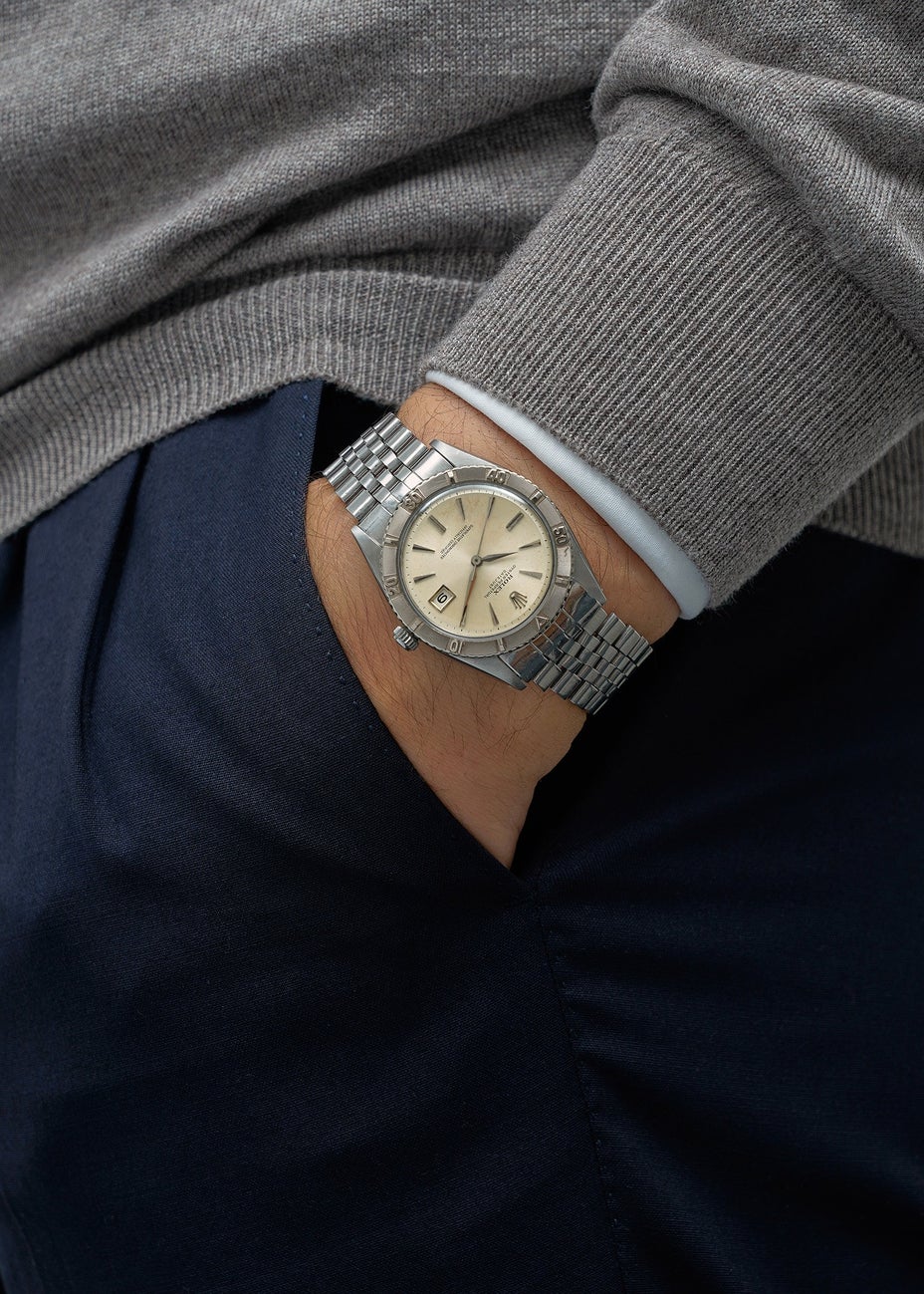
A fine, rare and interesting stainless steel automatic wristwatch with "Thunderbird" bezel, center seconds and non-luminous dial
Full-Cataloguing
Rolex merged the ‘Turn-O-Graph’ with the ‘DateJust’ in 1954 with reference 6309. The model was advertised with images of the U.S. Air Force acrobatic flying team, or ‘Group Number 3600 of Air Demonstration’. Reference 6309 and its successors adopted the namesake ‘Thunderbird’ after the flying team’s emblem. The present watch, reference 1625, is a later reinterpretation of the original ‘Thunderbird’, featuring an updated case shape and movement caliber.
The model was not particularly commercially successful during its day, which makes it today extremely rare.
The present example sets itself apart from its peers due to an unusual detail. Normally, the model features luminous accents to the indexes (and luminous hands). But in this instance there is no trace of such accents, and the hands do not even have to groove to accomodate the radium. This is because in the late 1950s and early 1960s, some countries such as Canada and Japan banned radium due to health concerns. Consequently, before the luminous material was changed to tritium by the entirety of the market in circa 1963, specimens destined to these markets made before 1963 (such as this 1961 example) were made without luminous material.
An intriguing historical detail which amplifies the rarity and collectability of the present piece.
Rolex
Swiss | 1905Founded in 1905 England by Hans Wilsdorf and Alfred Davis as Wilsdorf & Davis, it soon became known as the Rolex Watch Company in 1915, moving its headquarters to Geneva in 1919. Like no other company, the success of the wristwatch can be attributed to many of Rolex's innovations that made them one of the most respected and well-known of all luxury brands. These innovations include their famous "Oyster" case — the world's first water resistant and dustproof watch case, invented in 1926 — and their "Perpetual" — the first reliable self-winding movement for wristwatches launched in 1933. They would form the foundation for Rolex's Datejust and Day-Date, respectively introduced in 1945 and 1956, but also importantly for their sports watches, such as the Explorer, Submariner and GMT-Master launched in the mid-1950s.
One of its most famous models is the Cosmograph Daytona. Launched in 1963, these chronographs are without any doubt amongst the most iconic and coveted of all collectible wristwatches. Other key collectible models include their most complicated vintage watches, including references 8171 and 6062 with triple calendar and moon phase, "Jean Claude Killy" triple date chronograph models and the Submariner, including early "big-crown" models and military-issued variants.