906
Rolex
Ref. 6238
“Pre-Daytona”
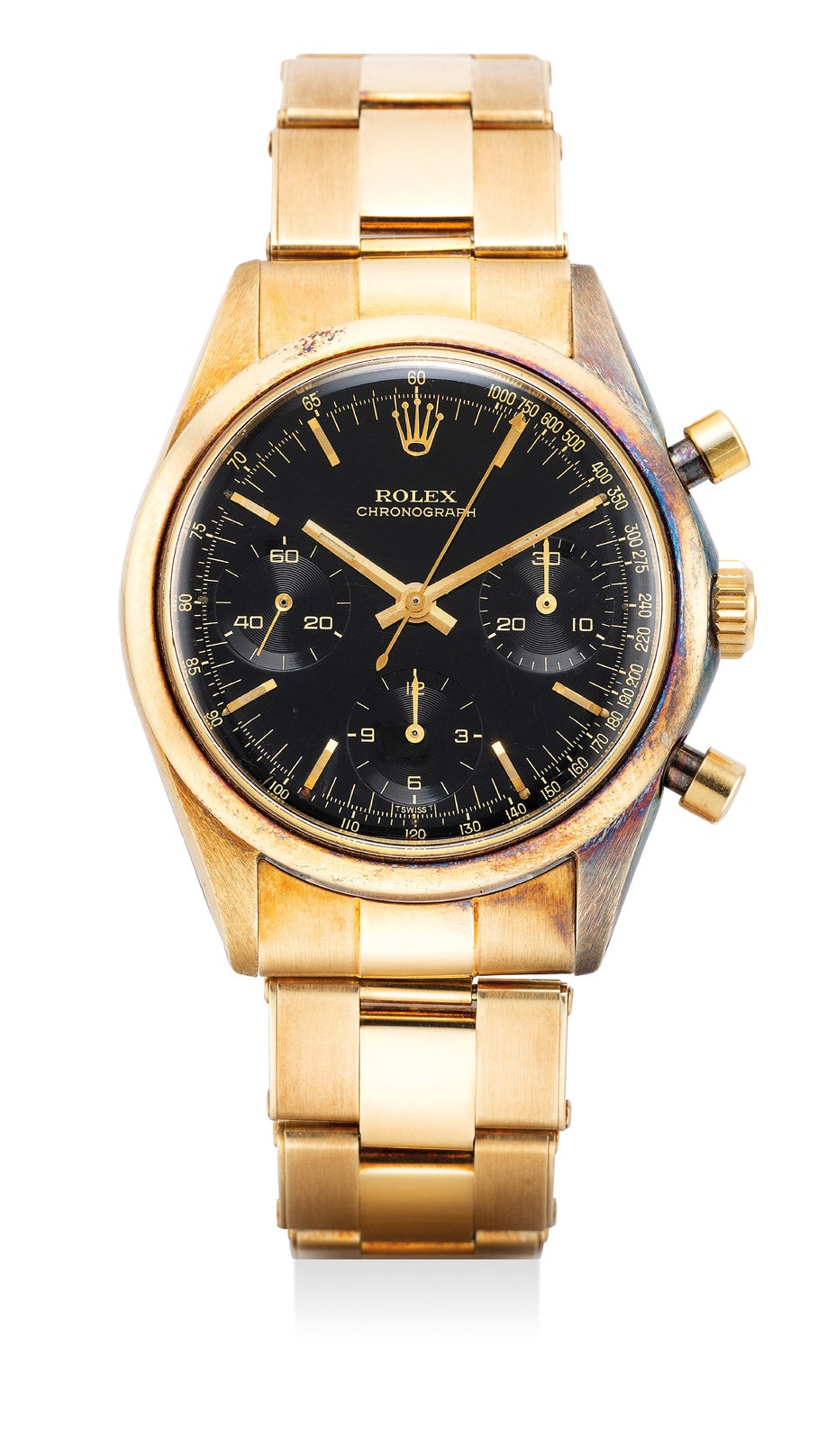
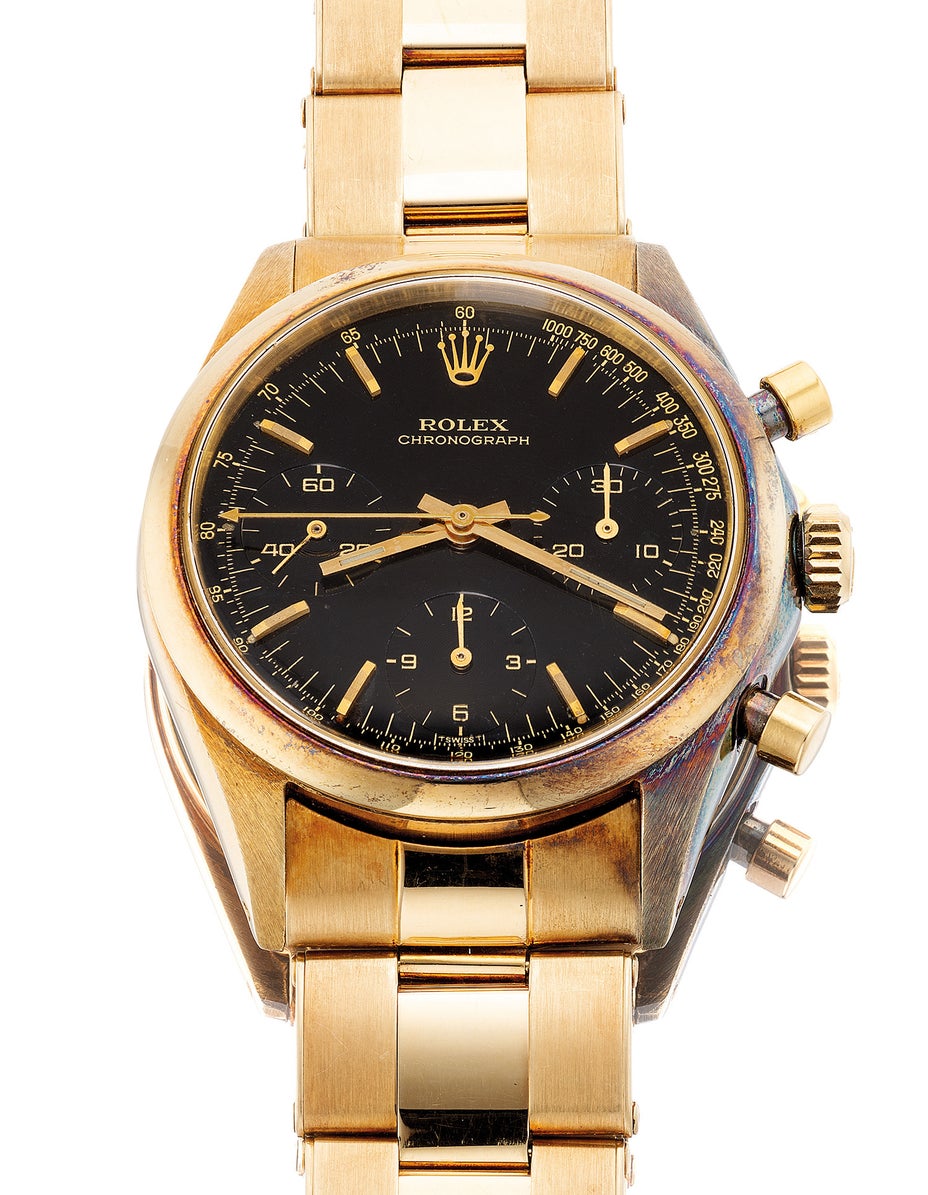
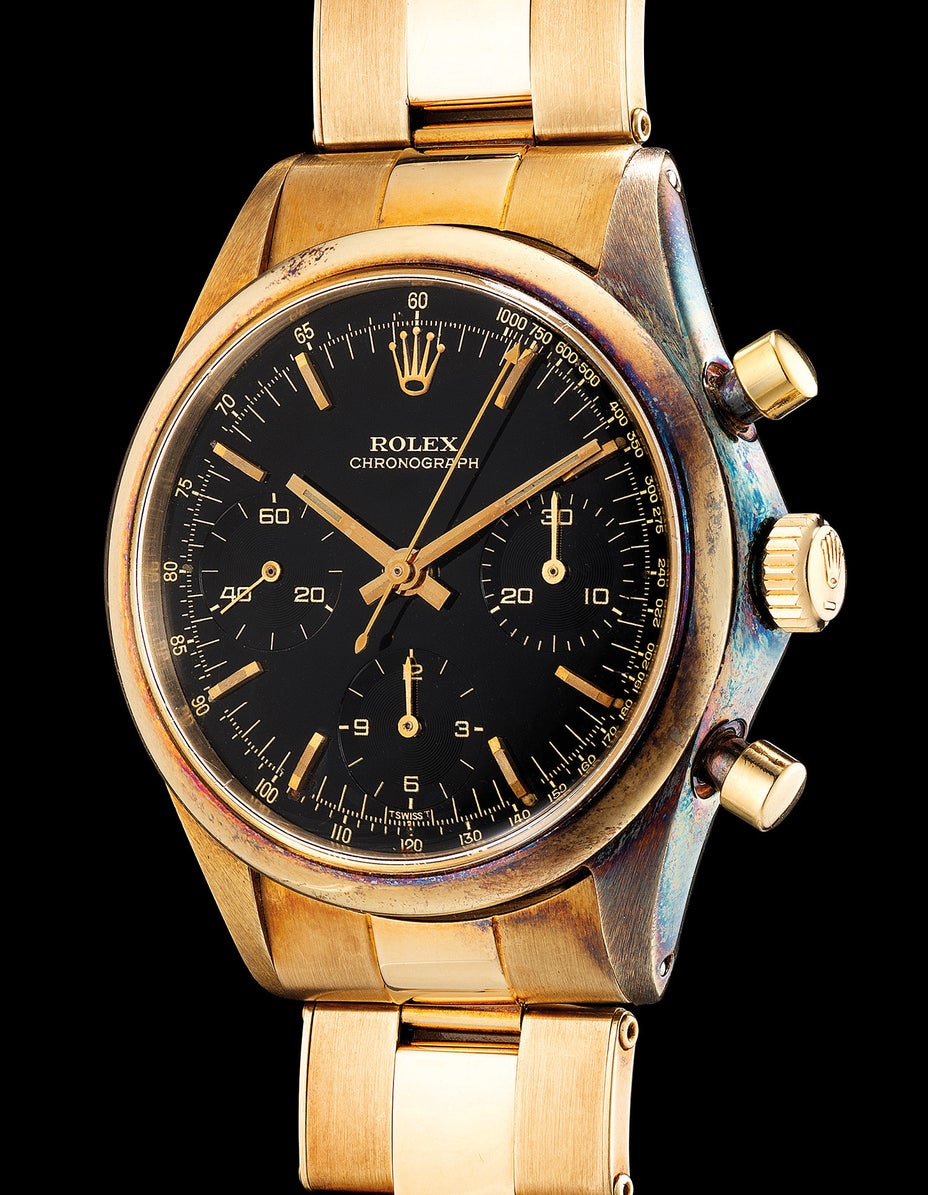
An extremely rare and highly attractive 14k yellow gold chronograph wristwatch with black “glossy” dial and bracelet
Full-Cataloguing
Designed as a tool on the wrist to calculate speed, the sporty Rolex Cosmograph was not well received since its launch, due to its distinctive appeal that was not inclined with the trend of the 1960’s where most watches were still flat and of classic design. However, a dramatic reverse would occur when the “DAYTONA” was implemented on the dial.
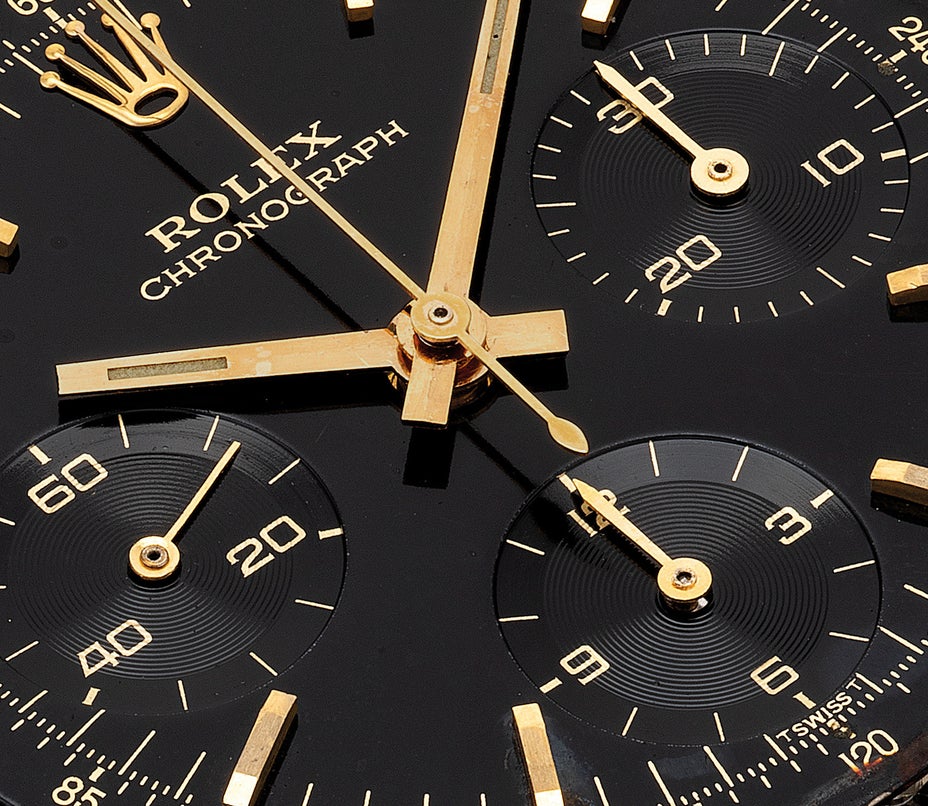
The 14K yellow gold case alone captivates the mind of the most discerned collector in this present example, as most examples were produced in stainless steel as well as a handful in 18K gold. Made for the American market, 14K yellow gold cases were uniquely made to tackle one issue, tax. Furthermore, with most dials produced in silvered or matte black, an example that featured a “glossy” dial, was almost somewhat of a myth with very few examples surfaced on the market.
The eclectically rare specimen is further presented in impressive condition which would be well respected in any collection of the most dedicated aficionados of horology. With an intrinsically appealing configuration sporting an attractive and unique 14K yellow gold case with heavy presence of oxidation developed on the right side, it is simply a watch that has never seen a wrist in decades. Hence explaining the wonderfully crisp lugs and the beautiful layer of patina on the case. When one focuses their vision on 6 O’clock “T SWISS T” is present, indicating the transition from radium to tritium as the luminous material used on the dial.
The exceedingly rare present example of a Rolex reference 6238 in 14K yellow gold fitted with a “glossy” black dial, is by no means a grail watch with only one other example known.
Rolex
Swiss | 1905Founded in 1905 England by Hans Wilsdorf and Alfred Davis as Wilsdorf & Davis, it soon became known as the Rolex Watch Company in 1915, moving its headquarters to Geneva in 1919. Like no other company, the success of the wristwatch can be attributed to many of Rolex's innovations that made them one of the most respected and well-known of all luxury brands. These innovations include their famous "Oyster" case — the world's first water resistant and dustproof watch case, invented in 1926 — and their "Perpetual" — the first reliable self-winding movement for wristwatches launched in 1933. They would form the foundation for Rolex's Datejust and Day-Date, respectively introduced in 1945 and 1956, but also importantly for their sports watches, such as the Explorer, Submariner and GMT-Master launched in the mid-1950s.
One of its most famous models is the Cosmograph Daytona. Launched in 1963, these chronographs are without any doubt amongst the most iconic and coveted of all collectible wristwatches. Other key collectible models include their most complicated vintage watches, including references 8171 and 6062 with triple calendar and moon phase, "Jean Claude Killy" triple date chronograph models and the Submariner, including early "big-crown" models and military-issued variants.