53Ο︎
Rolex
Ref. 18026, inside caseback stamped 2096
Day-Date
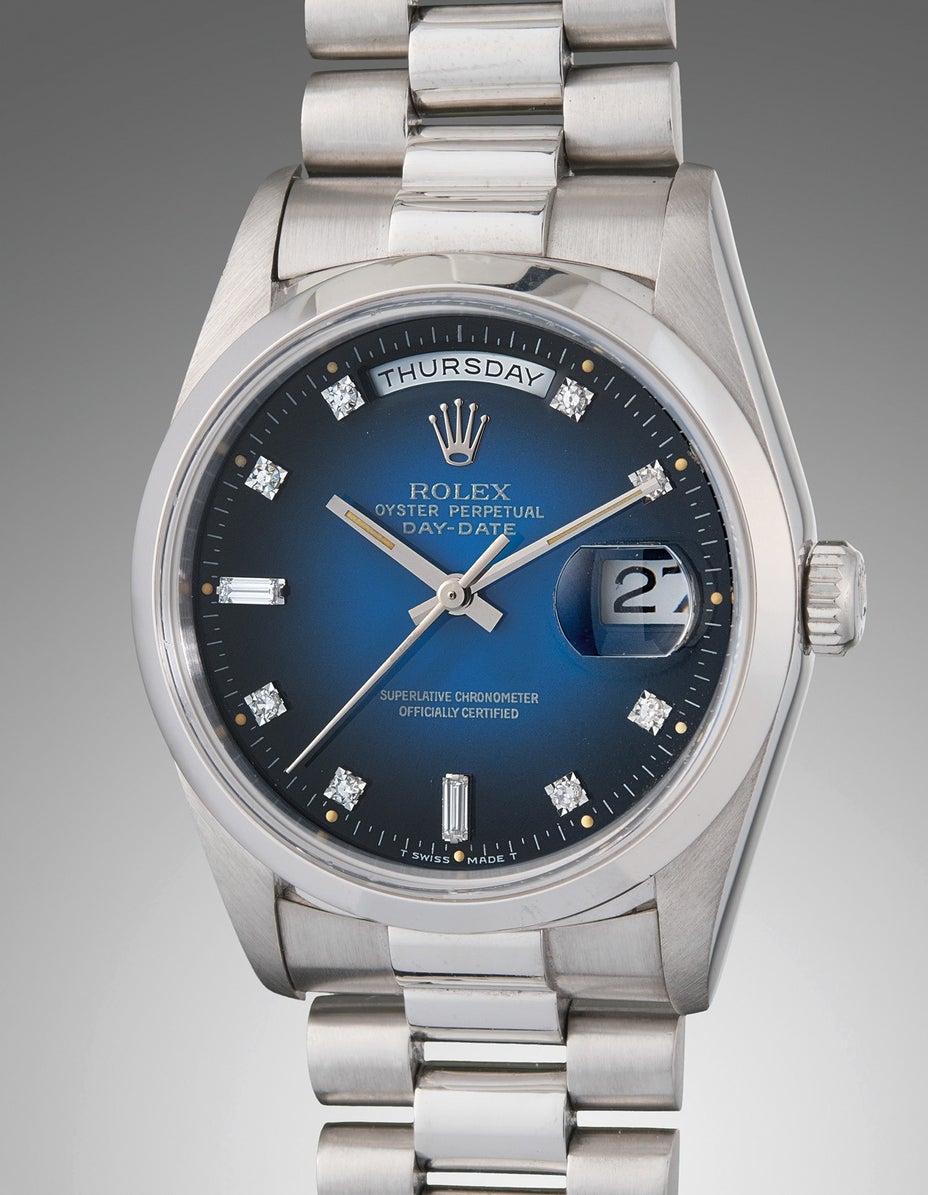
A very fine and highly attractive platinum and diamond-set calendar wristwatch with center seconds, blue lacquer dégradé dial, and bracelet
Full-Cataloguing
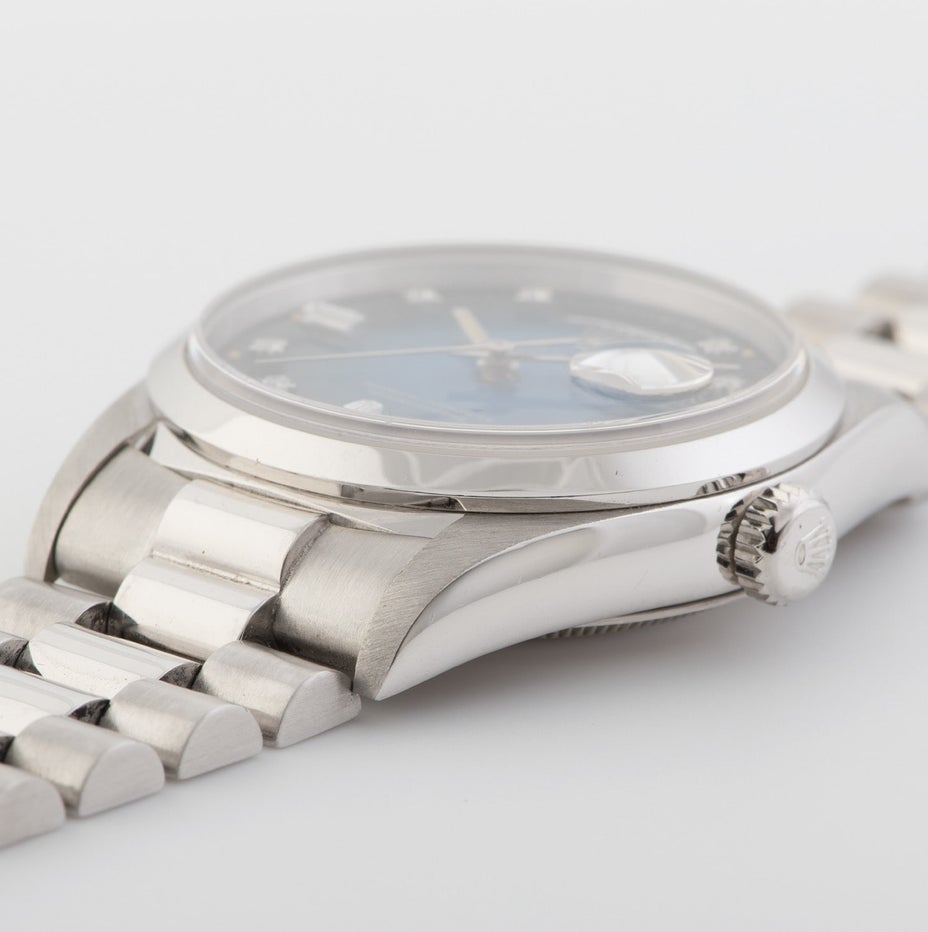
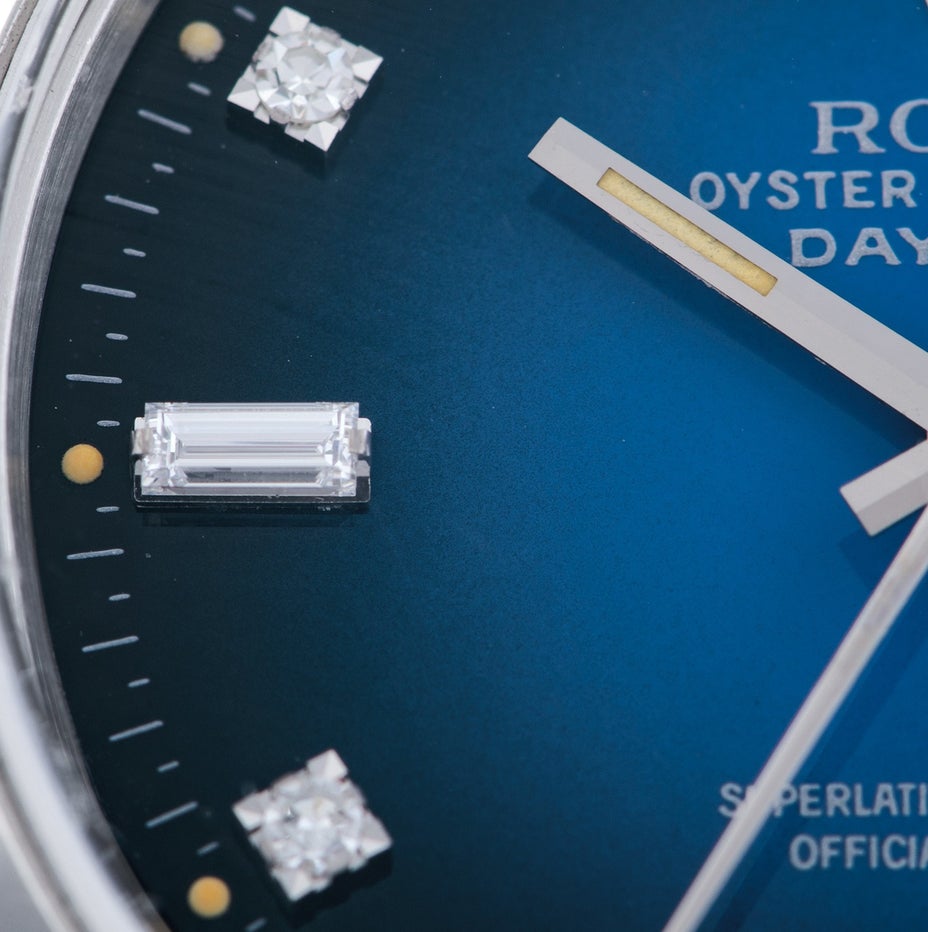
The current watch possesses a number of superlative features: an unpolished case in the noblest of metals, an attractive and sleek smooth bezel, double quick-set function for the day and the date, and beautiful dégradé blue dial set with brilliant-cut and baguette diamonds. The latter element truly sets this piece apart. The fluted bezel version featured in Pucci Papaleo Editore’s Day-Date: The Presidential Rolex is nicknamed "Poseidon", and it is easy to see how the blue centripetal color gradient would inspire notions of the Greek God of the seas. Starting at a dark navy – almost black – at the outermost parts of the lacquered dial and smoothly transitioning to a vibrant ocean blue, the dégradé (or "vignette") effect is quite arresting. Paired with perfectly aged luminous plots and vibrant diamonds at the hour markers, this mid-1990s Day-Date is elegant opulence at its best.
Rolex
Swiss | 1905Founded in 1905 England by Hans Wilsdorf and Alfred Davis as Wilsdorf & Davis, it soon became known as the Rolex Watch Company in 1915, moving its headquarters to Geneva in 1919. Like no other company, the success of the wristwatch can be attributed to many of Rolex's innovations that made them one of the most respected and well-known of all luxury brands. These innovations include their famous "Oyster" case — the world's first water resistant and dustproof watch case, invented in 1926 — and their "Perpetual" — the first reliable self-winding movement for wristwatches launched in 1933. They would form the foundation for Rolex's Datejust and Day-Date, respectively introduced in 1945 and 1956, but also importantly for their sports watches, such as the Explorer, Submariner and GMT-Master launched in the mid-1950s.
One of its most famous models is the Cosmograph Daytona. Launched in 1963, these chronographs are without any doubt amongst the most iconic and coveted of all collectible wristwatches. Other key collectible models include their most complicated vintage watches, including references 8171 and 6062 with triple calendar and moon phase, "Jean Claude Killy" triple date chronograph models and the Submariner, including early "big-crown" models and military-issued variants.