60
René Boivin
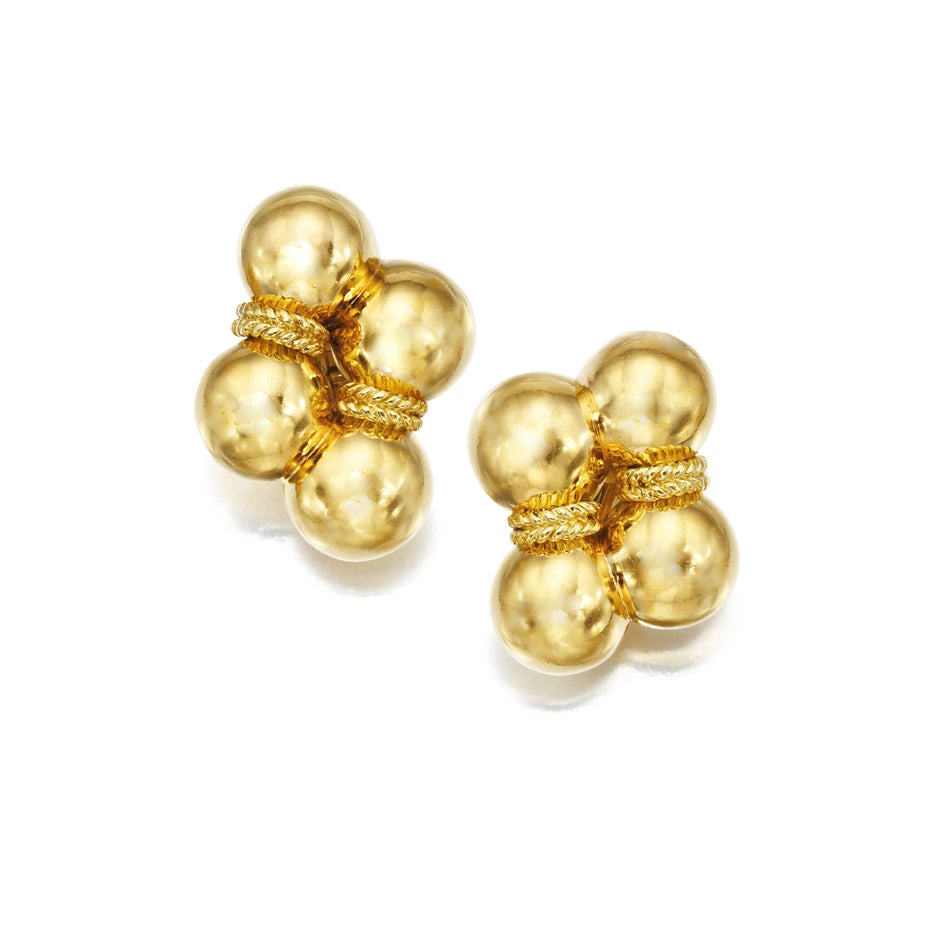
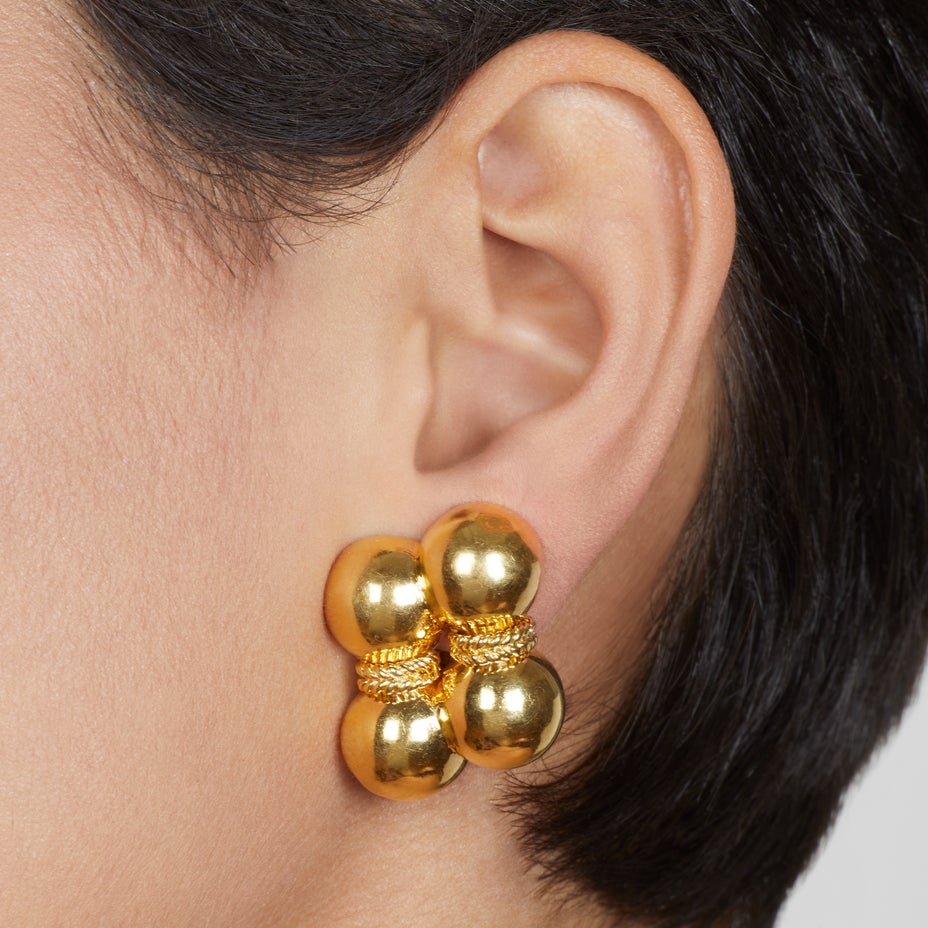
Pair of Gold Ear Clips, 'Hourglass'
Priority Bidding is here! Secure a lower Buyer's Premium. Learn more >
Further Details
Full-Cataloguing
René Boivin
French | B. 1864 D. 1917In 1917, on the death of her husband, René Boivin, Madame Jeanne Boivin took the courageous decision to take over the jewellery business that René had founded in 1890 and built into a thriving success. She had helped her husband in the business, with accounts, bookwork, and overseeing the workshop. At that time, for a woman to take complete control, both creatively and commercially was highly unusual. Jeanne Boivin became the first woman to head such an illustrious jewellery Maison; under her direction, it became a business run by women, generating a design language that set their jewels apart from those created by male-dominated Maisons.
Jeanne Boivin was the sister of Paul Poiret, the famous couturier, and she brought a sense of fashion and strong femininity to Boivin’s jewellery design. She disliked traditional jewellery, especially showy jewels, valued only for intrinsic value, as status symbols. When she hired young Suzanne Vuillerme, (Suzanne Belperron), she found the modelmaker and designer was able to visualize her own ideas, and together they developed a distinctive style, one carried on by Belperron after she left the Maison Boivin in 1931. Their interpretations of Art Deco geometry and modernism were tempered by feminine instincts, rejecting mechanical themes, and bringing more sculptural, sensual and voluptuous lines and volumes to tailored form and silhouette; together they created 20th-century classics – the domed, bombé ring, the so-called ‘barbaric’ bangle, the rounded, ‘melon-slice’ cuff. Both loved to experiment with unconventional materials, chosen for their artistic rather than monetary value, and both continued to explore cultural influences, Egyptian, Assyria, Merovingian, that had been favorite themes of René Boivin. In 1932 Belperron was replaced by Juliette Moutard, who continued to develop and enhance Boivin’s concepts, particularly interpretations of nature, seashells, pomegranates, flowers, leaves, articulated animals. Sea themes were a specialty of Moutard who designed one of the most famous of 20th-century jewels, the Starfish brooch, monumental in size, gem-studded and articulated, made in just a few versions, including the 1937 brooch for Claudette Colbert, and another for oil heiress Millicent Rogers.
Jeanne Boivin’s daughter, Germaine joined the company as a designer in 1938. She brought with her experience of working for her uncle, Poiret, and more influences from fashion, including the theme of passementerie, ribbons, bows, and embroidery. More famous classics followed in the 1950s, the Quatre Corps ring with its four rows of bezel-set gems, and the Pampilles ring, the centre stone fringed all around with dangling, free-moving gems, supremely tactile. Boivin’s continuing cultural references took the form of Hindu-inspired necklaces and bracelets, with their chain borders, imitating braided silk thread of traditional Indian jewels.
Jeanne Boivin retired in 1954 and passed away in 1959. Juliette Moutard retired in 1970. Germaine continued to run the business until 1976 when the business was sold. In 2020 the Boivin archives were acquired by Geneva-based G. Torroni SA, a sixth-generation firm specializing in antique jewelry. Together with Olivier Baroin, a trained jeweler, author and expert, the company continues to draw upon Boivin’s original designs and techniques, producing reissues and reinterpretations in Paris.