24
Piero Manzoni
Achrome
Estimate
$500,000–700,000
artificial fiber, polystyrene
work 24 3/4 x 24 1/4 in. (63 x 61.5 cm)
frame 29 1/4 x 29 1/4 x 9 1/2 in. (74.3 x 74.3 x 24 cm)
frame 29 1/4 x 29 1/4 x 9 1/2 in. (74.3 x 74.3 x 24 cm)
This work is registered in the Archivio Opera Piero Manzoni, Milan under number 1303C.
Full-Cataloguing
An influential prefigure to Conceptual Art, Piero Manzoni’s ground breaking artistic practice wryly and acutely questioned the nature of the art object. There is a strong underlying conceptual dialogue throughout Manzoni’s practice that represents a meticulous investigation into the possibilities of the painted surface. In an effort to defy narrative, Manzoni emphasized the surface of his works through the use of raw materials that transformed themselves into a work of art, thus removing the mark of the artist’s hand and allowing the material to act as protagonist as it completes itself without his direct intervention.
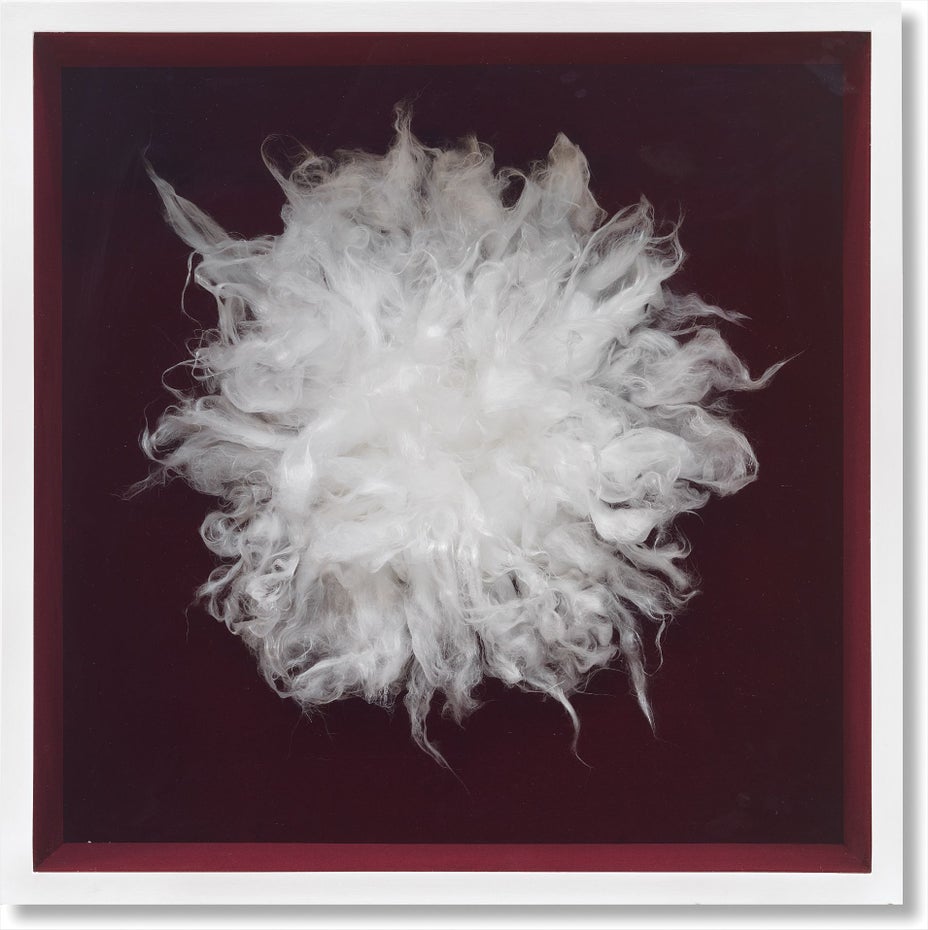
Produced in direct response to Yves Klein’s monochromes, Manzoni’s series of colorless works eliminated any and all narrative, metaphor and allusion through a process that allowed the materials to articulate their own formal and intrinsic properties. Known as Achromes and appearing white, these works were in fact colorless, or “achromatic” and as such represented a negation of painting. The present Achrome is a stunning example of Manzoni’s late works from the series, created just one year before his death. This work consists of a tuft of artificial fiber that has been adhered to red velvet. Although in actual fact this work has color and texture, it functions according to the same principles of his earlier white works in the way that all extraneous detail and style is eliminated, leaving only the presence of the raw material, the self-determined pure signifier highlighting the “a-chromatic” meaning of the work.
Produced in direct response to Yves Klein’s monochromes, Manzoni’s series of colorless works eliminated any and all narrative, metaphor and allusion through a process that allowed the materials to articulate their own formal and intrinsic properties. Known as Achromes and appearing white, these works were in fact colorless, or “achromatic” and as such represented a negation of painting. The present Achrome is a stunning example of Manzoni’s late works from the series, created just one year before his death. This work consists of a tuft of artificial fiber that has been adhered to red velvet. Although in actual fact this work has color and texture, it functions according to the same principles of his earlier white works in the way that all extraneous detail and style is eliminated, leaving only the presence of the raw material, the self-determined pure signifier highlighting the “a-chromatic” meaning of the work.