123
Patek Philippe
Ref. 2499
“Second Series, Pink Gold”
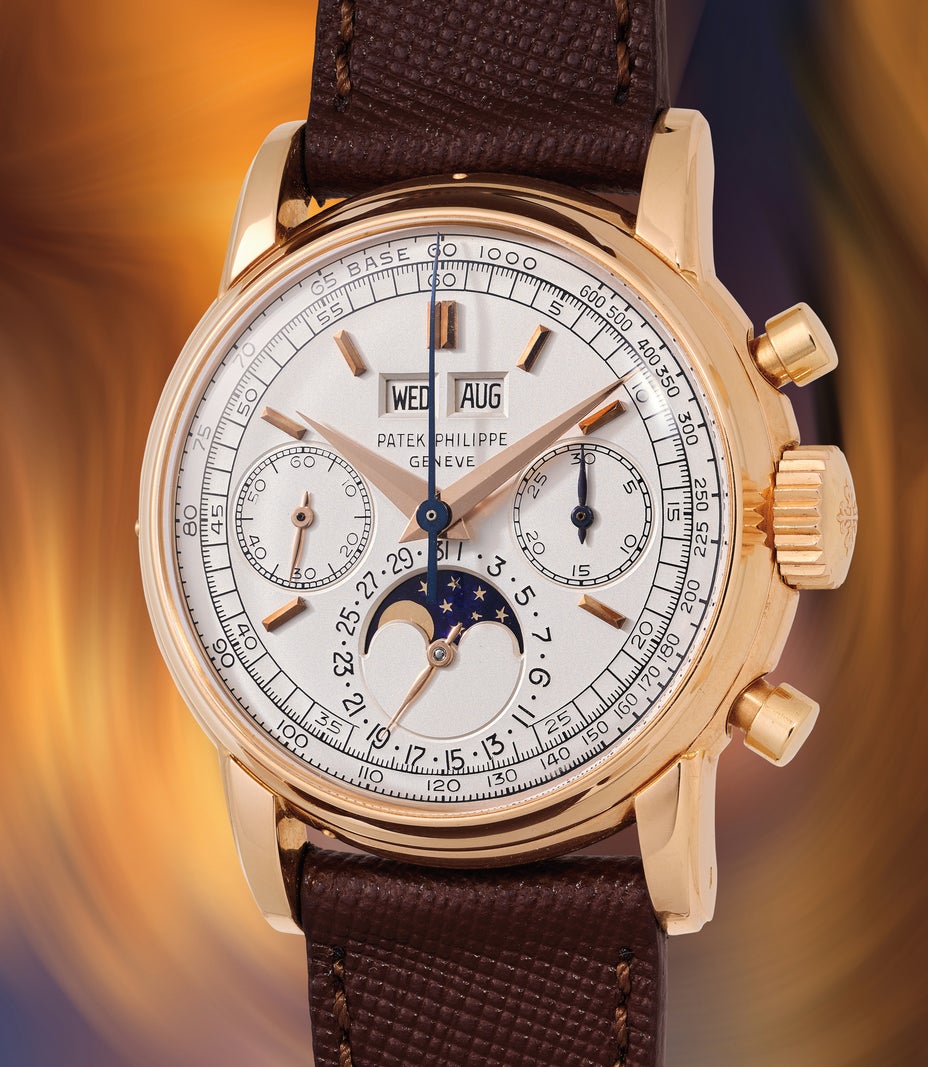
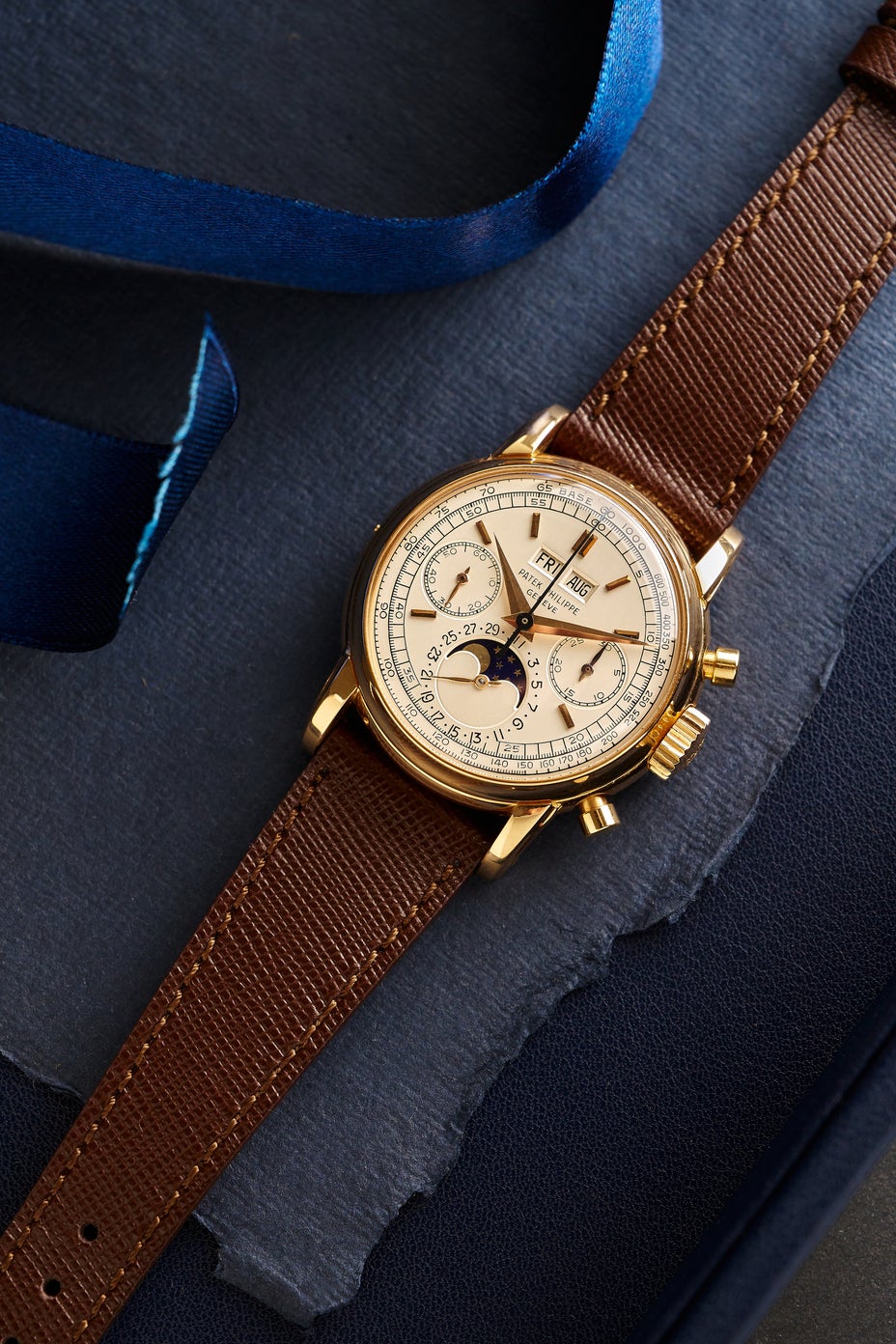
A highly important, very well-preserved, and exceptionally rare “Second Series” pink gold perpetual calendar chronograph wristwatch with moon phases
Full-Cataloguing
• One of eight publicly identified second series 2499 in 18K pink gold
• Immaculate, impressive condition coming from an important European collector
There are few iconic models that are considered the inarguable pinnacle of watch collecting. These references usually combine rarity, technical proficiency and exceptional aesthetics in such a way that they have been recognized for their importance since the inception of wristwatch collecting. The Patek Philippe reference 2499 is without a doubt one of these treasures - considered by some the most beautiful vintage design ever rendered in watch form.
Only having produced an extremely limited total of 349 examples, when presented with the earliest examples, namely the first and second series, the rarity and appeal skyrockets. Adding fuel to the fire is when that example is cased in 18K pink gold, of which only eight pieces of the second series have been publicly identified.
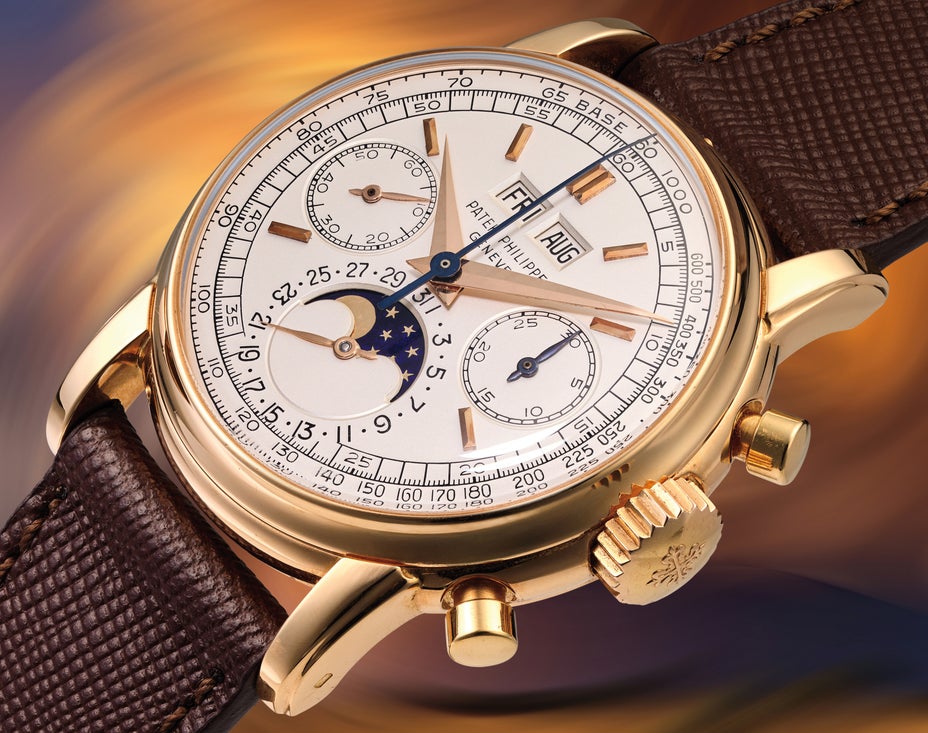
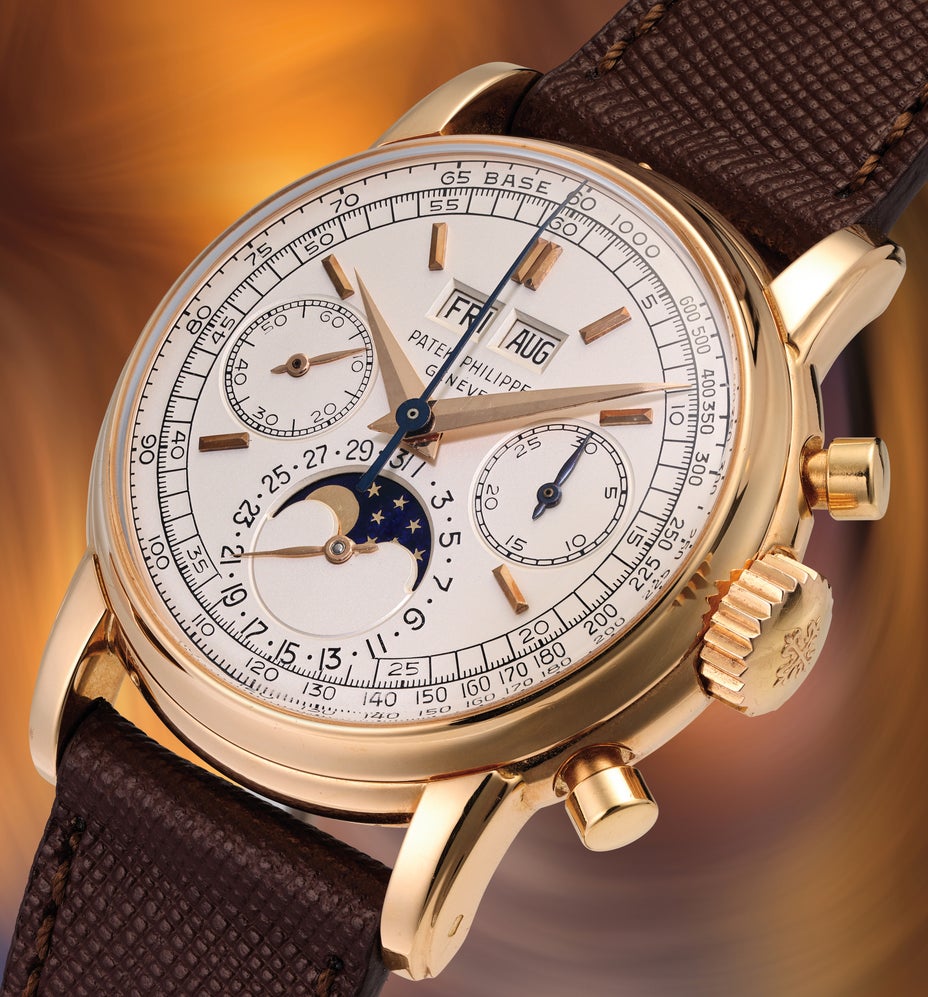
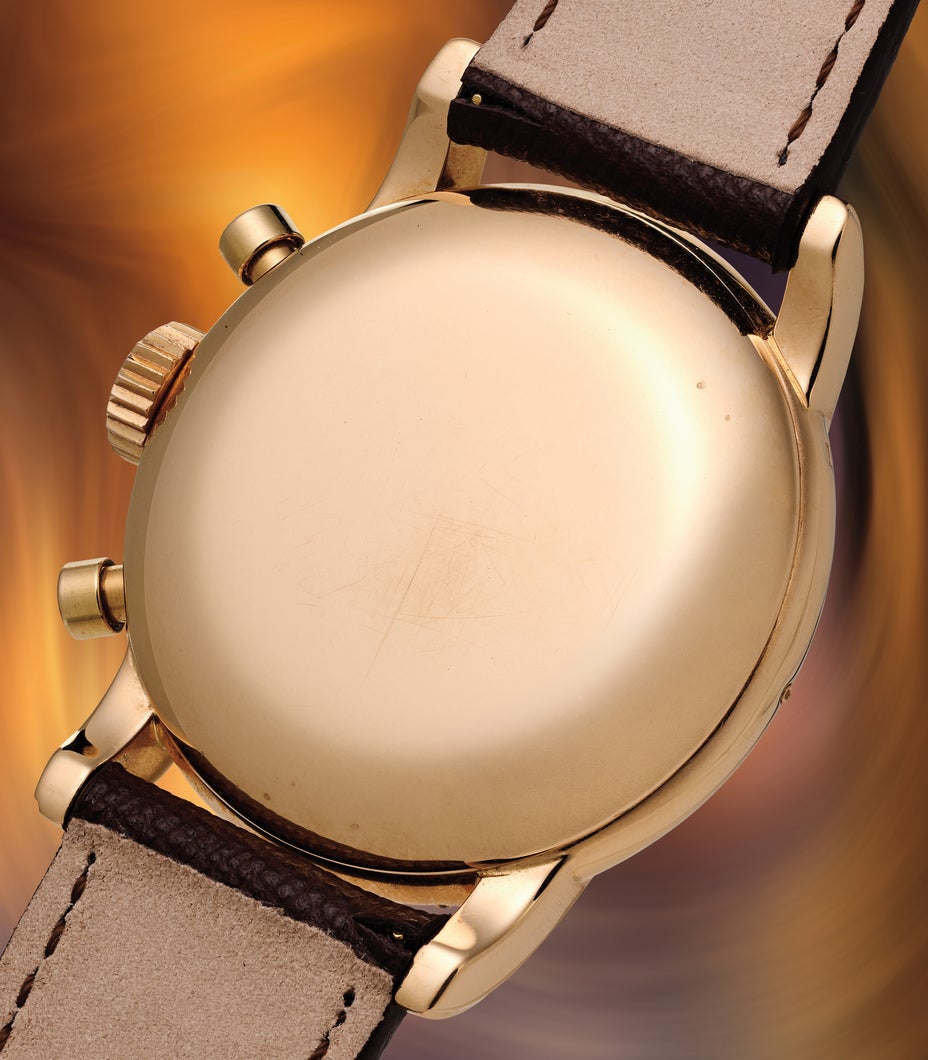
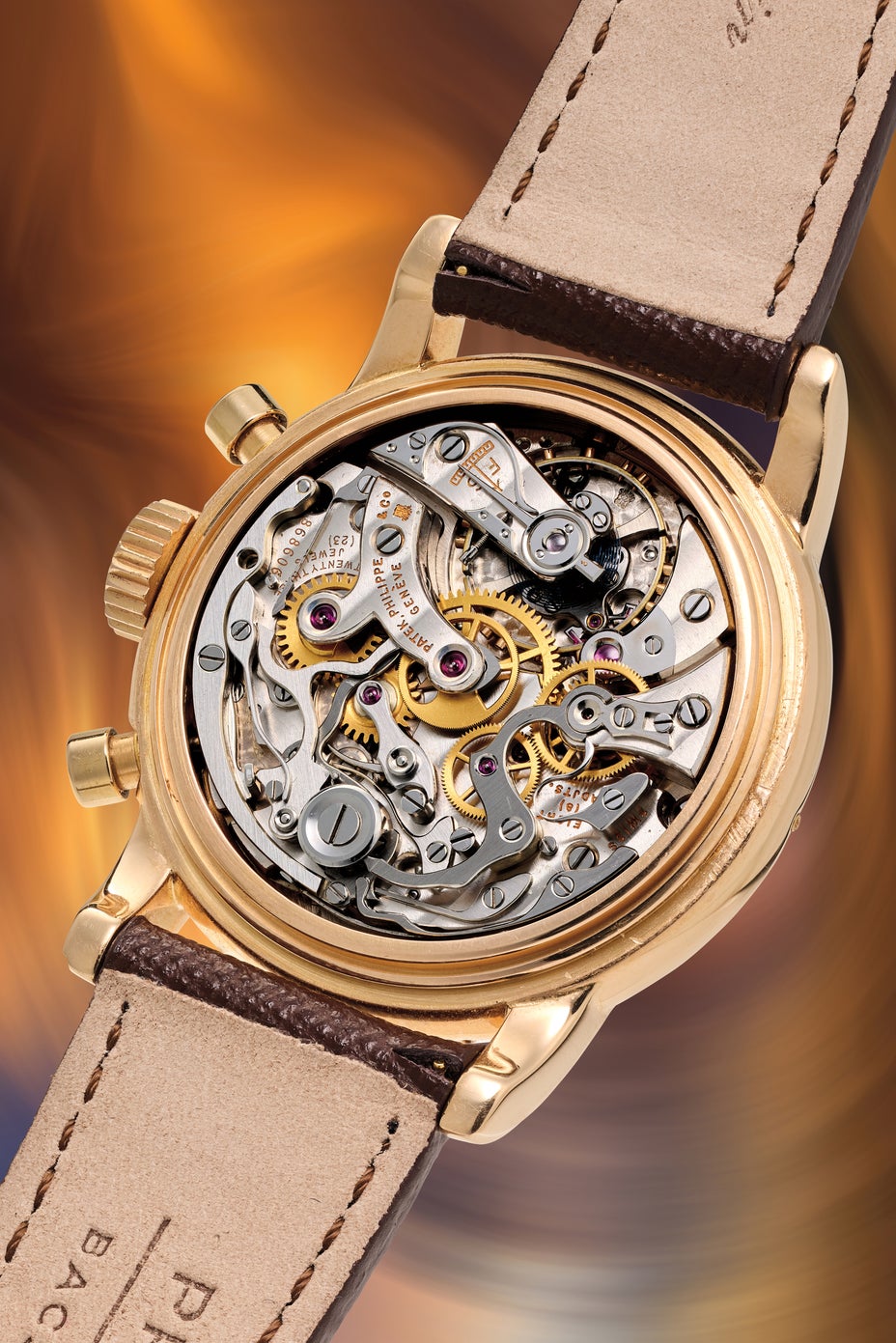
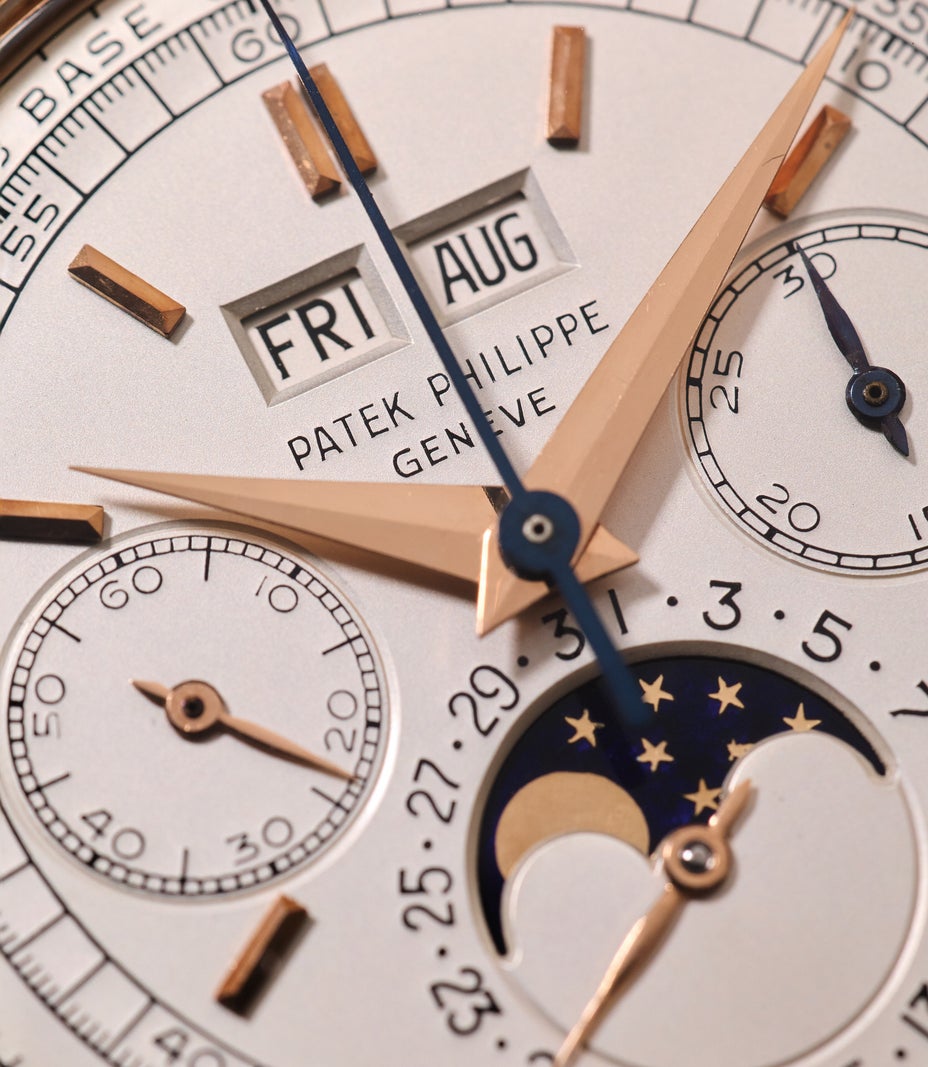
Adding to the overall lure of a pink gold Second Series 2499, the present piece is one of those in the most exquisite state of preservation. The case fully preserves its architecture, with the voluptuous lugs showcasing their carved and fluted design and with incredibly deep and crisp hallmarks on the band and side of the lug - two locations notoriously sensitive to polishing. The dial fully matches the case condition, with crisp engraved/enameled graphics without a hint of fading and sharp edges to the calendar windows and moon aperture.
We truly are in the presence of one of the best specimens of one of the most collectible wristwatch models ever made - an absolute collector’s dream.
868’226 - last appeared at auction in 2013
868’605 - last appeared at auction in 1999
868’606 - the present watch, from a European collection, last appeared at auction in 2023
868’609 - last appeared at auction in 2025
868’611 - last appeared at auction in 2001
868’613 - last appeared at auction in 2011
868’626 - last appeared at auction in 1989
868’752 - last appeared at auction in 2009
HISTORICAL CONTEXT
Reference 2499 is the second - and last vintage - serially produced Patek Philippe perpetual calendar chronograph wristwatch with moonphases. Introduced in 1950, it succeeded (and partly overlapped with) reference 1518 (1941-1954). Mechanically, it shares the same 13 lignes 130 chronograph calibre with the addition of the calendar/moonphase module, based on a Valjoux ébauche and heavily modified in-house. With this movement, Patek Philippe solidified an aesthetic language that has since been employed on virtually all the brand’s models with this complication: an extremely balanced three-counter, two-window architecture which manages to convey the wealth of information given by the watch without feeling overly encumbered.
So entangled is this line of timepieces with the history of the company, that it is the only line which has been in continuous production from its inception until the present, with five main models so far (1518, 2499, 3970, 5970 and 5270).
The technical supremacy of a company who manages to serially manufacture perpetual calendar (not even considering the additional complications!) timepieces beginning from the 1940s is beyond praise: to put it in perspective, the only other company to try something similar was Audemars Piguet with the perpetual calendar (no additional complication) reference 5516. That model was in production for about 4 years (1955-1958), for a total output of 9 pieces. By then, Patek had already made all the 281 examples of ref. 1518, and production of ref. 2499 had been ongoing for six years.
This also helps us to understand the incredible power of this brand. It is important to take note of the fact that reference 1518 (and its chronograph-less counterpart ref. 1526) was launched in 1941 amidst the full swing of WWII. Patek Philippe’s clientele was however so desirous of these timepieces that the war had virtually no impact on their sales, with actual waiting lists being established. The same situation occurred - magnified by peace time - with reference 2499.
STYLE CONSIDERATIONS
While technically superb, part of the charm of the reference is to be attributed to its design. It would be only slightly hyperbolic to state that the design of this model is to be considered the pinnacle of watchmaking design - all ages, all brands, all timepieces included. While this might be arguable - and in fact scores of watch enthusiasts have had such arguments - it is undeniable that the design of the model is a lesson in balance and elegance.
Its progenitor ref. 1518 was a son of its time - wartime - and thus the design was highly inspired by the Bauhaus aesthetic mantra “form follows function” (today reinterpreted as “less is more”): an extremely elegant and compact, no-frills timepiece which is still today considered a champion of Patek Philippe’s understatement.
Reference 2499 was instead designed immediately post-war, and the promises and hopes of such a vibrant era are apparent in its design. The diameter was enlarged from 35mm to 36mm (and later 37.5), a major departure from the restrained aesthetic codes so far employed. The architecture of the case manages to achieve what might have seemed an impossibility: a perfect balance of flair and restraint. The watch feels incredibly luxurious and peculiar, possibly even borderline flamboyant, but never in the slightest excessive or overdone. The case architecture is extremely complex: the concave bezel is contrasted by a convex band. Edges and curves abound everywhere. The lugs - possibly the most iconic detail of the reference - feature a sculpted groove to the outer edge which manages to impart a feeling that is both imposing and airy at the same time. Many of these details have been employed on later models and some references - going as far as ref. 5016 and 5004, in production until the early 2010s - still feature virtually the same case, with minor adaptations.
TECHNICAL DETAILS AND PRODUCTION.
The first examples of ref. 2499 date back to 1949/1950, and the model was discontinued in 1985. Over nearly 35 years, the total production adds up to only 349 pieces in yellow and pink gold, and 2 additional “extra series” platinum pieces. The existence of an extremely restricted number of white gold pieces has been speculated but never confirmed.
As mentioned, the movement was based on a Valjoux ébauche modified and finished to the highest standard, and sometimes stamped with the Geneva Seal (but not always). No relevant modification to the movement was implemented throughout the entire production cycle.
Case and dial instead present a marked evolution, and four series are recognized.
- First series (1951 – 1960): Square chronograph pushers, applied Arabic or baton numerals and tachymeter scale.
- Second series (1955 – 1964): Round chronograph buttons, either applied baton or applied Arabic numerals, tachymeter scale, “floating” date ring. (Present example)
- Third series (1960 – 1978): Round chronograph buttons, applied baton numerals, outer seconds divisions, "floating" date ring, no tachymeter scale.
- Fourth series (1978 – 1985): Round chronograph buttons, applied baton numerals, “floating” date ring, outer seconds divisions (shorter than Third Series), no tachymeter scale, sapphire crystal requiring a thicker bezel.
The present pink gold example belongs to the second series. Second series cases are markedly different from those belonging to the first series: the square chronograph pushers of the first series (inherited from ref. 1518) are abandoned and in their place we find round pushers - more modern and in line with the then-current fashion.
Scholarship was hesitant on whether cases with round pusher were made exclusively by one casemaker - Wenger. Some Vichet examples were rumored to have appeared in the past, but no consensus had been reached. In December 2019 the question was finally closed with the appearance at Phillips New York of an example with case made by Vichet but with round pushers.
The details of the dial remain unchanged between the first and second series; they begin to differ significantly in the transition to the third series. Second series pieces were made, like first series examples, for about a decade mostly in the 1950s. The present example dates exactly to 1953.
While any 2499 is rightfully to be considered a dream watch, pink gold examples are “ultimate” trophy timepieces, objects which collectors spend decades striving to acquire, and often with no success. It is not just an economic problem: the innate rarity of these watches - with a combined total output estimated at between 30 and 40 pieces across all four series: about 10% of the production - coupled with the attachment collectors feel for them, mean they hardly ever appear on the market, furthermore in such attractive condition.
Patek Philippe
Swiss | 1839Since its founding in 1839, this famous Geneva-based firm has been surprising its clientele with superbly crafted timepieces fitted with watchmaking's most prestigious complications. Traditional and conservative designs are found across Patek Philippe's watches made throughout their history — the utmost in understated elegance.
Well-known for the Graves Supercomplication — a highly complicated pocket watch that was the world’s most complicated watch for 50 years — this family-owned brand has earned a reputation of excellence around the world. Patek's complicated vintage watches hold the highest number of world records for results achieved at auction compared with any other brand. For collectors, key models include the reference 1518, the world's first serially produced perpetual calendar chronograph, and its successor, the reference 2499. Other famous models include perpetual calendars such as the ref. 1526, ref. 3448 and 3450, chronographs such as the reference 130, 530 and 1463, as well as reference 1436 and 1563 split seconds chronographs. Patek is also well-known for their classically styled, time-only "Calatrava" dress watches, and the "Nautilus," an iconic luxury sports watch first introduced in 1976 as the reference 3700 that is still in production today.