52
Patek Philippe
Ref. 96
Calatrava
A remarkable and highly collectable stainless steel wristwatch with engraved/enameled graphics, Breguet numerals and Gay Frères bracelet
Full-Cataloguing
- Time only, subsidiary seconds at 6 o'clock
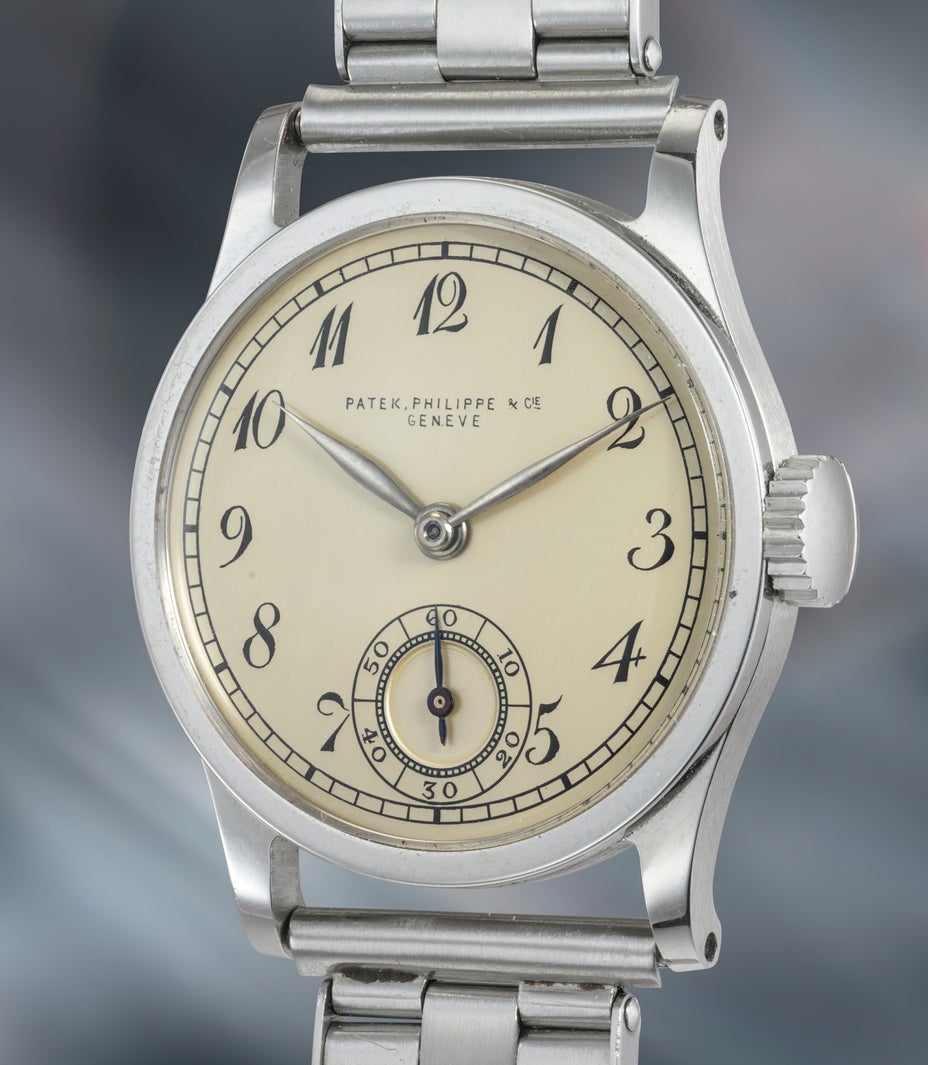
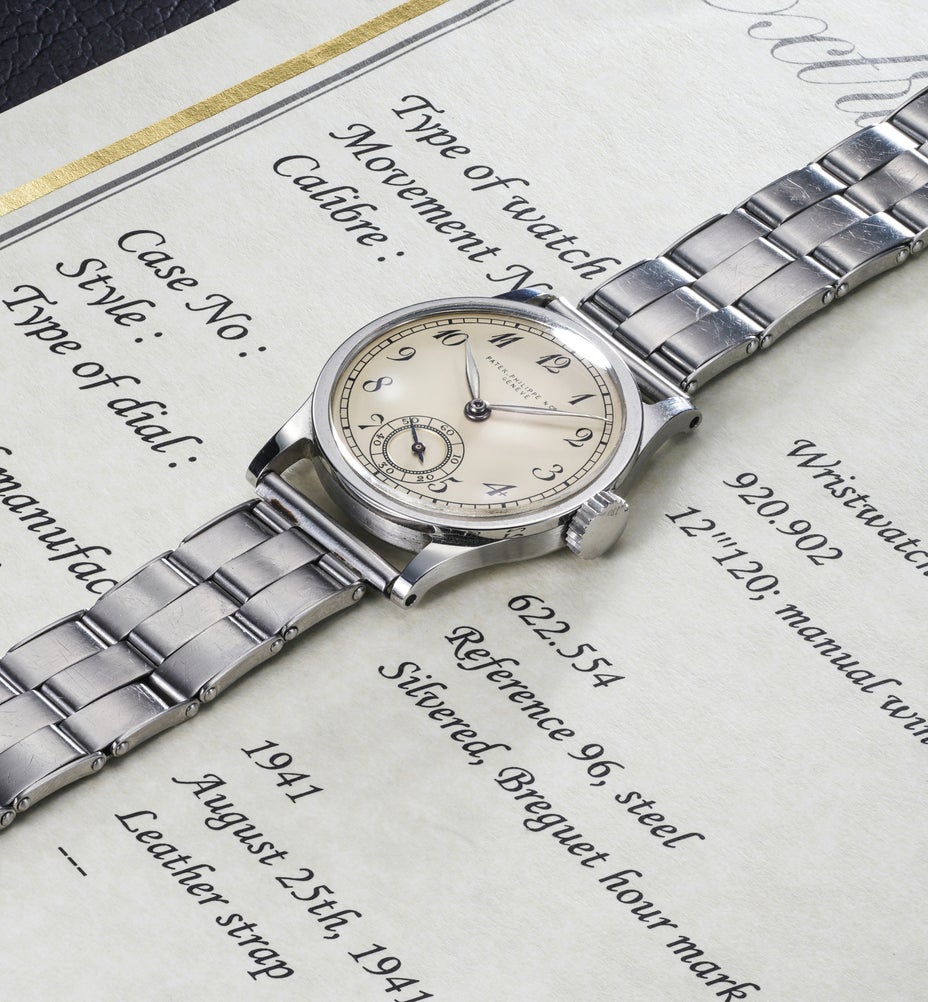
- Superbly attractive and equally rare variant with fully engraved/enamel graphics including Breguet numerals - all confirmed by the extract
- With Gay Frères expandable bracelet, a collectible in itself
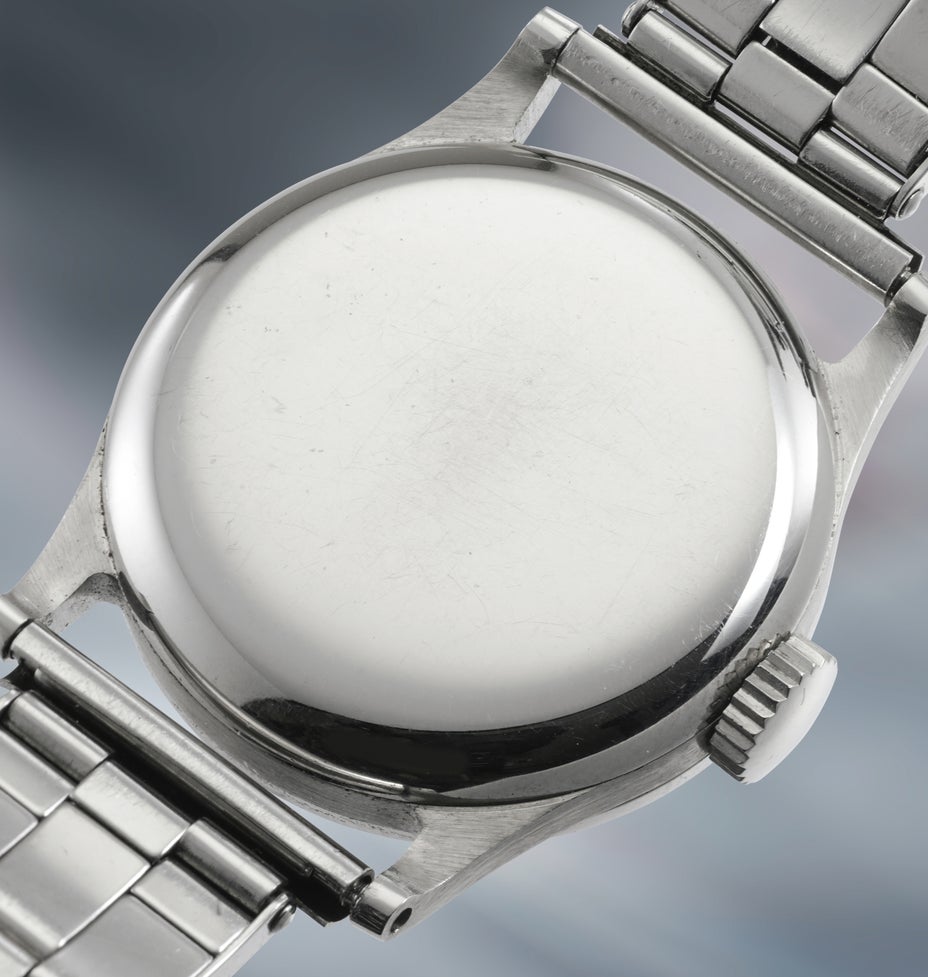
- Offered in delightful condition
The present example of iconic reference 96 is without a doubt one of the most distinguished representatives of the model. It is immediately distinguished by its enthralling dial design, featuring quasi-militaristic railway divisions and seconds at 6, in the best 1940s tradition, juxtaposed to the much more flamboyant Breguet numerals. The combination is well documented albeit highly uncommon, appearing only on a few dozen steel examples. There are two variants of the design: one featuring applied Breguet numerals, another - here exemplified - featuring fully engraved/enamel graphics, including the numerals. The latter is a much more expensive technique - so much so that it was eventually completely discontinued (more or less at the time of the quartz crisis) and now no brand employs it anymore. And yet, this method yielded incredibly durable dials and bold graphics which - opposite to their printed counterparts - are not subject to fading or color change if properly cared for: a true treasure lost to the sands of time. Given the added cost, it is no surprise that the Patek Philippe archive retains full description of the dial, mentioning explicitly “Breguet hour markers in black enamel”.
The presence of the long signature - as expected from a watch made in 1941 - is the cherry on the cake.
Patek Philippe's reference 96 is the archetypal "Calatrava" wristwatch. The model, manufactured from 1932 until 1973, was inspired by the Bauhaus aesthetic canon of "form follows function," resulting in a timeless purity and harmony of case lines, still echoed today in the firm's designs. Its success prompted numerous variations, featuring different dial and hand types, as well as caliber modifications with different seconds indication including center seconds, seconds hand at six o’clock, and "no-second" variants. Sophisticated and elegant, the case with long downturned lugs and a simple flat bezel has remained relevant for the last 90 years. The reference 96 was most often cased in yellow gold (about 600 examples known), as well as in stainless steel (circa 250 known), pink gold (around 150 known) , platinum (a bit more than 50 known) and white gold (10 pieces known).
Patek Philippe
Swiss | 1839Since its founding in 1839, this famous Geneva-based firm has been surprising its clientele with superbly crafted timepieces fitted with watchmaking's most prestigious complications. Traditional and conservative designs are found across Patek Philippe's watches made throughout their history — the utmost in understated elegance.
Well-known for the Graves Supercomplication — a highly complicated pocket watch that was the world’s most complicated watch for 50 years — this family-owned brand has earned a reputation of excellence around the world. Patek's complicated vintage watches hold the highest number of world records for results achieved at auction compared with any other brand. For collectors, key models include the reference 1518, the world's first serially produced perpetual calendar chronograph, and its successor, the reference 2499. Other famous models include perpetual calendars such as the ref. 1526, ref. 3448 and 3450, chronographs such as the reference 130, 530 and 1463, as well as reference 1436 and 1563 split seconds chronographs. Patek is also well-known for their classically styled, time-only "Calatrava" dress watches, and the "Nautilus," an iconic luxury sports watch first introduced in 1976 as the reference 3700 that is still in production today.