
205
Patek Philippe
Ref. 605
World Time
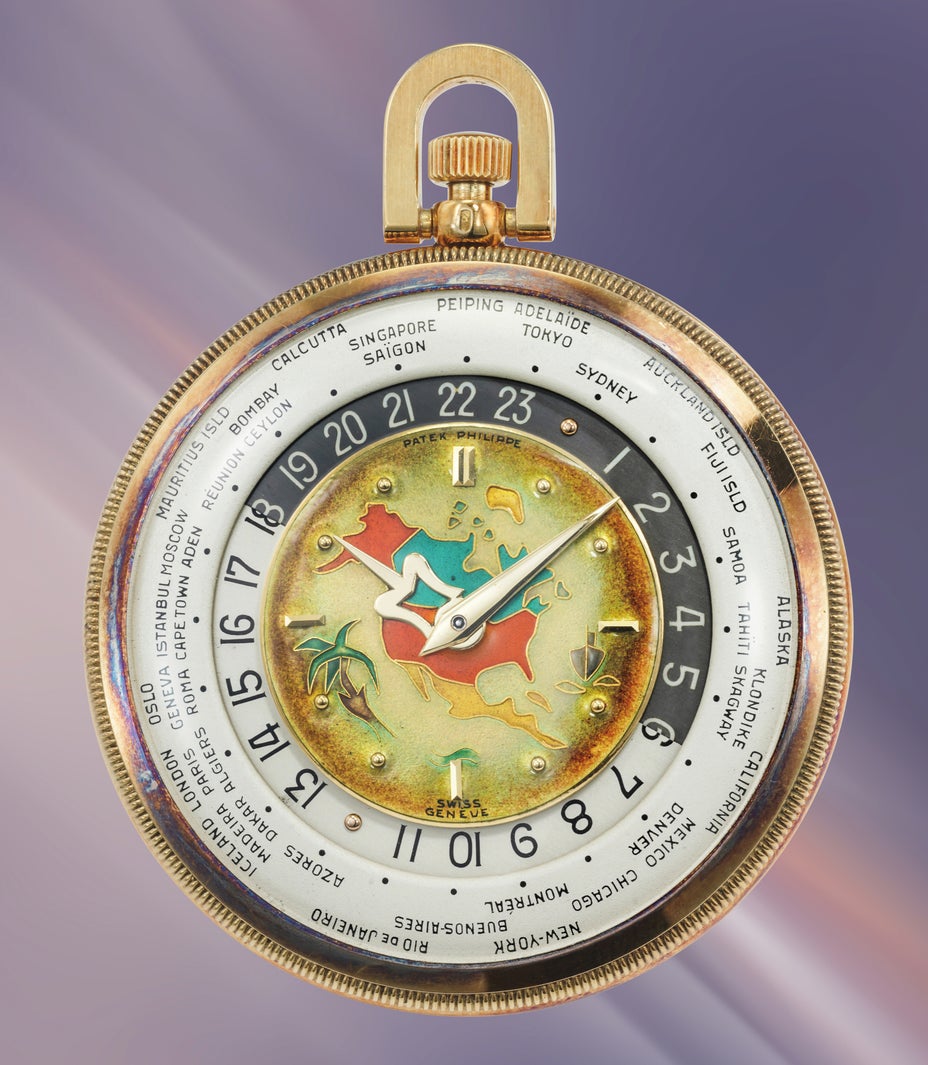
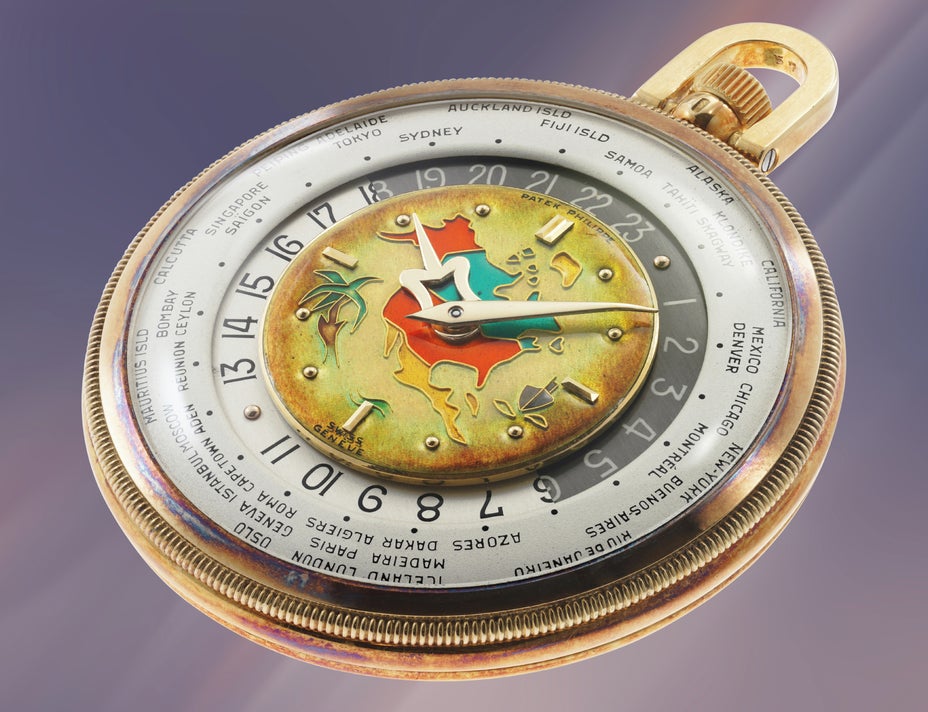
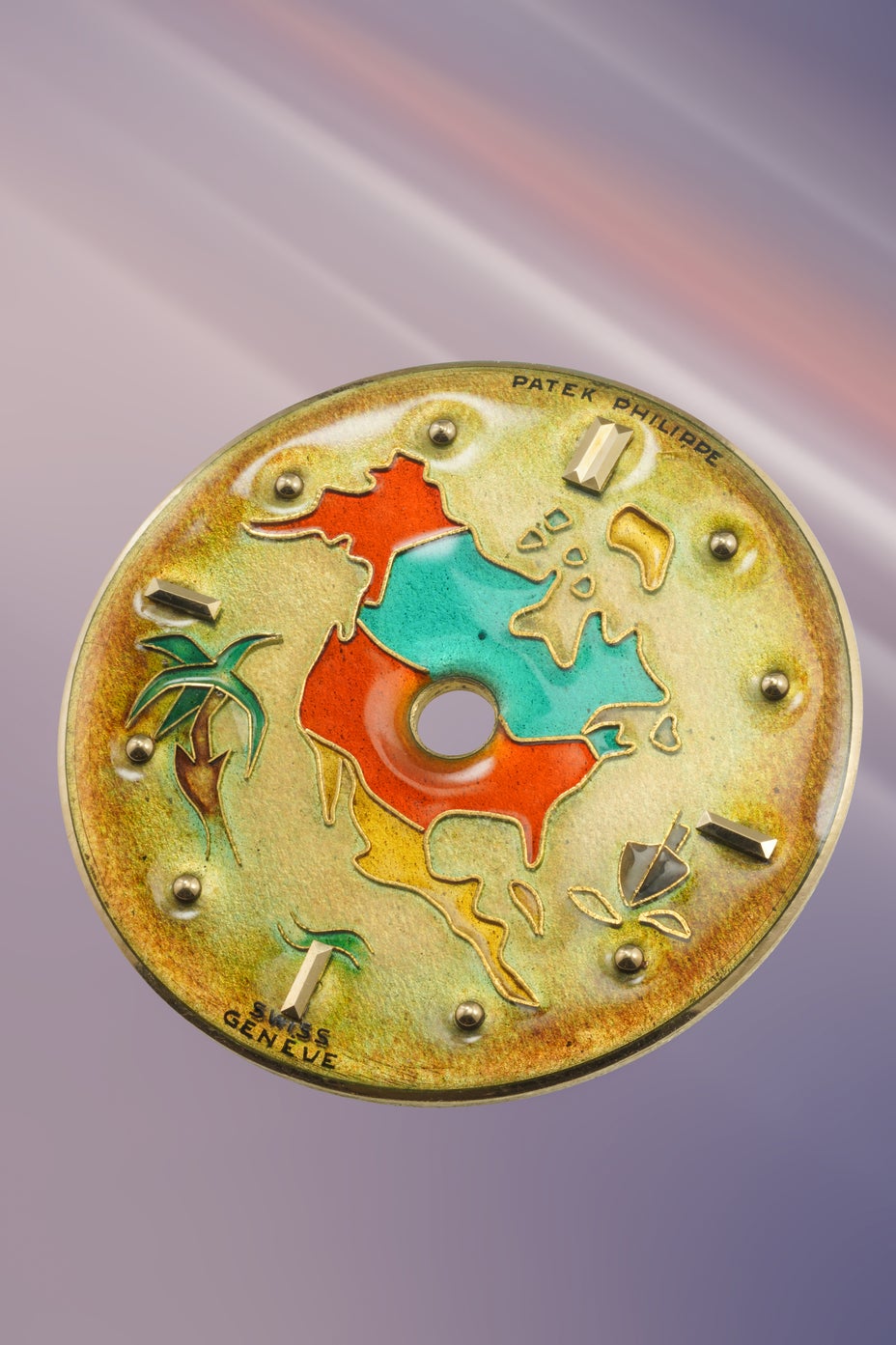
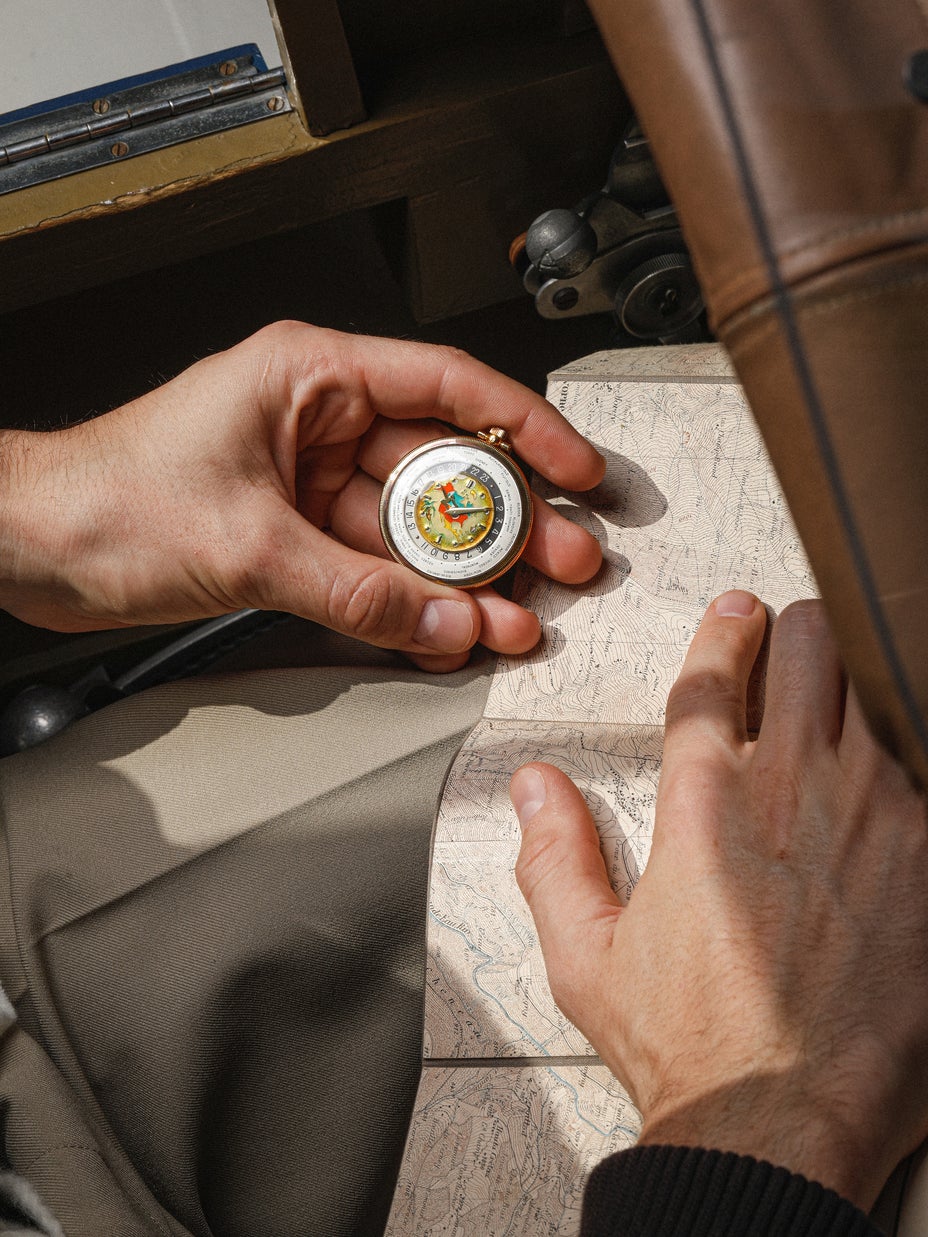
An important, enormously attractive and highly collectible world time openface pocket watch with cloisonné enamel dial depicting the map of North America
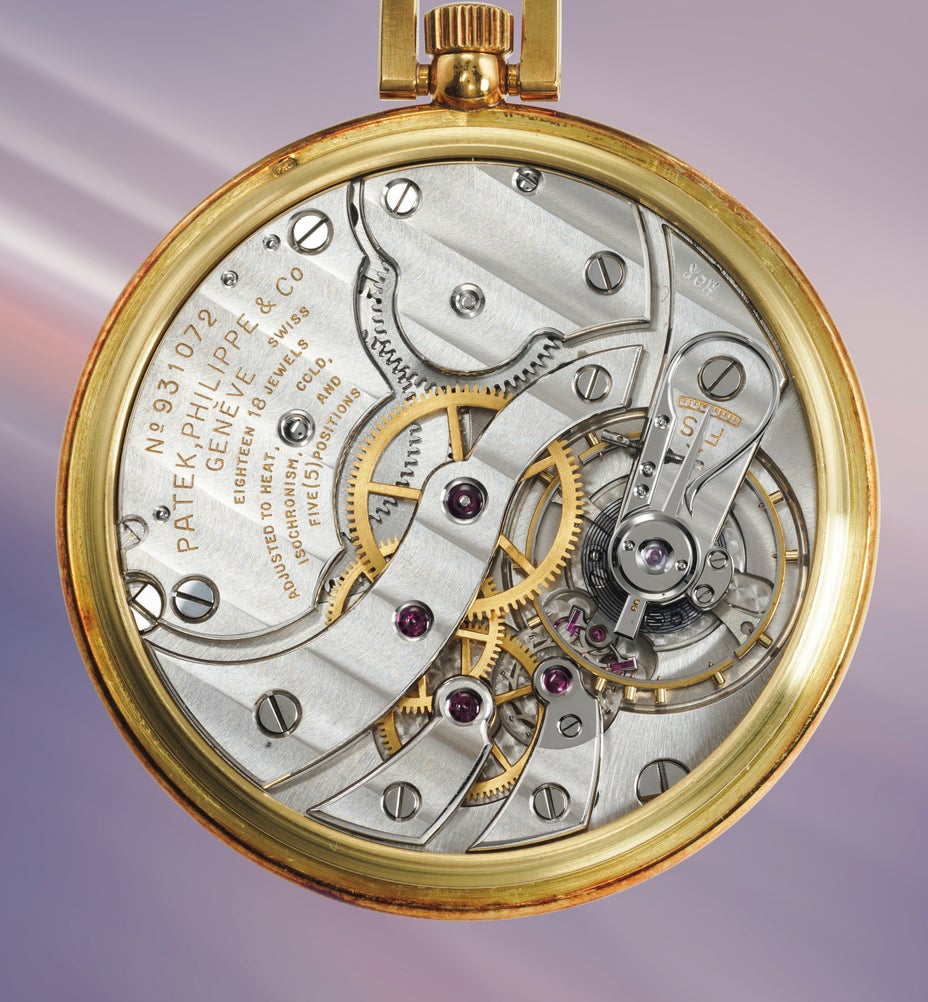
Full-Cataloguing
- World-time
- Featuring cloisonné enamel dial with the depiction of North America, one of five known
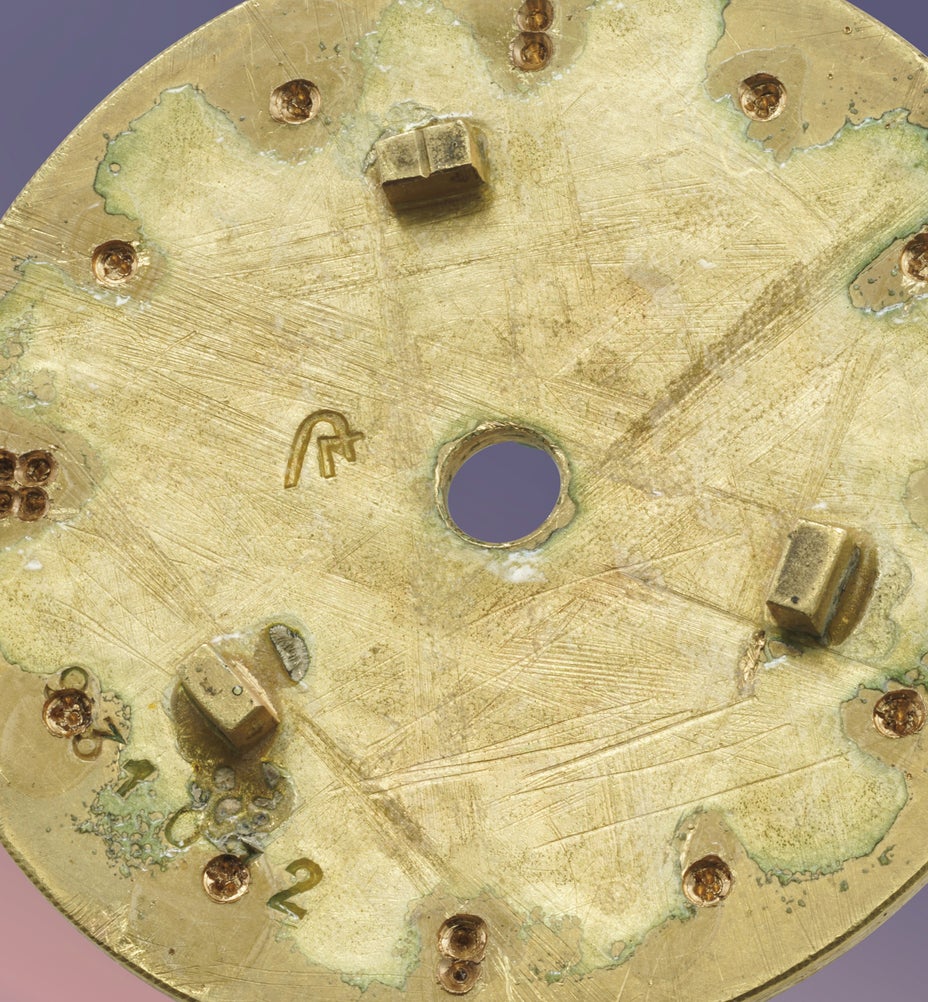
- The enamel disc bears the full movement number of the watch to the back
Patek Philippe has been renowned - for more than a century now - as one of the most important watchmakers in the world. Over the decades, many different complications and styles were tackled by the company, but three main product lines have become nearly synonymous with the brand: the line of perpetual calendar chronographs with moonphases, the minute repeating watches, and the here epitomized world-time line of watches. First realized in very few numbers in the 1940s and 1950s, the complication was rediscovered by the brand in the 1990s and is today a staple of their offering. One of the reasons of this success is undoubtedly the legendary cloisonné polychrome enamel versions of the mid-twentieth century, exemplified by the present masterpiece.
Production of reference 605HU - for Heures Universelles (universal hours in French) - commenced in 1937, continuing up to the late 1960s. These models were available either with metal dials or, in some rare instances, cloisonné enamel dials representing maps (a leitmotif of PP world-time watches, found on wrist versions as well, both vintage and modern) or other themes. As connoisseurs well know, the production of every single piece was made under the supervision of the inventor of the world-time system, Louis Cottier - who also handmade the hands of the watches, to ensure perfect functionality and lack of friction with the dials. In fact, the “LC” monogram of the watchmaker is present - together with the watch movement number - on the back of the enamel disc. As far as we know, these Cottier signatures are the only examples of a watchmaker’s signature on Patek Philippe timepieces, which highlights in how high a regard Mr. Cottier was held by the company.
Time is indicated with hour and minute hands at center - featuring the signature “Cottier hands” - and the city of choice (local time zone) is placed at the 12 o'clock position. After this simple procedure, the watch displays on the 24-hour ring the correct time for every time zone in the world: an extremely elegant solution which unsurprisingly has survived virtually unchanged until today.
It is interesting to note that the present example lists London and Paris on the same time zone, Greenwich Mean Time. On June 15th, 1940, Paris converted to Central European Time and for many years, it was thought that Paris would eventually revert to GMT, which explains why many reference 605 HU made well in the 50s or 60s still list Paris and London on the same timezone.
A little over a dozen reference 605HU in yellow gold with cloisonné enamel dials are known, and only 5 examples depicting North America and a palm tree - a subtle detail missing from the North America dials made for world-time wristwatches - have so far been identified, underlining the extreme rarity of these models. Each of them is unanimously considered by the collectors’ community a pinnacle of Patek Philippe savoir-faire and creativity and counted among the most important time-only pocket watches ever made. An absolutely unmissable opportunity for the most demanding watch collector.
Patek Philippe
Swiss | 1839Since its founding in 1839, this famous Geneva-based firm has been surprising its clientele with superbly crafted timepieces fitted with watchmaking's most prestigious complications. Traditional and conservative designs are found across Patek Philippe's watches made throughout their history — the utmost in understated elegance.
Well-known for the Graves Supercomplication — a highly complicated pocket watch that was the world’s most complicated watch for 50 years — this family-owned brand has earned a reputation of excellence around the world. Patek's complicated vintage watches hold the highest number of world records for results achieved at auction compared with any other brand. For collectors, key models include the reference 1518, the world's first serially produced perpetual calendar chronograph, and its successor, the reference 2499. Other famous models include perpetual calendars such as the ref. 1526, ref. 3448 and 3450, chronographs such as the reference 130, 530 and 1463, as well as reference 1436 and 1563 split seconds chronographs. Patek is also well-known for their classically styled, time-only "Calatrava" dress watches, and the "Nautilus," an iconic luxury sports watch first introduced in 1976 as the reference 3700 that is still in production today.