17
Patek Philippe
Ref. 96
Calatrava
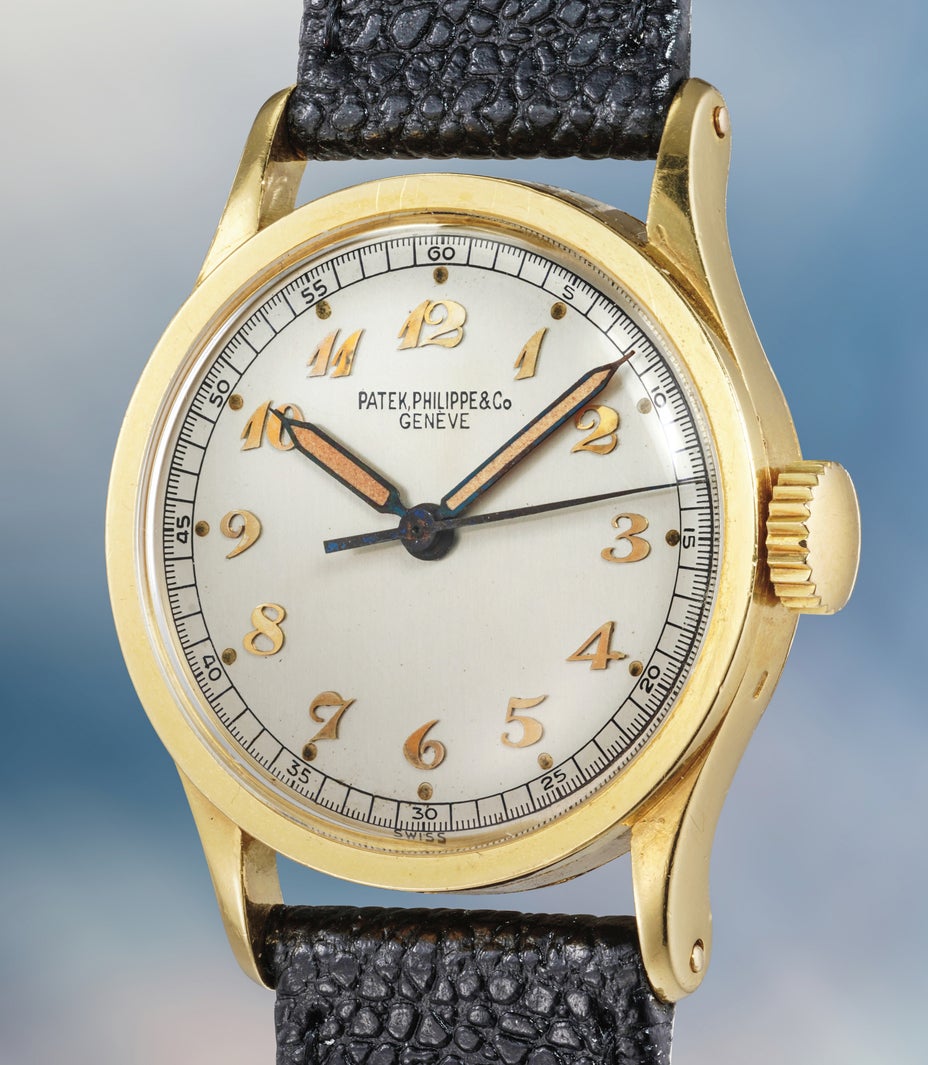
A superb and extremely rare yellow gold wristwatch with indirect center seconds, Breguet numerals and luminous dots
Full-Cataloguing
- Indirect center seconds - highly uncommon and sought-after
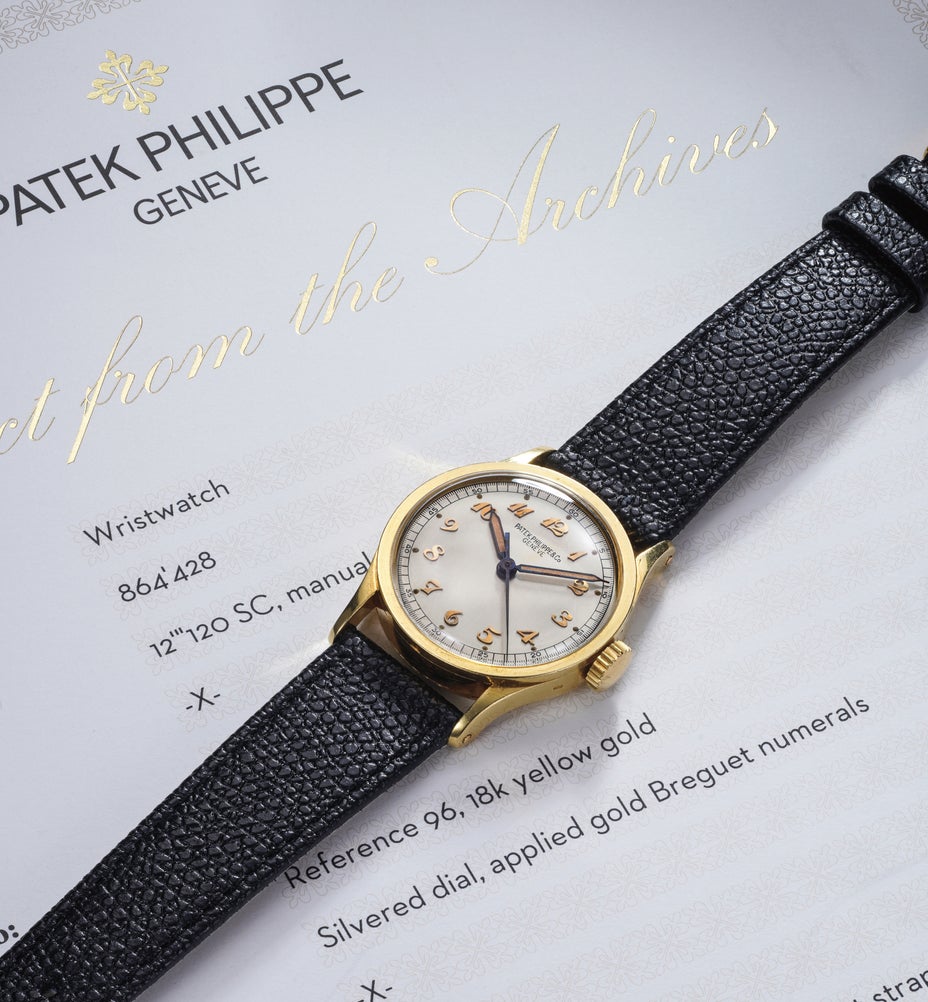
- Rare and attractive luminous Breguet numerals - Breguet numerals are confirmed by Extract from the Archives
Patek Philippe's reference 96 is the archetypal "Calatrava" wristwatch. The model, manufactured from 1932 until 1973, was inspired by the Bauhaus aesthetic canon of "form follows function," resulting in a timeless purity and harmony of case lines, still echoed today in the firm's designs. Its success prompted numerous variations, featuring different dial and hand types, as well as caliber modifications with different seconds indication including center seconds, seconds hand at six o’clock, and "no-second" variants. Sophisticated and elegant, the case with long downturned lugs and a simple flat bezel has remained relevant for the last 90 years. The reference 96 was most often cased in yellow gold, as well as in stainless steel, pink gold, white gold, and platinum.
This exotic example is well above a “standard” 96 in terms of collectability. In terms of aesthetics, it features one of the most beloved dial configurations in the history of Patek Philippe: a luminous dial with Breguet numerals. The juxtaposition of the whimsical and elaborate Breguet numerals to the utilitarianism of the luminous accents has long fascinated collectors. The Breguet numerals are confirmed by the Extract from the archives. Furthermore, the dial is in superb condition, with strong graphics retaining all details, such as the accent and comma in the signature.
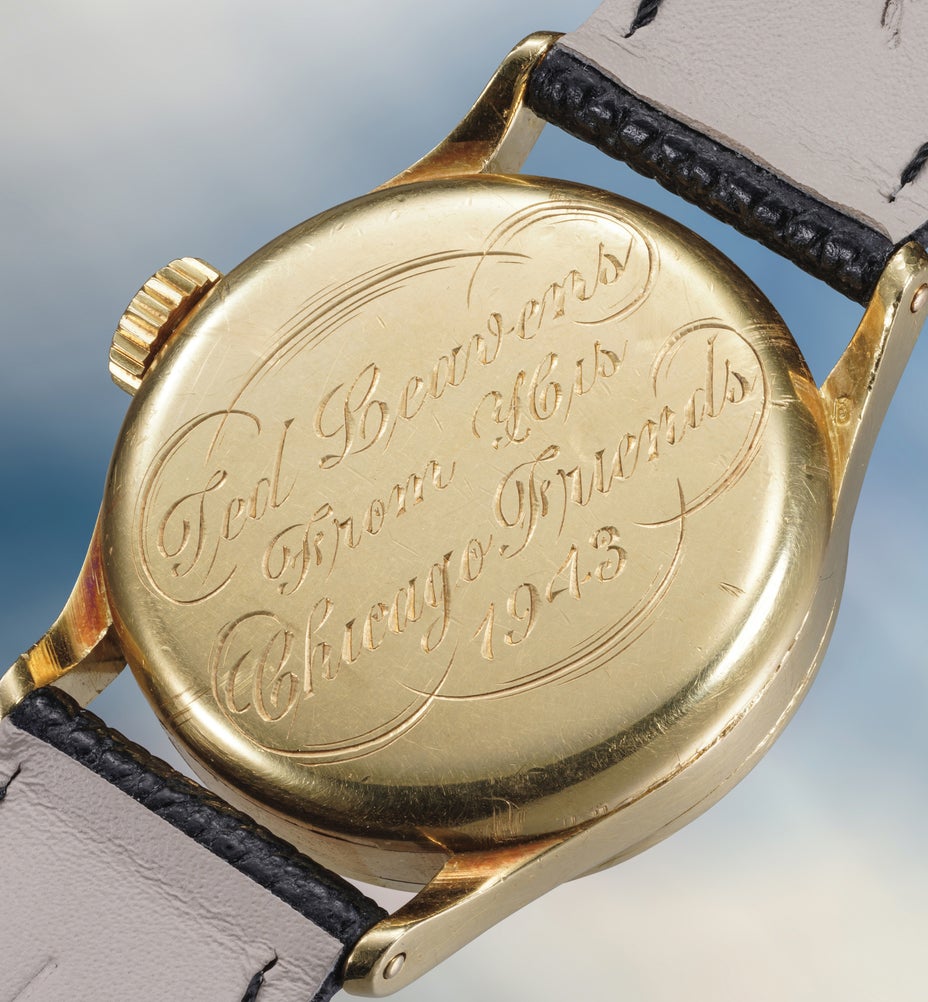
Mechanically, it impresses the scholar thanks to its indirect center seconds. While most examples of the model feature seconds at 6 - as the caliber’s gear train ended at 6 o’clock, as customary in most movements at the time - few specimens, such as the present watch, sport center seconds thanks to a modification which adds a gear train on top of the movement to “relocate” the seconds to the center. Finally, a note of intrigue is given by the engraving to the back “Ted Leavens from his Chicago friends 1943”. While the precise identity of Mr. Leavens is lost to time, it can only be imagined that he must have been a man of relevance and respect, judging by the gift he received. The fact that the movement is signed PXP indicates the watch was imported and sold in the USA, thus perfectly fitting with the Chicago location.
Patek Philippe
Swiss | 1839Since its founding in 1839, this famous Geneva-based firm has been surprising its clientele with superbly crafted timepieces fitted with watchmaking's most prestigious complications. Traditional and conservative designs are found across Patek Philippe's watches made throughout their history — the utmost in understated elegance.
Well-known for the Graves Supercomplication — a highly complicated pocket watch that was the world’s most complicated watch for 50 years — this family-owned brand has earned a reputation of excellence around the world. Patek's complicated vintage watches hold the highest number of world records for results achieved at auction compared with any other brand. For collectors, key models include the reference 1518, the world's first serially produced perpetual calendar chronograph, and its successor, the reference 2499. Other famous models include perpetual calendars such as the ref. 1526, ref. 3448 and 3450, chronographs such as the reference 130, 530 and 1463, as well as reference 1436 and 1563 split seconds chronographs. Patek is also well-known for their classically styled, time-only "Calatrava" dress watches, and the "Nautilus," an iconic luxury sports watch first introduced in 1976 as the reference 3700 that is still in production today.