44
Patek Philippe
“Observatory Chronometer”
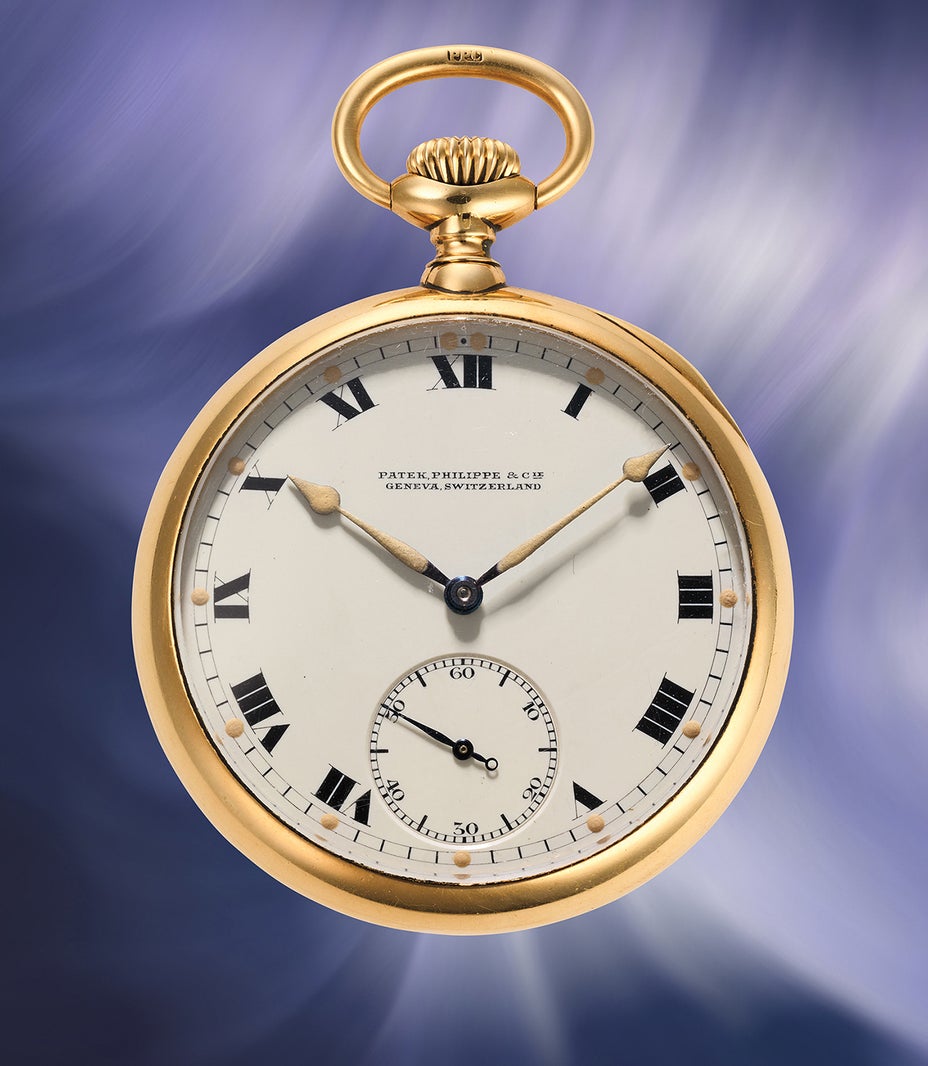
A very rare and attractive yellow gold openface pocket watch with “Extra”-grade movement, Guillaume balance, Geneva Observatory Bulletin, and extract from the archives
Full-Cataloguing
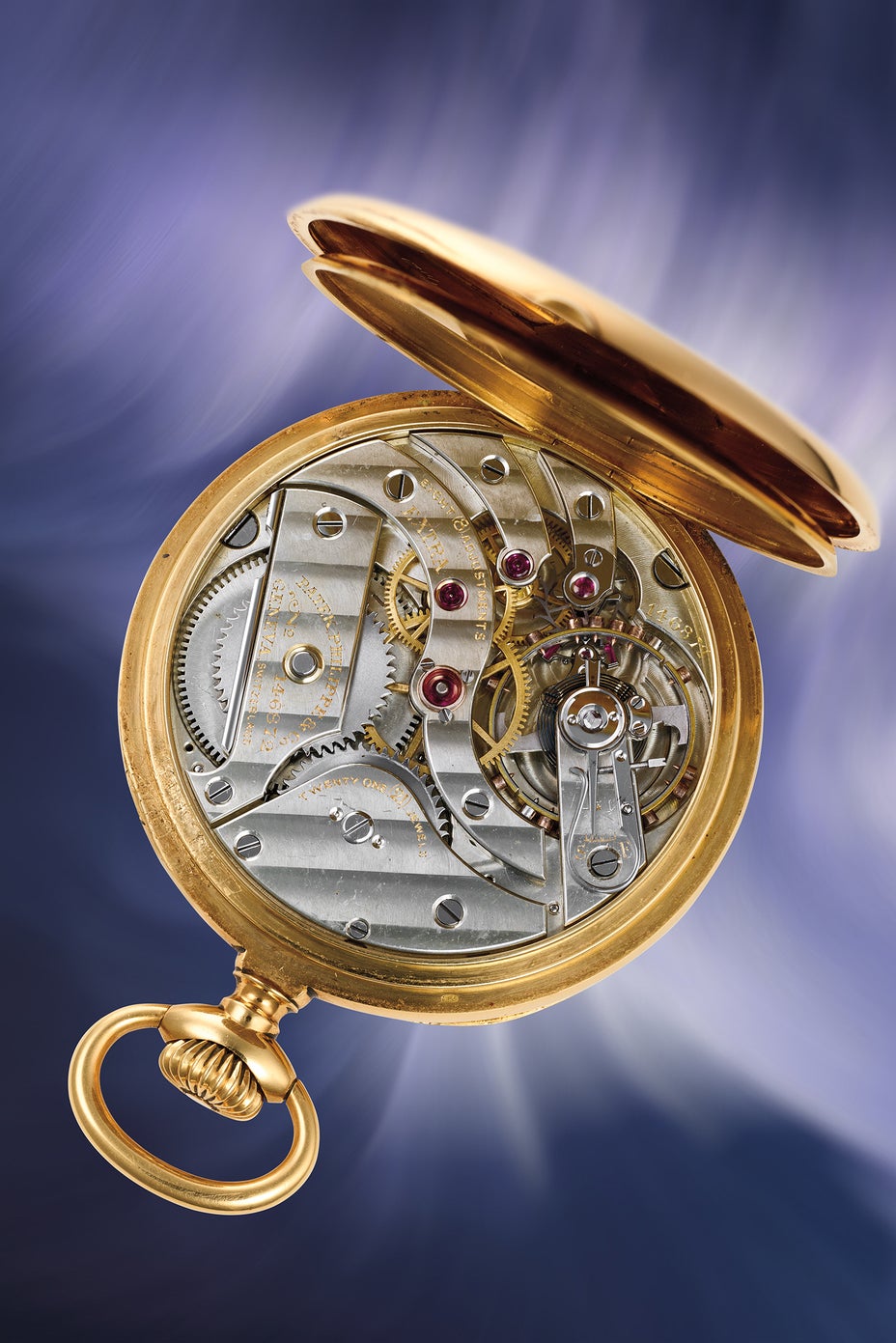
• Features a high-grade “Extra” movement fitted with Guillaume balance
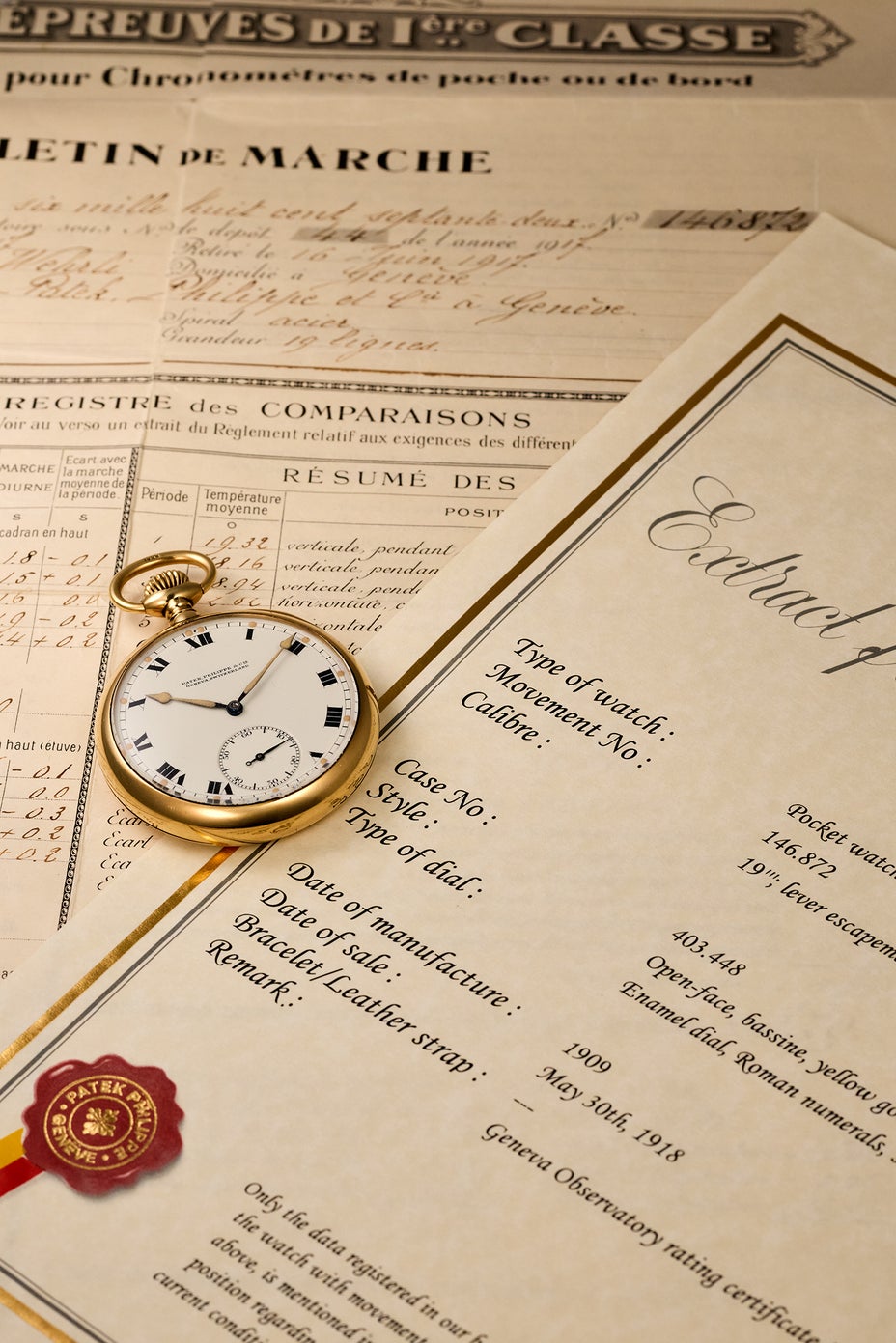
• Accompanied by its original Geneva Observatory Bulletin
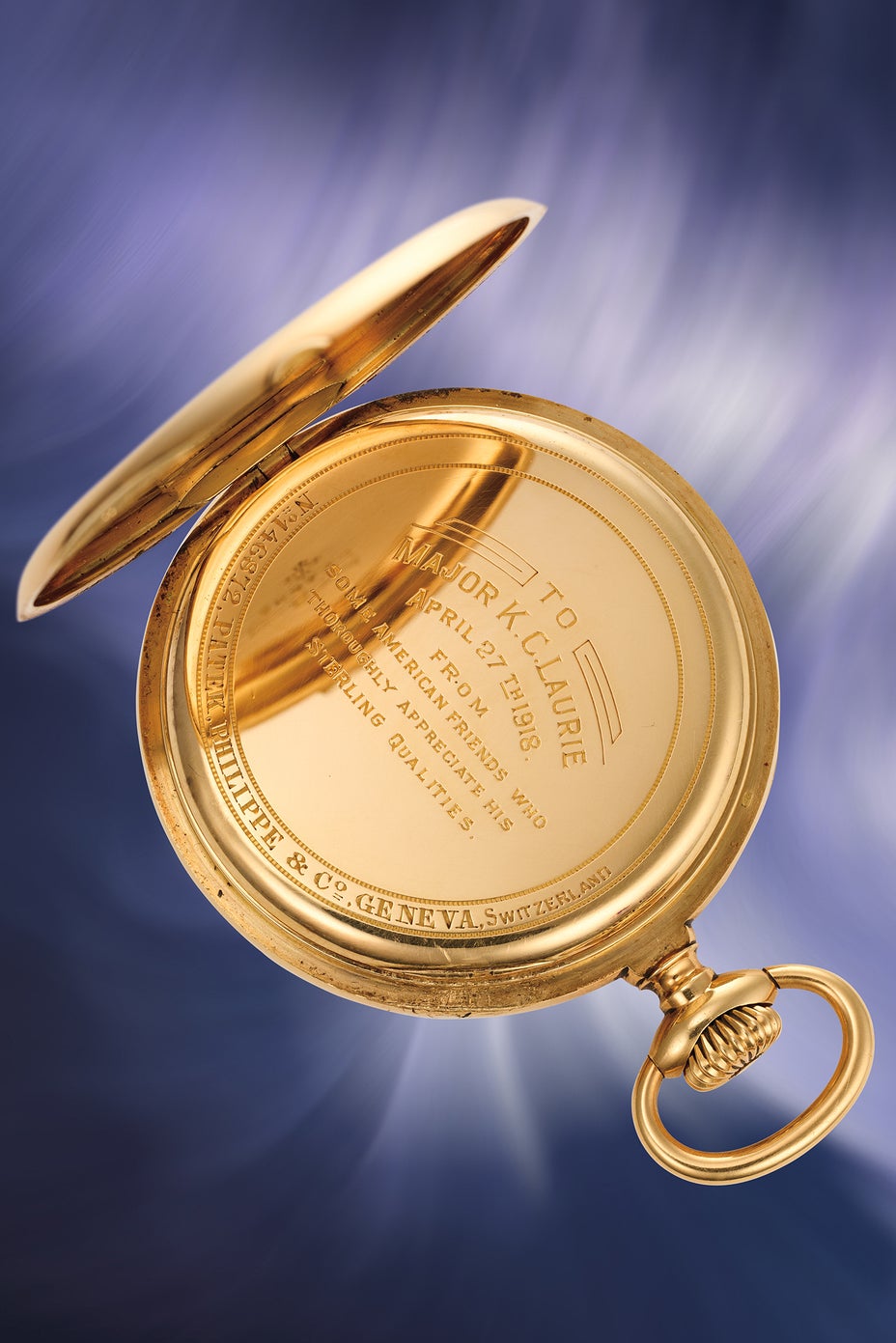
• Luminous dial and hands and engraved cuvette dated 1918 with personal inscription
The present Patek Philippe openface pocket watch is a compelling testament to the manufacture’s early 20th-century pursuit of chronometric excellence. Produced in 1909 and cased in 18K yellow gold, it houses a highly refined “Extra”-grade caliber 19 movement, distinguished by its 21 jewels and the inclusion of a Guillaume balance—an innovation of the era designed to counteract thermal variation and enhance precision.
Of particular importance, the watch is accompanied by its original Geneva Observatory Bulletin dated June 19th, 1917. Such bulletins were awarded only after rigorous testing in multiple positions and temperatures, underscoring the movement’s exceptional performance and placing it among the elite timekeepers of its time. The presence of both a Guillaume balance and Observatory certification firmly situates this piece within the upper echelon of Patek Philippe’s production.
Further enhancing its historical appeal, the cuvette is engraved: “To Major K.C. Laurie April 27th 1918. From some American friends who thoroughly appreciate his sterling qualities.” This evocative inscription suggests a presentation piece of personal and possibly military significance, aligning with the final year of World War I.
Accompanied with its Extract from the Archives confirming its production in 1909 and sale on May 30th, 1918, the present watch represents a rare convergence of technical sophistication, documented chronometric achievement, and historical provenance.
Patek Philippe
Swiss | 1839Since its founding in 1839, this famous Geneva-based firm has been surprising its clientele with superbly crafted timepieces fitted with watchmaking's most prestigious complications. Traditional and conservative designs are found across Patek Philippe's watches made throughout their history — the utmost in understated elegance.
Well-known for the Graves Supercomplication — a highly complicated pocket watch that was the world’s most complicated watch for 50 years — this family-owned brand has earned a reputation of excellence around the world. Patek's complicated vintage watches hold the highest number of world records for results achieved at auction compared with any other brand. For collectors, key models include the reference 1518, the world's first serially produced perpetual calendar chronograph, and its successor, the reference 2499. Other famous models include perpetual calendars such as the ref. 1526, ref. 3448 and 3450, chronographs such as the reference 130, 530 and 1463, as well as reference 1436 and 1563 split seconds chronographs. Patek is also well-known for their classically styled, time-only "Calatrava" dress watches, and the "Nautilus," an iconic luxury sports watch first introduced in 1976 as the reference 3700 that is still in production today.