1014Σ︎
Patek Philippe
Ref. 2499/100 “MK I”
An unpolished, exceptionally well-preserved and important yellow gold perpetual calendar chronograph wristwatch with moon phases, hang tag and presentation box
Full-Cataloguing
The Patek Philippe ref. 2499 across four series:
- First series (1951 – 1960): Square chronograph pushers, applied Arabic numerals and tachometer scale
- Second series (1955 – 1964): Round chronograph buttons, either applied baton or applied Arabic numerals and tachymeter scale.
- Third series (1960 – 1978): Round chronograph buttons, applied baton numerals and outer seconds divisions.
- Fourth series (1978 – 1985): Round chronograph buttons, applied baton numerals, outer seconds divisions and sapphire crystal (The present example)
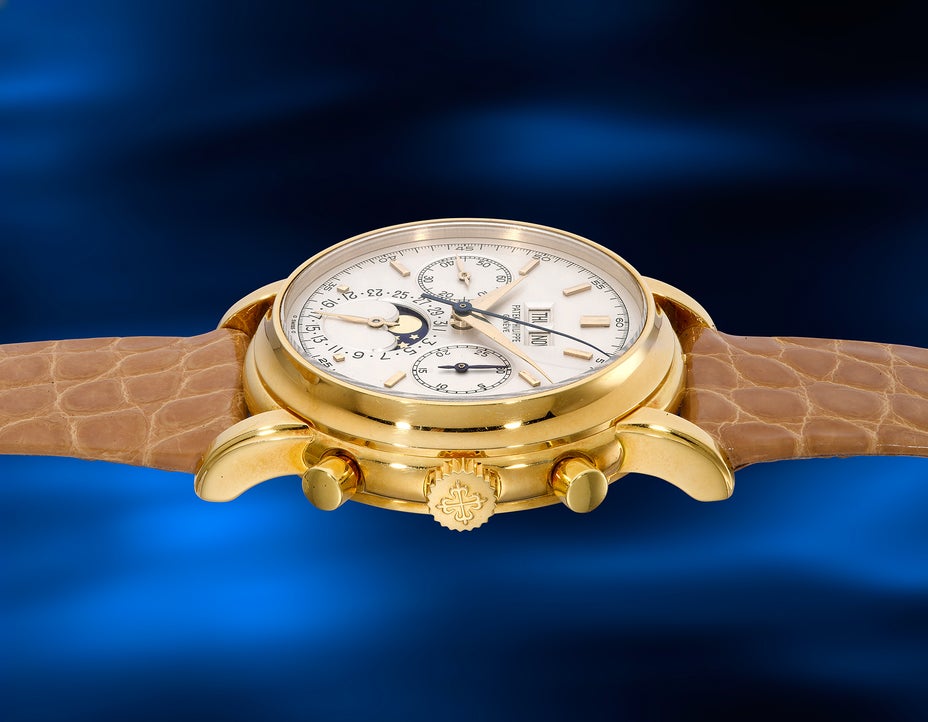
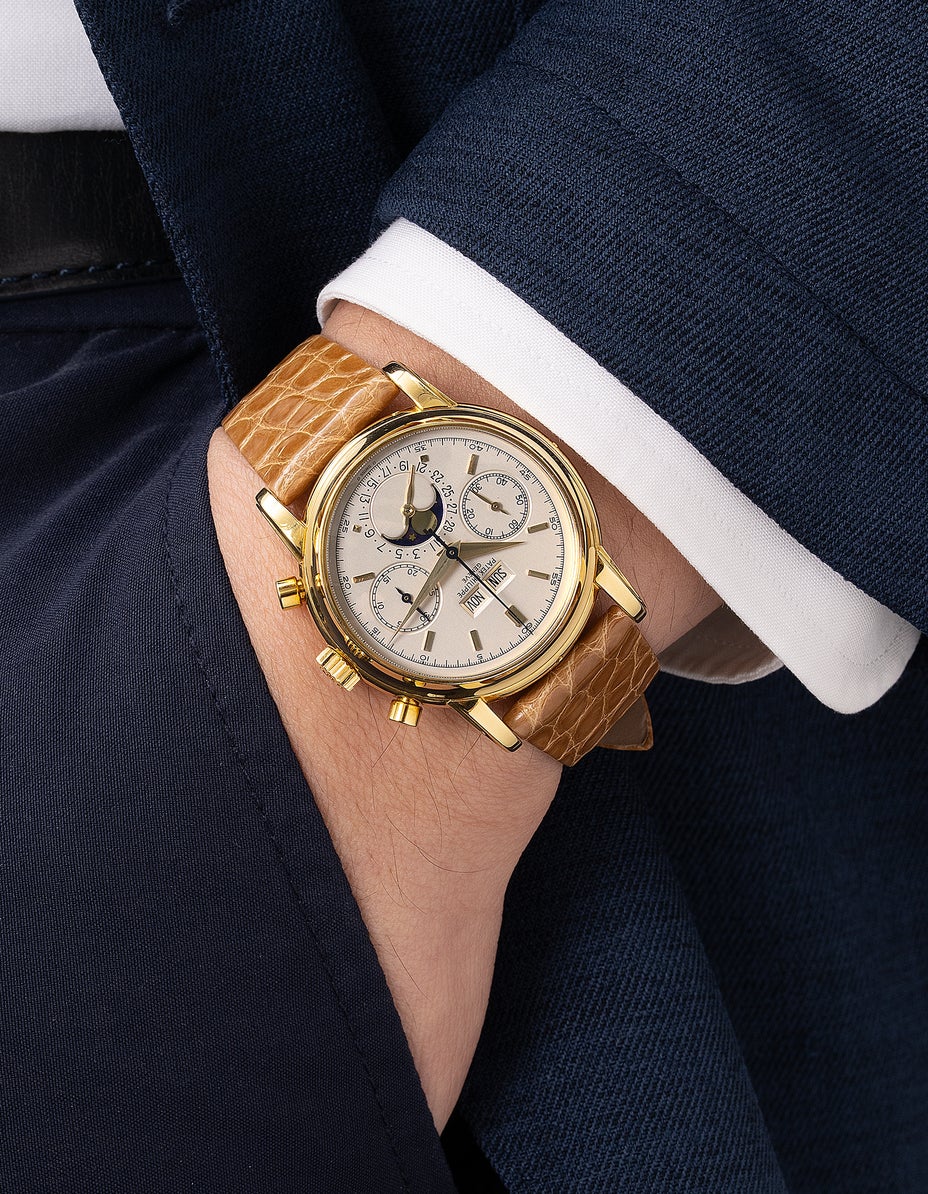
Of the approximately 120 watches produced in the 4th series, only around 46 were made in the MK I case, crafted by Wenger (Casemaker key 1), like the present example. The earlier MK I case represents the last cases made by Wenger before Patek Philippe began producing its own cases at its subsidiary, Ateliers Réunis, in 1982. The MK I Wenger case includes a larger crown, and the positions of the pushers and bezel profile are slightly different as well.
The provenance of this watch is well-documented, having been sold four times, with its most recent appearance at Phillips Hong Kong in 2019 during the Phillips & Blackbird: SPORTS auction. Offered by an important European collector, it was kept untouched in the collection for six years before returning to the auction market.
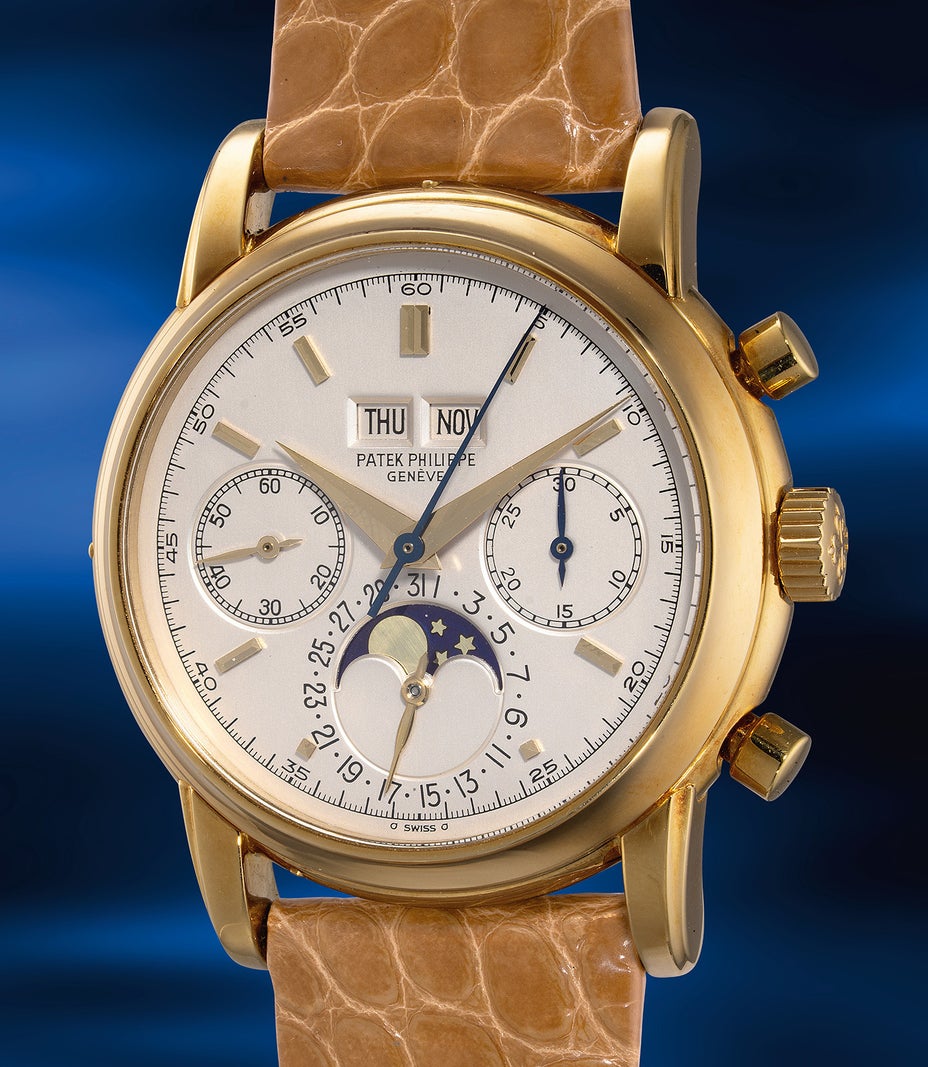
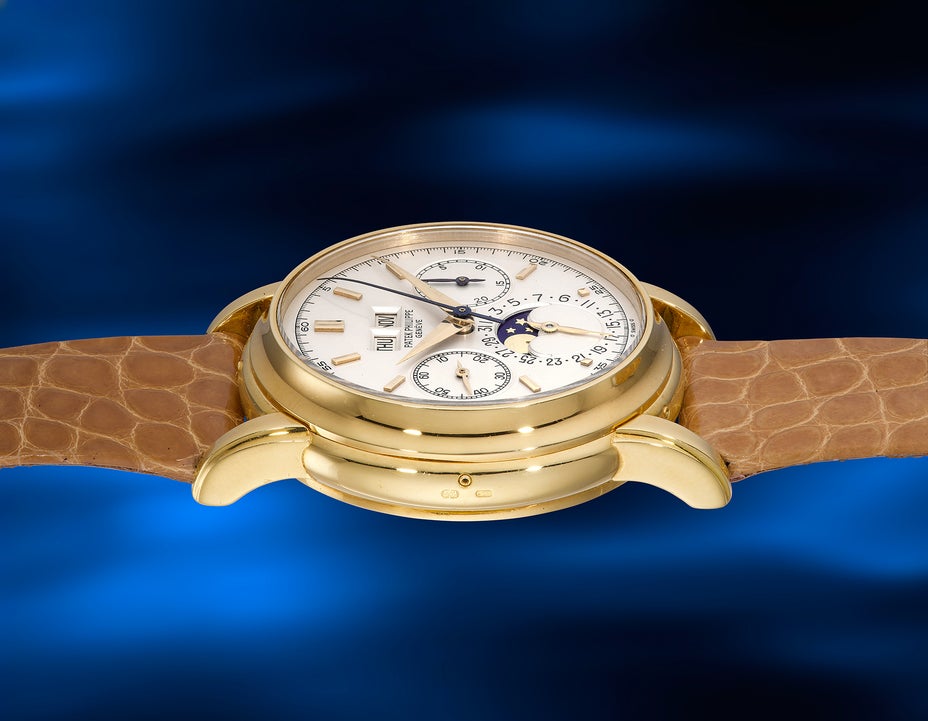
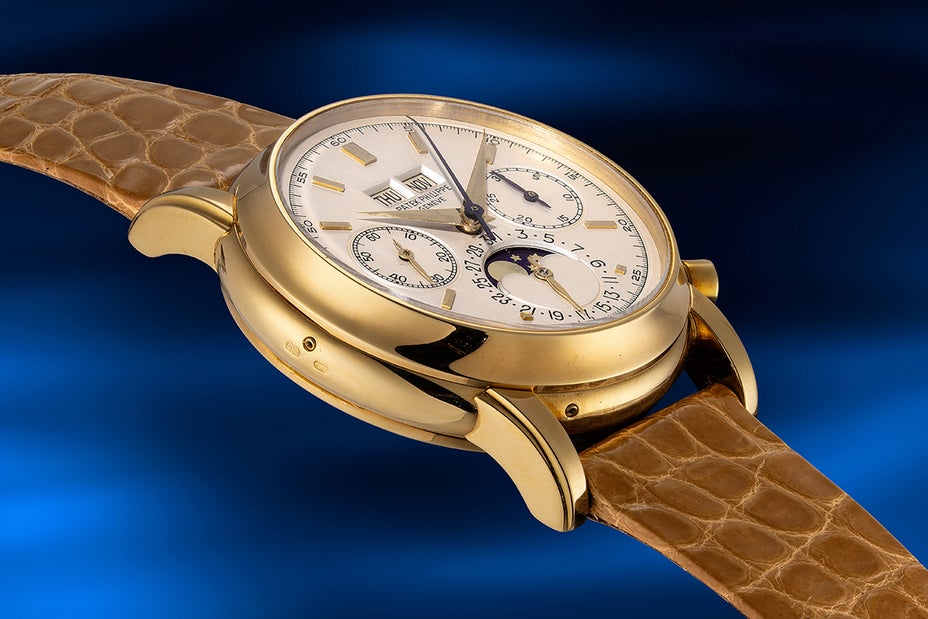
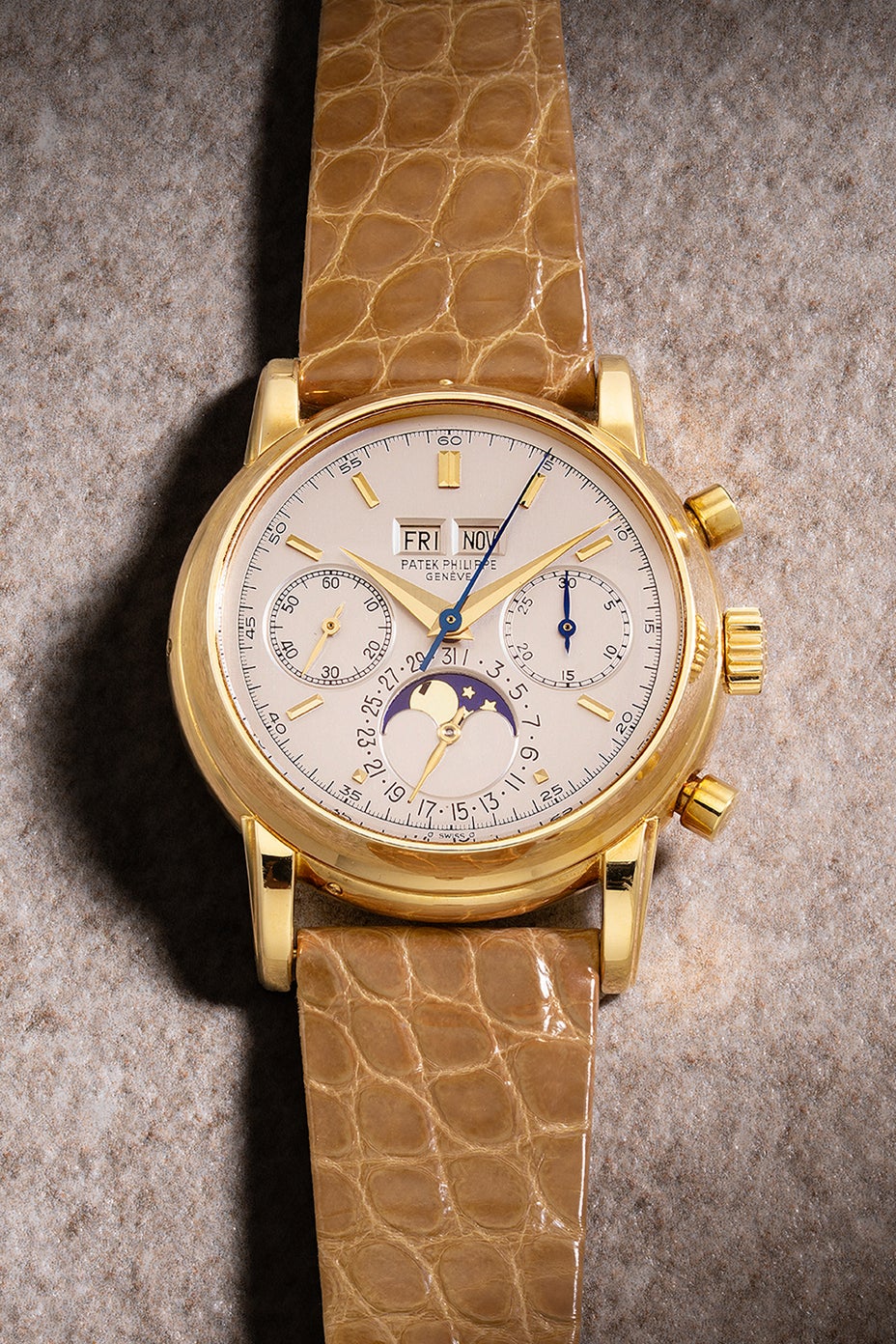
"Stunning" is the best way to describe the condition of this piece. The solid gold dial, crafted by Stern Frères, shows no signs of restoration and retains its original silky finish, a hallmark of these late-series dials. All 4th series dials are marked with sigma signs beside the “SWISS”, indicating that the hands and indexes are made of solid gold, a regulation for all Swiss-made watches starting from the 1970s. The present dial has preserved all printed inscriptions without any loss, and the calendar aperture windows are hand-cut and remarkably sharp. The gold Dauphine hands are original, along with the hands of all three subdials. The moon phase wheel, made of gold, features beautiful blue champlevé enamel representing the night sky. The back of the dial is properly marked and shows no signs of restoration, with the hour markers never removed.
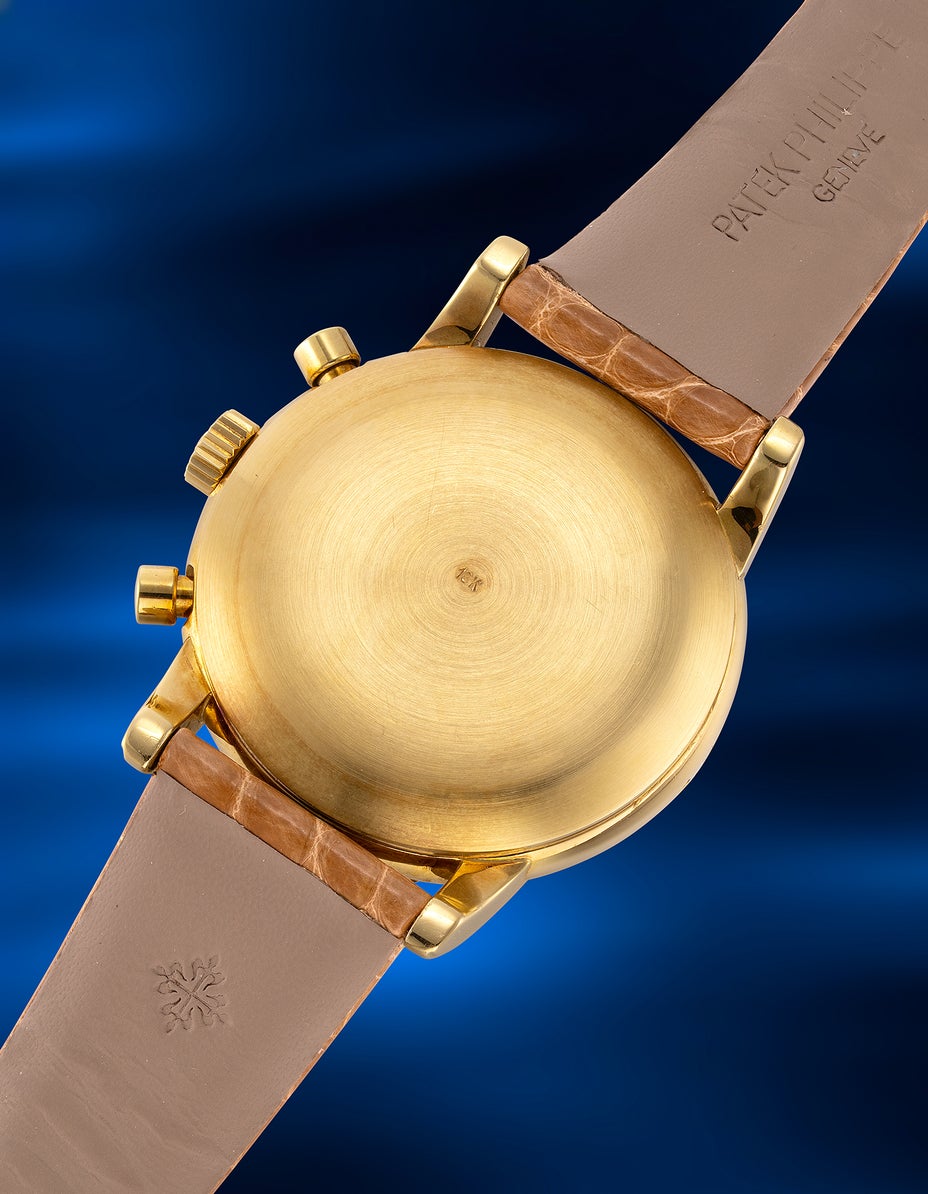
The immaculate preservation extends to the case, which is exceptionally well-maintained. The case proportions retain their original shapes and appear almost new, with only very superficial wear on the surface. All hallmarks are extremely crisp, particularly on the caseband, which is especially prone to rounding with even the slightest polishing. The caseback maintains its original factory satin circular finish, with the 18K hallmark equally deep and crisp. The large winding crown, chronograph pushers and date correctors are all original, and their state of preservation indicates that the watch was not worn much during its lifetime. The bezel retains its shape and volume, consistent with the condition of the rest of the case. The inside of the bezel is correctly engraved with last the three digits of the case number “160” in Roman numerals, while the last three digits of the movement number “399” are engraved on the movement plate under the dial. The lugs are thick and in immaculate condition, with pronounced and crisp fluting.
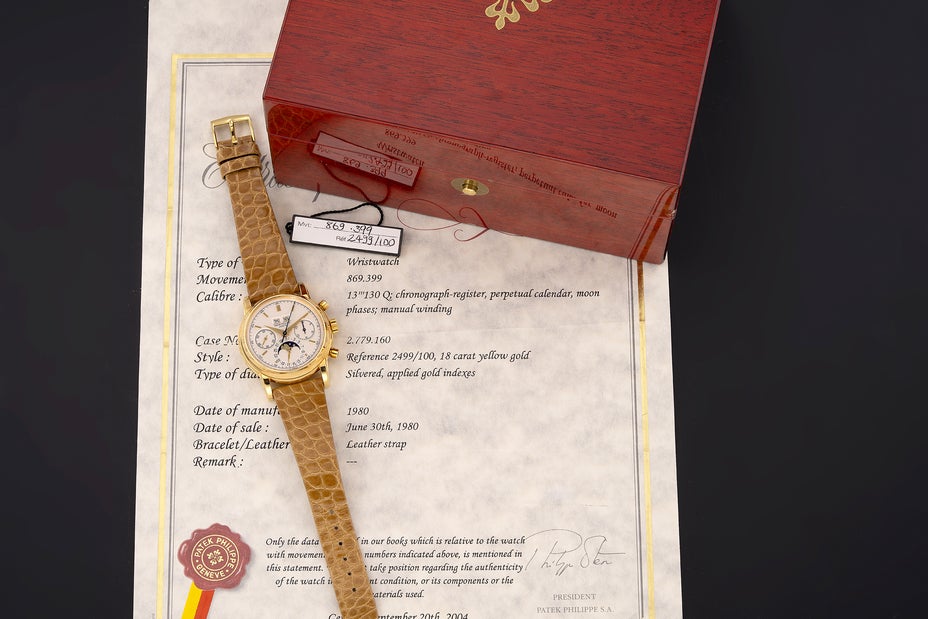
A magical find in the market, this piece comes with the Extract of the Archives, original hang tag, a research study and presentation box. It is one of the most well-preserved 4th series examples ever seen in the market, representing the pinnacle of Patek Philippe’s watchmaking legacy.
Patek Philippe
Swiss | 1839Since its founding in 1839, this famous Geneva-based firm has been surprising its clientele with superbly crafted timepieces fitted with watchmaking's most prestigious complications. Traditional and conservative designs are found across Patek Philippe's watches made throughout their history — the utmost in understated elegance.
Well-known for the Graves Supercomplication — a highly complicated pocket watch that was the world’s most complicated watch for 50 years — this family-owned brand has earned a reputation of excellence around the world. Patek's complicated vintage watches hold the highest number of world records for results achieved at auction compared with any other brand. For collectors, key models include the reference 1518, the world's first serially produced perpetual calendar chronograph, and its successor, the reference 2499. Other famous models include perpetual calendars such as the ref. 1526, ref. 3448 and 3450, chronographs such as the reference 130, 530 and 1463, as well as reference 1436 and 1563 split seconds chronographs. Patek is also well-known for their classically styled, time-only "Calatrava" dress watches, and the "Nautilus," an iconic luxury sports watch first introduced in 1976 as the reference 3700 that is still in production today.