942
Patek Philippe
Ref. 130
“Sector Dial”
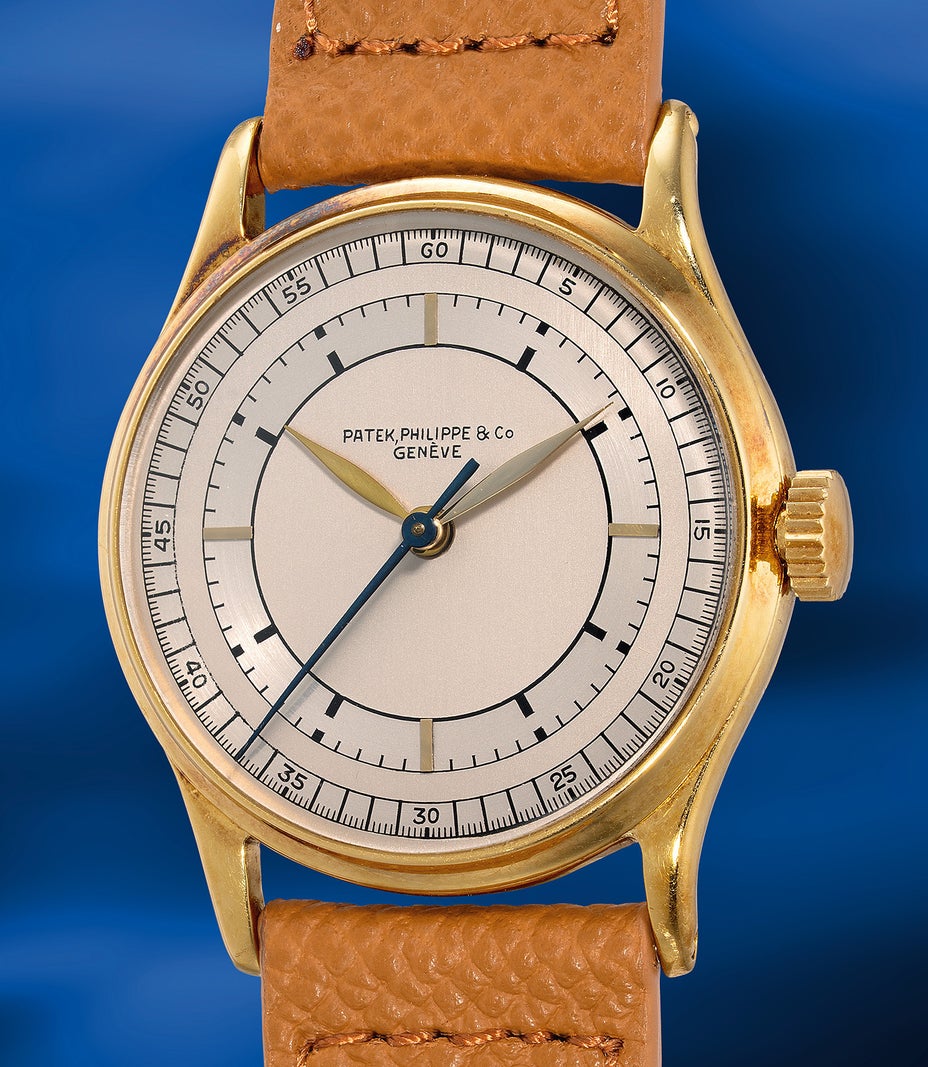
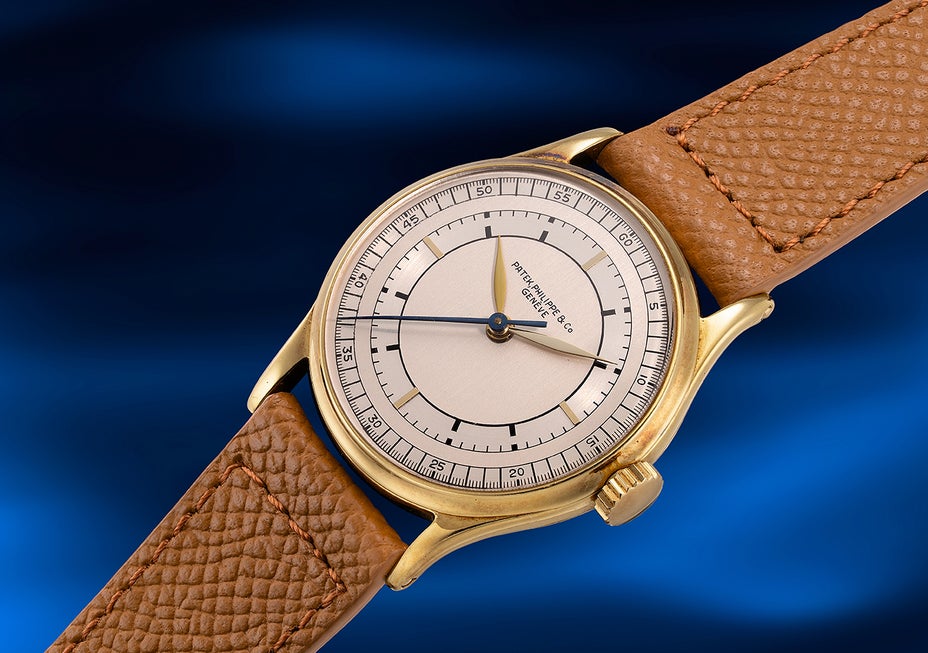
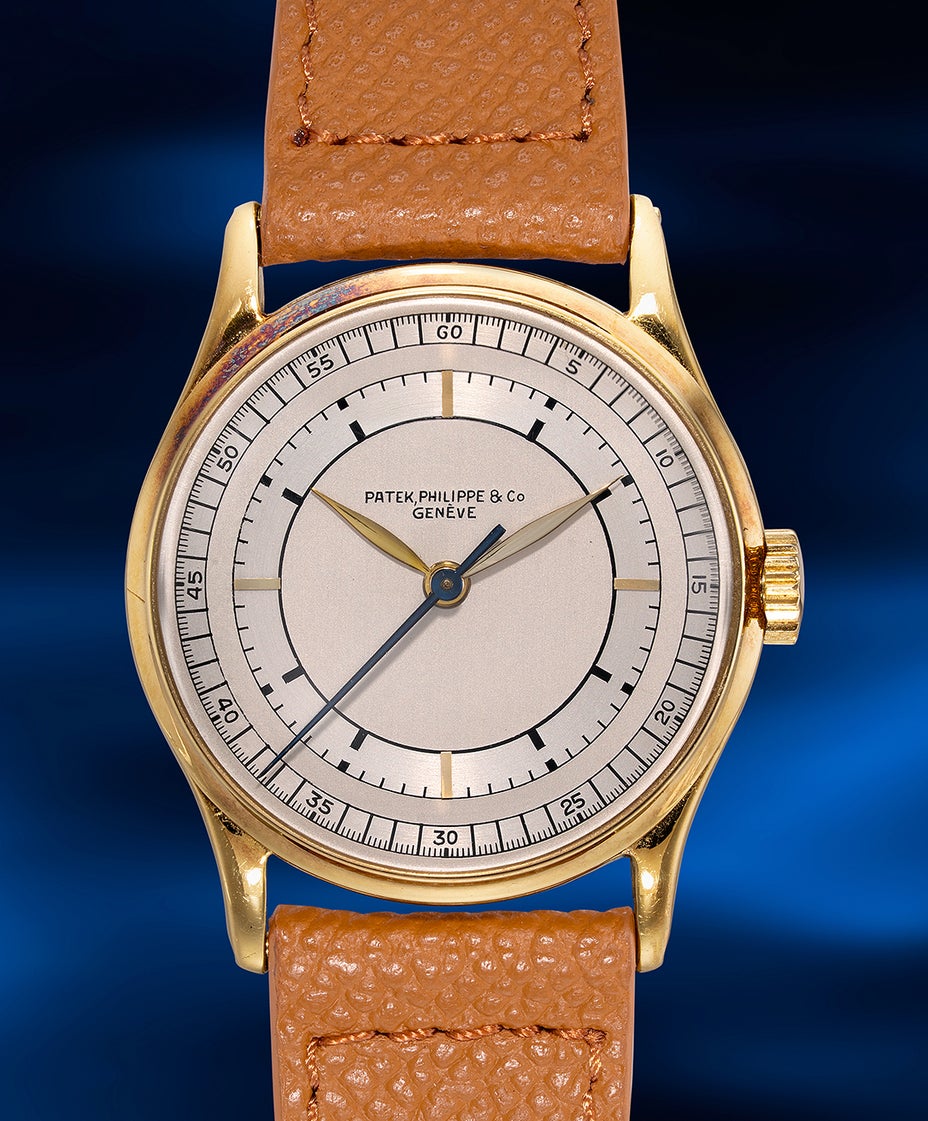
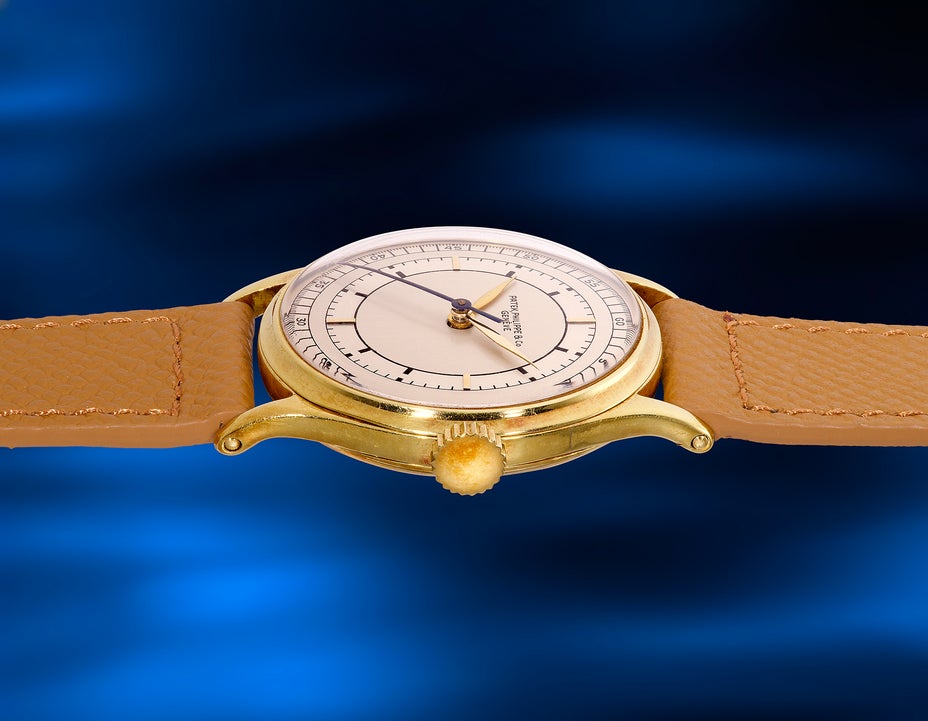
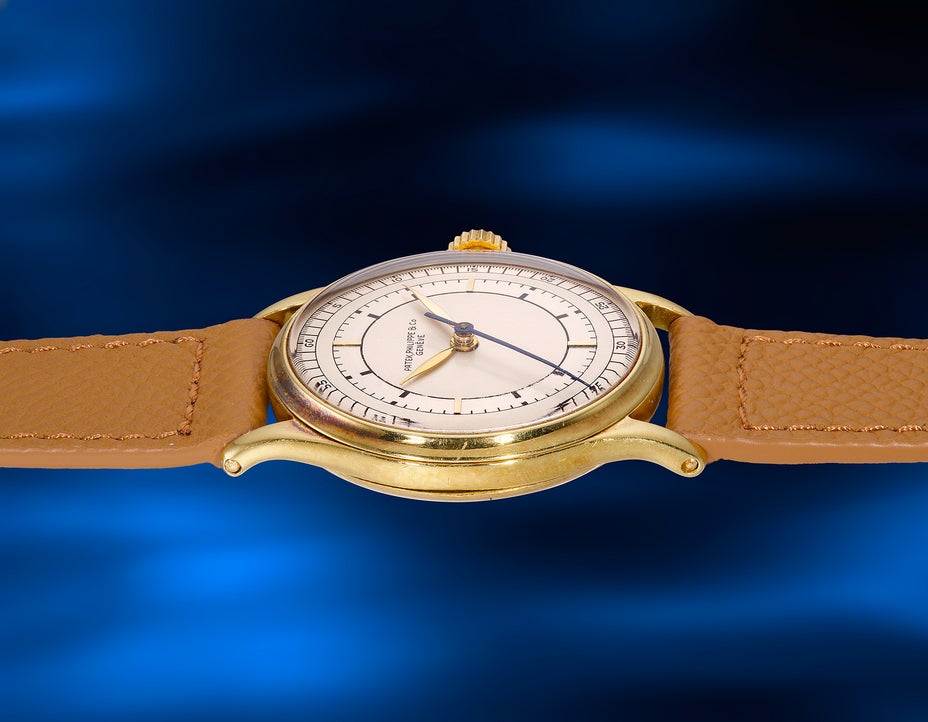
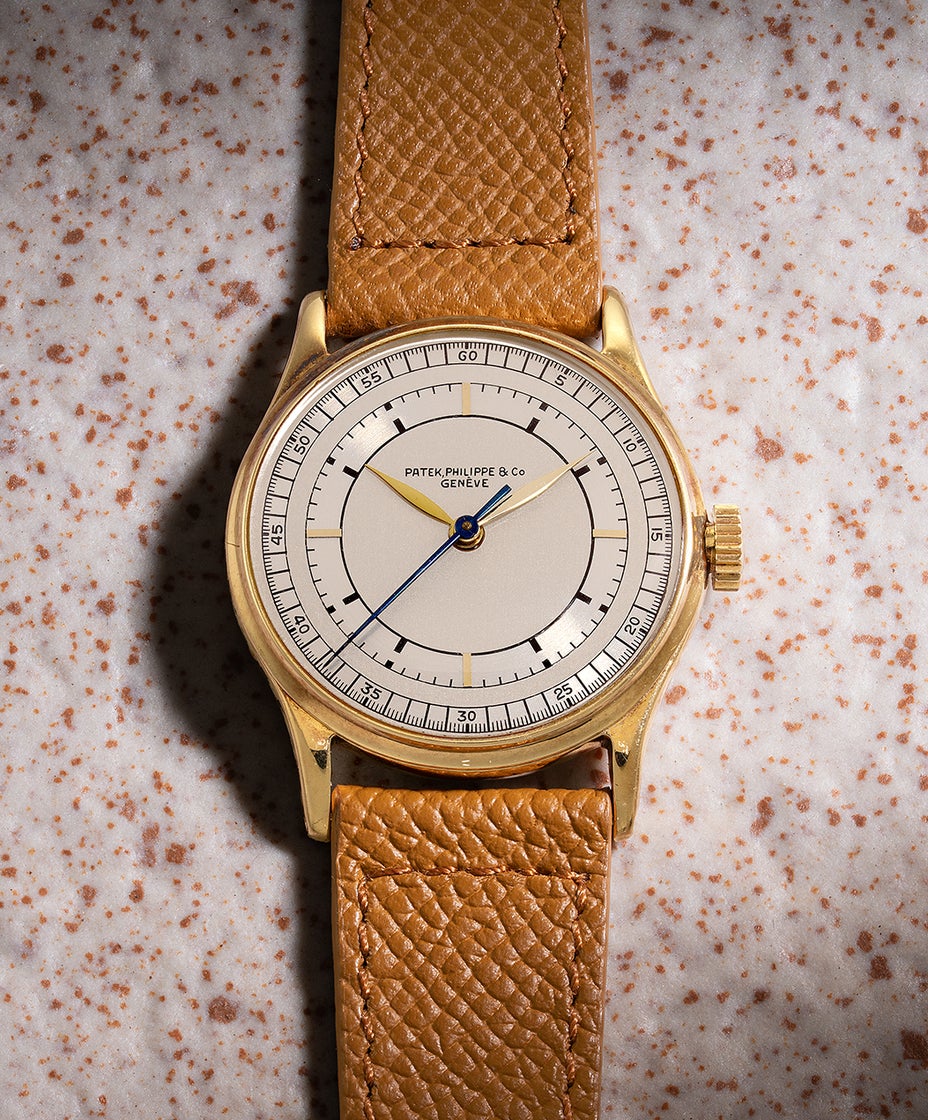
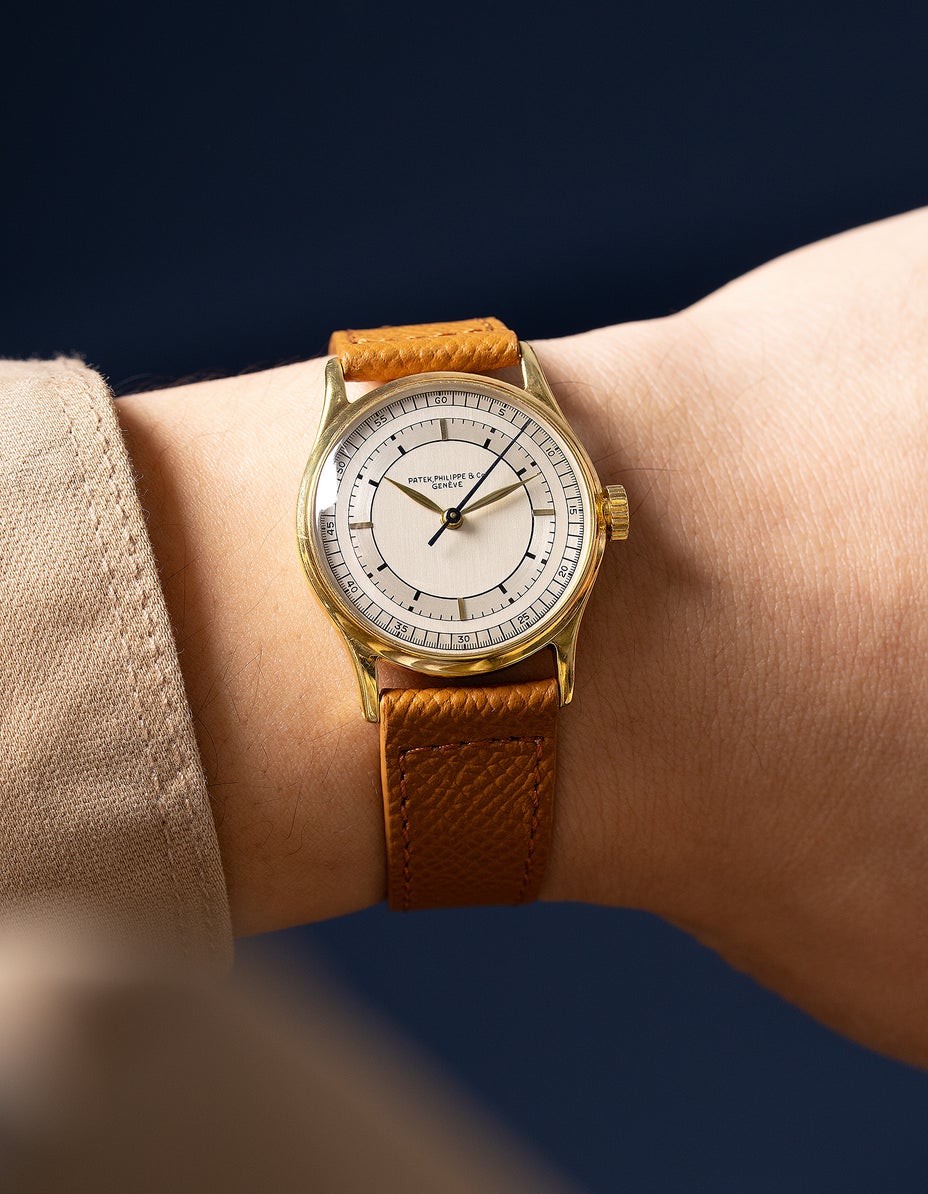
An exceedingly important, attractive and well-preserved yellow gold wristwatch with two-tone silvered sector dial, the only known example with center seconds
Full-Cataloguing
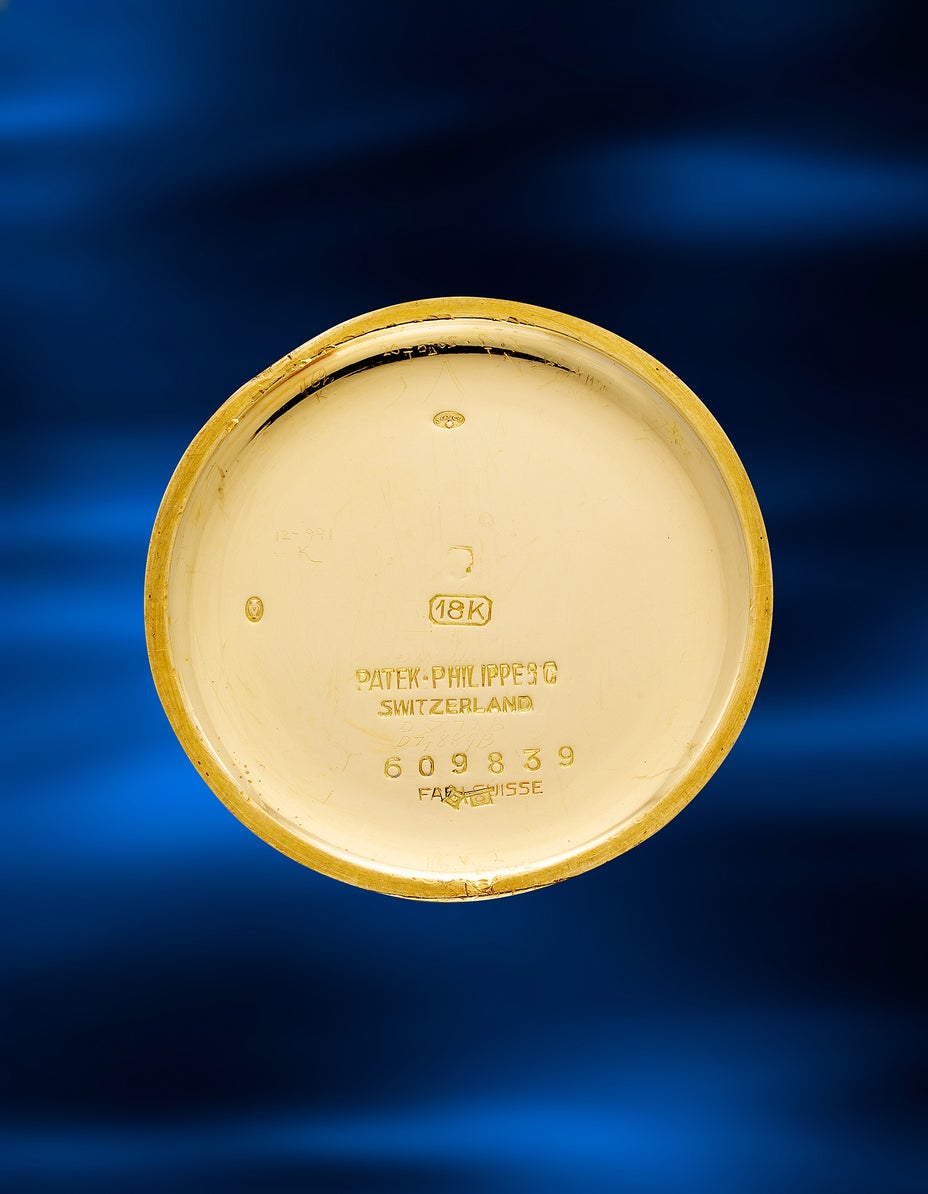
A legacy watch from the golden age of horology, this piece embodies the essence of traditional watchmaking and the refined elegance of Patek Philippe. This specific example is identified as the earliest ref. 130 by its case number (609’839) and may be the first ever made, potentially serving as a prototype for the subsequent monopoussoir chronograph iterations. Unlike other examples, this watch lacks a chronograph function and features a sweep center seconds hand, which may be unique according to our research. Some of the earliest 130s were custom ordered, and during the brief period from 1934 to 1936, time-only versions like this one were produced before Patek Philippe introduced the Valjoux-inspired caliber 13-130 in 1936. Known ref. 130 time-only examples only exist in yellow gold, with just one displaying a sweep center seconds (the present watch) and another with small seconds.
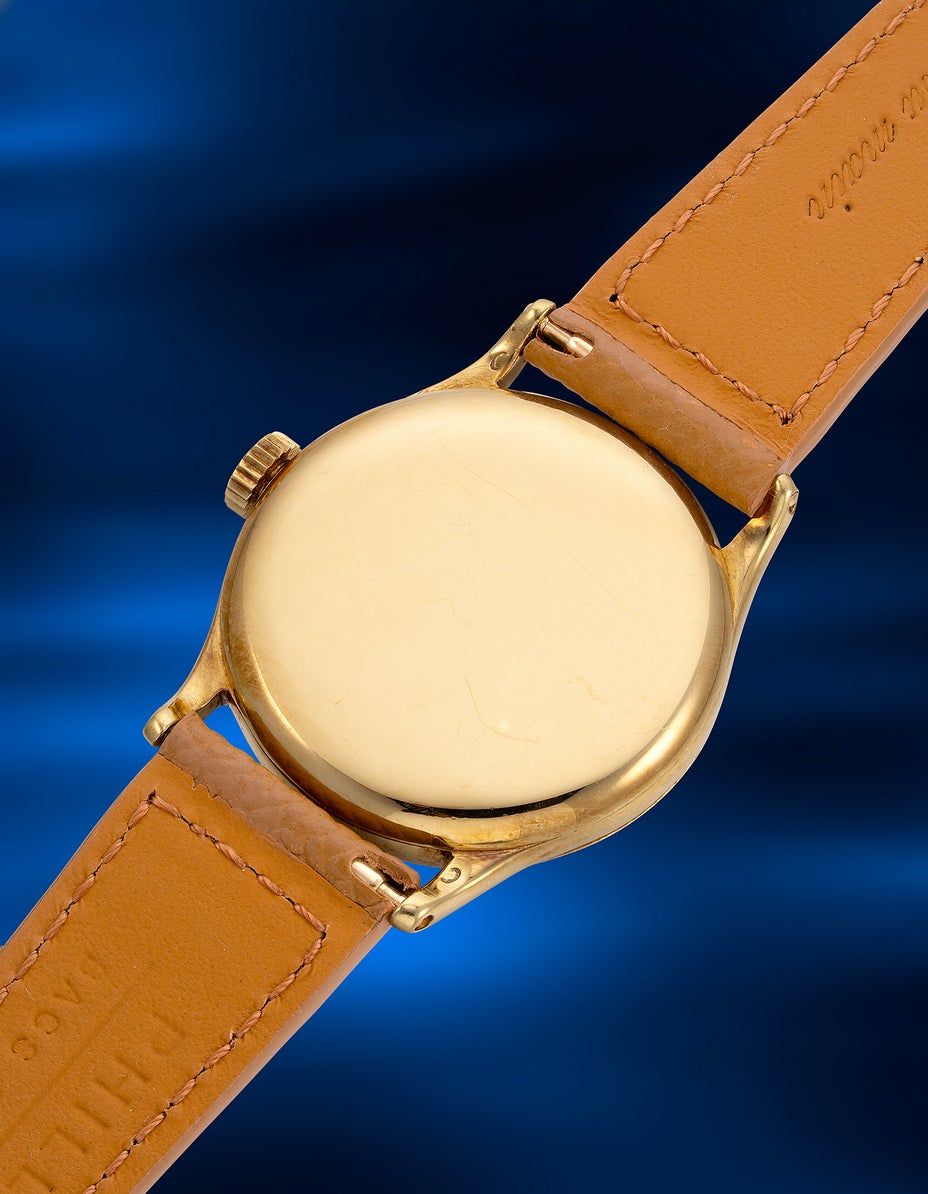
Its case is derived from the Bauhaus-designed reference 96, produced in various styles and metals, epitomizing elegance on the wrist and representing the pinnacle of wristwatch design in the 1930s. Made by Emile Vichet (Key Number 9), a renowned Geneva case maker for Patek Philippe during this period, the case design features a three-part construction with a snap-on bezel and caseback. Two French “owl” import hallmarks are visible on the back of the lugs and inside the caseback, along with the “Fab Suisse” mark for watches imported into France and the oval J G & Cie retailer's mark for Jean Guillermin, the exclusive French Patek Philippe importer located in Place Vendôme.
The first sector dials of the ref. 130 from Patek Philippe appeared around 1934 and became standard on most ref. 130 chronographs by 1936. The dial, crafted by Stern Frères, features a rare and attractive two-tone silvered sector design with four raised gold indexes at the quarters, along with entirely engraved enamel signature and scales. The two sectors are circularly brushed, indicating hours and minutes on one and seconds with one-fifth of a second precision on the other.
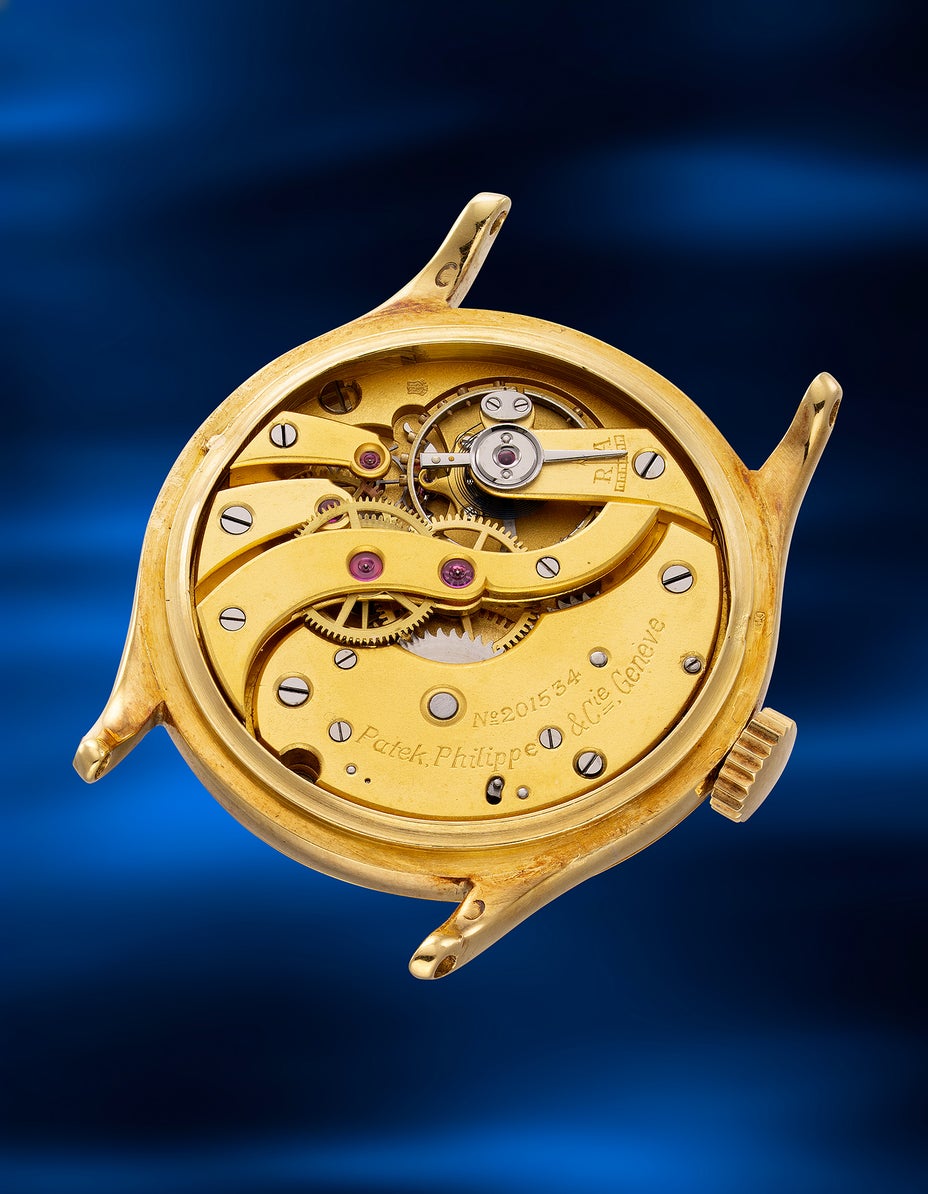
Bearing a serial number of 201’534, this calibre 12 SC was made in 1924, as confirmed by the Extract of the Archives. The movement is modified from a LeCoultre ébauche, showcasing a gilt finish typical of pre-1936 models, with the baseplate stamped with the Geneva seal.
Presented in impeccably restoration to preserve its condition, this top-quality intervention offers both aesthetic and practical benefits, returning the watch to its original manufacturing standards for enjoyment. The dial was likely refinished in the 1980s and has recently been lightly cleaned and coated with a new “zapon” finish. Although the case has been polished over the years, it retains strong proportions and clear hallmarks. In 2022, the movement underwent a documented major overhaul and restoration by Patek Philippe, costing over 20,000 Swiss Francs.
This stunning and likely unique reference 130 is undoubtedly a key piece in the history of both the model and Patek Philippe, making it an exceptional and wearable vintage grail for avid collectors.
Patek Philippe
Swiss | 1839Since its founding in 1839, this famous Geneva-based firm has been surprising its clientele with superbly crafted timepieces fitted with watchmaking's most prestigious complications. Traditional and conservative designs are found across Patek Philippe's watches made throughout their history — the utmost in understated elegance.
Well-known for the Graves Supercomplication — a highly complicated pocket watch that was the world’s most complicated watch for 50 years — this family-owned brand has earned a reputation of excellence around the world. Patek's complicated vintage watches hold the highest number of world records for results achieved at auction compared with any other brand. For collectors, key models include the reference 1518, the world's first serially produced perpetual calendar chronograph, and its successor, the reference 2499. Other famous models include perpetual calendars such as the ref. 1526, ref. 3448 and 3450, chronographs such as the reference 130, 530 and 1463, as well as reference 1436 and 1563 split seconds chronographs. Patek is also well-known for their classically styled, time-only "Calatrava" dress watches, and the "Nautilus," an iconic luxury sports watch first introduced in 1976 as the reference 3700 that is still in production today.