20Σ︎
Patek Philippe
Ref. 1518
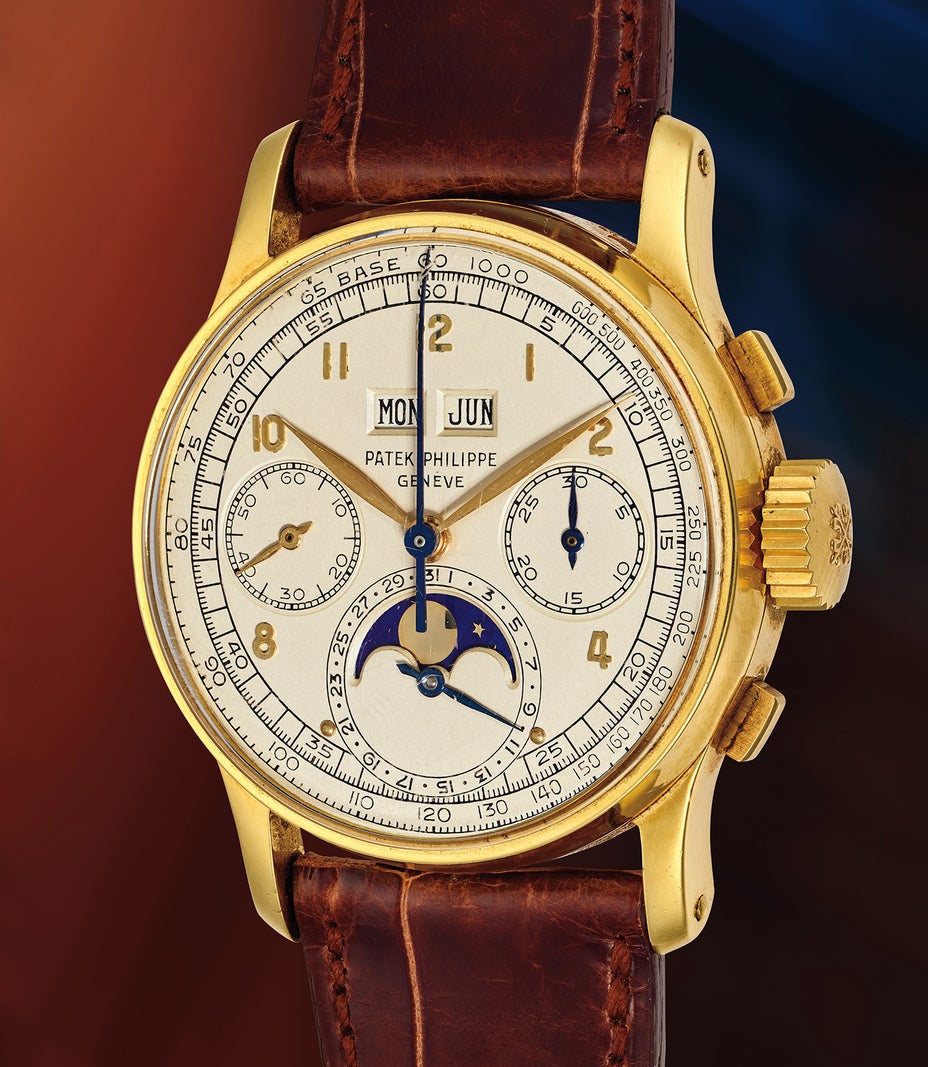
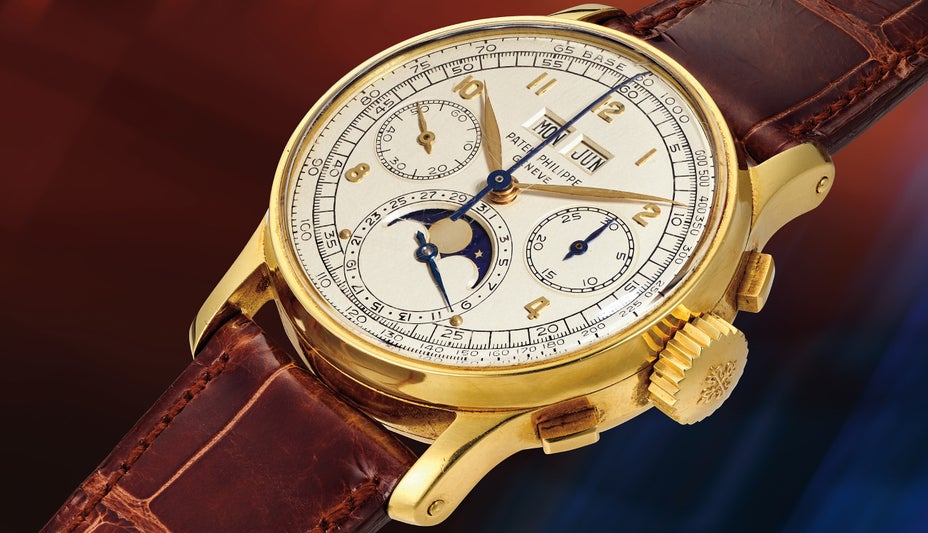
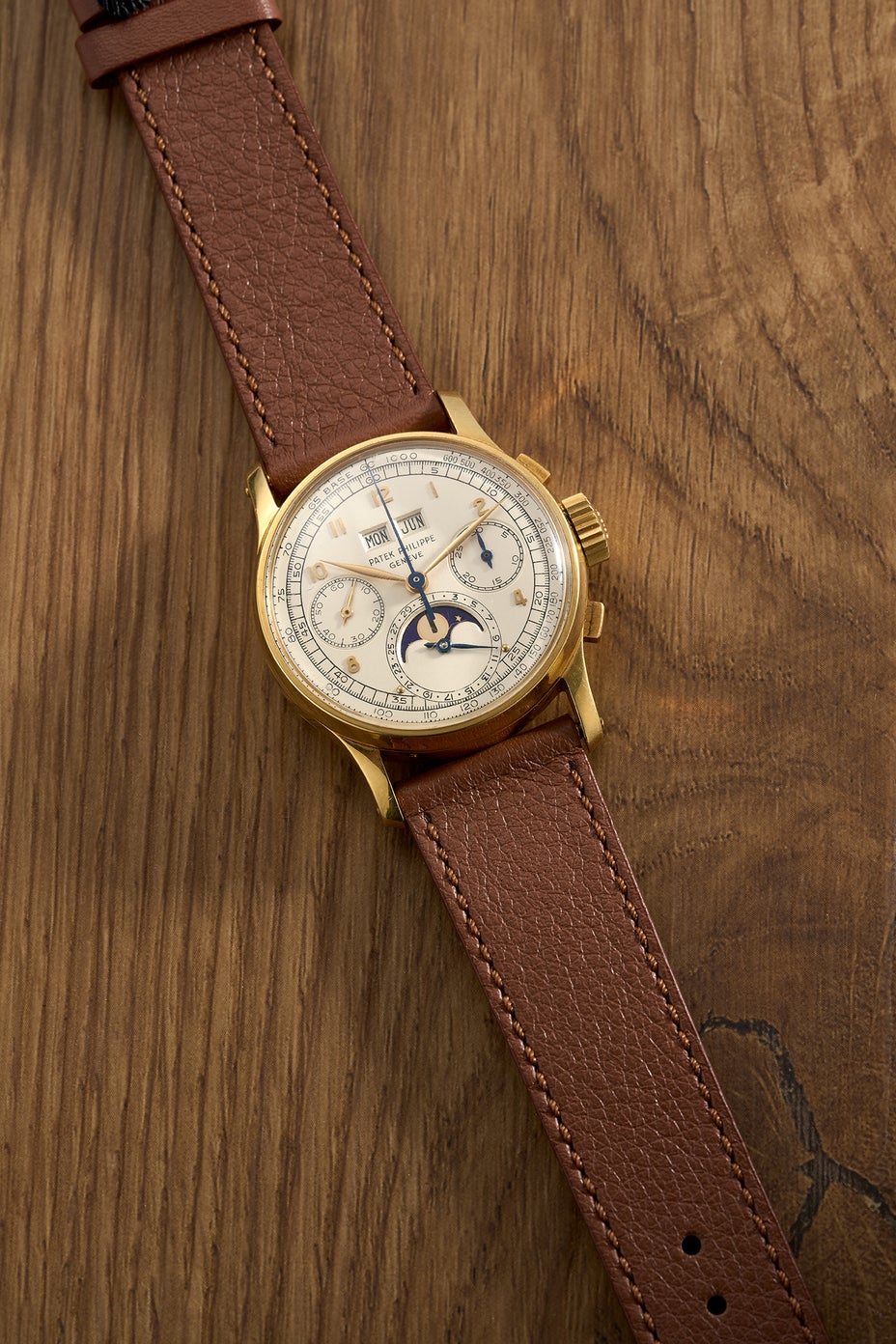
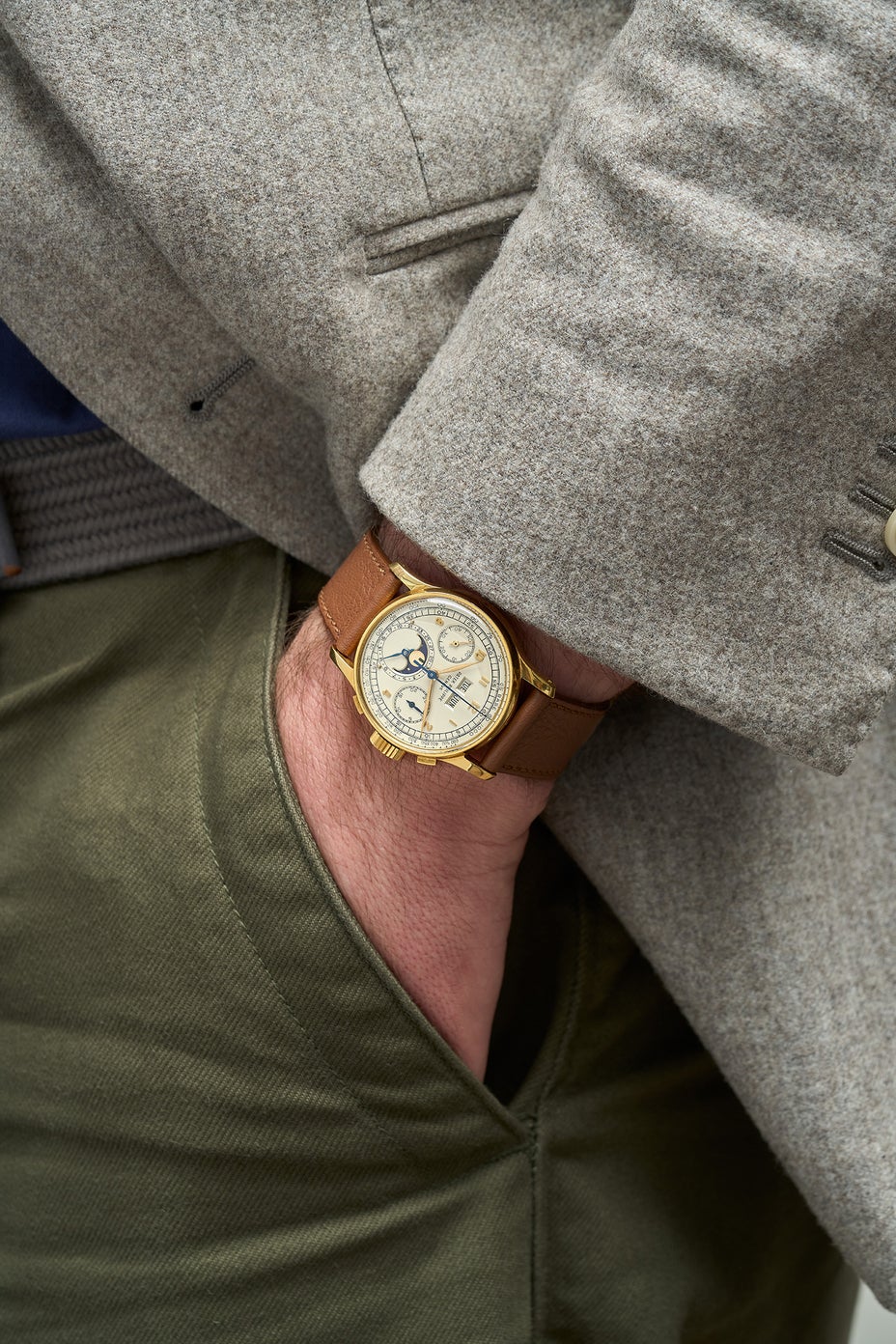
A superb, extremely well-preserved, and important yellow gold perpetual calendar wristwatch with tachymeter scale, moon phase, and presentation box
Full-Cataloguing
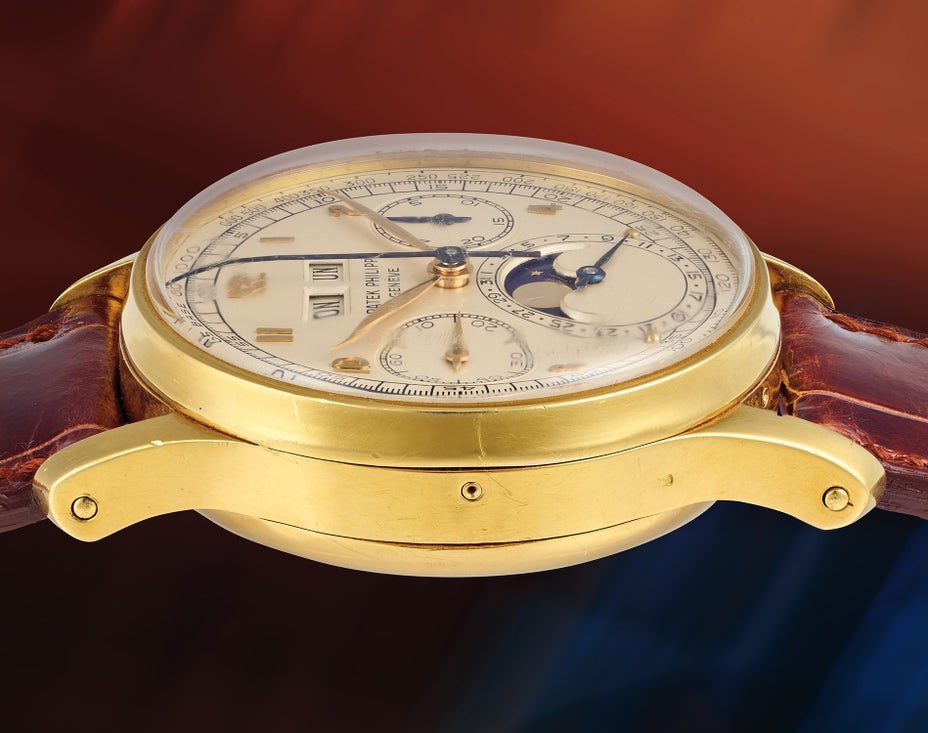
The design aesthetic was a new and modern look with clean lines, elegant proportions, and extended, curved lugs. The case, manufactured by Emile Vichet S. A. for Patek Philippe with Poinçon de Maître key 9, evolved over the course of its 14 year history. So ahead of its time was the design, Patek Philippe continues to use its timeless aesthetic as the foundation for a long line of highly sought after successor models including the references 2499, 3970, 5970 and today’s 5270.
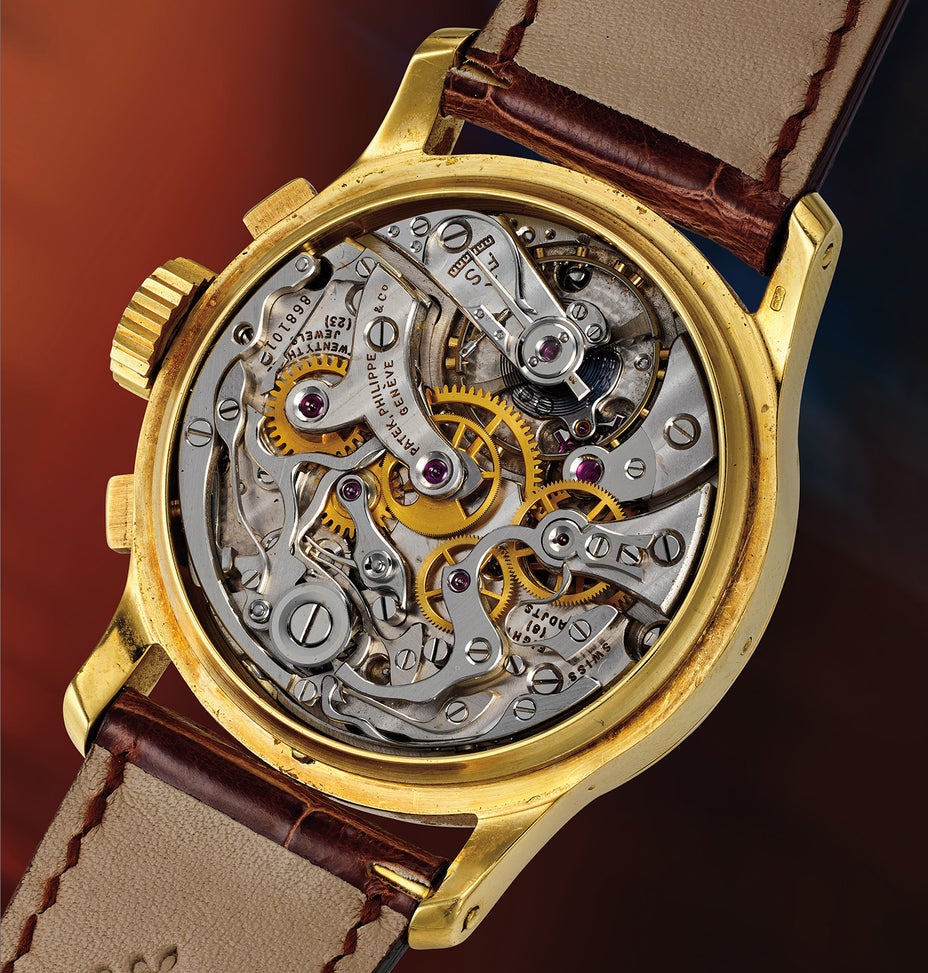
This landmark model can certainly be considered a must for any serious collector of vintage wristwatches but acquiring one has become more difficult given the scarcity of well-preserved examples coming to the market. Scholarship suggests that Patek Philippe produced approximately 281 examples, with the majority in yellow gold, exceedingly rare examples in pink gold, and only four known examples in steel. Patek’s exquisitely finished, manually wound caliber 13’’’130 Q is housed inside.
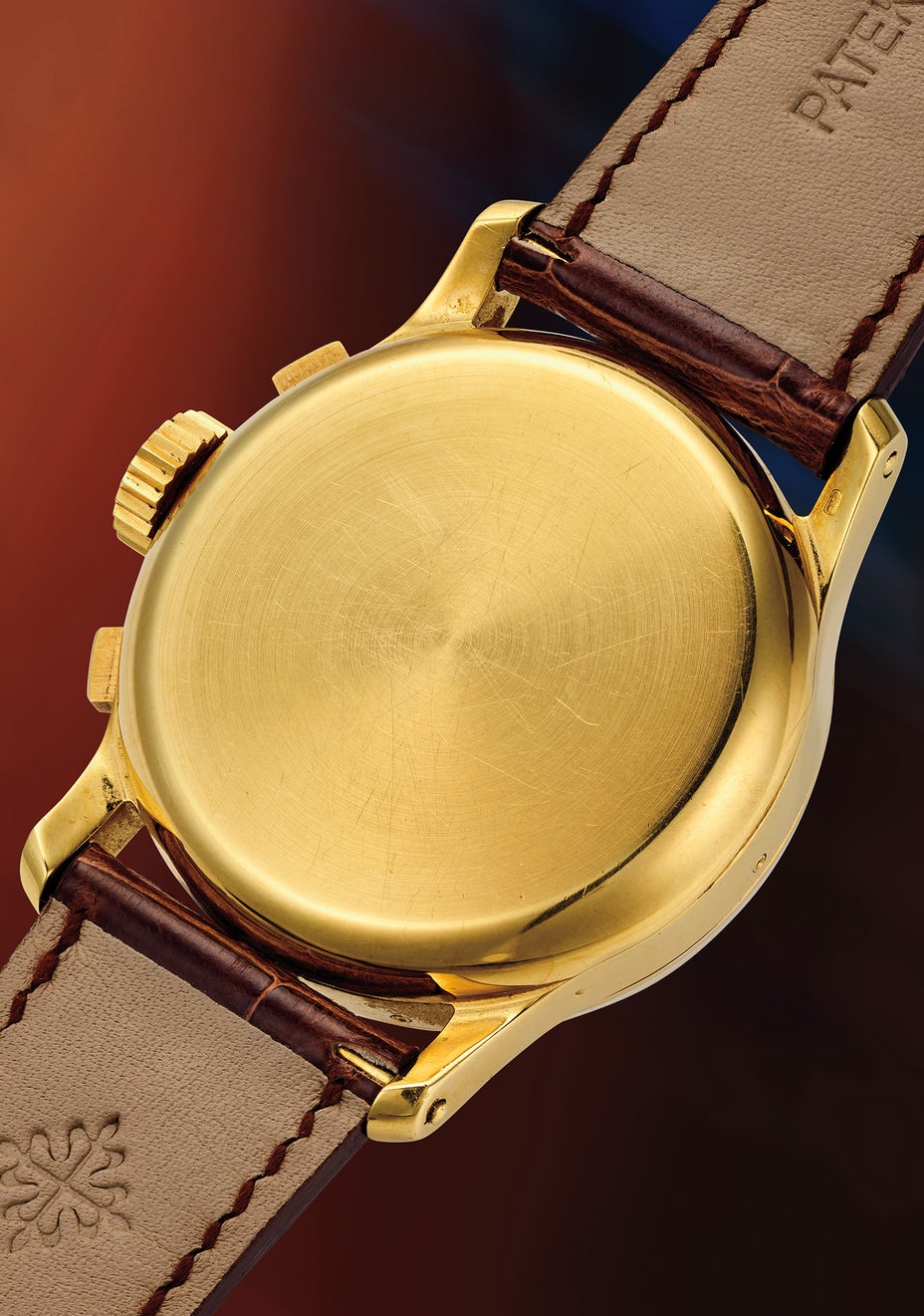
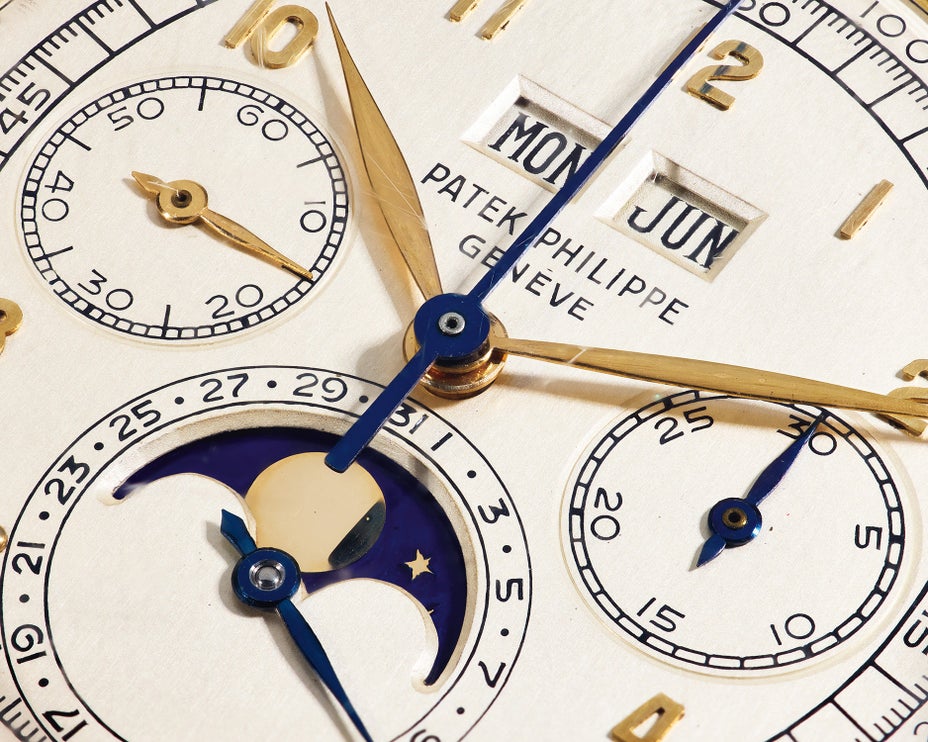
The present, exceptional yellow gold 1518 was last seen at auction in 1989, when it was bought by the current owner. A renowned American collector, he never wore the watch since its purchase, having kept it stored at all times in a vault protected against moisture and humidity. This superlative example impresses with its superb state of preservation. The case is very strong, retaining its original factory finishing, and exhibiting full, thick lugs with perfectly round spring bar holes, indicative of hardly any use and showing no signs of a previous polishing. The dial is stunning, showing no aging or any signs of prior interventions, with all of the original, raised hard enamel graphics remaining full and vibrant. The day, month, and moon phase apertures retain very sharp edges – further evidence of being stored undisturbed for decades in a moisture-free environment.
This iconic model is a must-have for any serious collector of vintage Patek Philippe watches, and when such a well-preserved example comes to the market, it ticks all the boxes that collectors and scholars alike seek in a legendary vintage watch.
Patek Philippe
Swiss | 1839Since its founding in 1839, this famous Geneva-based firm has been surprising its clientele with superbly crafted timepieces fitted with watchmaking's most prestigious complications. Traditional and conservative designs are found across Patek Philippe's watches made throughout their history — the utmost in understated elegance.
Well-known for the Graves Supercomplication — a highly complicated pocket watch that was the world’s most complicated watch for 50 years — this family-owned brand has earned a reputation of excellence around the world. Patek's complicated vintage watches hold the highest number of world records for results achieved at auction compared with any other brand. For collectors, key models include the reference 1518, the world's first serially produced perpetual calendar chronograph, and its successor, the reference 2499. Other famous models include perpetual calendars such as the ref. 1526, ref. 3448 and 3450, chronographs such as the reference 130, 530 and 1463, as well as reference 1436 and 1563 split seconds chronographs. Patek is also well-known for their classically styled, time-only "Calatrava" dress watches, and the "Nautilus," an iconic luxury sports watch first introduced in 1976 as the reference 3700 that is still in production today.