117
Patek Philippe
Ref. 866/109
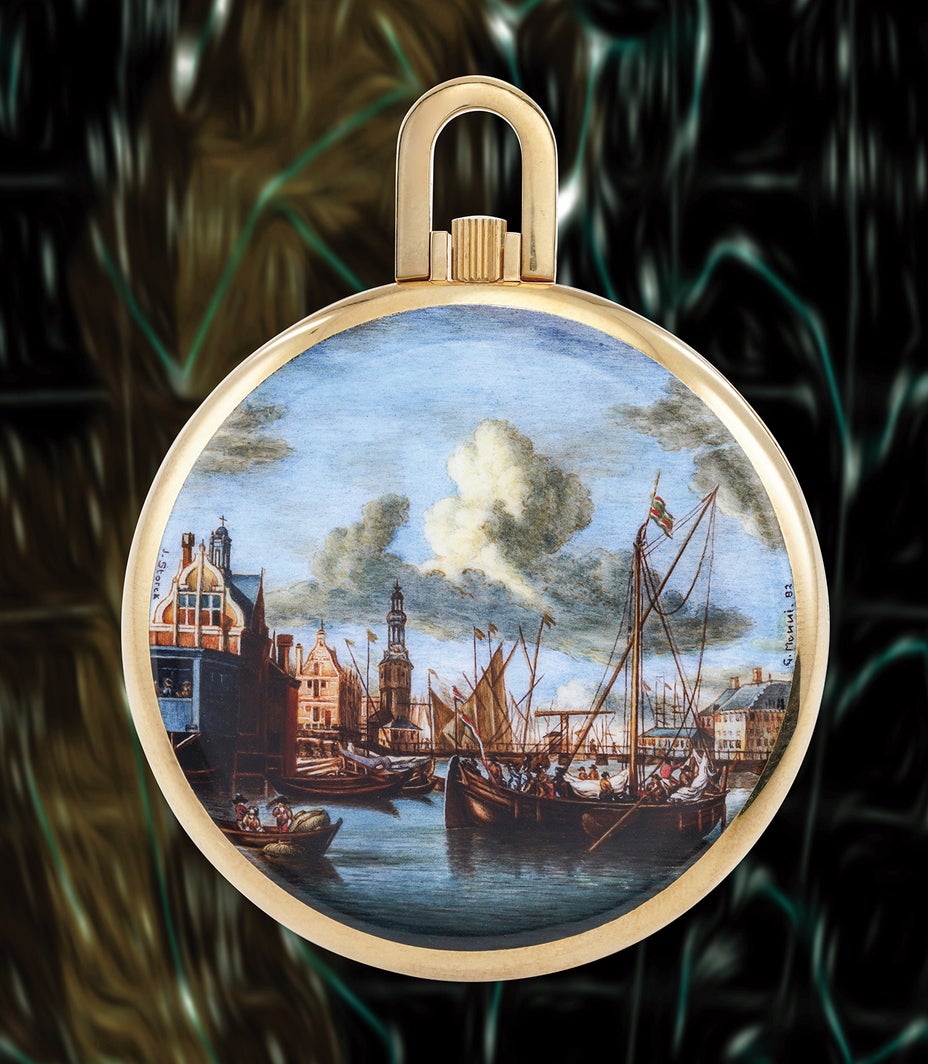
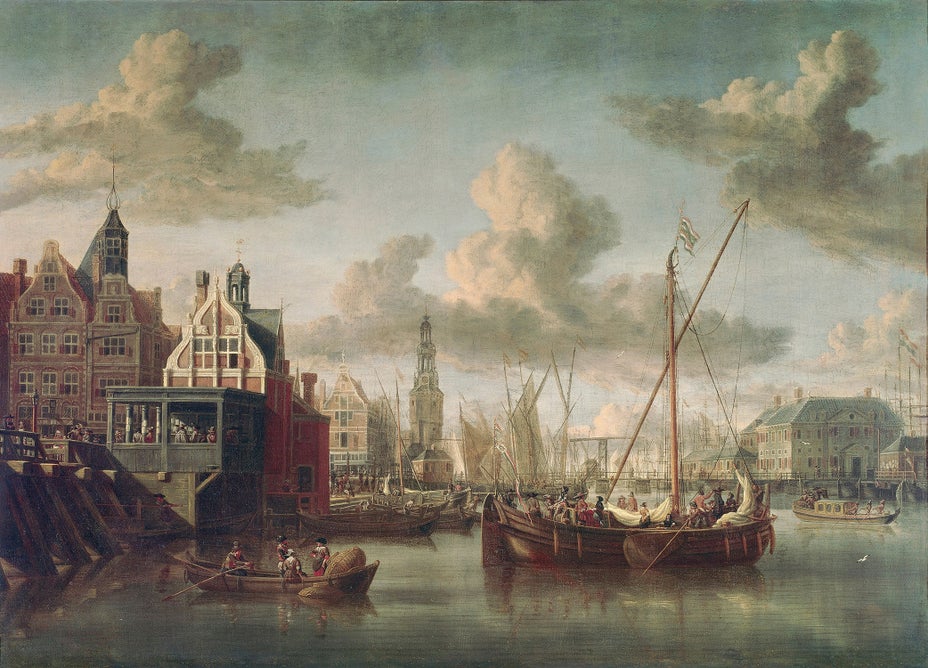
"View of the Port of Amsterdam"
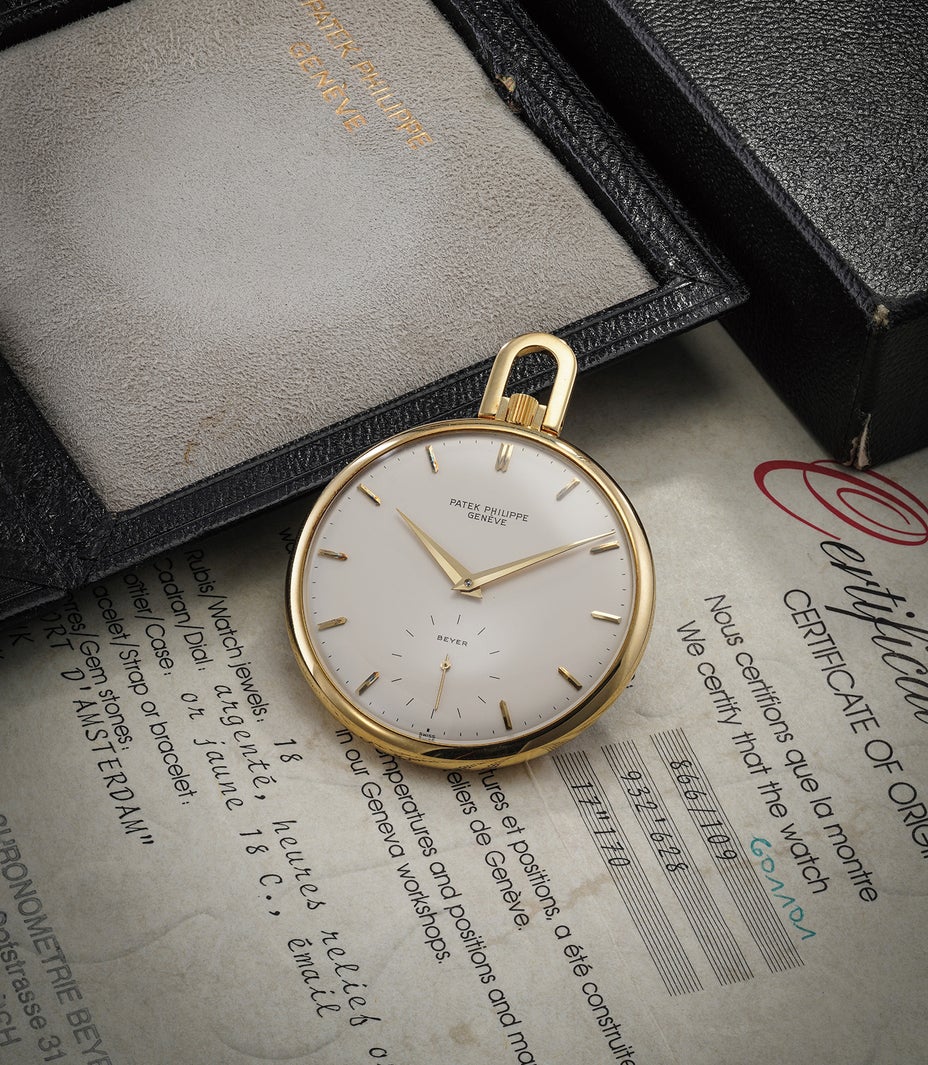
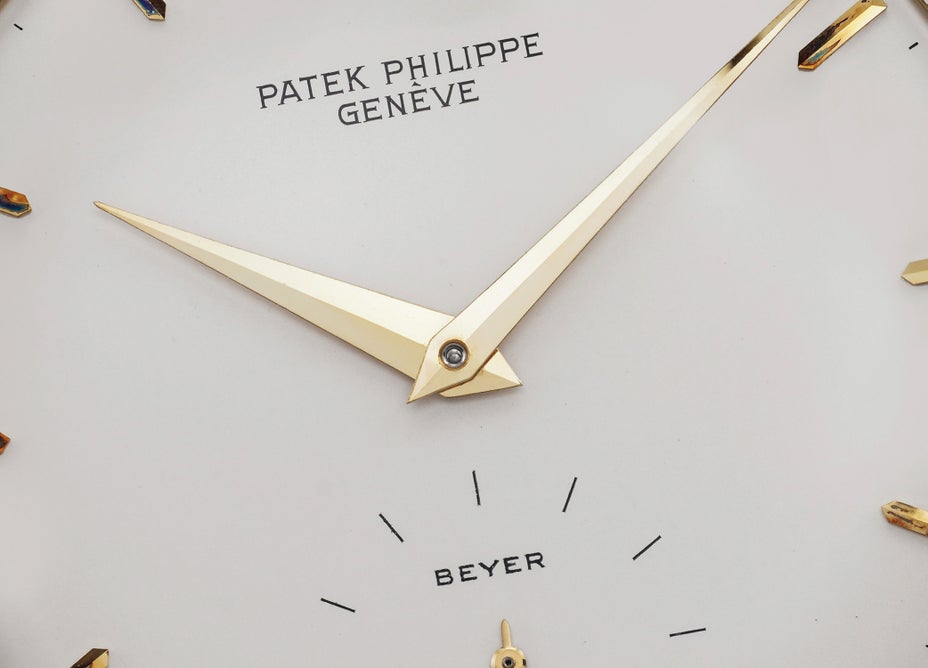
A breathtaking, extremely collectible and sublime yellow gold openface pocket watch with miniature enamel caseback by G. Menni reproducing the 1678 painting "View of the Port of Amsterdam" by Jacobus Stork, Certificate and box, retailed by Beyer
Full-Cataloguing
Enameling is a multifaceted art, spanning from the relatively straightforward “Grand Feu” monochrome enamel (most often, white) to more and more elaborate techniques: flinqué, champlevé, cloisonné etc. Miniature enamel is considered the pinnacle of the field. While other enameling technique produce somewhat simple designs (most iconically represented by the various cloisonné enamel geographic maps which have been used by many watchmakers), miniature enamel is the ultimate challenge for the artisan, as they try to approach photorealism. The effort is further complicated by the fact that most often the scene depicted is not out of reality, but rather a copy of a painting. This implies the baffling task of reproducing in vitreous enamel the same effect of wide brushstrokes on canvas.
The artist first applies a white base enamel, that will serve as the “canvas”, to the caseback. This undergoes a first firing at a temperature of around 900°C in order to be able to withstand the many subsequent firings in the furnace. They then trace the outlines of the motifs with a brush consisting of two or three marten's hairs. Each color is applied separately and placed in a kiln to vitrify. This is a dangerous process as at each firing the dial can break or fissure, resulting in high rejection rates. In addition to this risk, during vitrification the color of the enamel changes and the artist needs to be able to forecast to final hue in order to realize an effective work.
Unsurprisingly, miniature enameling is reserved only for the ultimate masters of the field, and the output is absurdly limited, with each piece taking months to realize - and most often each being a piece unique.
We owe the mesmerizing scene painted on the back of the present watch to G. Menni, one of Patek Philippe’s most celebrated enamel artists, along with Suzanne Rohr. Menni worked for Patek Philippe from the early 1980s to the late 1990s. Perpetuating the apparent Patek Philippe management’s fascination with “marine” themes (a fascination which is in fact present in the form of physical paintings - some of them transported to enamel in similar watches - hanging on the walls of the Geneva Patek Philippe Salon), this piece depicts a tranquil harbor scene. As mentioned on the left side of the dial, it is a reproduction of a 1678 painting by Jacobus Stork titled “View of the Port of Amsterdam”.
Jacobus Stork (1641 - 1700) was a Dutch Golden Age marine painter, same as his father Jan Jansz. Sturckenburgh and his brothers Abraham and Johannes. All siblings were trained by their father and possess very similar styles, making attribution of Stork works with certainty to either brother somewhat complicated. Indeed, the painting was sold at public auction just a few years ago (2022) and attributed to Abraham - though the cataloguing essay mentions it was exhibited in 1967 in Paris at the "Musée des Arts Décoratifs" during a retrospective on life in Holland during the 17th century ("La vie en Hollande au XVIIe siècle") with the signature "J. STORCK 1678", and consequently attributed to Jacobus. Most likely, Menni had this attribution in mind when signing his enamel J. Storck.
Apparently, naval themes were a specialty of Menni, as Phillips sold another of his miniature creations, the reproduction of a work of art depicting a naval battle. Comparison of the two pieces shows that it was apparently customary for Menni to put the name of the original artist on the left of the enamel, and to affix his own signature on the right.
A true crossroad between art and horology, the present piece is offered complete with its original documents, making it a rare treat for the most demanding connoisseur.
Patek Philippe
Swiss | 1839Since its founding in 1839, this famous Geneva-based firm has been surprising its clientele with superbly crafted timepieces fitted with watchmaking's most prestigious complications. Traditional and conservative designs are found across Patek Philippe's watches made throughout their history — the utmost in understated elegance.
Well-known for the Graves Supercomplication — a highly complicated pocket watch that was the world’s most complicated watch for 50 years — this family-owned brand has earned a reputation of excellence around the world. Patek's complicated vintage watches hold the highest number of world records for results achieved at auction compared with any other brand. For collectors, key models include the reference 1518, the world's first serially produced perpetual calendar chronograph, and its successor, the reference 2499. Other famous models include perpetual calendars such as the ref. 1526, ref. 3448 and 3450, chronographs such as the reference 130, 530 and 1463, as well as reference 1436 and 1563 split seconds chronographs. Patek is also well-known for their classically styled, time-only "Calatrava" dress watches, and the "Nautilus," an iconic luxury sports watch first introduced in 1976 as the reference 3700 that is still in production today.