

US import tariffs: Non-US origin lots in this sale (including watches and timepieces with Swiss-made or non-US made movements) will be subject to special tariffs upon import to the USA, currently ranging from 10% to 39% on the total invoice price (hammer price plus buyer’s premium). Buyers are responsible for paying any applicable tariffs, duties, taxes and charges when importing their purchased lots. Due to the evolving nature of international trade regulations, we recommend clients consult with their local customs office or advisor for up-to-date information on the applicable tariffs.
106Σ
Patek Philippe
Ref. 1436
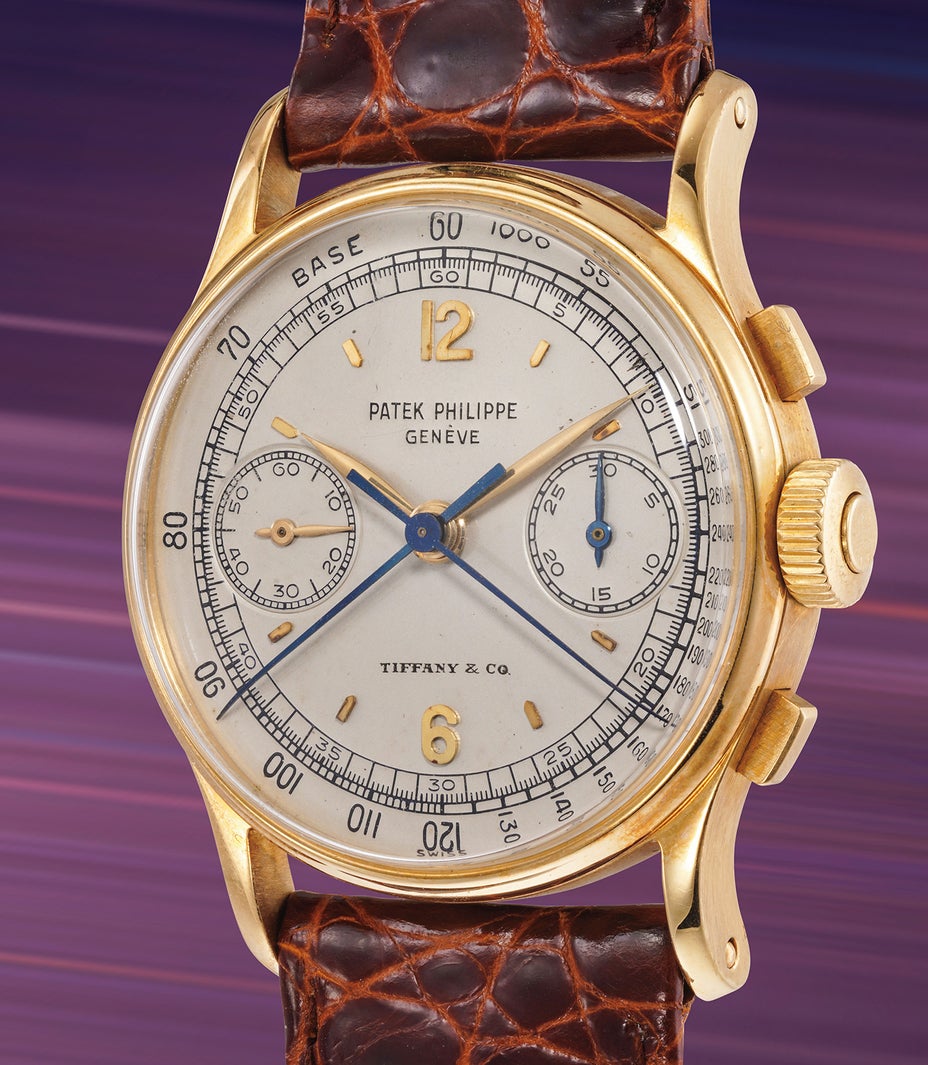
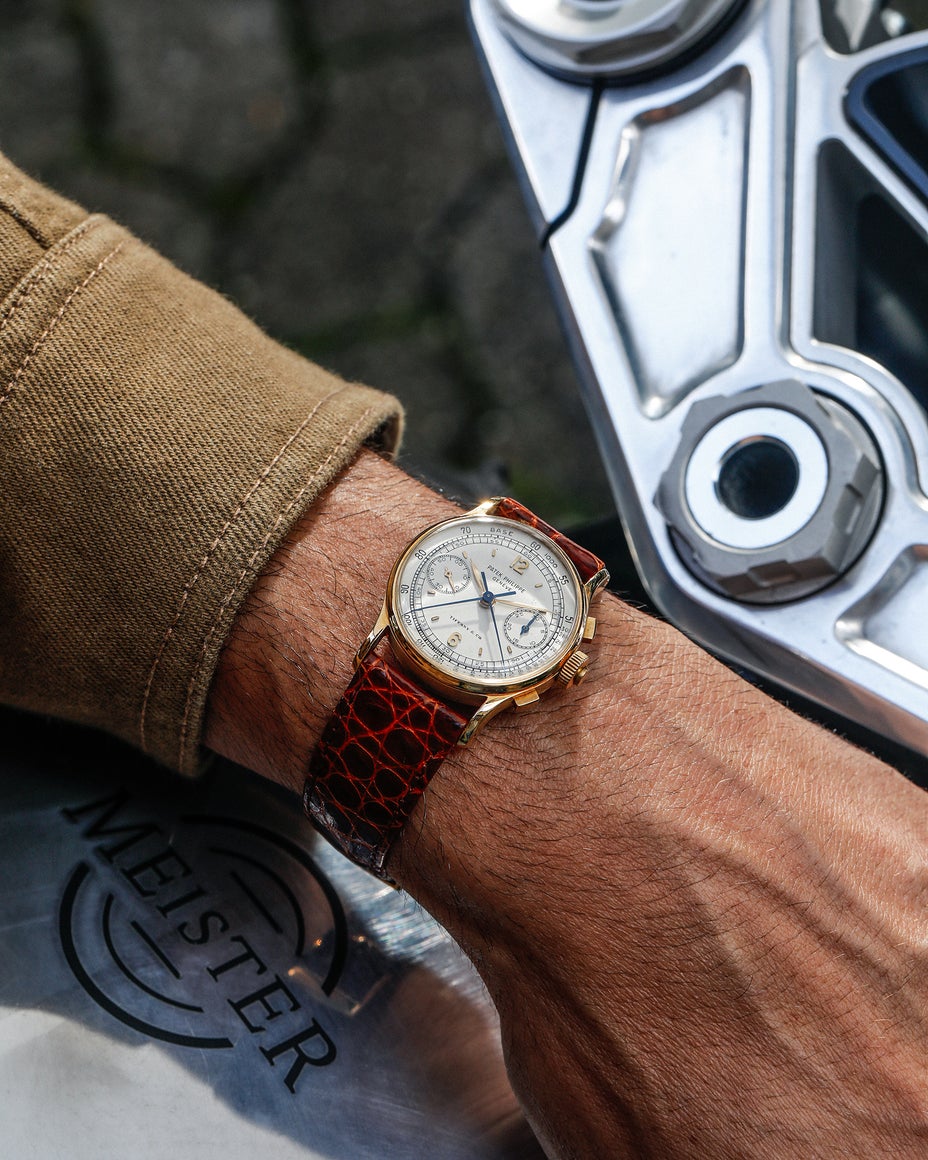
A superb, important and extremely scarce yellow gold split-second chronograph wristwatch retailed by Tiffany & Co.
- Estimate
- CHF150,000 - 300,000€162,000 - 324,000$188,000 - 377,000
CHF355,600
Lot Details
- Manufacturer
- Patek Philippe
- Year
- 1956
- Reference No
- 1436
- Movement No
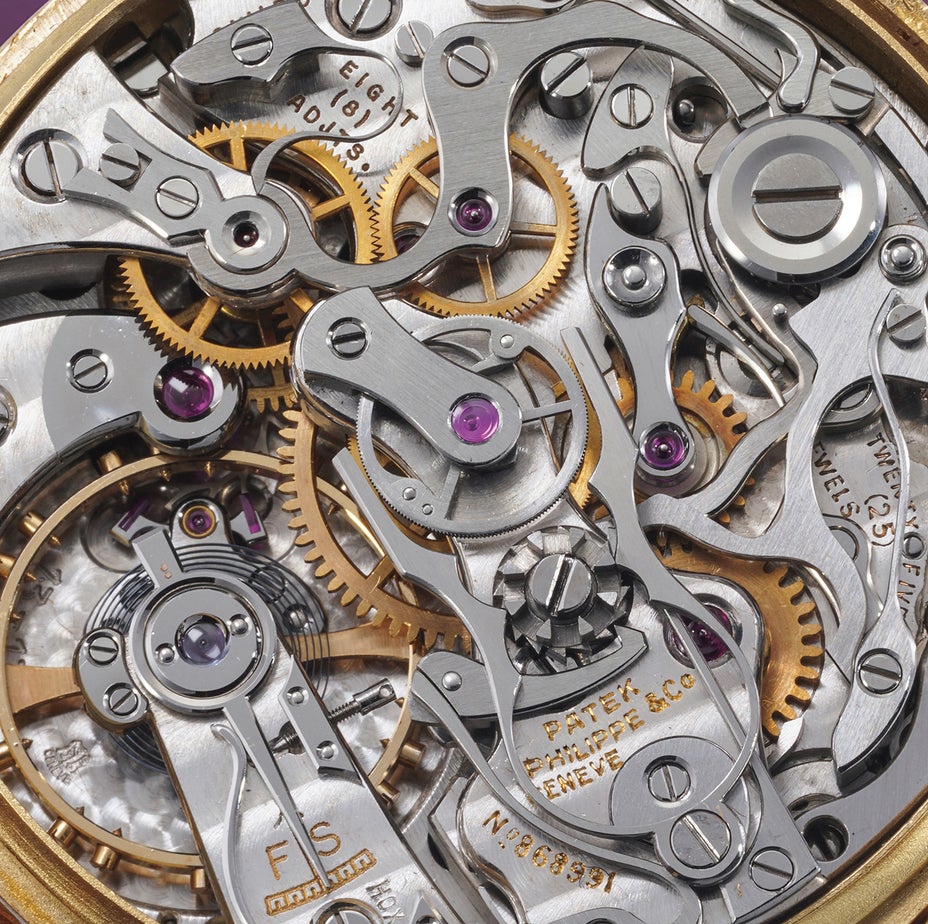
- 868'991
- Case No
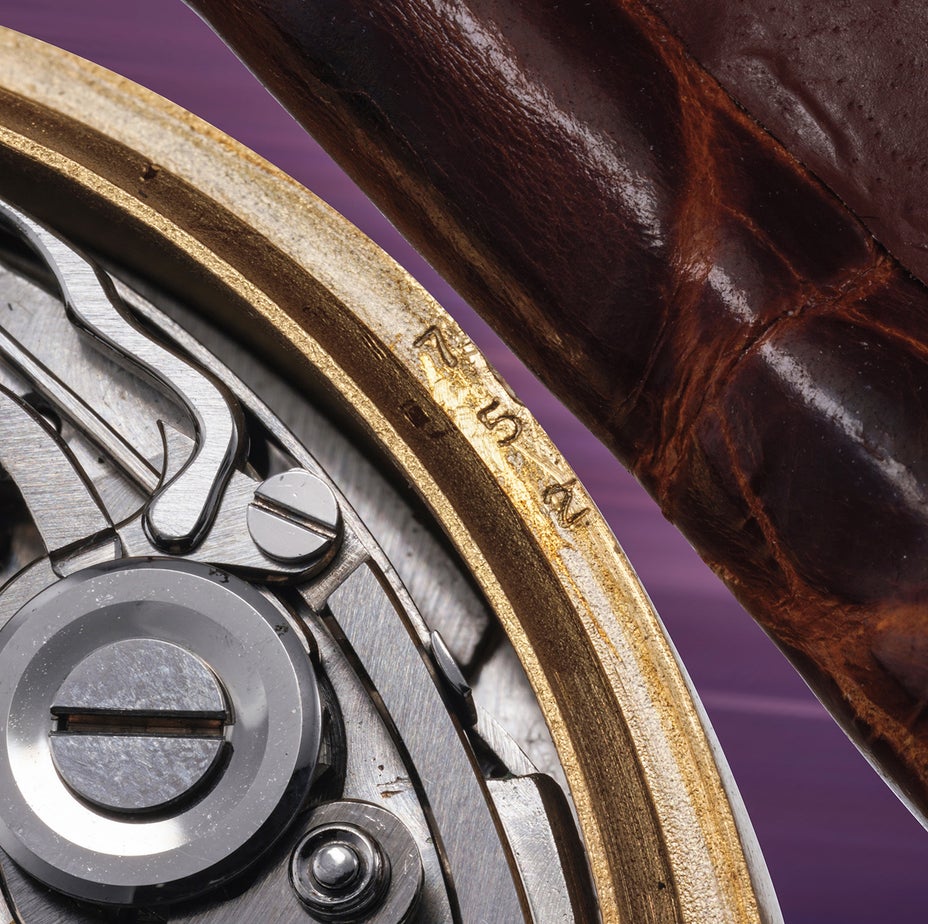
- 2'626'752, stock no. 612141 (or 141219)
- Material
- 18k yellow gold
- Calibre
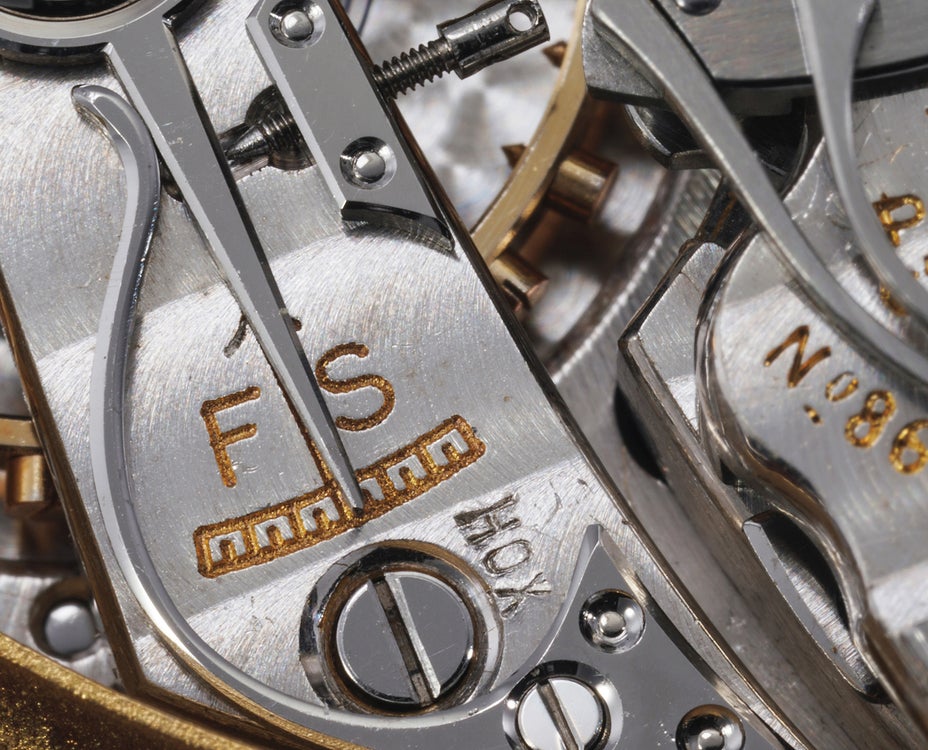
- Manual, cal. 13 CHR, 25 jewels, stamped "HOX" and with the Geneva Seal
- Bracelet/Strap
- Patek Philippe alligator strap
- Clasp/Buckle
- 18k yellow gold Patek Philippe pin buckle
- Dimensions
- 33mm Diameter
- Signed
- Case, dial, movement, strap and buckle signed
- Accessories
- Accompanied by Patek Philippe Extract from the Archives confirming production of the present watch in 1956 and its subsequent sale on July 29, 1964, and 2 additional Extract dated 1990 and 1988.
Specialist
Full-Cataloguing
Catalogue Essay
Reference 1436 is one of the most elegant, rare, important and collectible vintage Patek Philippe models. Shortly after the launch of the chronograph reference 130 in 1934, the company noticed that a split-second version had a potential market. Indeed, the “rattrapante” mechanism was particularly useful for technical purposes, such as timing horse or automobile races, as well measuring scientific experiments.
Thus, in 1938 the firm introduced ref. 1436, to the day considered one of the most refined models ever produced by the firm. Not only it represents an ineffable merging of design and technical proficiency, it is furthermore one of the scarcest models made by the firm. Given the difficulty of assembling a split-second movement, research suggests that the total output for the model is approximately 140 examples, produced throughout the reference's approximate 33 years of manufacture. That means an average of 4 watches per year. This is an exceedingly limited number, even by the production standards of the mid-to-late 20th century.
While earlier example feature a crown which also acts as split-second pusher, second generation examples like the present watch feature a co-axial button within the crown, giving the watch a more sporty appeal and render this model unmistakable to the eye of the collector.
Incredibly enough, the present piece represents a higher collecting tier than a “standard” 1436. As apparent at first glance, it indeed bears a Tiffany & Co.-signed dial, accompanied by all the details one would expect to come with such a dial: Tiffany stock number hand-engraved behind the lug, and HOX stamp on the movement certifying it was imported into the USA.
One of the most important collaboration in the history of watchmaking, the relationship between Tiffany and Patek goes back more than one-and-a-half century and resulted in some of the most important timepieces in history. Testament to this iron-clad relationship is the fact that today Tiffany is the only retailer who is allowed to have their name on the dial alongside “Patek Philippe”.
Not only Tiffany-stamped Patek Philippe pieces are some of the most collectible watches on the market, but they are also some of the most difficult to find. Research shows that, for example, less than 10 tiffany-stamped 1436 are known from the public. market. The present piece, last seen in 1988 and reappearing now after nearly 40 years, is one of these rarefied masterpieces.
While earlier example feature a crown which also acts as split-second pusher, second generation examples like the present watch feature a co-axial button within the crown, giving the watch a more sporty appeal and render this model unmistakable to the eye of the collector.
Incredibly enough, the present piece represents a higher collecting tier than a “standard” 1436. As apparent at first glance, it indeed bears a Tiffany & Co.-signed dial, accompanied by all the details one would expect to come with such a dial: Tiffany stock number hand-engraved behind the lug, and HOX stamp on the movement certifying it was imported into the USA.
One of the most important collaboration in the history of watchmaking, the relationship between Tiffany and Patek goes back more than one-and-a-half century and resulted in some of the most important timepieces in history. Testament to this iron-clad relationship is the fact that today Tiffany is the only retailer who is allowed to have their name on the dial alongside “Patek Philippe”.
Not only Tiffany-stamped Patek Philippe pieces are some of the most collectible watches on the market, but they are also some of the most difficult to find. Research shows that, for example, less than 10 tiffany-stamped 1436 are known from the public. market. The present piece, last seen in 1988 and reappearing now after nearly 40 years, is one of these rarefied masterpieces.
Patek Philippe
Swiss | 1839Since its founding in 1839, this famous Geneva-based firm has been surprising its clientele with superbly crafted timepieces fitted with watchmaking's most prestigious complications. Traditional and conservative designs are found across Patek Philippe's watches made throughout their history — the utmost in understated elegance.Well-known for the Graves Supercomplication — a highly complicated pocket watch that was the world’s most complicated watch for 50 years — this family-owned brand has earned a reputation of excellence around the world. Patek's complicated vintage watches hold the highest number of world records for results achieved at auction compared with any other brand. For collectors, key models include the reference 1518, the world's first serially produced perpetual calendar chronograph, and its successor, the reference 2499. Other famous models include perpetual calendars such as the ref. 1526, ref. 3448 and 3450, chronographs such as the reference 130, 530 and 1463, as well as reference 1436 and 1563 split seconds chronographs. Patek is also well-known for their classically styled, time-only "Calatrava" dress watches, and the "Nautilus," an iconic luxury sports watch first introduced in 1976 as the reference 3700 that is still in production today.
Browse Maker