54Σ︎
Patek Philippe
Ref. 3940
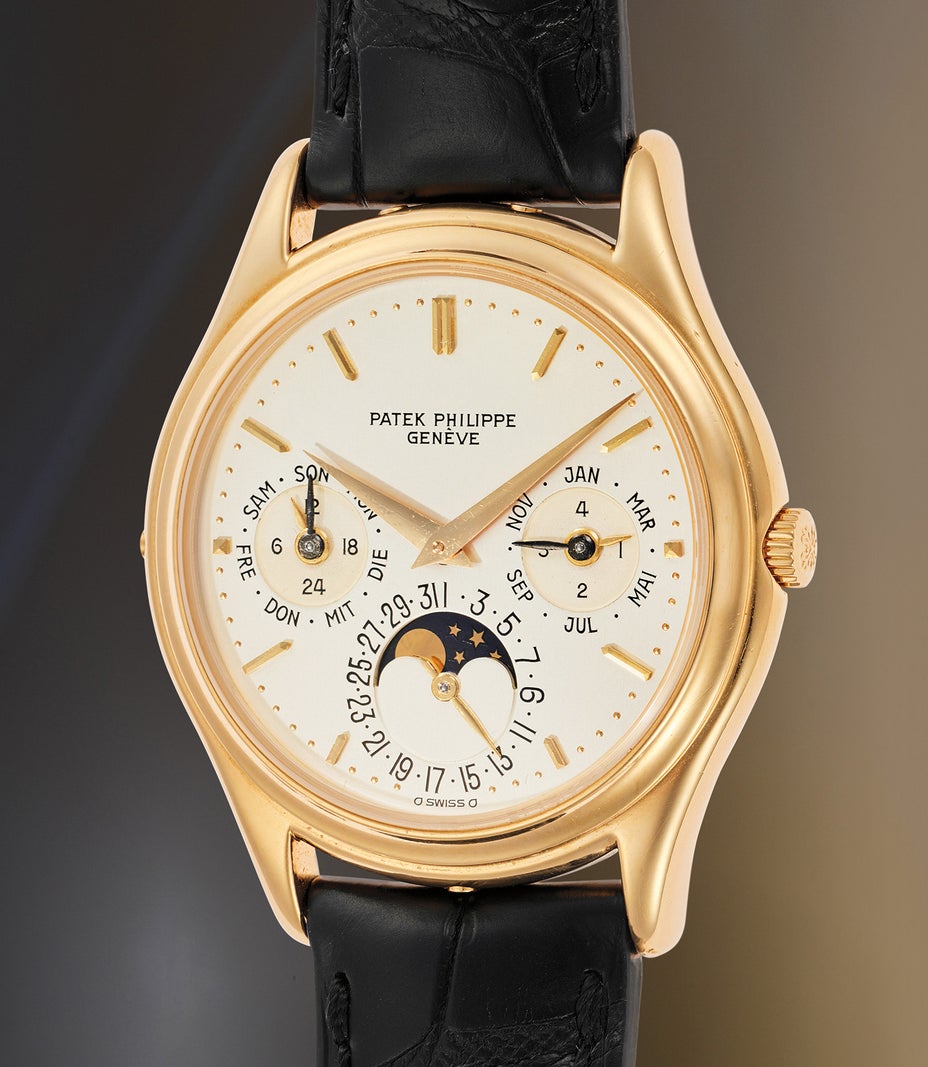
A well-preserved and collectible “first series” yellow gold perpetual calendar wristwatch with moon phase, 24-hour, and leap year indication
Full-Cataloguing
The wristwatch was encased predominately in yellow gold, with fewer examples in pink and white gold, and very rarely in platinum. In 1985, the first 25 watches were produced to celebrate the 225th anniversary of the famed retailer Chronometrie Beyer in Zürich with numbered watches. That same year, the brand began standard production of the reference and continued to produce it until 2007 when they replaced the 3940 with the reference 5140 powered by the same caliber 240 movement, but with a case measuring 37mm in diameter.
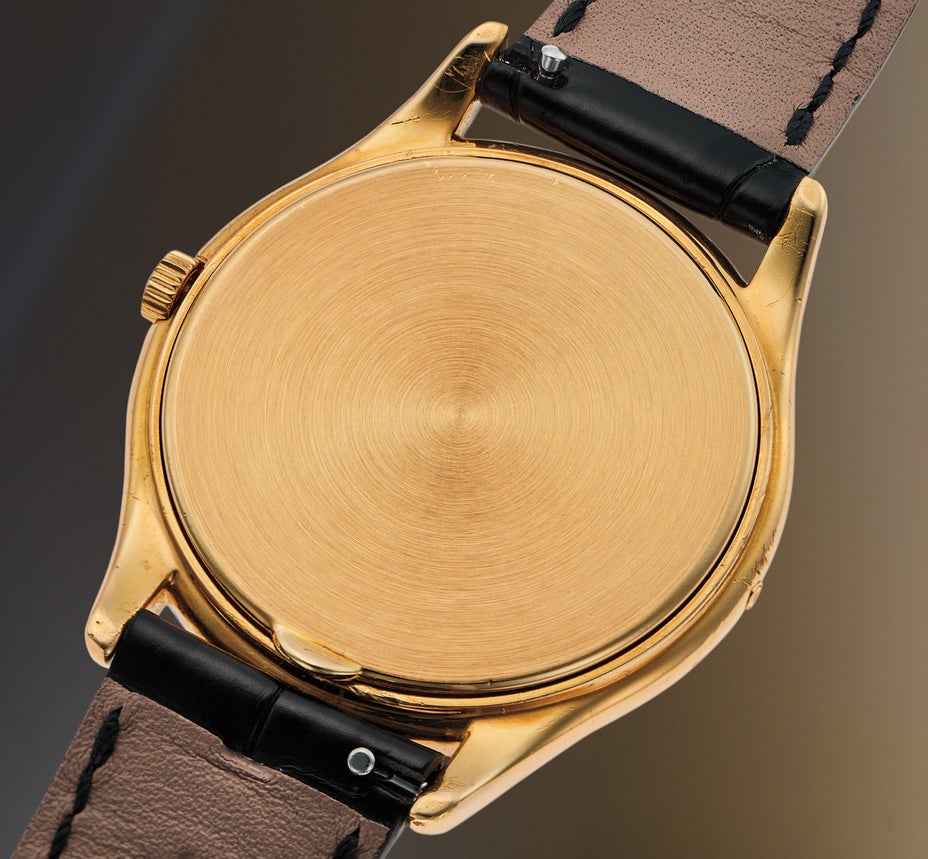
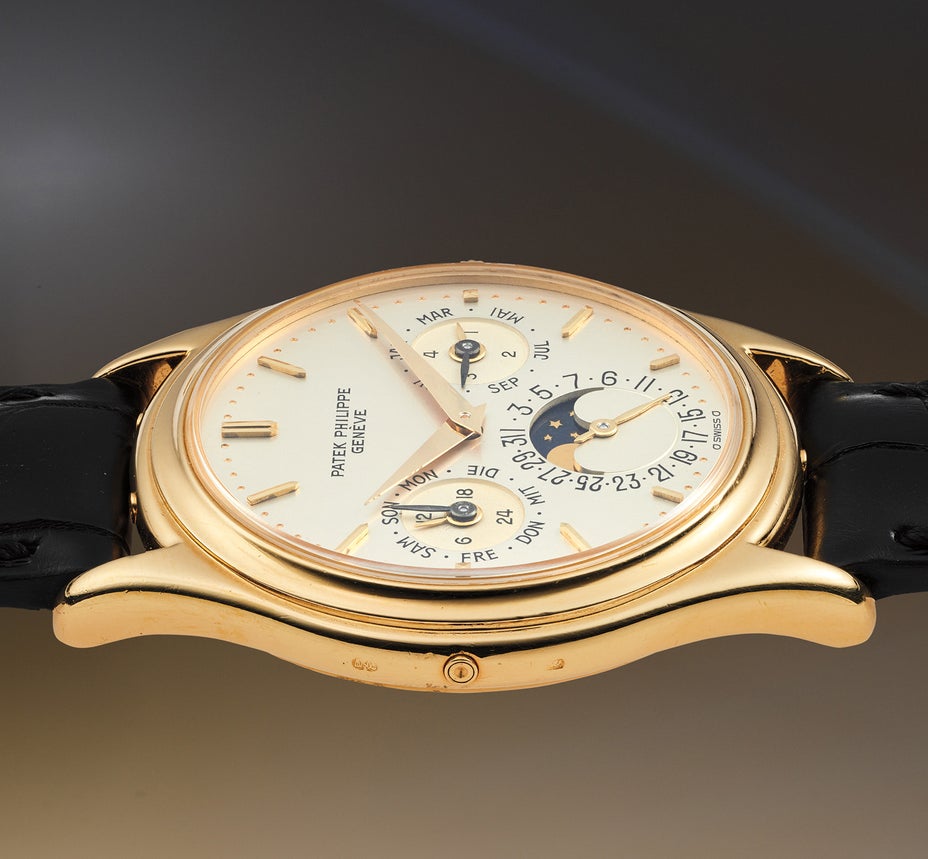
The present watch from 1987 is part of the first series of the reference 3940, which was produced only during the first three years. These early watches featured flat, sunken subsidiary dials giving them a pleasing vintage look, and a single leap year indicator compared with later models having a cross dividing the four sectors. With its visible hallmarks to the side of the case, this particular 3940 offers an excellent opportunity to own a coveted, “first series” version of a classic perpetual calendar timepiece.
Patek Philippe
Swiss | 1839Since its founding in 1839, this famous Geneva-based firm has been surprising its clientele with superbly crafted timepieces fitted with watchmaking's most prestigious complications. Traditional and conservative designs are found across Patek Philippe's watches made throughout their history — the utmost in understated elegance.
Well-known for the Graves Supercomplication — a highly complicated pocket watch that was the world’s most complicated watch for 50 years — this family-owned brand has earned a reputation of excellence around the world. Patek's complicated vintage watches hold the highest number of world records for results achieved at auction compared with any other brand. For collectors, key models include the reference 1518, the world's first serially produced perpetual calendar chronograph, and its successor, the reference 2499. Other famous models include perpetual calendars such as the ref. 1526, ref. 3448 and 3450, chronographs such as the reference 130, 530 and 1463, as well as reference 1436 and 1563 split seconds chronographs. Patek is also well-known for their classically styled, time-only "Calatrava" dress watches, and the "Nautilus," an iconic luxury sports watch first introduced in 1976 as the reference 3700 that is still in production today.