127Σ︎✱︎
Patek Philippe
Ref. 2499
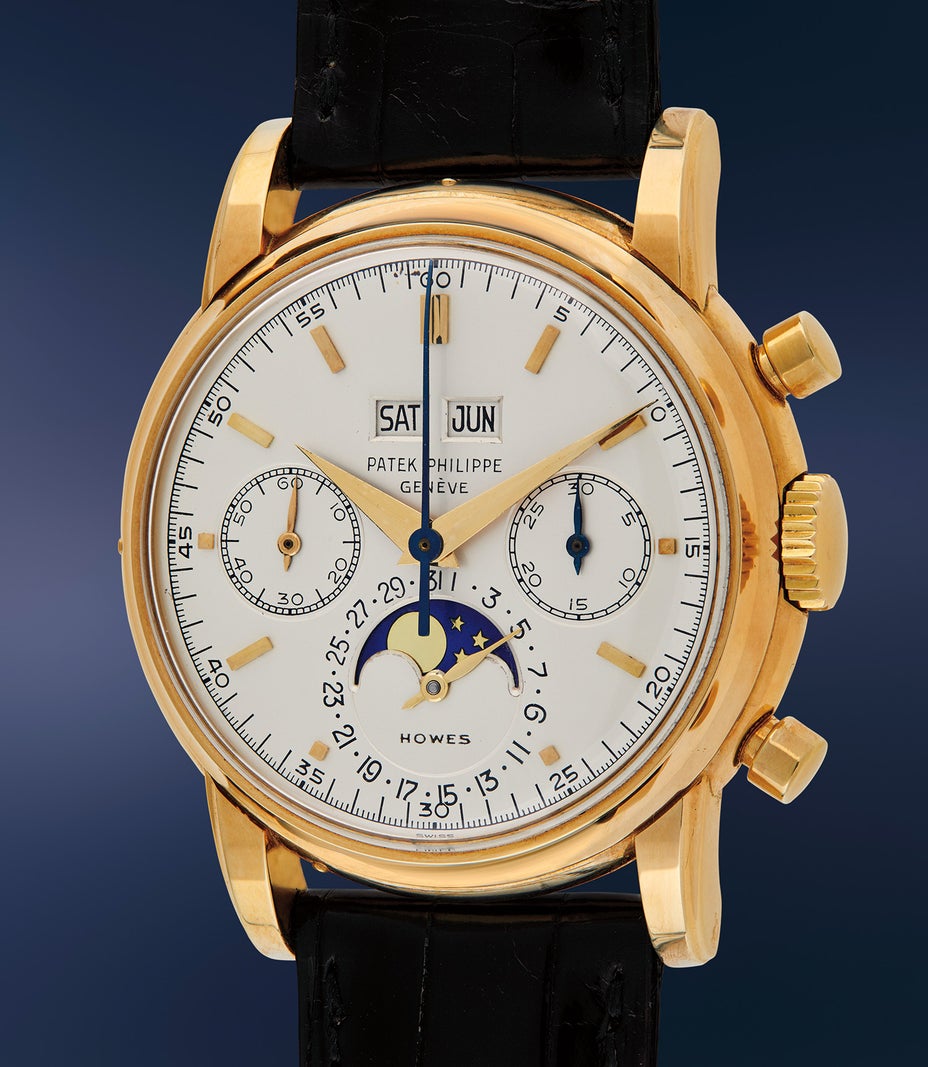
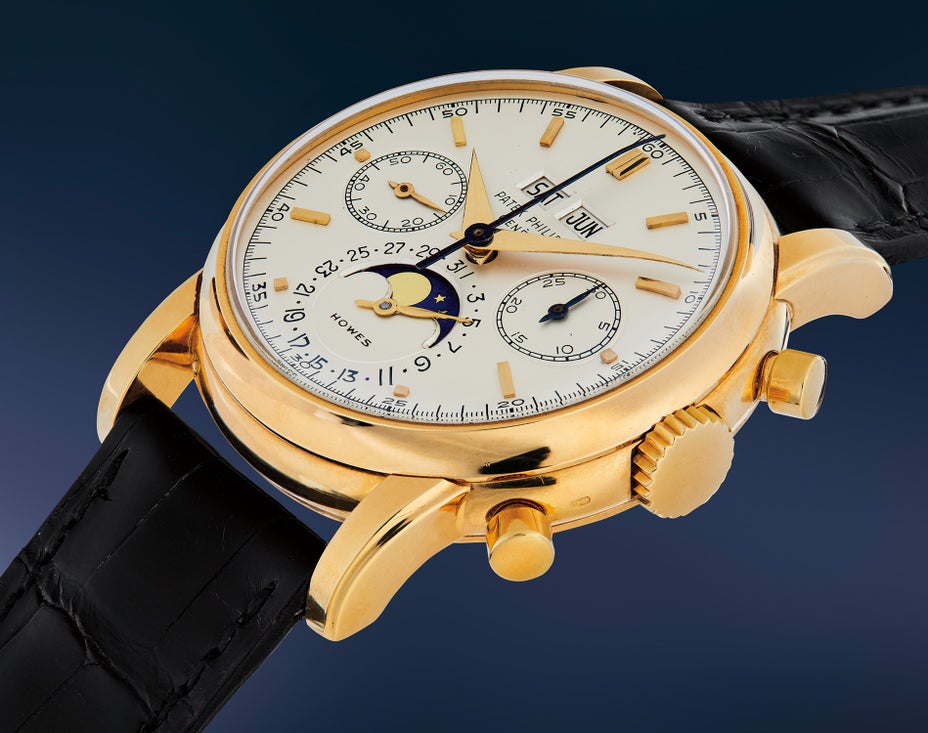
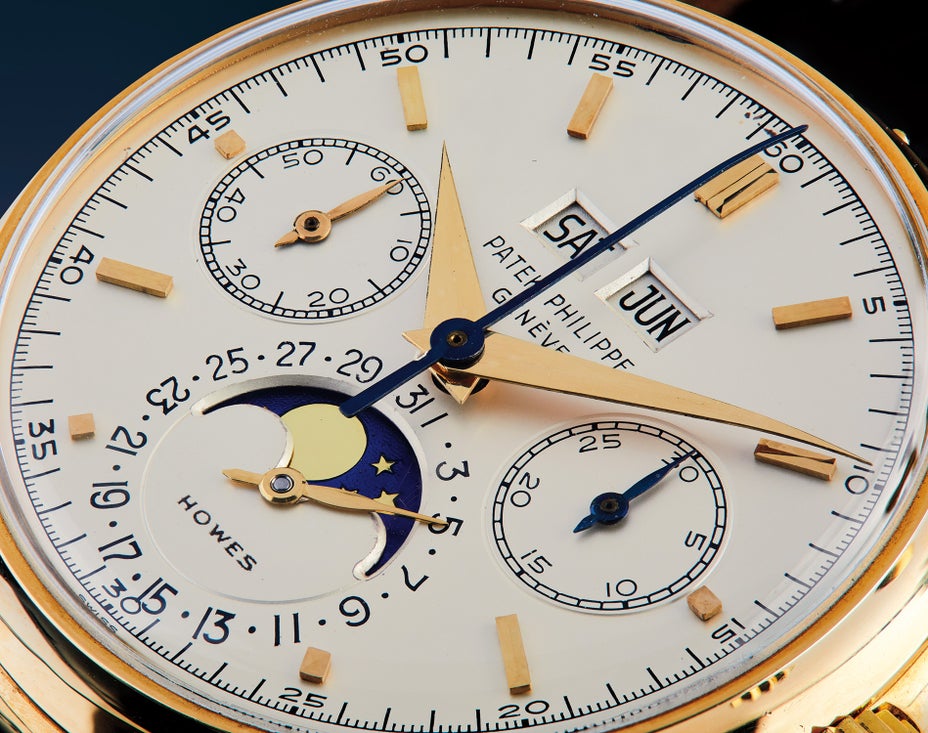
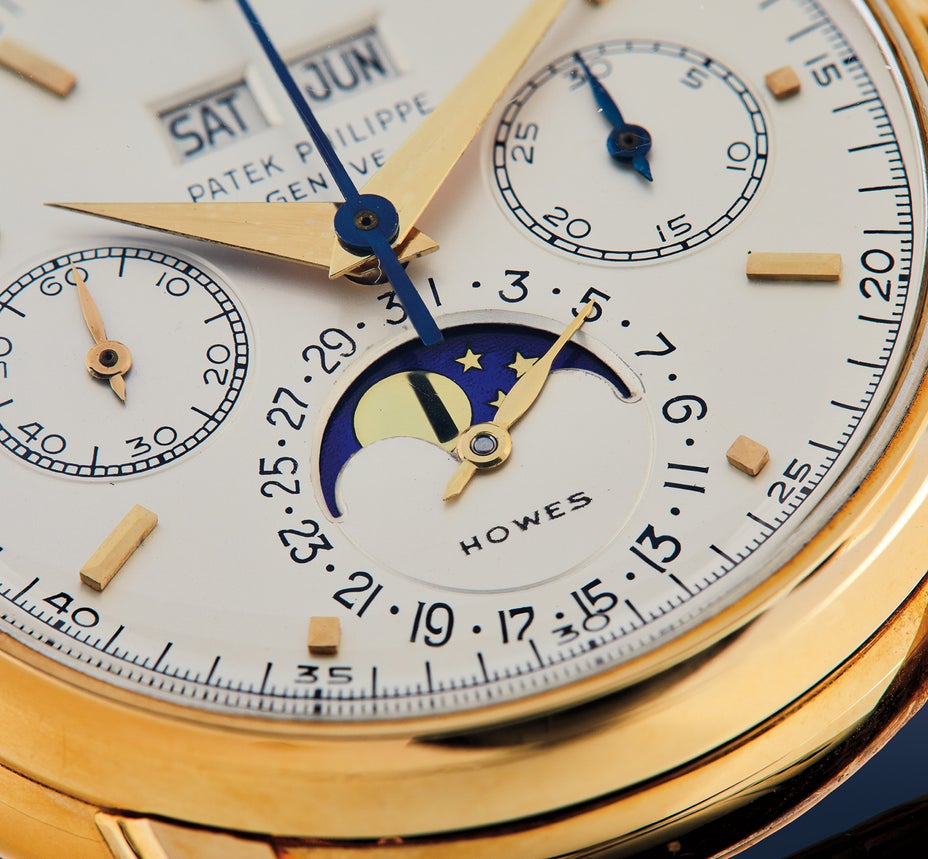
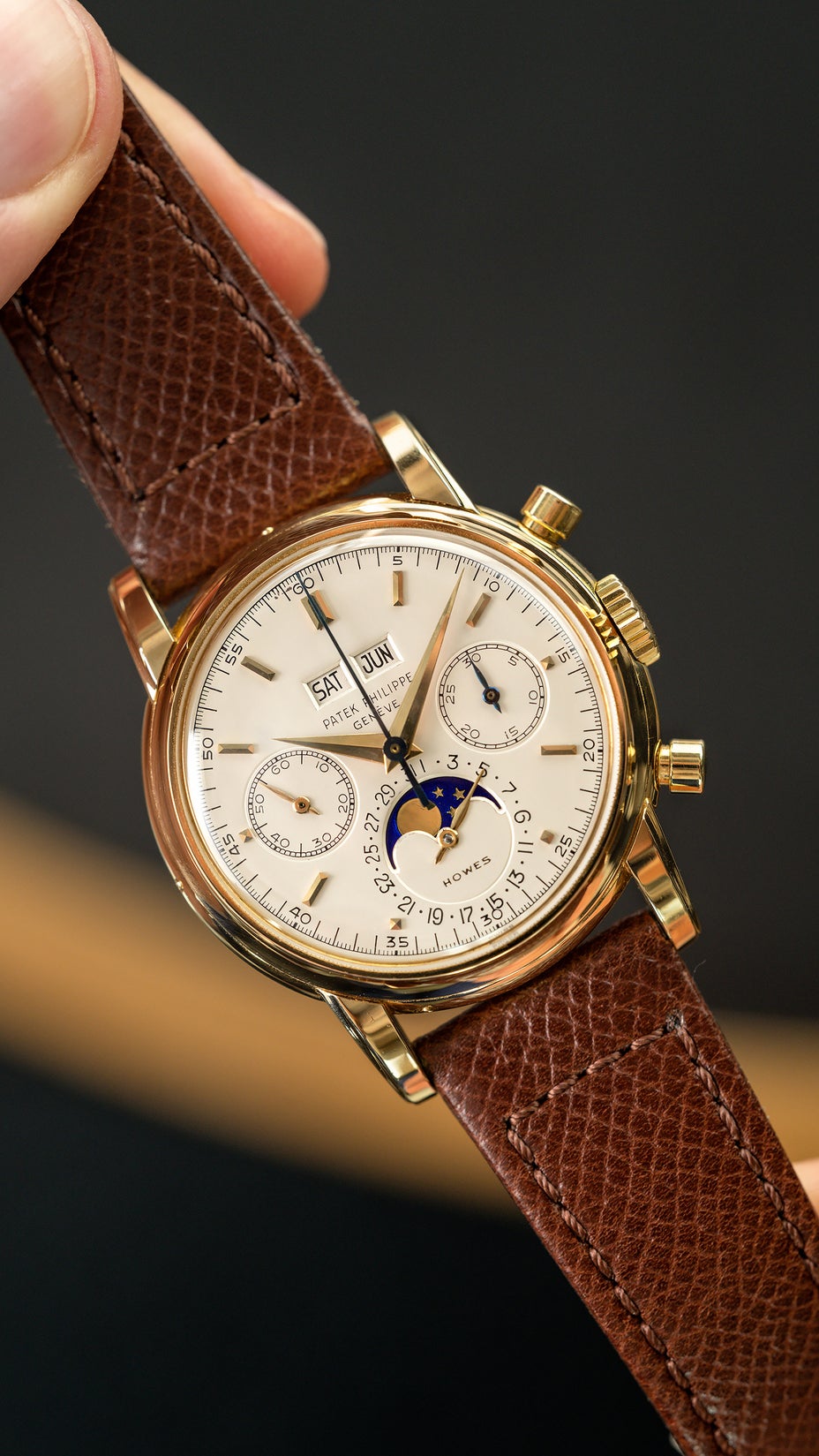
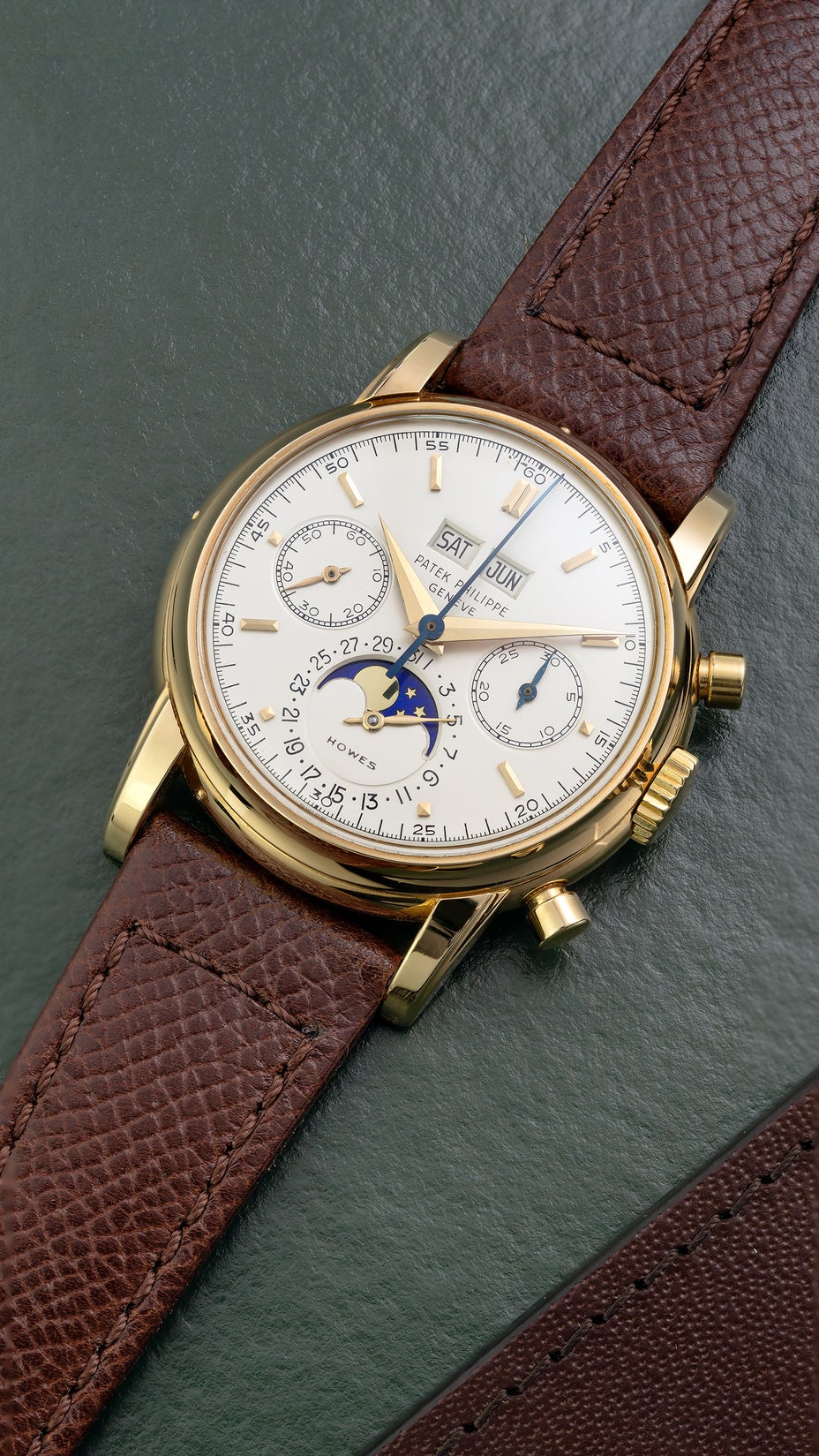
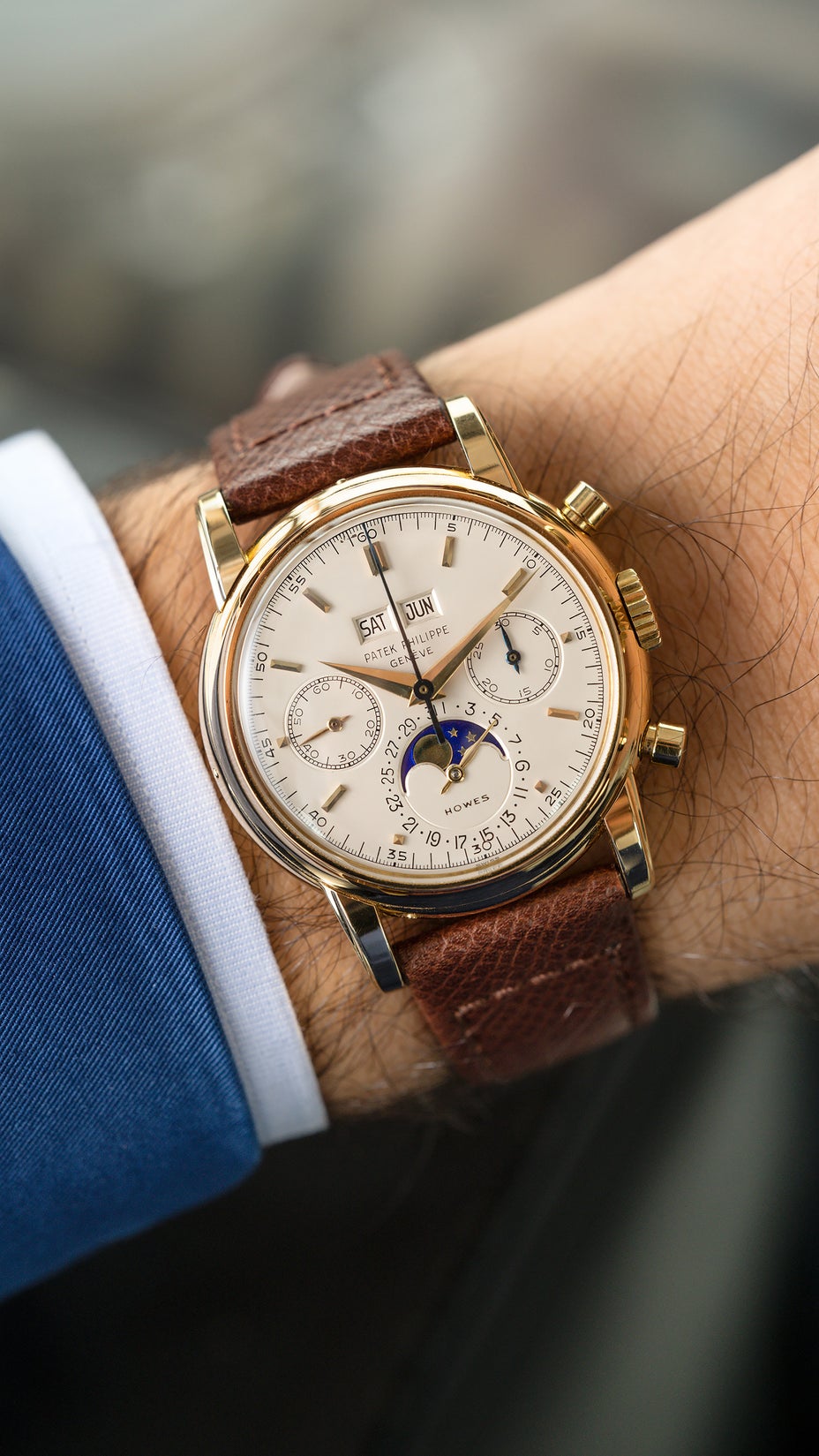
A possibly unique, extremely elegant, and well-preserved yellow gold perpetual calendar chronograph wristwatch with moon phases, retailed by Howes
Full-Cataloguing
The reference 2499 can be divided into four series:
- First series watches feature square chronograph pushers, applied Arabic numerals and display a tachymeter scale on the dial.
- Second series watches feature round chronograph pushers, either applied baton or applied Arabic numerals and a tachymeter scale on the dial.
- Third series, like the present watch, feature round chronograph pushers, applied baton numerals and outer seconds divisions.
- Fourth series watches feature round chronograph pushers, applied baton numerals, outer seconds divisions and a sapphire crystal.
This example is preserved in wonderful condition with strong fluting on the lugs and robust case proportions. It last appeared at auction in November of 2000 and has resided unaltered in an important American collection since then.
Certainly any third-series 2499 in such condition is worthy of praise, a jewel of any auction catalogue. The “possibly unique” designation of this 2499, however, points to something beyond even this rarity. Signed by American retailer Howes, it is the only Howes-signed 2499 ever known, and thus one of the rarest reference 2499s to be offered in recent times.
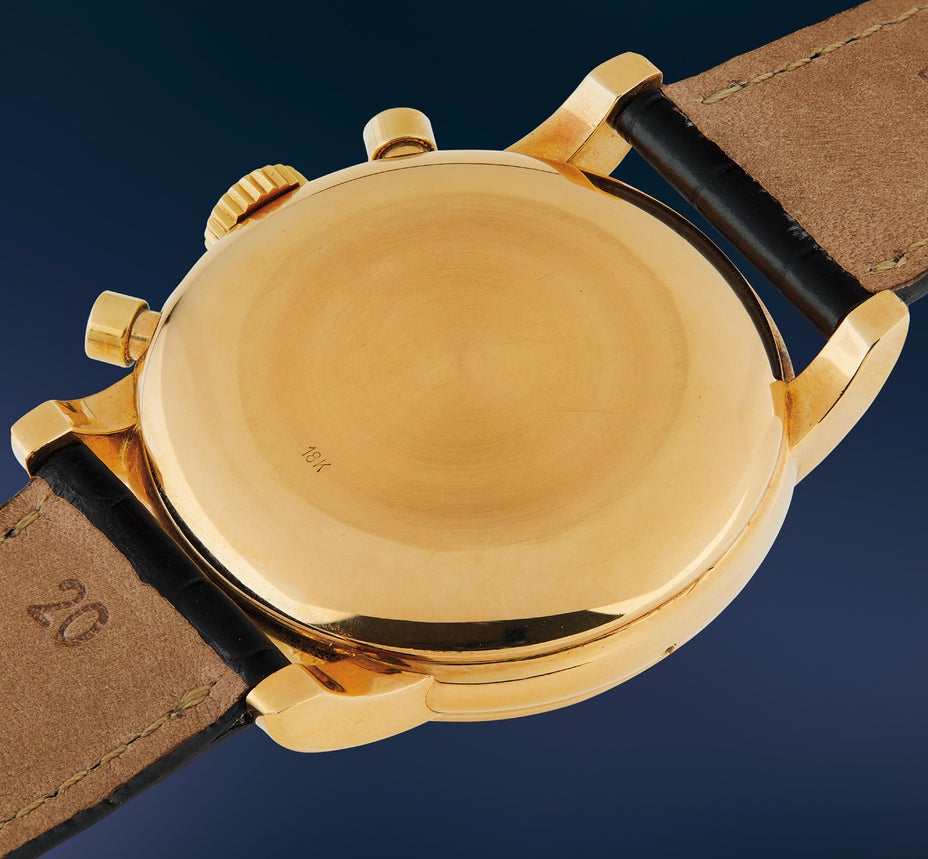
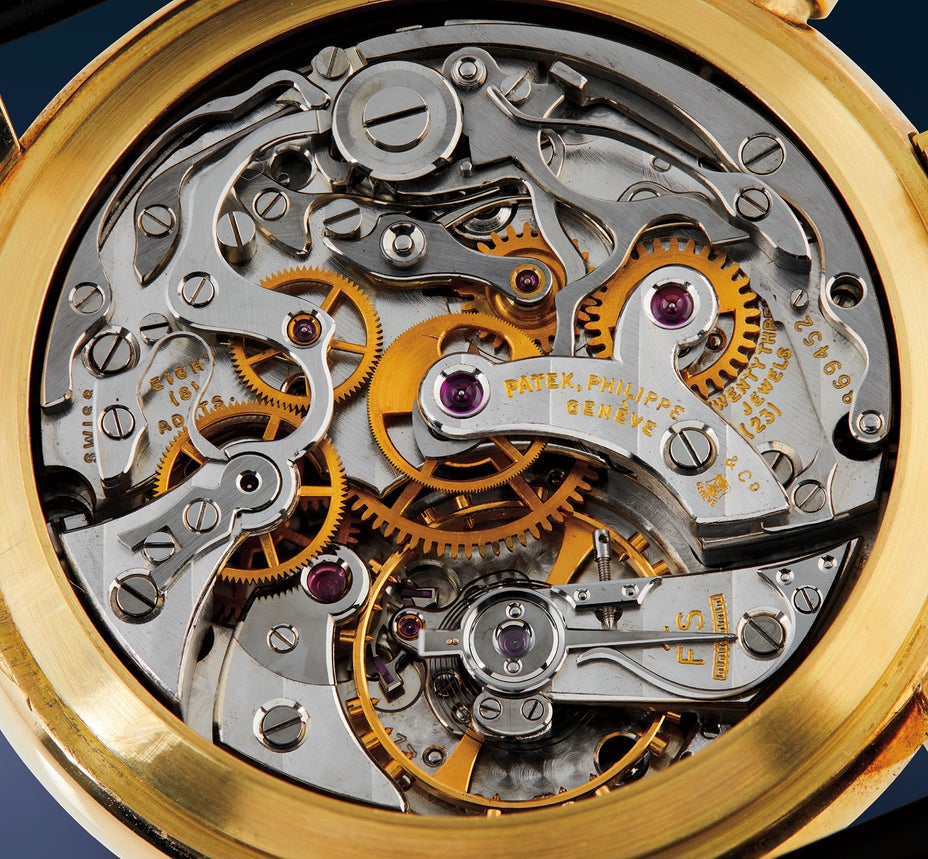
Born in the late 1860s to British and Irish immigrant parents in Iowa (likely fleeing poverty as a result of the Potato Famine), Benjamin Durward Howes began his career as an expert in pearls – an unlikely trade in landlocked Iowa. He later moved to Los Angeles, where he and his brother Edward opened a brick-and-mortar storefront in 1919. An issue of the Jewelers Circular from 1926 recounts “pearl merchant” B.D. Howes vacationing in Lake Tahoe and Yellowstone National Park for four weeks, and his son Durward planning a buying trip to New York after reporting a very profitable year. B.D. Howes and Son eventually expanded to 10 stores across the West of the United States, including Arizona and Hawaii, and oversaw their enterprise from Pasadena, California. They remained prominent jewelers in the area as the business was passed down through several generations of Howes family members. Most Howes-signed Patek Philippe timepieces are Calatravas, leading us to conclude that this piece was ordered for an extremely important client of the jeweler. The American import mark of “HOX” is stamped to the inside caseback, as well as the “18K” indication on the exterior of the caseback, further underscoring its originality.
The resurfacing of this possibly unique gem is a most welcome occurrence, certain to delight collectors of vintage, high-end, complicated Patek Philippe wristwatches – with a tiny, but important detail to set it apart. Combined with its overall originality and outstanding state of preservation, it is a trophy watch for the most discerning connoisseur.
Patek Philippe
Swiss | 1839Since its founding in 1839, this famous Geneva-based firm has been surprising its clientele with superbly crafted timepieces fitted with watchmaking's most prestigious complications. Traditional and conservative designs are found across Patek Philippe's watches made throughout their history — the utmost in understated elegance.
Well-known for the Graves Supercomplication — a highly complicated pocket watch that was the world’s most complicated watch for 50 years — this family-owned brand has earned a reputation of excellence around the world. Patek's complicated vintage watches hold the highest number of world records for results achieved at auction compared with any other brand. For collectors, key models include the reference 1518, the world's first serially produced perpetual calendar chronograph, and its successor, the reference 2499. Other famous models include perpetual calendars such as the ref. 1526, ref. 3448 and 3450, chronographs such as the reference 130, 530 and 1463, as well as reference 1436 and 1563 split seconds chronographs. Patek is also well-known for their classically styled, time-only "Calatrava" dress watches, and the "Nautilus," an iconic luxury sports watch first introduced in 1976 as the reference 3700 that is still in production today.