50
Patek Philippe
Ref. 130
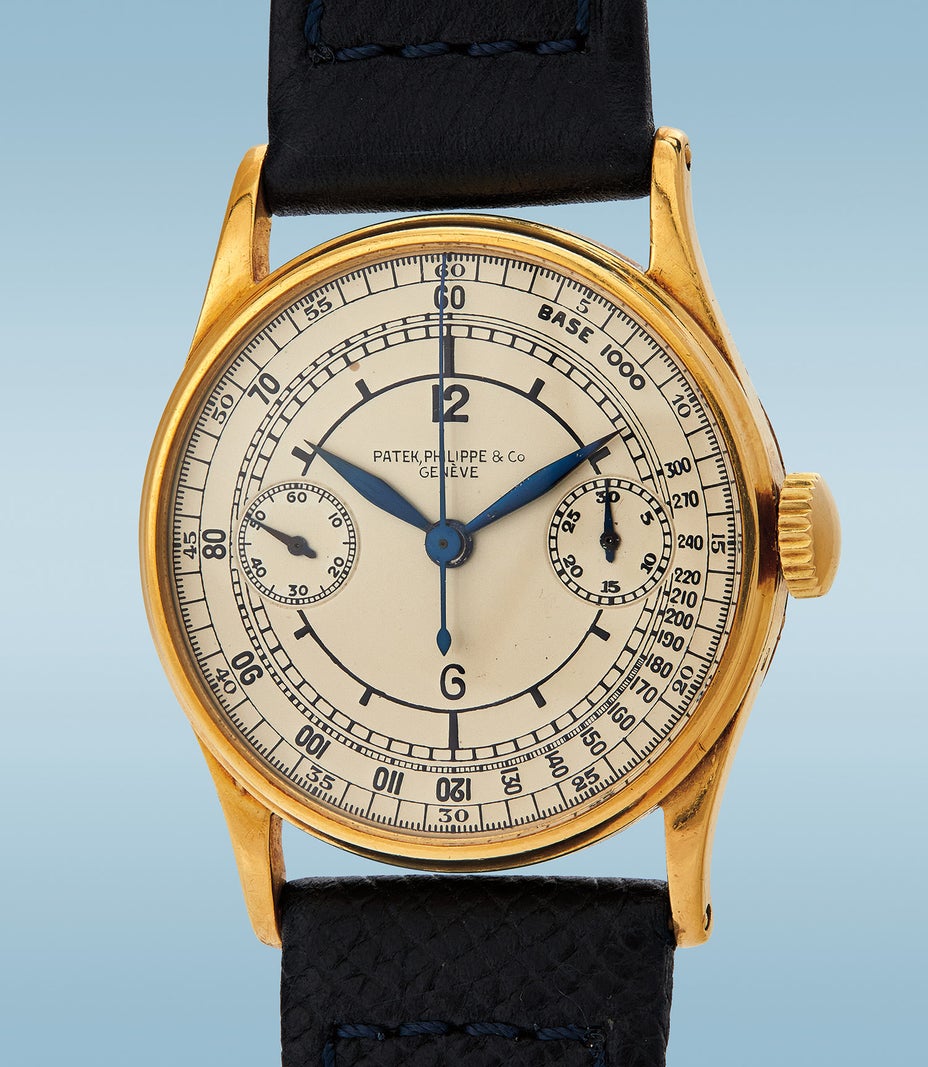
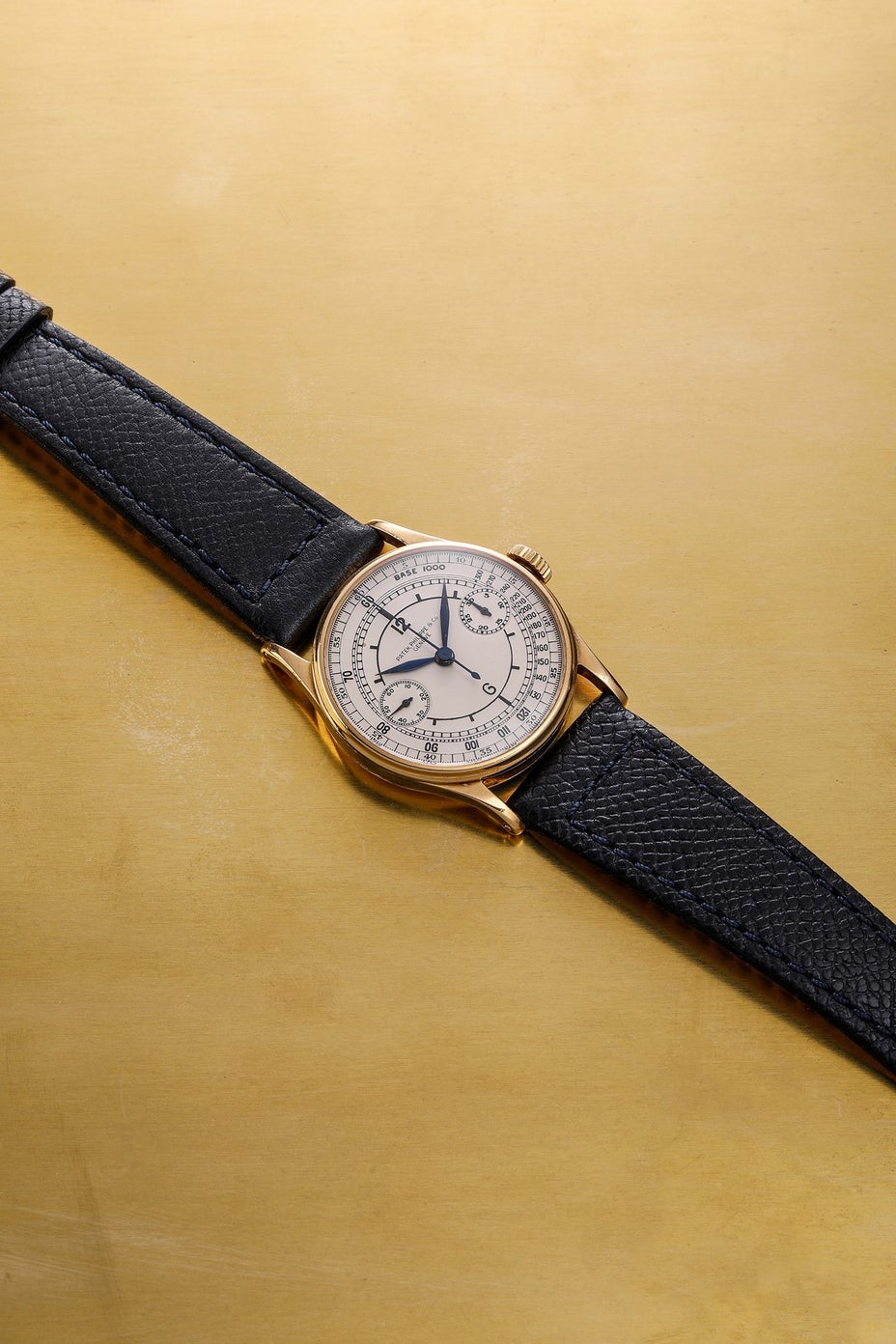
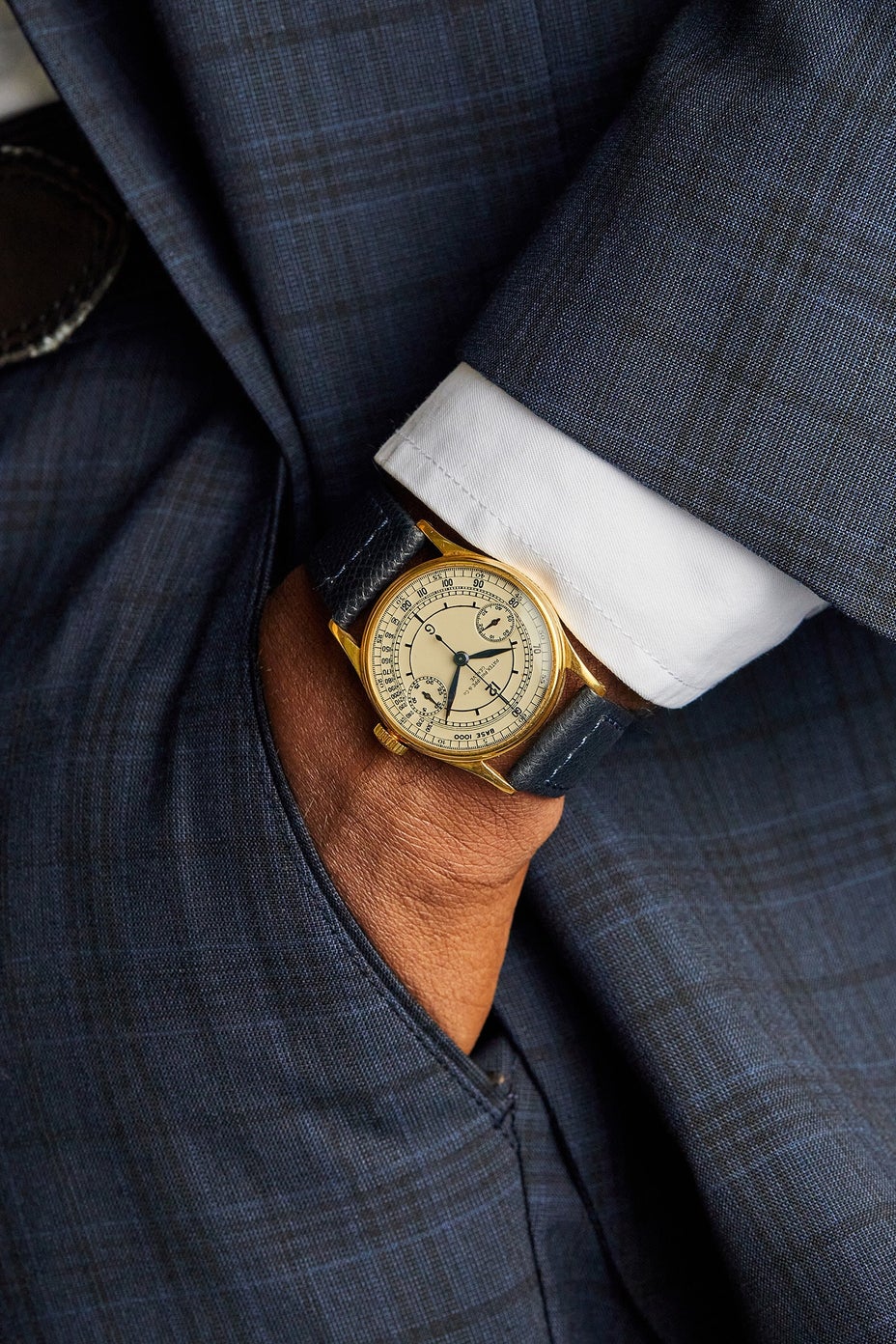
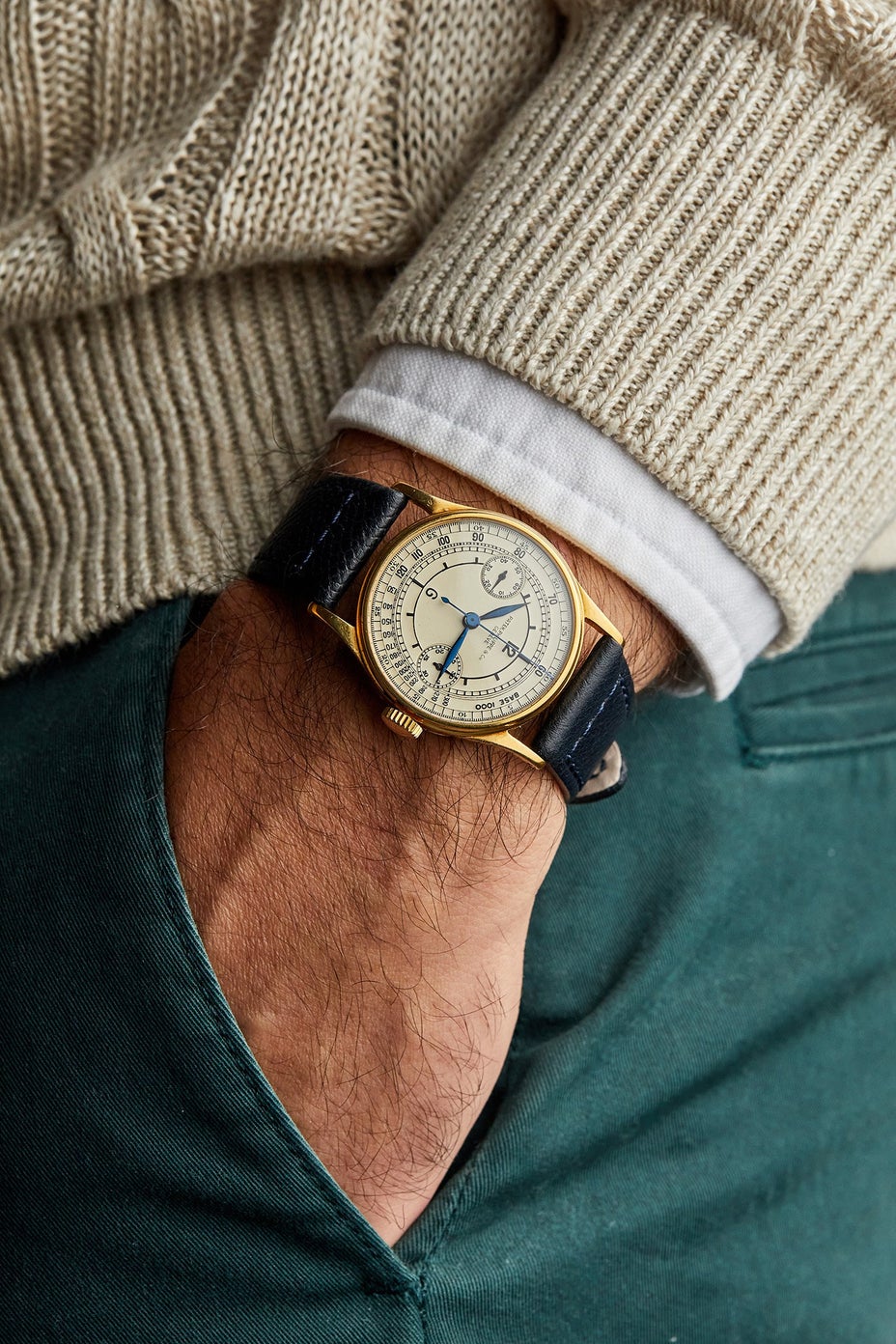
An exceptional, important, and highly attractive yellow gold co-axial single button chronograph wristwatch with sector dial and tachymeter scale
Full-Cataloguing
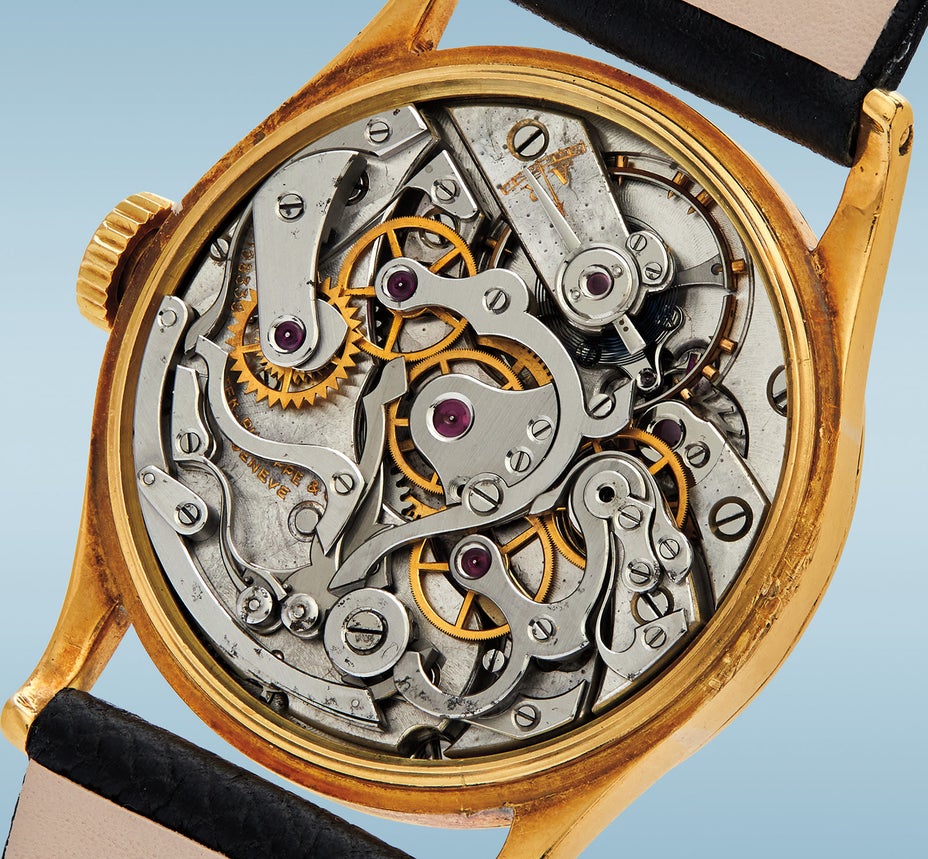
The present example is an early and rare combination featuring a single-button chronograph with a sector dial. Originally housed in tonneau-shaped cases made in the 1920s, these movements, produced by the great Victorin Piguet of the Vallée de Joux, Patek Philippe would later offer them in round-shaped cases due to society’s changing tastes.
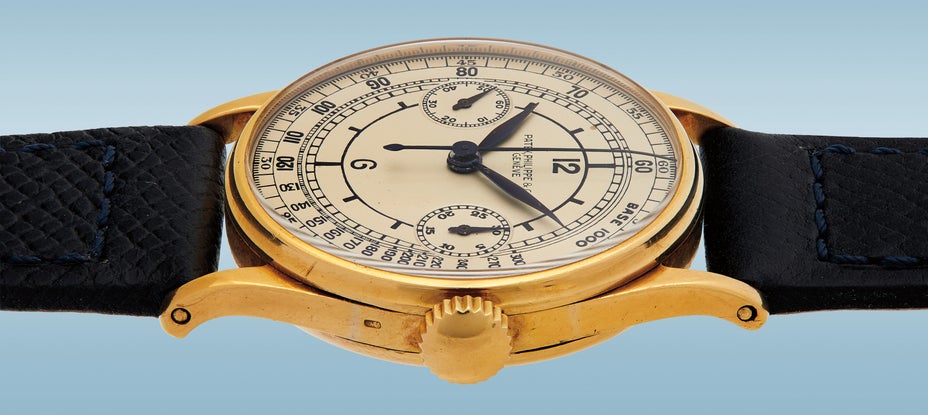
The single-button chronograph mechanism remains among the most complex and sophisticated developments of time measurement. Whereas the standard chronograph is activated and reset through two buttons in the band, the single-button chronograph is controlled through either a button in the band, or like the present watch, the crown.
According to research, Patek Philippe produced single-button chronograph wristwatches between 1924 and the late 1930s in only approximately thirty examples. The reference 130 was Patek Philippe’s first chronograph model given a reference number with the gold cases made by Vichet, one of Geneva’s best case makers at the time.
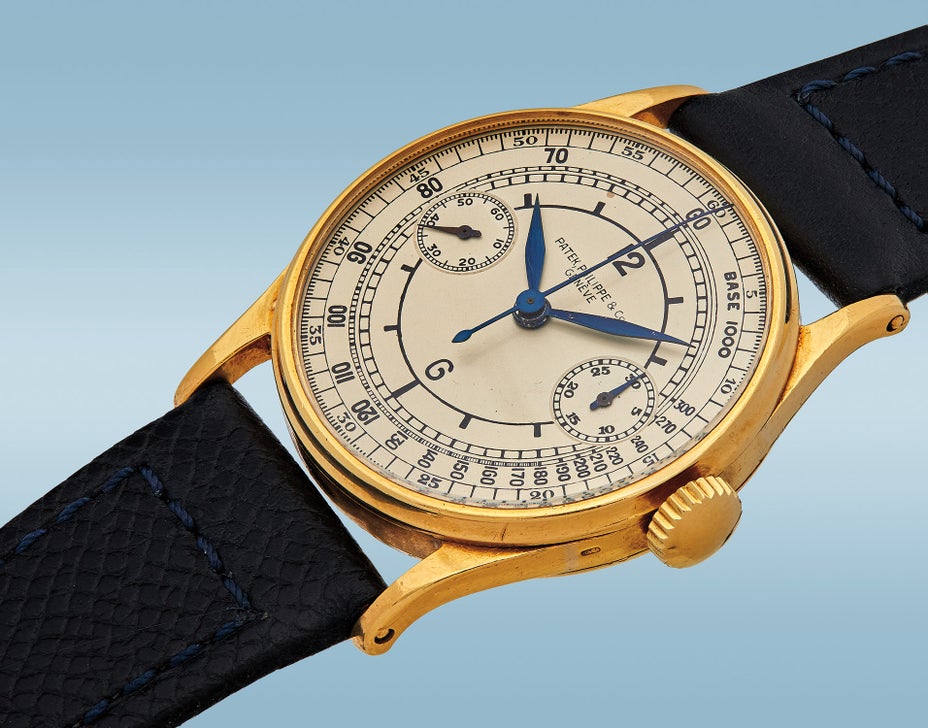
Absolutely timeless, it is perfectly contemporary and relevant for today as it was 80 years ago when it was first sold. Its elegant round case, elongated lugs, and prominent bezel give it a distinguished, streamlined look with no extra pushers disrupting the perfect balance of the case.
The gorgeous sector dial is an interesting study in design, and is considered one of the most desirable dial types for collectors. It is interesting to note how sector dials were in fashion for a remarkably short time. They are usually found on watches made during the 1930s. It appears that Patek Philippe created a number of varying sector-type designs, differing from each other in the number of sectors and type of numerals employed.
The present, beautifully preserved dial, with its extraordinary raised, hard, champlevé enamel printing, has two distinct font styles - with the right side 30-minute register, and outer 60 minute scale in a vintage font, while the left-hand constant seconds, tachymeter and large hour markers are in a modern Art Deco font. The “Base 1000” and rate indications “120” down to “80” are in a bold print.
Patek Philippe chronograph watches with sector dials remain as unobtainable as they are attractive: only a few dozen such watches have ever appeared on the auction market. Since first sold publicly in 2012 when consigned by the family of the original owner, the present lot has been lovingly cared for by its second owner, a cherished piece in one of the world’s most prominent private collections.
Patek Philippe
Swiss | 1839Since its founding in 1839, this famous Geneva-based firm has been surprising its clientele with superbly crafted timepieces fitted with watchmaking's most prestigious complications. Traditional and conservative designs are found across Patek Philippe's watches made throughout their history — the utmost in understated elegance.
Well-known for the Graves Supercomplication — a highly complicated pocket watch that was the world’s most complicated watch for 50 years — this family-owned brand has earned a reputation of excellence around the world. Patek's complicated vintage watches hold the highest number of world records for results achieved at auction compared with any other brand. For collectors, key models include the reference 1518, the world's first serially produced perpetual calendar chronograph, and its successor, the reference 2499. Other famous models include perpetual calendars such as the ref. 1526, ref. 3448 and 3450, chronographs such as the reference 130, 530 and 1463, as well as reference 1436 and 1563 split seconds chronographs. Patek is also well-known for their classically styled, time-only "Calatrava" dress watches, and the "Nautilus," an iconic luxury sports watch first introduced in 1976 as the reference 3700 that is still in production today.