77
Patek Philippe
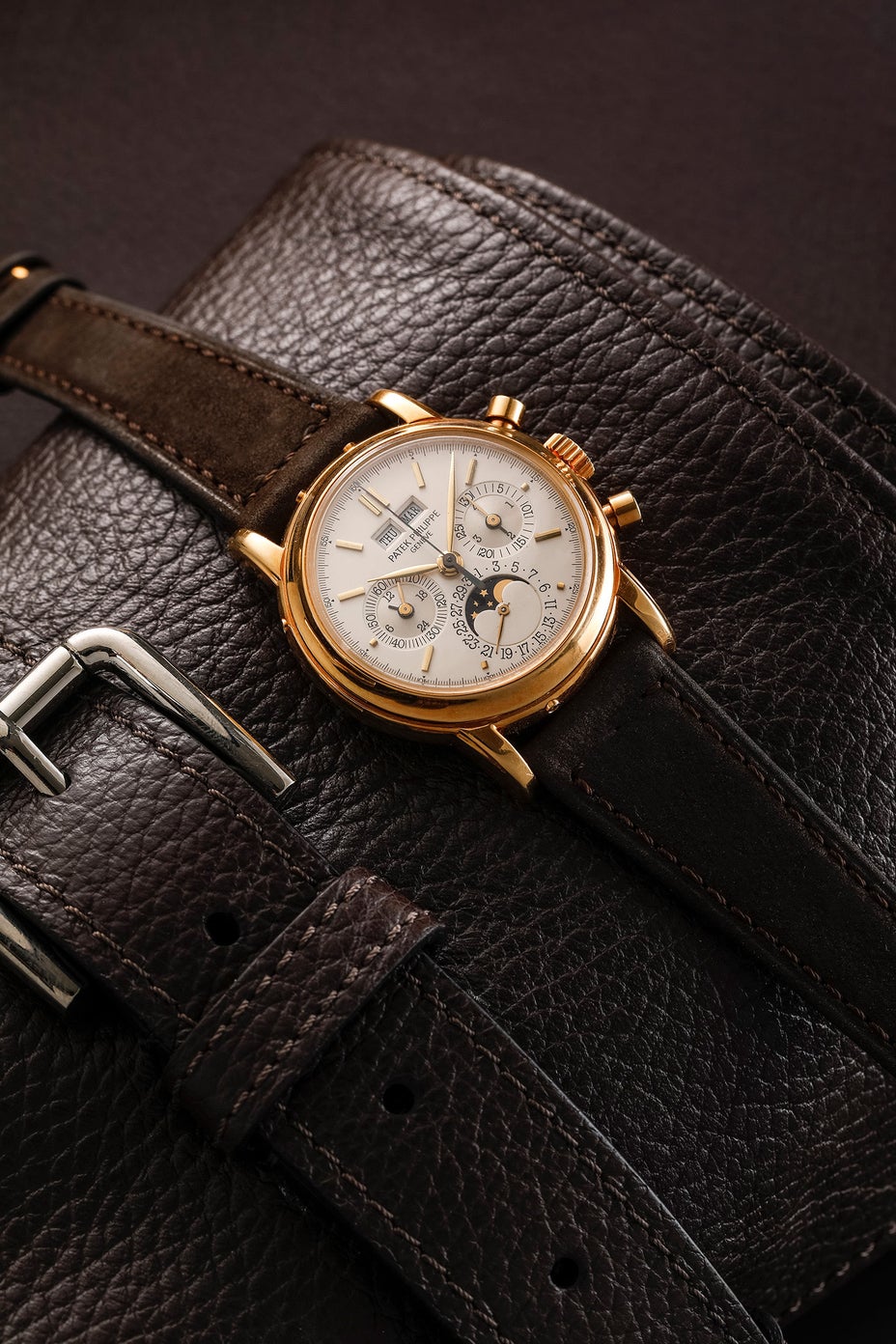
Ref. 3971
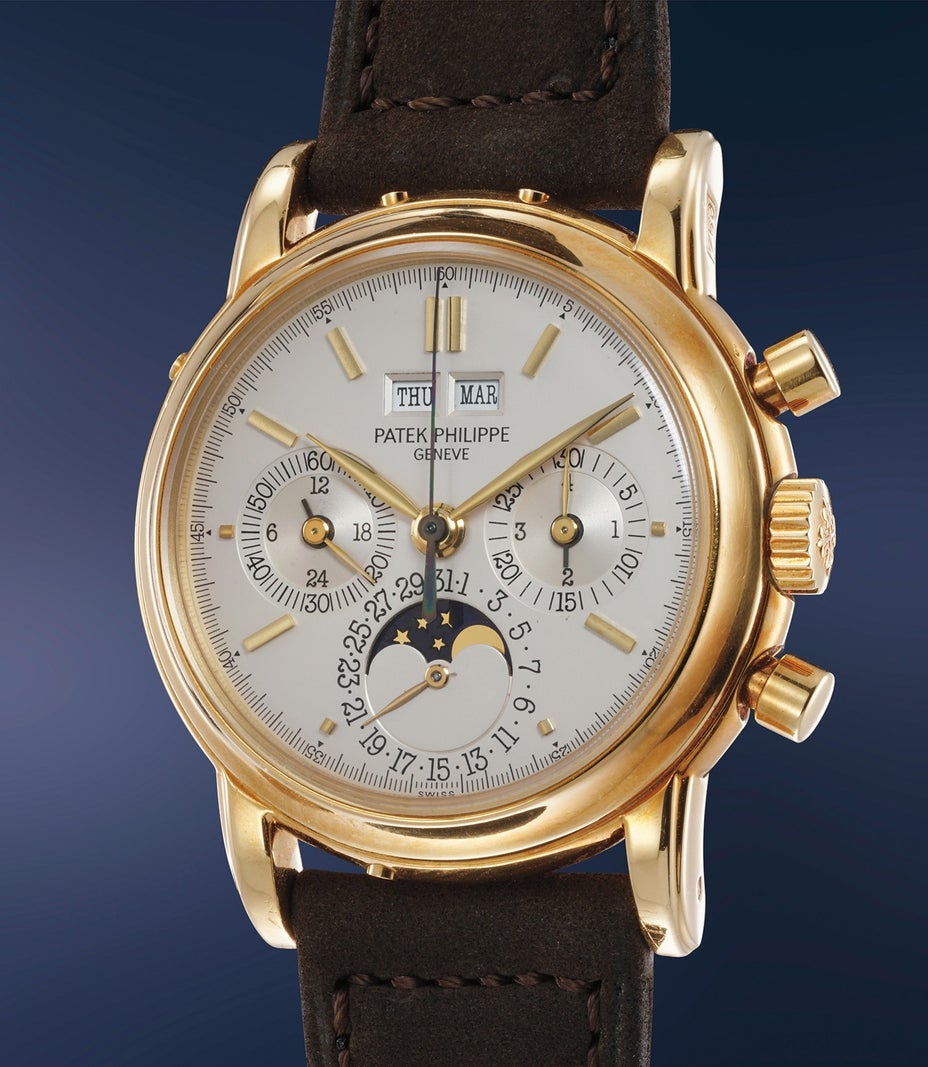
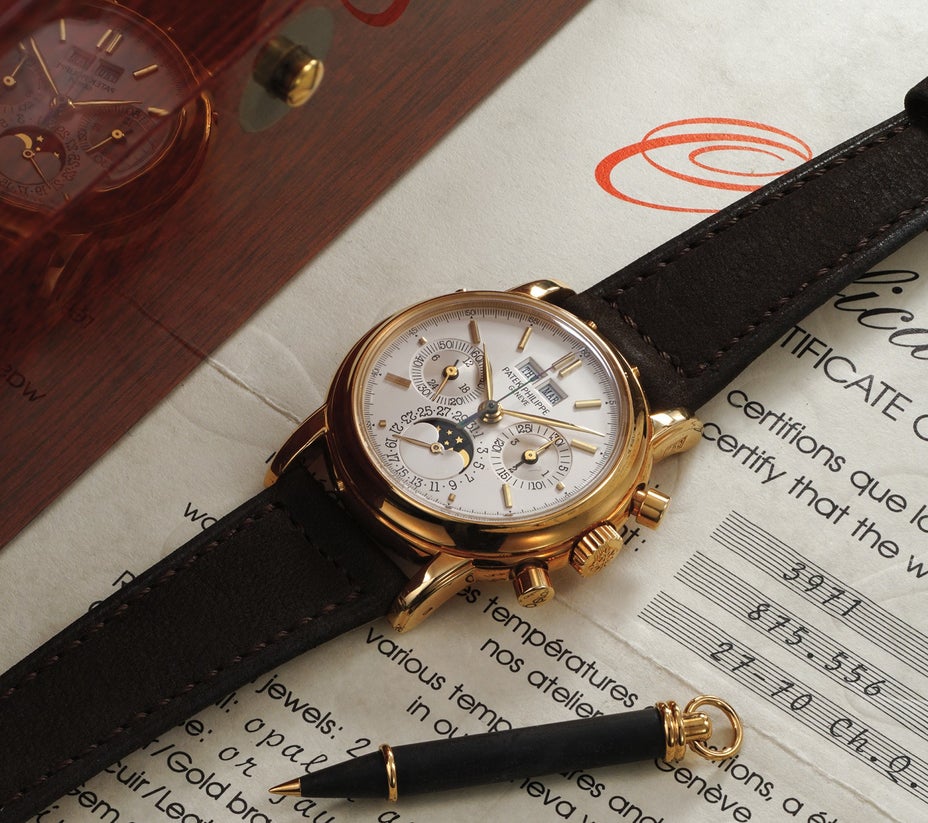
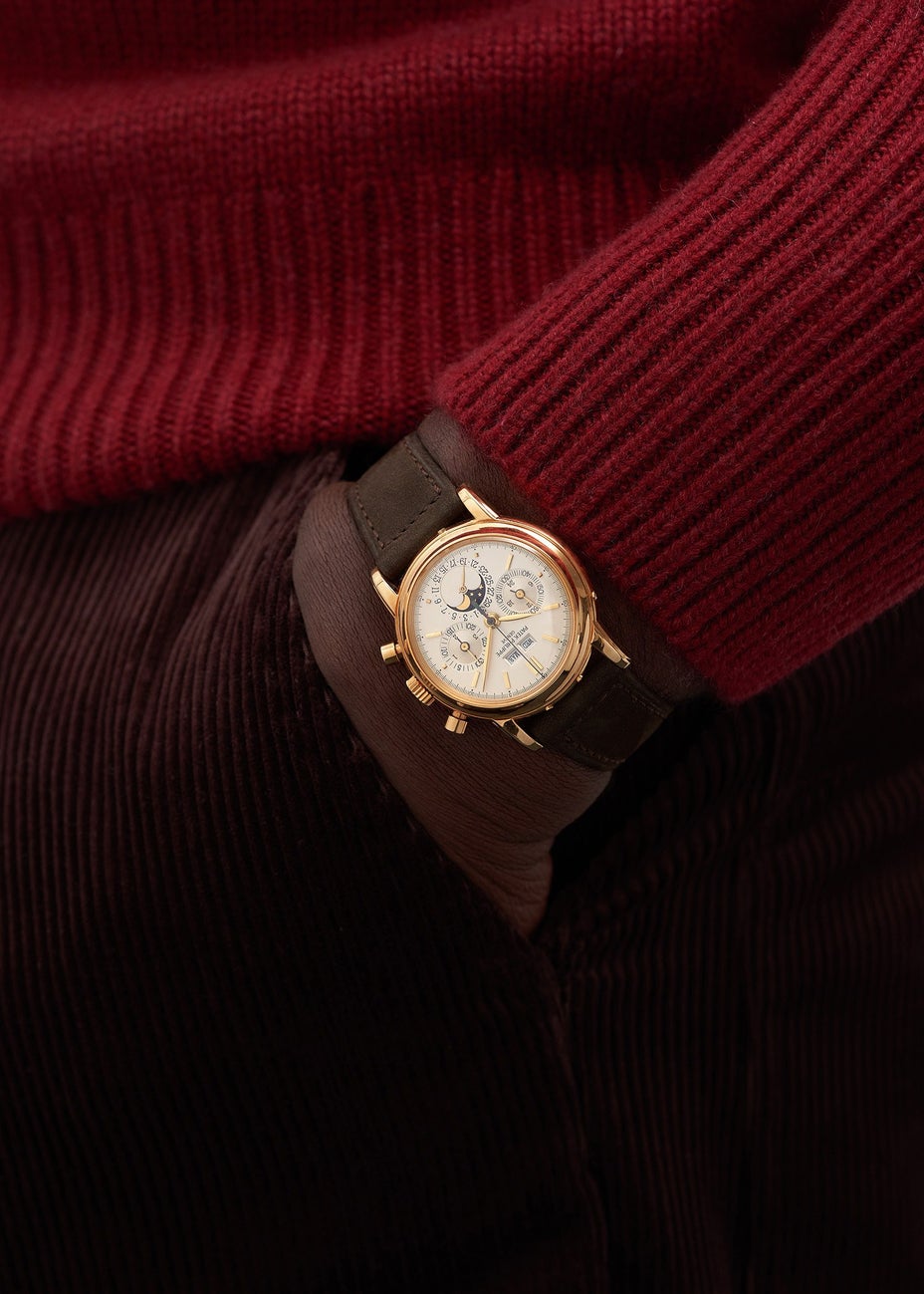
An early and scarce yellow gold perpetual calendar chronograph wristwatch with moonphases, 24-hour indication, Certificate and box
Full-Cataloguing
The reference features one of the most peculiar evolutions for a Patek Philippe model, most likely due to the fact that the 1990s were a time of changes in watchmaking - they were in fact the beginning of the Renaissance of mechanical watchmaking which is in full bloom nowadays.
Originally, the two models were released with snap on case back (first series) but very soon, the screw down back was introduced.
Second series pieces, such as the present one, thus present screw back and maintain the “first series” dial configuration, featuring “feuille” hands and rectangular markers.
With the third series, a merging of the two references takes place: ref. 3971 disappears and only ref. 3970 is left, offered with both solid and glazed back (except for the platinum version). The dial configuration as well changes: the hands are baton (also seen on last examples of second series), and the numerals are not perfectly rectangular anymore, but rather feature a small “arrow” pointing to the center (lapidated indexes).
While the output of the model was at the beginning relatively low, it ramped up by the end of the production run. Consequently, early examples are much more scarce than later specimens.
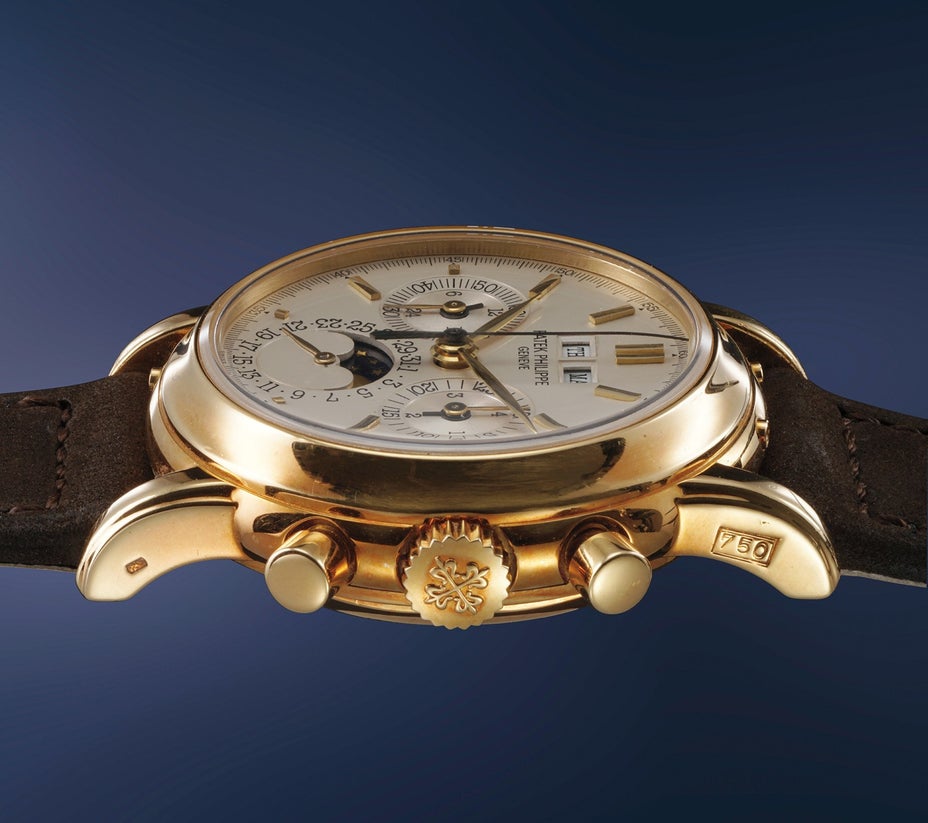
An additional layer of intellectual - and aesthetic as well - interest is given by the fact that early pieces such as the present one feature four hallmarks to the outer sides of the lugs, a very unusual placement which was abandoned mid-production probably because the location is very sensitive to rubbing (another hypothesis is that clients remarked that they did not like to see the hallmarks on the lugs).
Offered in extremely appealing condition and complete with the original accessories, the present second series 3971 is a superb representative of this historical model.
Patek Philippe
Swiss | 1839Since its founding in 1839, this famous Geneva-based firm has been surprising its clientele with superbly crafted timepieces fitted with watchmaking's most prestigious complications. Traditional and conservative designs are found across Patek Philippe's watches made throughout their history — the utmost in understated elegance.
Well-known for the Graves Supercomplication — a highly complicated pocket watch that was the world’s most complicated watch for 50 years — this family-owned brand has earned a reputation of excellence around the world. Patek's complicated vintage watches hold the highest number of world records for results achieved at auction compared with any other brand. For collectors, key models include the reference 1518, the world's first serially produced perpetual calendar chronograph, and its successor, the reference 2499. Other famous models include perpetual calendars such as the ref. 1526, ref. 3448 and 3450, chronographs such as the reference 130, 530 and 1463, as well as reference 1436 and 1563 split seconds chronographs. Patek is also well-known for their classically styled, time-only "Calatrava" dress watches, and the "Nautilus," an iconic luxury sports watch first introduced in 1976 as the reference 3700 that is still in production today.