930Σ︎
Patek Philippe
Ref. 5089G-069
Calatrava
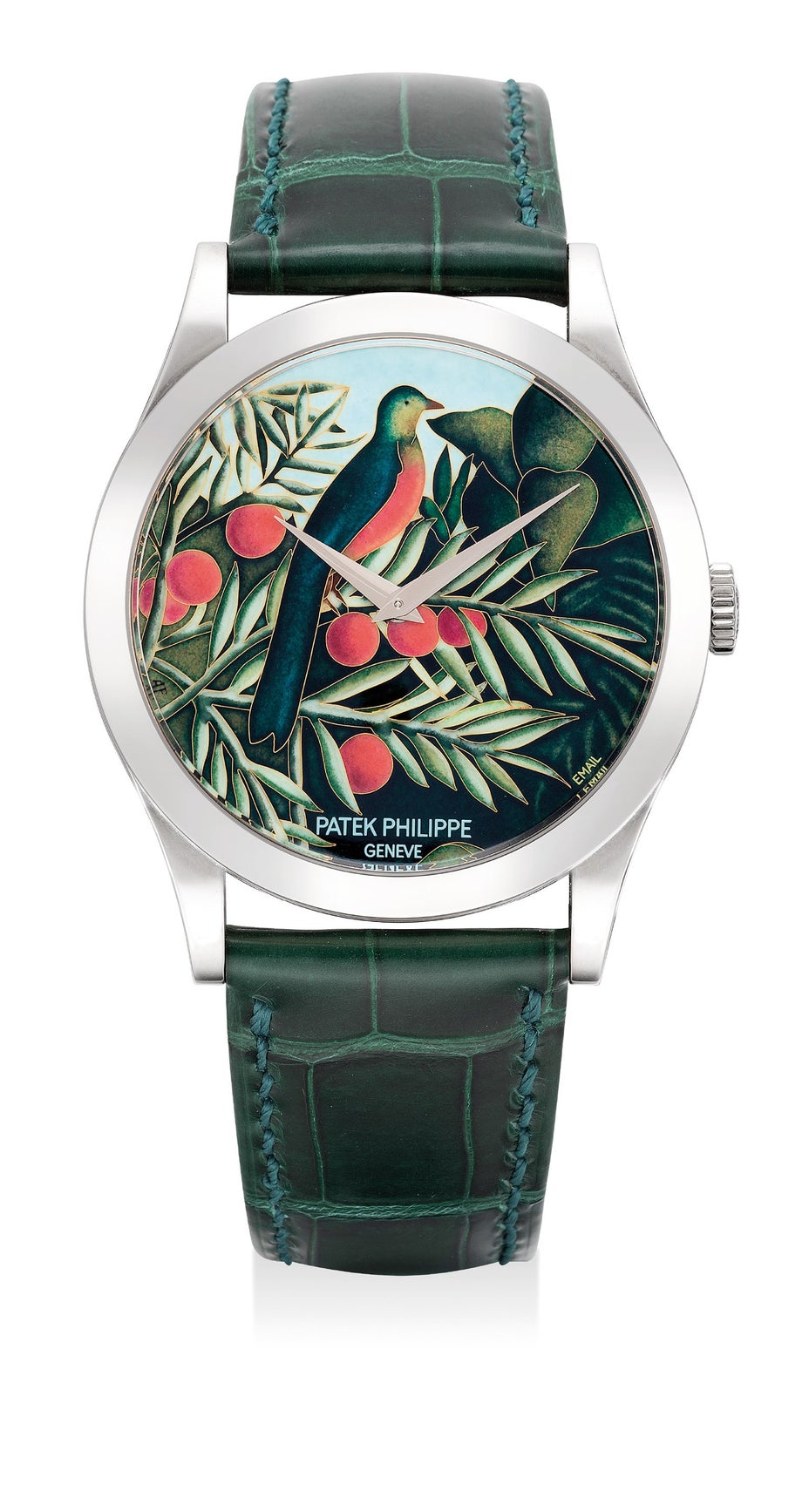
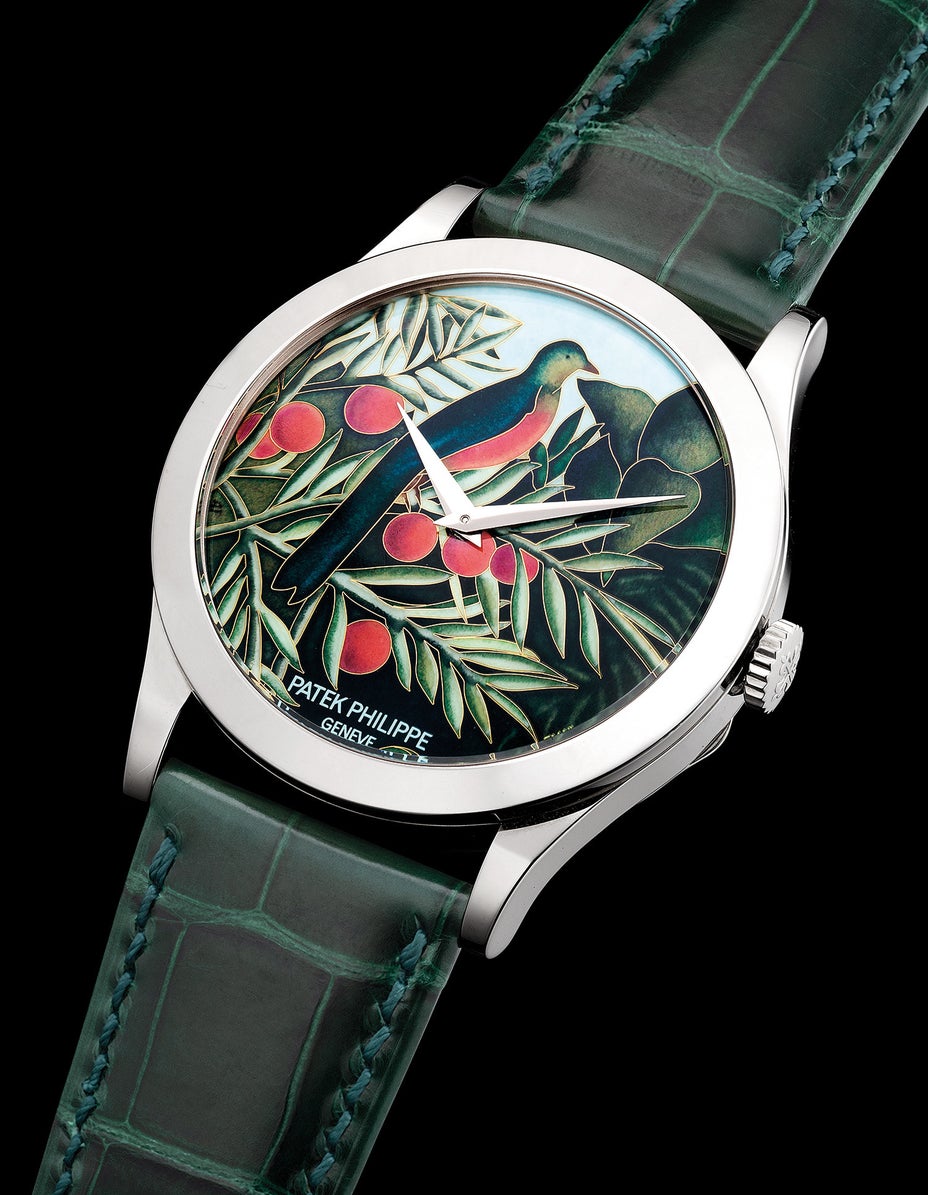
An extremely rare, attractive and striking white gold automatic wristwatch with cloisonné enamel dial, signed by Anita Porchet, hinged case back
Full-Cataloguing
The present watch is an example of cloisonné enamelling, a decoration known for the superbly vibrant and colourful dials it produces, as well for its daunting complexity. The design is first “compartmentalised”, each compartment (cloison) realised with gold thread. Subsequently, the cloisons are filled with enamel powder and the dial undergoes a series of high temperature firings which melt and vitrify the enamel powder. The artisan needs to be technically extremely skilled - temperature fluctuations or improper handling result in an irremediably cracked dial - but that is only part of the craft. Enamel powder changes color during firing, thus one has to predict these changes beforehand in order to be able to obtain the intended final design.
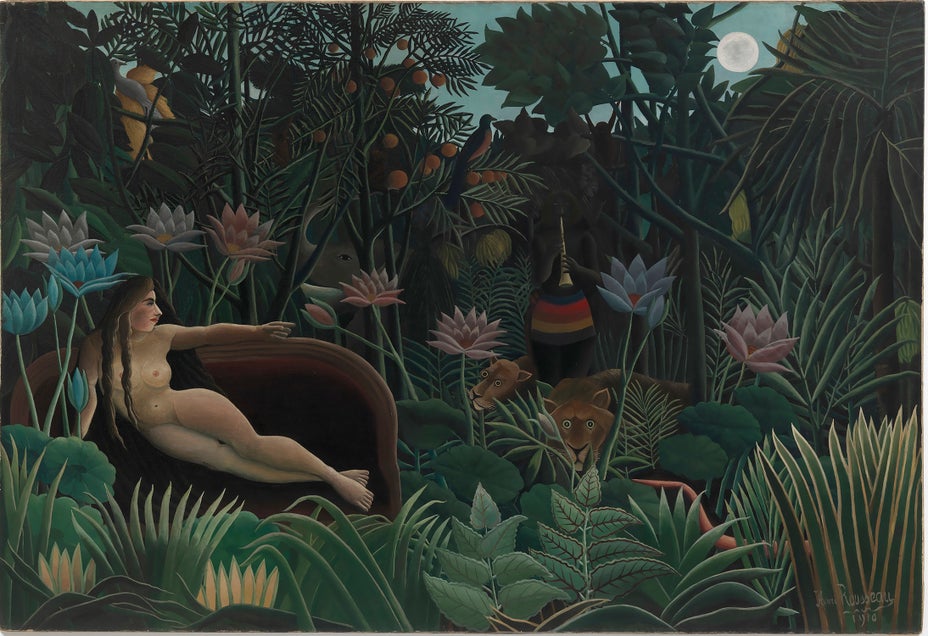
The present piece is particularly interesting for two reasons: it is the reproduction of a detail of Henry Rousseau’s painting the dream (today at the Moma, NY) and, most importantly, it was created by one of the most skilled enamelers currently active: Anita Porchet. She was awarded in 2015 the Prix Gaïa, an award granted yearly by the watchmaking museum (Musée international d'horlogerie) of Le-Chaux-de-Fonds and considered the “Nobel” of watchmaking. Her initials AP are featured on the dial at 8 o’clock, a detail not present in all cloisonné dials and which can be considered akin to having an important painting bearing the signature of the artist, rather than one without.
Patek Philippe
Swiss | 1839Since its founding in 1839, this famous Geneva-based firm has been surprising its clientele with superbly crafted timepieces fitted with watchmaking's most prestigious complications. Traditional and conservative designs are found across Patek Philippe's watches made throughout their history — the utmost in understated elegance.
Well-known for the Graves Supercomplication — a highly complicated pocket watch that was the world’s most complicated watch for 50 years — this family-owned brand has earned a reputation of excellence around the world. Patek's complicated vintage watches hold the highest number of world records for results achieved at auction compared with any other brand. For collectors, key models include the reference 1518, the world's first serially produced perpetual calendar chronograph, and its successor, the reference 2499. Other famous models include perpetual calendars such as the ref. 1526, ref. 3448 and 3450, chronographs such as the reference 130, 530 and 1463, as well as reference 1436 and 1563 split seconds chronographs. Patek is also well-known for their classically styled, time-only "Calatrava" dress watches, and the "Nautilus," an iconic luxury sports watch first introduced in 1976 as the reference 3700 that is still in production today.