1049
Patek Philippe
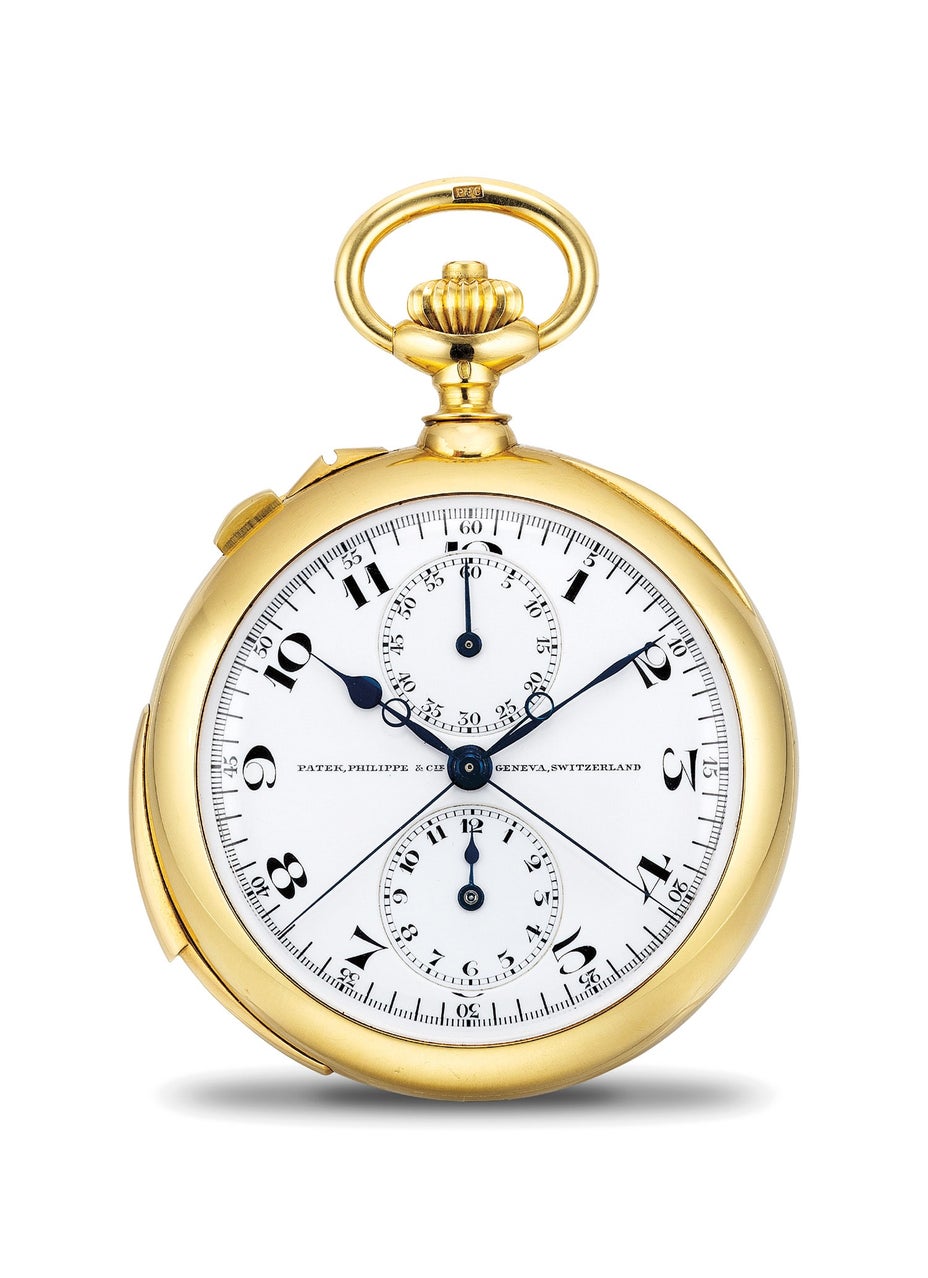
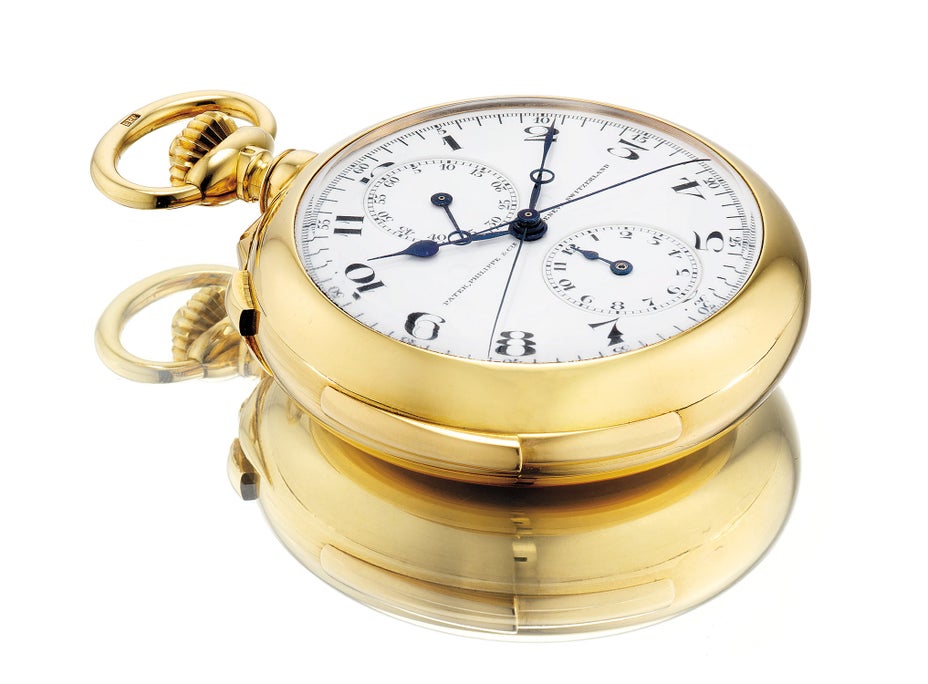
A very fine, rare and possibly unique minute repeating split-seconds chronograph watch with hour and minute registers
Full-Cataloguing
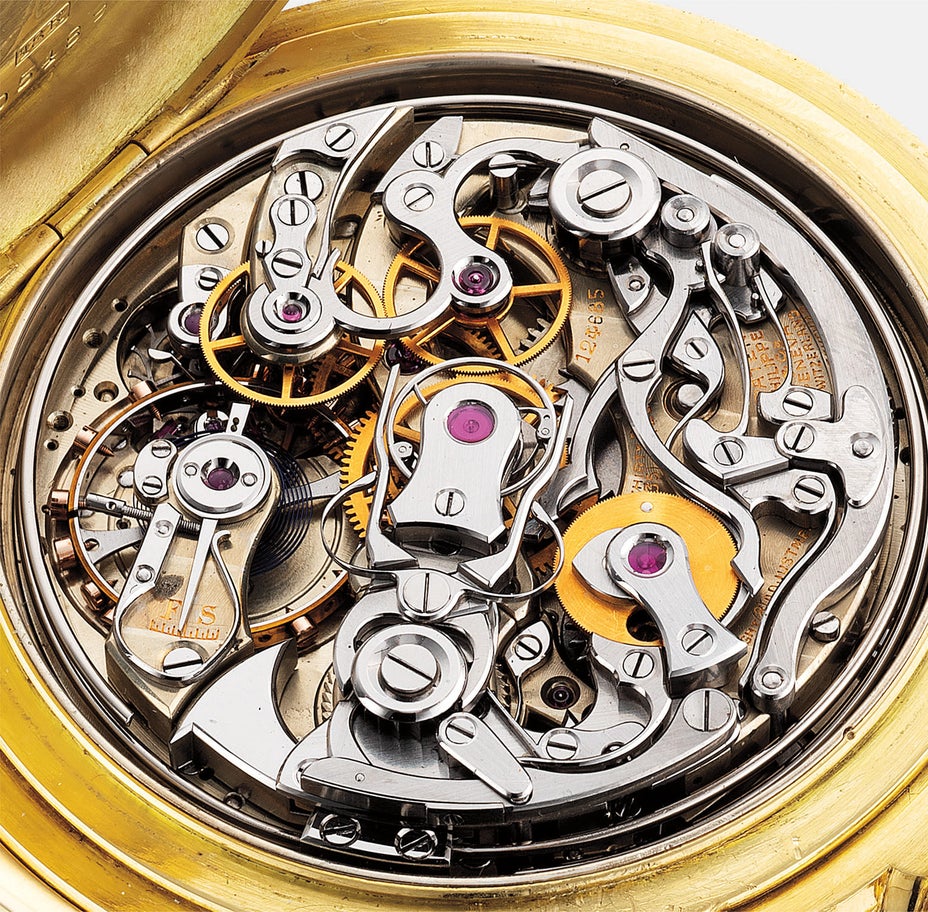
Patek Philippe patented their split-seconds mechanism in 1902 (patent 27052) and used the calibers 16’’’, 17/18’’’ and 19’’’. The watches came in several dial combinations with the rare hunter case models with and without registers, open face pocket watches with and without registers. Those open face watches with registers typically featured 30 minute and subsidiary seconds dials most often in a vertical position. Timepieces with the combination of 60 minute and 12-hour register are exceedingly rare. The split-seconds mechanism with register was added to the basic Patek Philippe minute repeating movement, however it was more complicated and expensive when using the 12-hour register.
The present watch is one of eight known examples of minute repeating split-seconds chronograph watches featuring the hour and minute registers, and this watch, movement number 124’685 is the only known example to be fully signed by the maker with the case, cuvette, dial and movement signed Patek Philippe and Cie. Research indicates almost half of Patek Philippe’s production of minute repeating split-seconds chronographs were sold the United States, and of the eight known examples with this rare register combination six display case and dial signed by the American retailer Tiffany & Co. with one dial signed by the retailer Spaulding.
In exceptional overall condition, the watch from 1903 and sold in 1927 is a rare treasure. The case hallmarks remain crisp in the bow and front of pendant, and while there is minor shallow wear the watch retains all of its originality. The dial is well preserved and aged with no visible hairlines or cracks. This possibly unique timepiece would have been a special order and it is a watch that will truly impress the connoisseur who seeks rare complicated timepieces.
Patek Philippe
Swiss | 1839Since its founding in 1839, this famous Geneva-based firm has been surprising its clientele with superbly crafted timepieces fitted with watchmaking's most prestigious complications. Traditional and conservative designs are found across Patek Philippe's watches made throughout their history — the utmost in understated elegance.
Well-known for the Graves Supercomplication — a highly complicated pocket watch that was the world’s most complicated watch for 50 years — this family-owned brand has earned a reputation of excellence around the world. Patek's complicated vintage watches hold the highest number of world records for results achieved at auction compared with any other brand. For collectors, key models include the reference 1518, the world's first serially produced perpetual calendar chronograph, and its successor, the reference 2499. Other famous models include perpetual calendars such as the ref. 1526, ref. 3448 and 3450, chronographs such as the reference 130, 530 and 1463, as well as reference 1436 and 1563 split seconds chronographs. Patek is also well-known for their classically styled, time-only "Calatrava" dress watches, and the "Nautilus," an iconic luxury sports watch first introduced in 1976 as the reference 3700 that is still in production today.