Property of a New England Collector
45
Ostertag
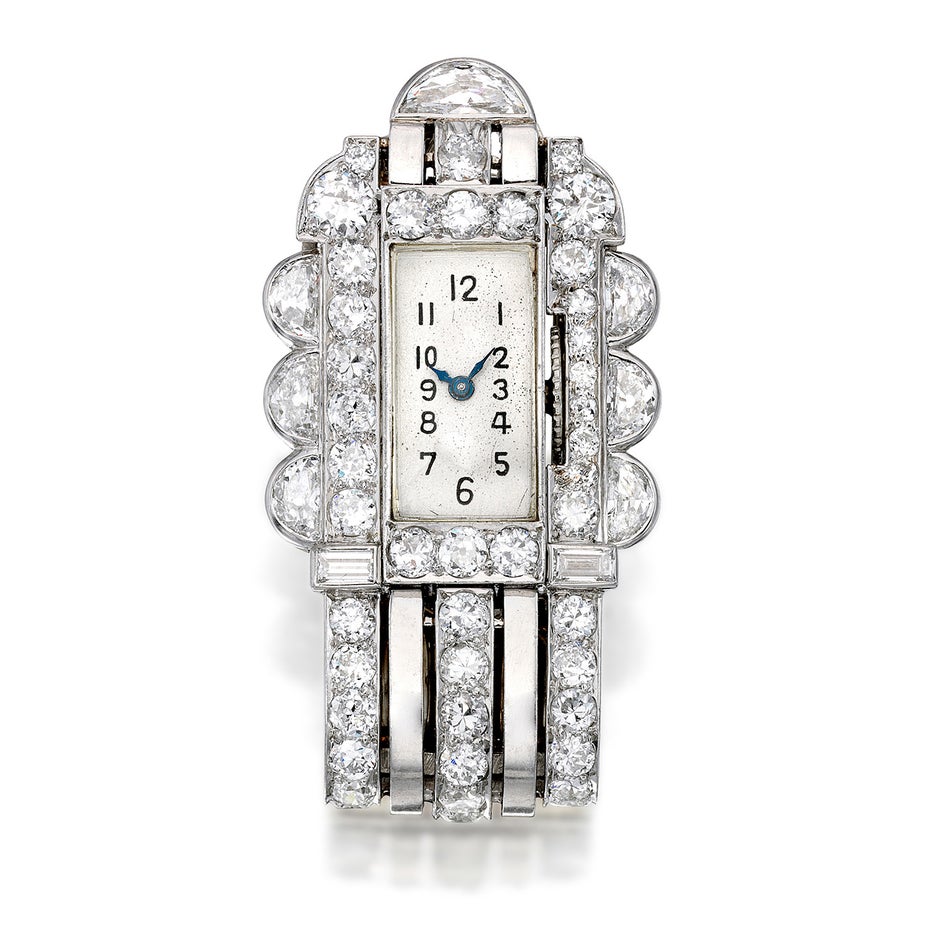
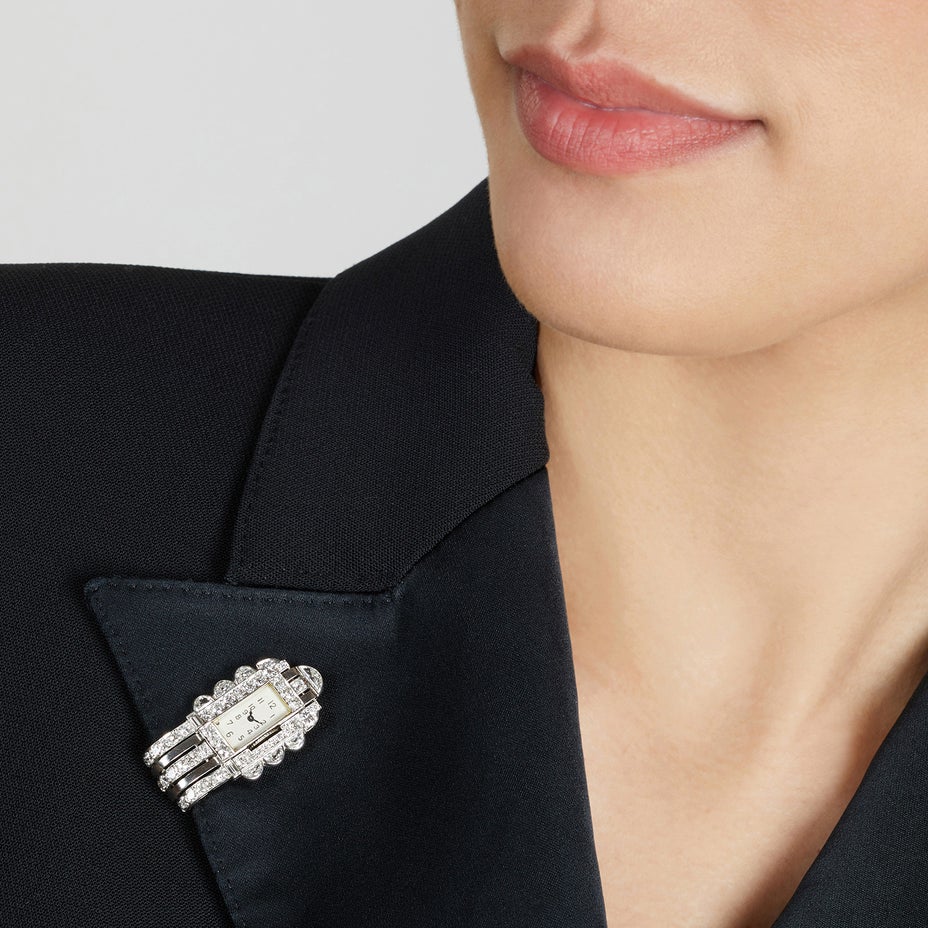
A Diamond, Platinum, and White Gold Watch Clip
Estimate
$3,000–5,000
Sold For
$3,780
Manual Wind, 17 jewels
Round brilliant-cut, half-moon-cut, and rectangular baguettes, total approximately 2.90 cts.
Signed, numbered, with maker's mark and French assay mark
Platinum and 18K white gold, length approximately 1 7/16 inches
Round brilliant-cut, half-moon-cut, and rectangular baguettes, total approximately 2.90 cts.
Signed, numbered, with maker's mark and French assay mark
Platinum and 18K white gold, length approximately 1 7/16 inches
Full-Cataloguing
The House of Ostertag was founded by Arnold Ostertag in the 1920s, at the height of the Art Deco movement. Located at 16 Place Vendôme in Paris, the house shared its coveted location with other important jewelry houses of the day, including Cartier, Van Cleef & Arpels, and Boucheron. Ostertag went on to open several more boutiques in Cannes, Le Touquet, and New York. By 1929, Ostertag was exhibiting his works at the Musée Galliera (today’s Palais Galliera), a fashion museum in Paris. Having formerly trained as a dentist in Chicago, his work emphasized his keen eye and attention to detail.
Arnold Ostertag derived much of his artistic inspiration from his travels, nurturing a particular fascination with and appreciation for the art and jewels of India. Many of his designs exhibit Indian influences, and he often realized them with jewels imported from India. His later pieces diverged from the geometric, smooth lines that characterized Art Deco, shifting toward what would come to be known as the “Tutti Frutti” style. Pieces of this era featured intricately arranged clusters of gems, including diamonds, sapphires, emeralds, and rubies. Common motifs included fruit, flowers, berries, and leaves.
With the outbreak of World War II in 1939, Ostertag shut its doors. Arnold Ostertag and his American wife, Verna, fled to the United States. With his passing a few months later, the House of Ostertag never reopened.
Arnold Ostertag derived much of his artistic inspiration from his travels, nurturing a particular fascination with and appreciation for the art and jewels of India. Many of his designs exhibit Indian influences, and he often realized them with jewels imported from India. His later pieces diverged from the geometric, smooth lines that characterized Art Deco, shifting toward what would come to be known as the “Tutti Frutti” style. Pieces of this era featured intricately arranged clusters of gems, including diamonds, sapphires, emeralds, and rubies. Common motifs included fruit, flowers, berries, and leaves.
With the outbreak of World War II in 1939, Ostertag shut its doors. Arnold Ostertag and his American wife, Verna, fled to the United States. With his passing a few months later, the House of Ostertag never reopened.