

127
Omega
Ref. 165024-64
Seamaster 300
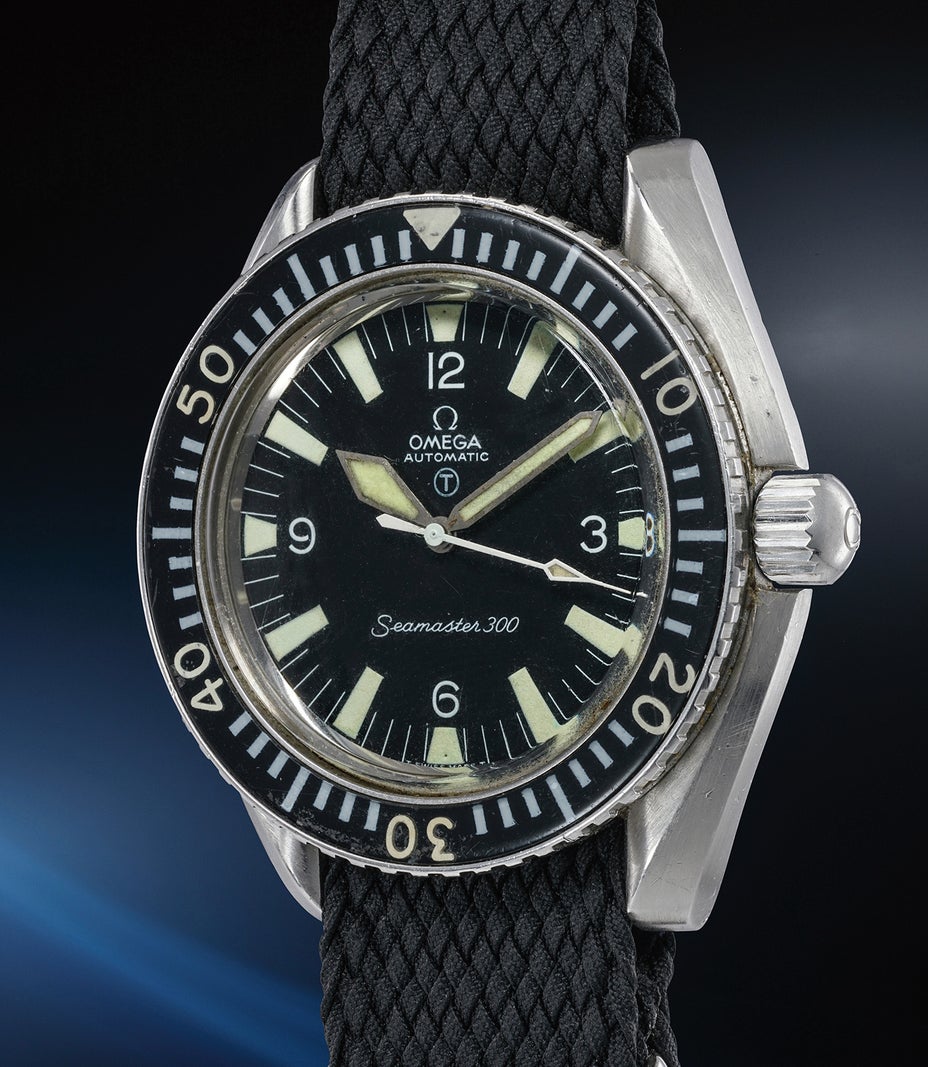
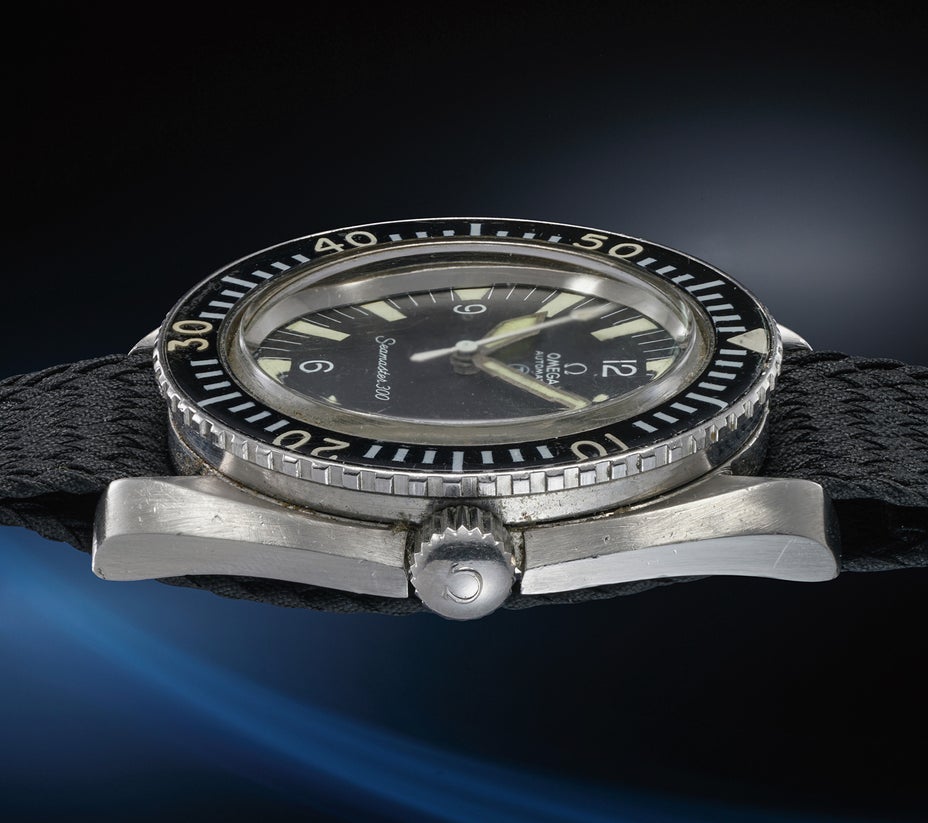
A rare and attractive stainless steel diver’s wristwatch with black dial, fixed spring bars and special British Army military markings
- Estimate
- CHF30,000 - 50,000$30,000 - 50,100€30,900 - 51,500
CHF68,040
Lot Details
- Manufacturer
- Omega
- Year
- 1967
- Reference No
- 165024-64
- Movement No
- 24'723'472
- Case No
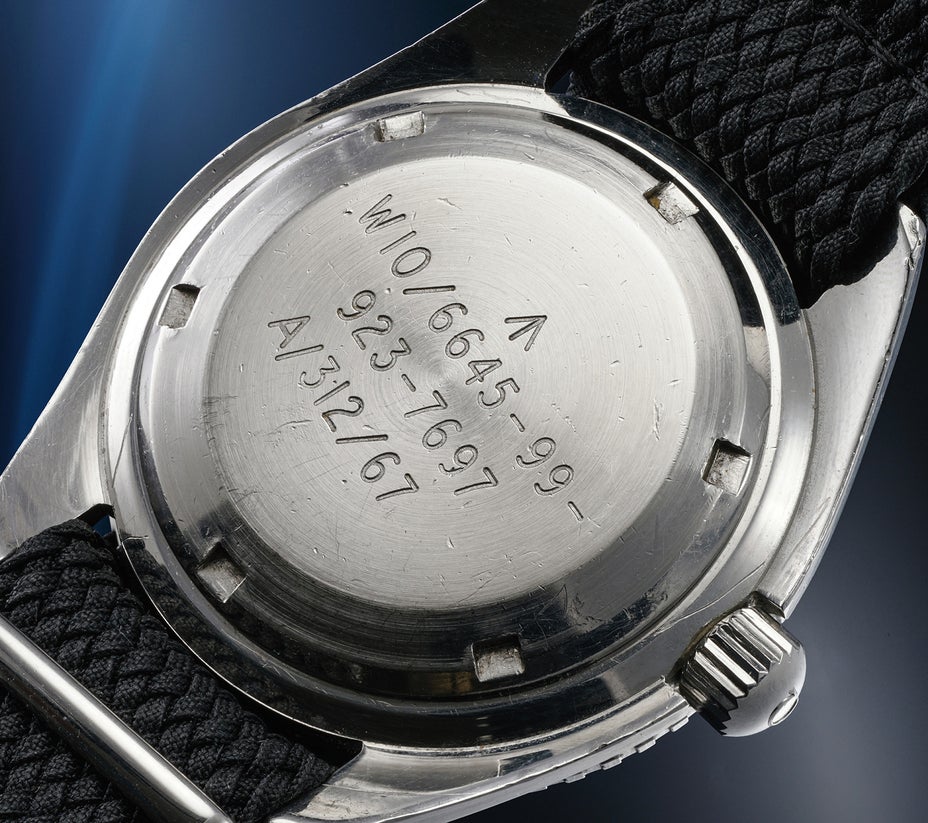
- Engraved W10/6645-99-923-7697 A/312/67
- Model Name
- Seamaster 300
- Material
- Stainless steel
- Calibre
- Automatic, cal. 552, 24 jewels
- Bracelet/Strap
- Nato
- Clasp/Buckle
- Stainless steel pin buckle
- Dimensions
- 40mm Diameter
- Signed
- Case, dial and movement signed
- Accessories
- Accompanied by Omega Extract from the Archives confirming delivery of the present watch to the British Army and its production date in 1967
Specialist
Full-Cataloguing
Catalogue Essay
Officially introduced in 1957, the Seamaster 300 is part of Omega’s “Professional” tool watches line produced for professional and recreational divers. Between 1967 and 1970, a very small batch of this reference was made for military use. Custom designed by Omega to meet the British Ministry of Defense’s specifications, their cases, with distinctive curved and beveled lugs, were delivered with fixed spring bars. The dials featured an encircled ‘T’ designation, signifying the use of tritium for the luminous hour markers and broad, sword-shaped hour and minute hands, along with an angular, sweep seconds hand specially designed for military use. The crown was screw down opposed to the snap down design found on standard production models.
The present example is certainly a rare timepiece, featuring caseback engravings that confirm the originality of the watch. On the first line the “broad arrow” insignia means that the watch was issued to the British military. “W10” signifies that the watch was issued to the British Royal Army, “6645” signifies the present object to be a time measuring instrument, “99” is the NATO code for the UK, “923-7697” on the third line is the NATO code to signify the present watch as a diver’s watch and lastly “A/312” is the individual number issued and “67” confirms that the watch was deployed in 1967.
Preserved in great overall condition, this rare military timepiece is certainly one not to miss for collectors of vintage professional tool watches.
The present example is certainly a rare timepiece, featuring caseback engravings that confirm the originality of the watch. On the first line the “broad arrow” insignia means that the watch was issued to the British military. “W10” signifies that the watch was issued to the British Royal Army, “6645” signifies the present object to be a time measuring instrument, “99” is the NATO code for the UK, “923-7697” on the third line is the NATO code to signify the present watch as a diver’s watch and lastly “A/312” is the individual number issued and “67” confirms that the watch was deployed in 1967.
Preserved in great overall condition, this rare military timepiece is certainly one not to miss for collectors of vintage professional tool watches.
Omega
Swiss | 1848Omega's rich history begins with its founder, Louis Brandt, who established the firm in 1848 in La Chaux de Fonds. In 1903, the company changed its name to Omega, becoming the only watch brand in history to have been named after one its own movements. A full-fledged manufacturer of highly accurate, affordable and reliable watches, its sterling reputation enabled them to be chosen as the first watch company to time the Olympic Games beginning in 1932. Its continued focus on precision and reliability ultimately led their Speedmaster chronograph wristwatch to be chosen by NASA in 1965 — the first watch worn on the moon.Key models sought-after by collectors include their first, oversized water-resistant chronograph — the reference 2077, early Speedmaster models such as the CK 2915 and 2998, military-issued versions of the Seamaster and oversized chronometer models such as those fitted with their prestigious caliber 30T2Rg.
Browse Maker