111
Omega
Ref. 2915-1
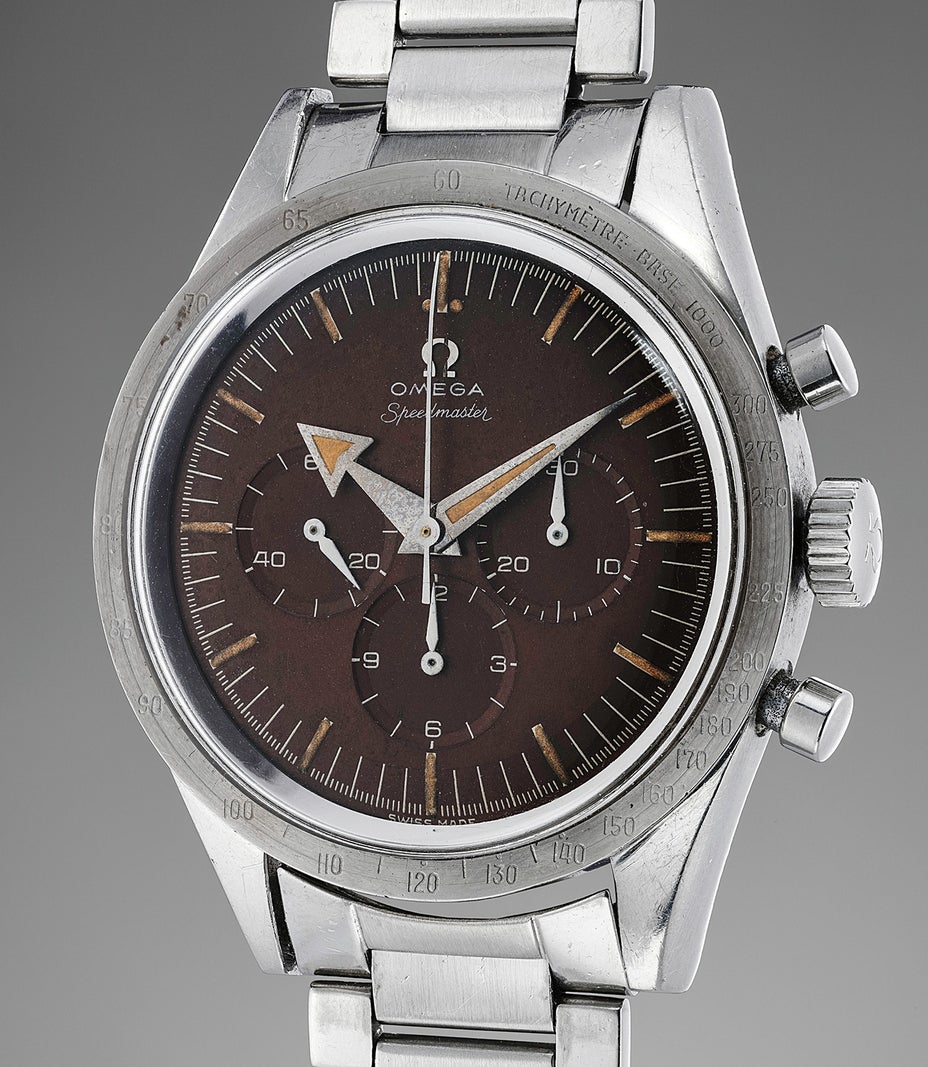
Speedmaster "Broad Arrow"
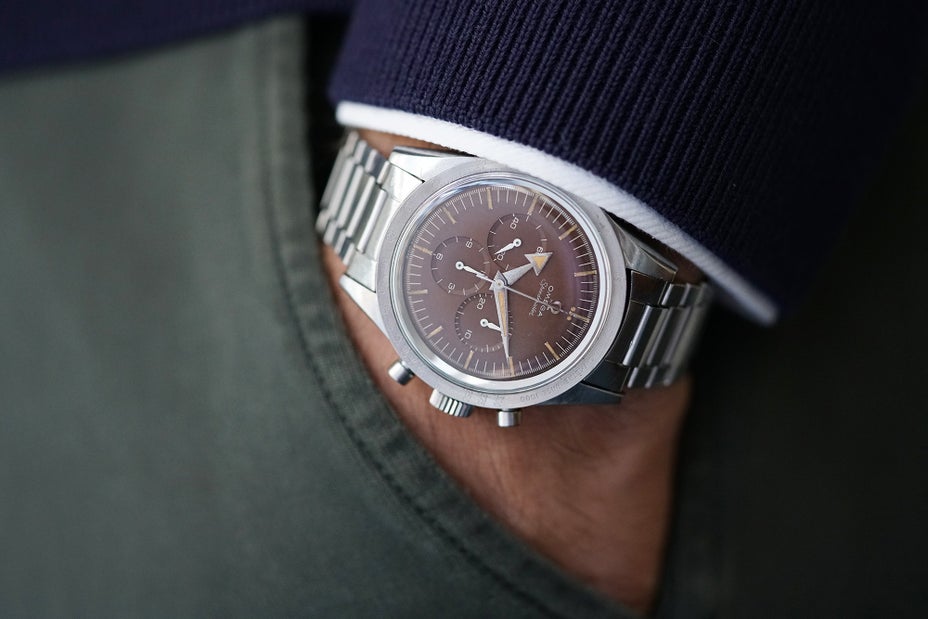
An extremely rare, early and important stainless steel chronograph wristwatch with Broad Arrow hands, "tropical" dial and bracelet
Full-Cataloguing
The Speedmaster was notably the very first chronograph wristwatch to feature a tachymeter scale on the bezel, rather than on the dial - a feature that other watch manufactures would soon emulate.
Reference 2915 is immediately recognizable due to its Broad Arrow hands and Base 1000 steel bezel. The launch of the very first example, 2915-1, gave way to its "first generation" successors 2915-1, 2915-2 and finally 2915-3. Subsequent Speedmaster references followed, each displaying variations to the hands, bezels and case shape.
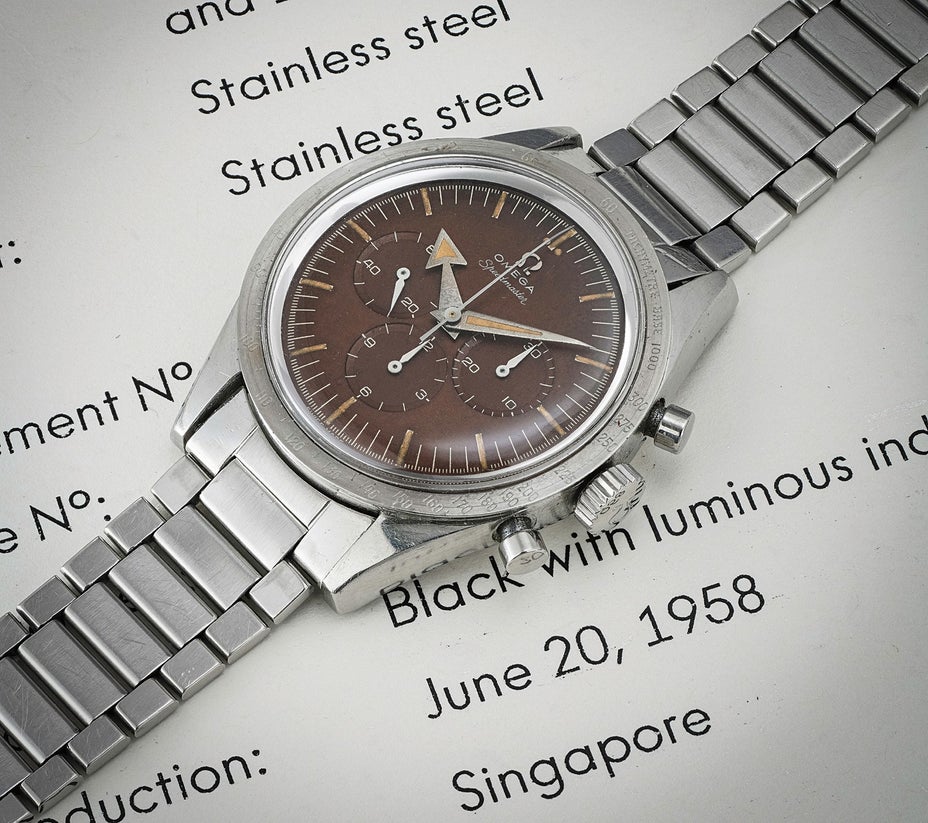
Possibly one of the most remarkable reference 2915-1s to ever grace the auction market, the present watch displays an exceptional "tropical" dial that has aged to a vibrant milk-chocolate shade. Research shows that this watch was originally delivered to Singapore - quite literally, the tropics. Its significance cannot be overstated - the brown tone is not only rich and vivid, but it is also incredibly even throughout. Moreover, the luminous material on both the dial and hands have aged to an attractive honey tone.
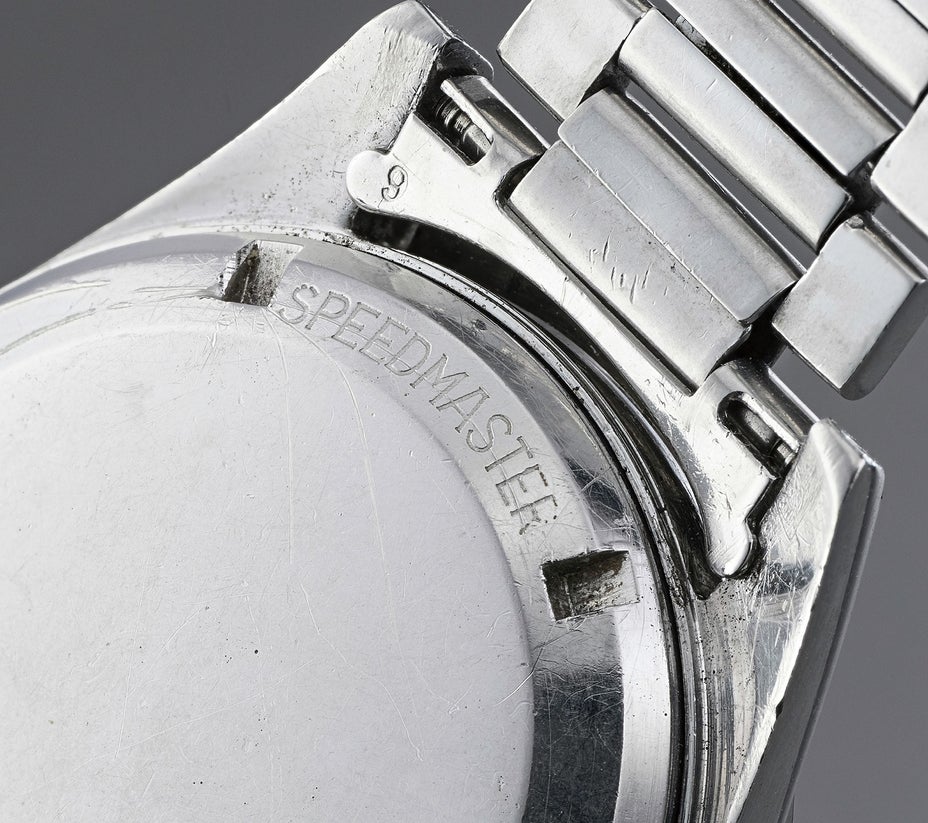
Most impressively, the other components are also original such as the first generation double bevel case back with no seahorse and "SPEEDMASTER" on the outer edge. The first generation bezel displays a "flat top 3". Even the semi-expandable bracelet with "6" end links are correct and the clasp does not display a date stamp - a correct feature of the earliest examples.
Rarely do such outstanding examples grace the market, and there is no telling when another will appear in the public sphere.
Omega
Swiss | 1848Omega's rich history begins with its founder, Louis Brandt, who established the firm in 1848 in La Chaux de Fonds. In 1903, the company changed its name to Omega, becoming the only watch brand in history to have been named after one its own movements. A full-fledged manufacturer of highly accurate, affordable and reliable watches, its sterling reputation enabled them to be chosen as the first watch company to time the Olympic Games beginning in 1932. Its continued focus on precision and reliability ultimately led their Speedmaster chronograph wristwatch to be chosen by NASA in 1965 — the first watch worn on the moon.
Key models sought-after by collectors include their first, oversized water-resistant chronograph — the reference 2077, early Speedmaster models such as the CK 2915 and 2998, military-issued versions of the Seamaster and oversized chronometer models such as those fitted with their prestigious caliber 30T2Rg.