Priority Bidding is here! Secure a lower Buyer’s Premium today (excludes Online Auctions and Watches). Learn More

25

Mathias Goeritz

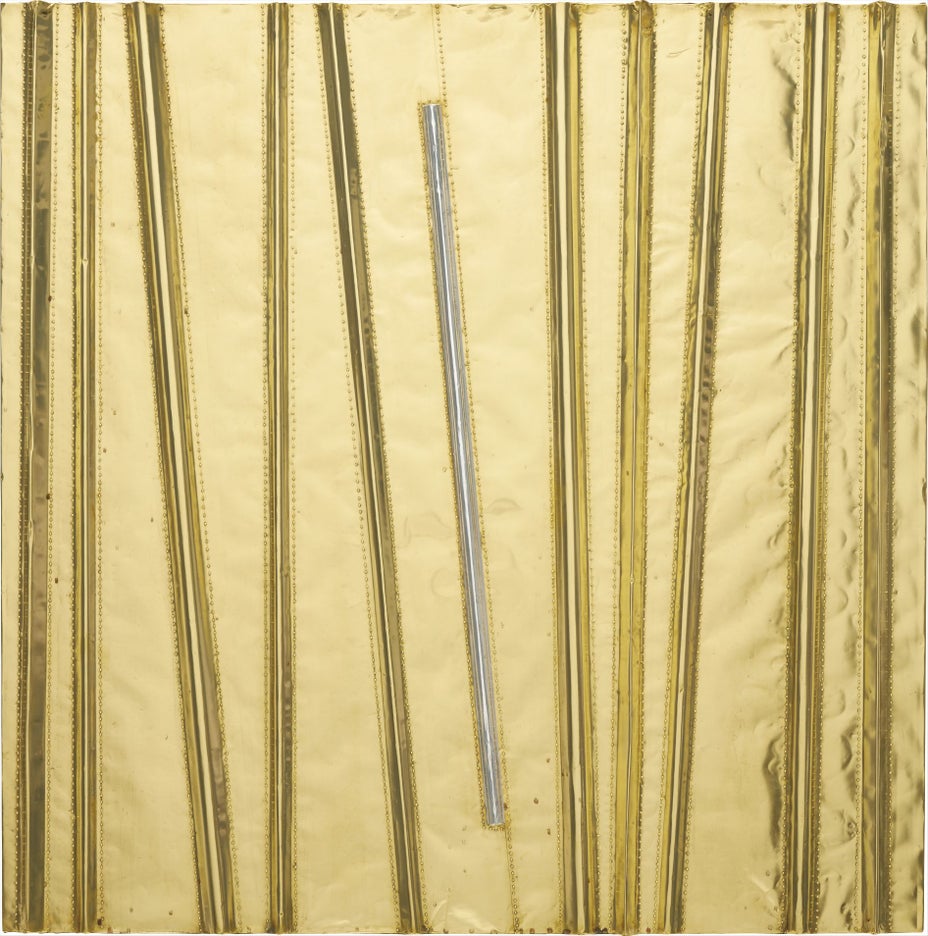
Mensaje

Estimate
$60,000 - 80,000
$62,500
Lot Details
aluminum and brass on wood
47 1/4 x 47 1/4 in. (120 x 120 cm)
Catalogue Essay
The present lot by Mathias Goeritz is a rare and unique Mensaje from the 1980s. It is a prime example of the artist’s experimentation with gold leaf, metal and clouage. However, it is also important to contextualize the time period within Goeritz’s oeuvre, in order to best understand the work. During this time, Goeritz was working on architectural projects, such as the newly finished Labyrinth of Jerusalem (1974-1980), a community center in Eastern Talpiot near the Jordanian border that attracted settlers from various parts of the world. He also continued to work on large scale urban sculpture, such as The Crown (1981), reminiscent of his famous Torres de Sátelite (1958) in Mexico City, which epitomized his “emotional architecture.” Goeritz’s urban sculptures ultimately allowed him to institutionalize a new paradigm of public art in Mexico. This new style would eventually replace the mural movement of Mexico that had been in practice since the second half of the 20th century. This Mensaje in some ways exemplifies the contributions he made towards modernism, as it epitomizes the different styles of Mensajes he produced and the importance of this series within his body of work. In this uncommon and gleaming work, one can see the use of the flat gold plated metal sheet, with symmetrical punctured holes created by nails, a technique known as clouage, outlining an abstract composition of symmetrical metal sculpted lines. These sculpted lines not only create a three-dimensional surface, but also add depth, thus lending the work an architectural feel that goes beyond the sculptural scope. Therefore exemplifying Goeritz’s unique and visionary contributions to architecture, sculpture and abstraction.

Mathias Goeritz

Mexican | B. 1915 D. 1990
German-born artist Mathias Goeritz studied Philosophy and Art History in Berlin. He immigrated to Mexico in 1949, by which time he had already built a career as a modern artist and architect. He was influenced by the European artistic tendencies of the time, from modernist movements such as Group Zero to artists including Yves Klein and Lucio Fontana.

Goeritz's transference of knowledge exposed Mexico to the larger international art world, thus greatly contributing to the trajectory of Mexican art. He developed the concept of emotional architecture — where architecture is not overpowered by functionality but engages humankind with beauty, creating an emotive response. This concept would give artists in Mexico an alternative to the overarching influence of the national mural movement, and is exemplified in one of Goeritz's most significant works, El Museo Experimental el Eco.
Browse Artist