66
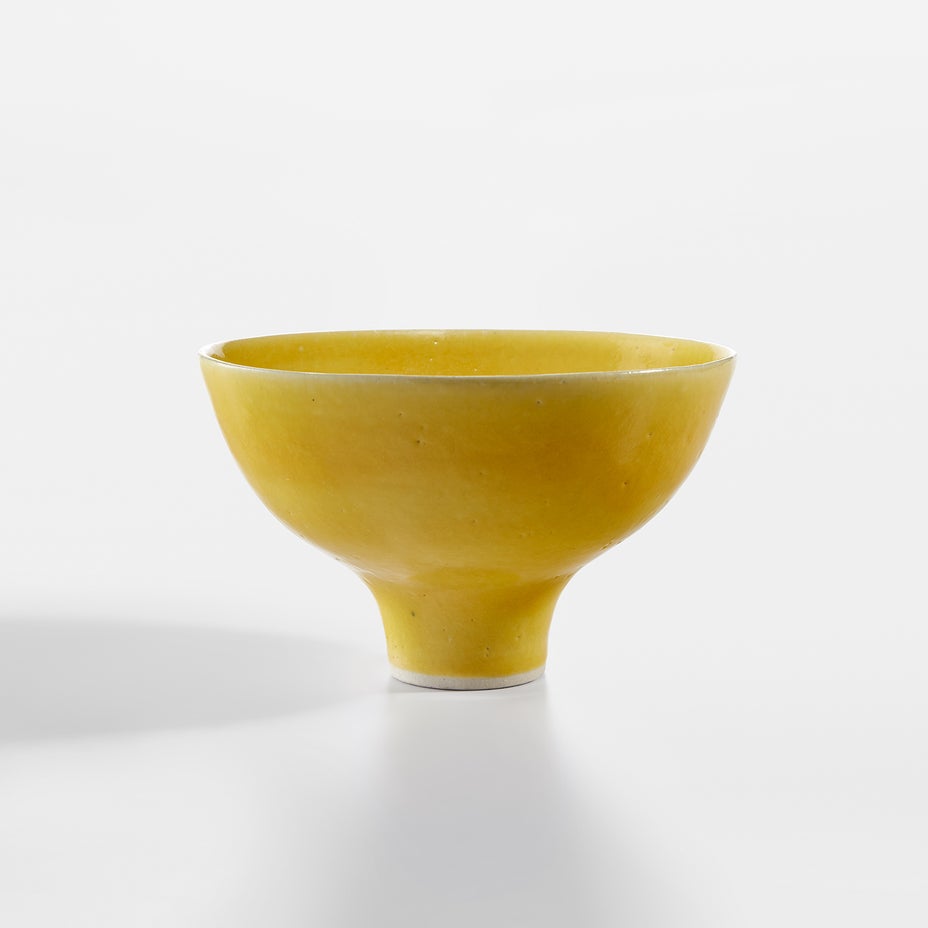
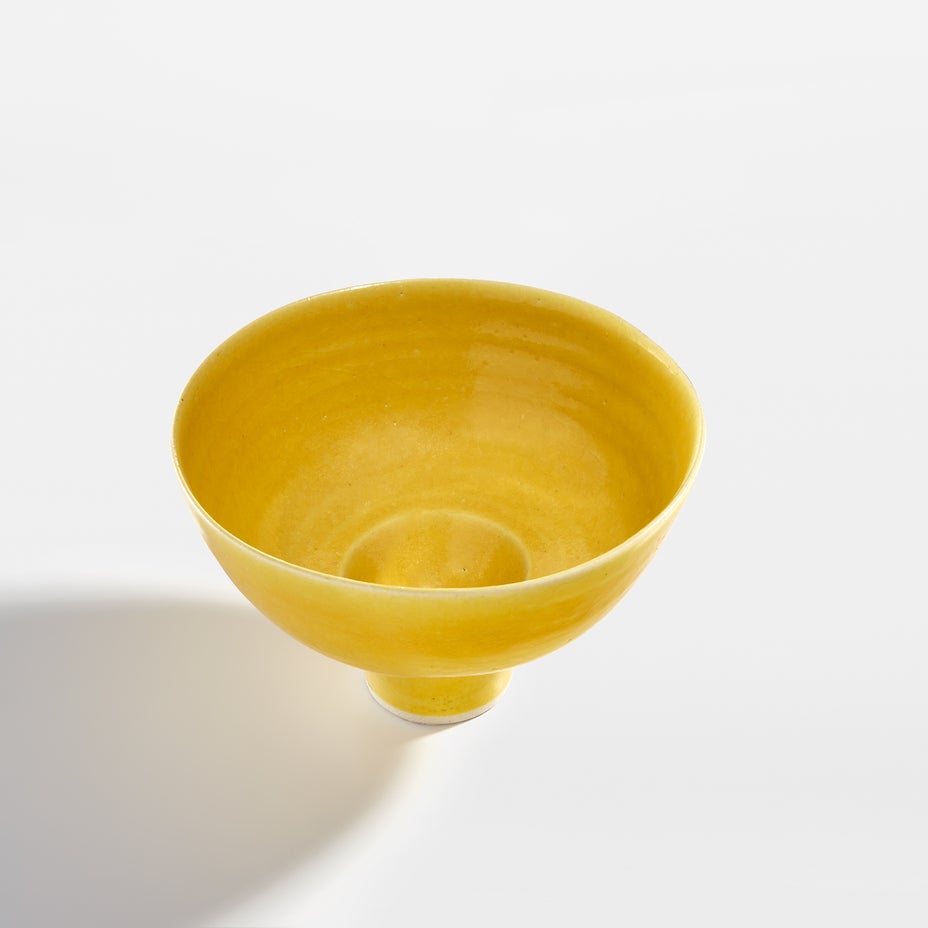
Lucie Rie
Footed bowl
Full-Cataloguing
Their interest in this material developed mid-life, following, and alongside, their respective successful careers: Kenneth as a bond broker on Wall Street and Barbara as an image consultant and personal shopper. The son of Ruth and Leon Juster, of Juster Gallery in New York, Kenneth’s love of art began in childhood. Juster Gallery specialized in French and American Impressionist and Modern art and were perhaps best known for their championing of artist André Lhote.
As an adult, Kenneth initially focused his attention on collecting Native American baskets, which are now in the collection of The Metropolitan Museum of Art. His insatiable curiosity and love of acquiring new works led him to British ceramics, which became the focus of his collection. Kenneth believed art was to be shared and enjoyed, and his passion was contagious. Soon, both he and Barbara were deeply involved in collecting, with their love of the craft world encompassing ceramics, wood, glass, wearables and jewelry.
In the 1980s, Barbara became involved with the American Craft Museum, eventually joining the board. They both participated in the museum’s “Collector’s Circle” and developed relationships with curators and dealers, traveled to fairs, and spent weekends going to galleries. During this time, they quietly built their personal collection, which few people would ever see in its entirety.
In 1990, they opened the New York branch of Bellas Artes, the Santa Fe gallery founded by Bob and Charlotte Kornstein in 1981. Barbara ran the gallery and became more deeply involved with the American Craft Museum, while Kenneth committed himself to collecting. Said Douglas Heller, of Heller Gallery in New York, “Their efforts to promote and preserve the achievements of materially-based makers was always motivated by passion, not profit.”
In addition to their identity as collectors and dealers, close relationships with artists, curators and gallerists, their patronage of museums, and support of the broader craft community, the Juster’s legacy is beautifully expressed through their daughter, Stefanie A. Juster (Gothelf). The Justers involved Stefanie in their collecting at an early age, often seeking her assistance with buying while she was a student in London. A supporter of her parents’ passion and steward of their collection, Stefanie’s appreciation for this material is a product of her parents’ impact and generosity of spirit.
Lucie Rie
Austrian | B. 1902 D. 1995Dame Lucie Rie studied under Michael Powolny at the Kunstgewerbeschule in Vienna before immigrating to London in 1938. In London she started out making buttons for the fashion industry before producing austere, sparsely decorated tableware that caught the attention of modernist interior decorators. Eventually she hit her stride with the pitch-perfect footed bowls and flared vases for which she is best-known today. She worked in porcelain and stoneware, applying glaze directly to the unfired body and firing only once. She limited decoration to incised lines, subtle spirals and golden manganese lips, allowing the beauty of her thin-walled vessels to shine through. In contrast with the rustic pots of English ceramicist Bernard Leach, who is considered an heir to the Arts and Crafts movement, collectors and scholars revere Rie for creating pottery that was in dialogue with the design and architecture of European Modernism.