174
Louise Bourgeois
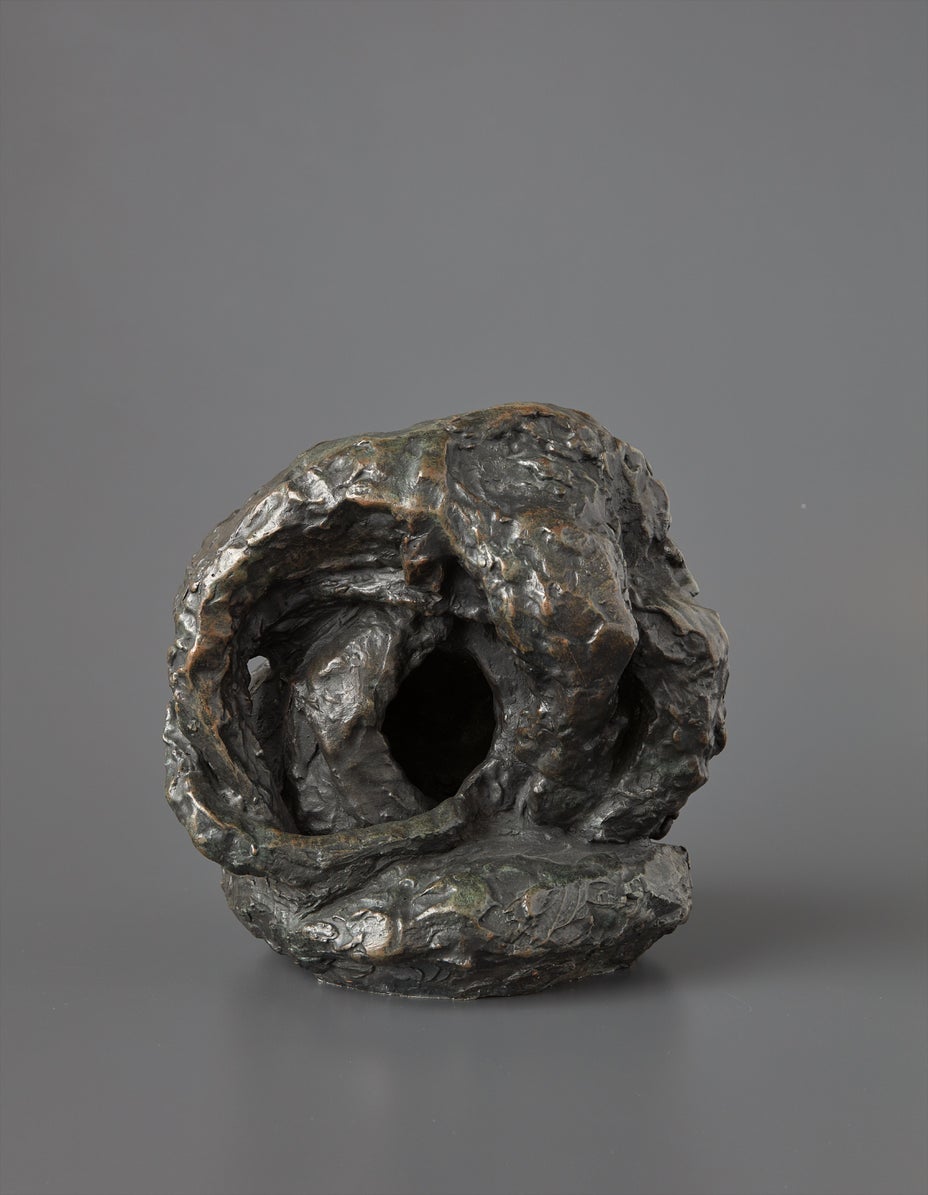
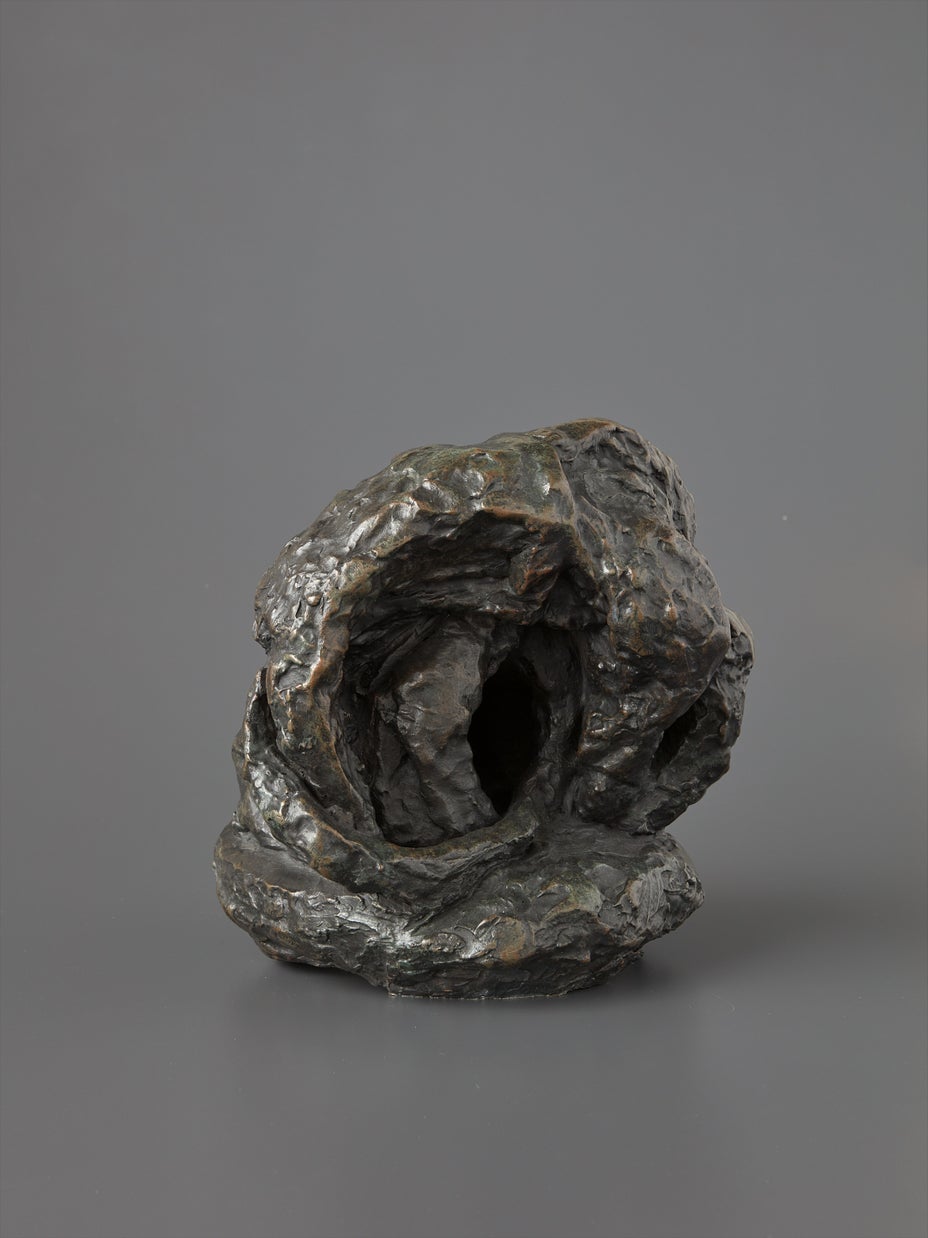
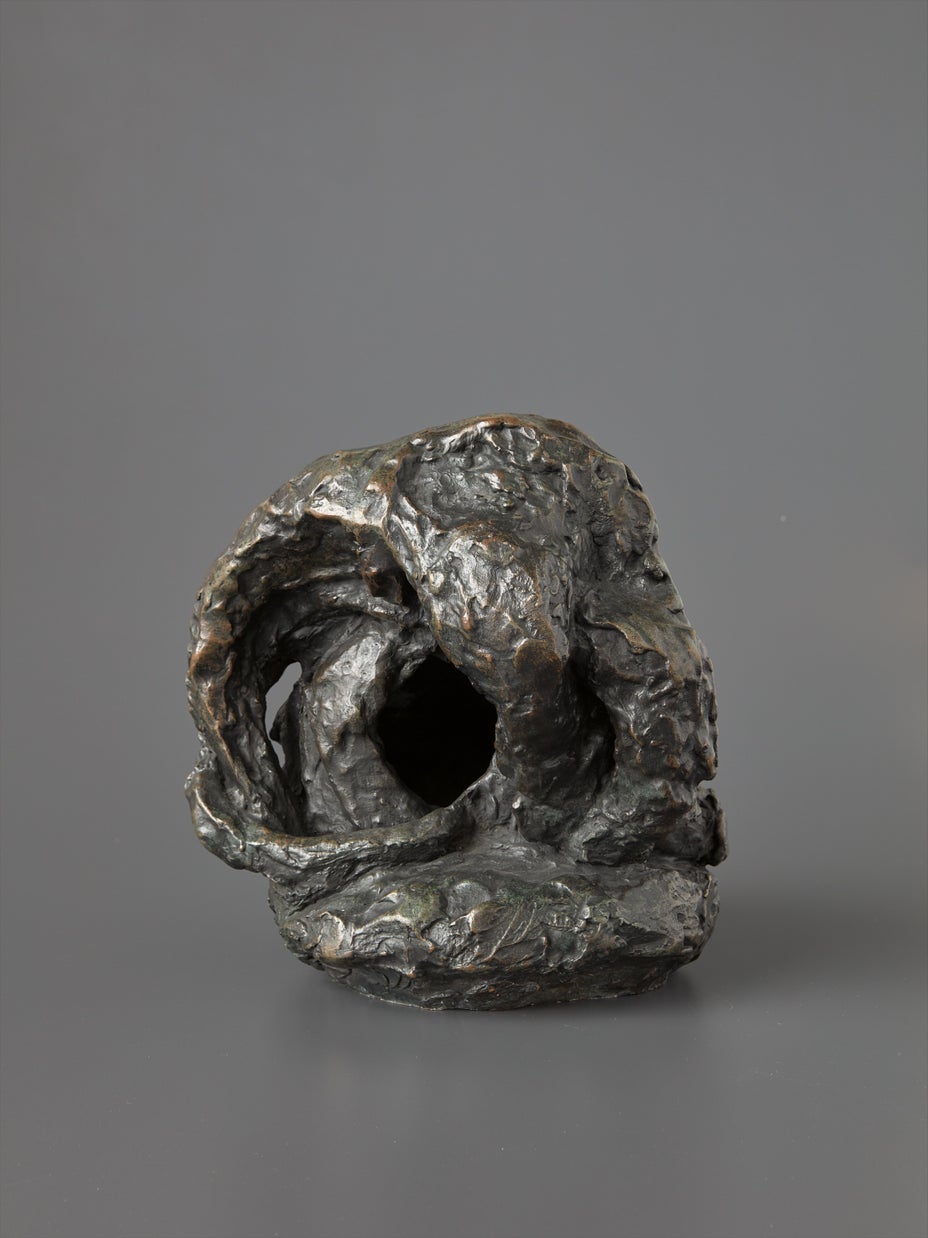
Rondeau for L
Estimate
$80,000–120,000
Sold For
$93,750
stamped with the artist's initials and number "L.B. 4/6" on the back right turning edge
bronze
11 x 11 x 10 1/2 in. (27.9 x 27.9 x 26.7 cm.)
Conceived in 1963 and cast in 1990, this work is number 4 from an edition of 6.
Full-Cataloguing
“Louise Bourgeois is the most inquisitive and best-informed artists of her generation”
Robert Storr
Louise Bourgeois’ sculptural practice is at once informed by and completely distinct from the artists from which she drew her influence. Well-versed in the discourses surrounding Cubism, Purism, and Surrealism, Bourgeois moved to New York in the late 1930s with a unique understanding of the intersection of these movements in the male-dominated post-war American art world. Soon after she left Paris for New York, the female artist befriended some of the exiled Surrealist circle including André Breton and Joan Miró, not forgetting what she learned during her time at the École des Beaux Arts with teachers such as Fernand Léger. It was her unique appreciation for the differences found among these leading artists that made Bourgeois herself a leader in a new discipline of sculpture, or as Robert Storr called, “the most inquisitive and best-informed artist of her generation” (Robert Storr, “Abstraction, L’Esprit géométrique” in Frances Morris, ed., Louise Bourgeois, exh. cat., Tate Modern, London, p. 27).
The Purist ideology of Fernand Léger was a huge influence on Bourgeois throughout the entirety of her career. An example from the edition of the most recent work in the following selection of sculptures, Untitled, 2001, was included in a 2005 exhibition of Fernand Léger’s work held at the Mjellby Konstmuseum in Halmstad, highlighting the influence of Léger on celebrated contemporary artists. Of Léger, Bourgeois said, “Fernand Léger was my best teacher… He said: ‘Louise, you are not a painter, you are a sculptor.’” (Louise Bourgeois, quoted in Robert Maxwell, “Interview with Robert Maxwell”, Modern Painters, vol. 6, no. 2, 1993, p. 41) Untitled indeed highlights Bourgeois’ sculptural prowess, consisting of three individual elements in varying heights, cast in silver nitrate. Together, these elements reference the male body while simultaneously recalling the stylized motifs found in Léger’s practice, evident in the spiral patterns carved into the bases of the two smaller elements. These three forms, however, can also be seen through the lens of Bourgeois’ Surrealist influences, which are evident too in the earlier of these three sculptures, both cast in 1990 – Rondeau for L, conceived in 1963, and The Loved Hand, conceived in 1967.
As Robert Storr espoused of the influence of Surrealism on Bourgeois, “In [the artist’s] restless hands, Surrealist biomorphism…allowed not only for allusions to, or alternate representations of, the body, but for a fundamental remaking of the world in which simple elements – a pen stroke or arabesque, carved chunk or length of wood, lump of clay or plaster – could be made to change identity or referent according to its ‘behaviour’ in isolation or in groups. At any given moment, such an element might suggest the geographical or geological, the vegetal or the animal, the male or female. Virtually never do any of them stand unmistakably for one thing.” (Robert Storr, “Abstraction, L’Esprit géométrique” in Frances Morris, ed., Louise Bourgeois, exh. cat., Tate Modern, London, p. 30) This is particularly evident in The Loved Hand, which may suggest a reference to the corporeal in its title, but cannot be isolated in this single interpretation. Suggesting a feeling of belonging that is distinctly feminine, The Loved Hand, in its form’s complexities, actually suggests what might be the opposite—something which is searching for love, or separate parts of a whole fighting for the same affection.
Rondeau for L may not reference anything relating to the human body, but is rather Surrealist in its psychological origins. Titled after Bourgeois’ psychoanalyst Dr. Henry Lowenfeld, this work reflects the period of the artist’s life in which it was made – one defined by introspection. In the 1960s when both Rondeau for L and The Loved Hand were conceived, Bourgeois was not only delving into her own subconscious, she was also shifting her sculptural practice from her earlier, geometric Personnages to more abstracted forms, which she used to explore her inner thoughts. As she said of these 1960s works, “[the] trembling and random quality of these materials reflected the polarities of feelings I needed to say” (Louise Bourgeois, quoted in Christine Meyer-Thoss, Designing for Free Fall, New York, 1992, p. 126). This transition is perhaps one of the most direct references to the effect of Surrealism on her practice, and yet the dynamic shapes which she cast established their own art historical purpose in the context of the post-modern world.
Robert Storr
Louise Bourgeois’ sculptural practice is at once informed by and completely distinct from the artists from which she drew her influence. Well-versed in the discourses surrounding Cubism, Purism, and Surrealism, Bourgeois moved to New York in the late 1930s with a unique understanding of the intersection of these movements in the male-dominated post-war American art world. Soon after she left Paris for New York, the female artist befriended some of the exiled Surrealist circle including André Breton and Joan Miró, not forgetting what she learned during her time at the École des Beaux Arts with teachers such as Fernand Léger. It was her unique appreciation for the differences found among these leading artists that made Bourgeois herself a leader in a new discipline of sculpture, or as Robert Storr called, “the most inquisitive and best-informed artist of her generation” (Robert Storr, “Abstraction, L’Esprit géométrique” in Frances Morris, ed., Louise Bourgeois, exh. cat., Tate Modern, London, p. 27).
The Purist ideology of Fernand Léger was a huge influence on Bourgeois throughout the entirety of her career. An example from the edition of the most recent work in the following selection of sculptures, Untitled, 2001, was included in a 2005 exhibition of Fernand Léger’s work held at the Mjellby Konstmuseum in Halmstad, highlighting the influence of Léger on celebrated contemporary artists. Of Léger, Bourgeois said, “Fernand Léger was my best teacher… He said: ‘Louise, you are not a painter, you are a sculptor.’” (Louise Bourgeois, quoted in Robert Maxwell, “Interview with Robert Maxwell”, Modern Painters, vol. 6, no. 2, 1993, p. 41) Untitled indeed highlights Bourgeois’ sculptural prowess, consisting of three individual elements in varying heights, cast in silver nitrate. Together, these elements reference the male body while simultaneously recalling the stylized motifs found in Léger’s practice, evident in the spiral patterns carved into the bases of the two smaller elements. These three forms, however, can also be seen through the lens of Bourgeois’ Surrealist influences, which are evident too in the earlier of these three sculptures, both cast in 1990 – Rondeau for L, conceived in 1963, and The Loved Hand, conceived in 1967.
As Robert Storr espoused of the influence of Surrealism on Bourgeois, “In [the artist’s] restless hands, Surrealist biomorphism…allowed not only for allusions to, or alternate representations of, the body, but for a fundamental remaking of the world in which simple elements – a pen stroke or arabesque, carved chunk or length of wood, lump of clay or plaster – could be made to change identity or referent according to its ‘behaviour’ in isolation or in groups. At any given moment, such an element might suggest the geographical or geological, the vegetal or the animal, the male or female. Virtually never do any of them stand unmistakably for one thing.” (Robert Storr, “Abstraction, L’Esprit géométrique” in Frances Morris, ed., Louise Bourgeois, exh. cat., Tate Modern, London, p. 30) This is particularly evident in The Loved Hand, which may suggest a reference to the corporeal in its title, but cannot be isolated in this single interpretation. Suggesting a feeling of belonging that is distinctly feminine, The Loved Hand, in its form’s complexities, actually suggests what might be the opposite—something which is searching for love, or separate parts of a whole fighting for the same affection.
Rondeau for L may not reference anything relating to the human body, but is rather Surrealist in its psychological origins. Titled after Bourgeois’ psychoanalyst Dr. Henry Lowenfeld, this work reflects the period of the artist’s life in which it was made – one defined by introspection. In the 1960s when both Rondeau for L and The Loved Hand were conceived, Bourgeois was not only delving into her own subconscious, she was also shifting her sculptural practice from her earlier, geometric Personnages to more abstracted forms, which she used to explore her inner thoughts. As she said of these 1960s works, “[the] trembling and random quality of these materials reflected the polarities of feelings I needed to say” (Louise Bourgeois, quoted in Christine Meyer-Thoss, Designing for Free Fall, New York, 1992, p. 126). This transition is perhaps one of the most direct references to the effect of Surrealism on her practice, and yet the dynamic shapes which she cast established their own art historical purpose in the context of the post-modern world.
Louise Bourgeois
French-American | B. 1911 D. 2010Known for her idiosyncratic style, Louise Bourgeois was a pioneering and iconic figure of twentieth and early twenty-first century art. Untied to an art historical movement, Bourgeois was a singular voice, both commanding and quiet.
Bourgeois was a prolific printmaker, draftsman, sculptor and painter. She employed diverse materials including metal, fabric, wood, plaster, paper and paint in a range of scale — both monumental and intimate. She used recurring themes and subjects (animals, insects, architecture, the figure, text and abstraction) as form and metaphor to explore the fragility of relationships and the human body. Her artworks are meditations of emotional states: loneliness, jealousy, pride, anger, fear, love and longing.