350
Louise Bourgeois
The Loved Hand
Estimate
$180,000–250,000
stamped with the artist's initials, number and the Modern Art Foundry mark "MAF 3/6 L.B." on the reverse
bronze
9 x 12 1/8 x 8 in. (22.9 x 30.8 x 20.3 cm.)
Conceived in 1967 and cast in 1990, this work is number 3 from an edition of 6 plus 1 artist's proof.
Full-Cataloguing
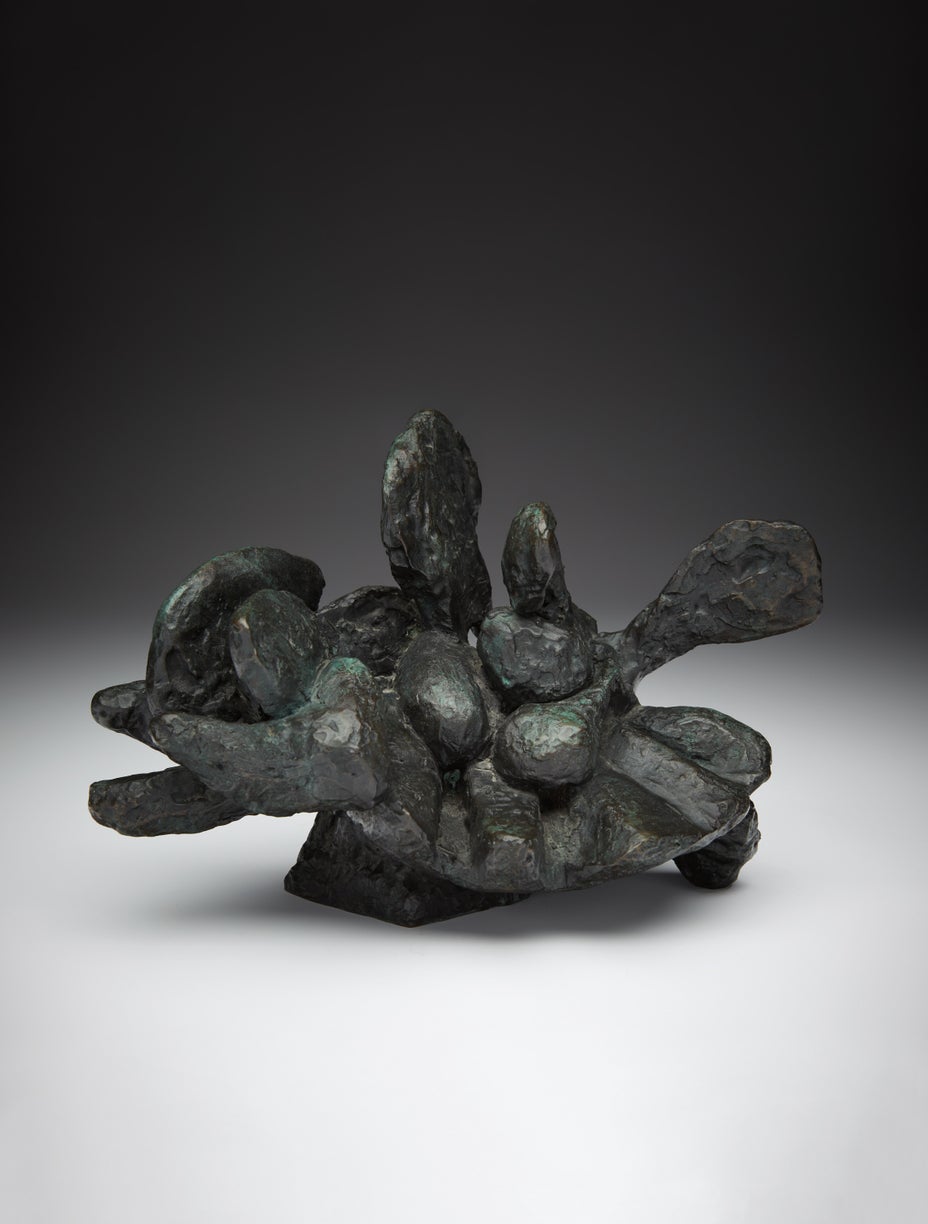
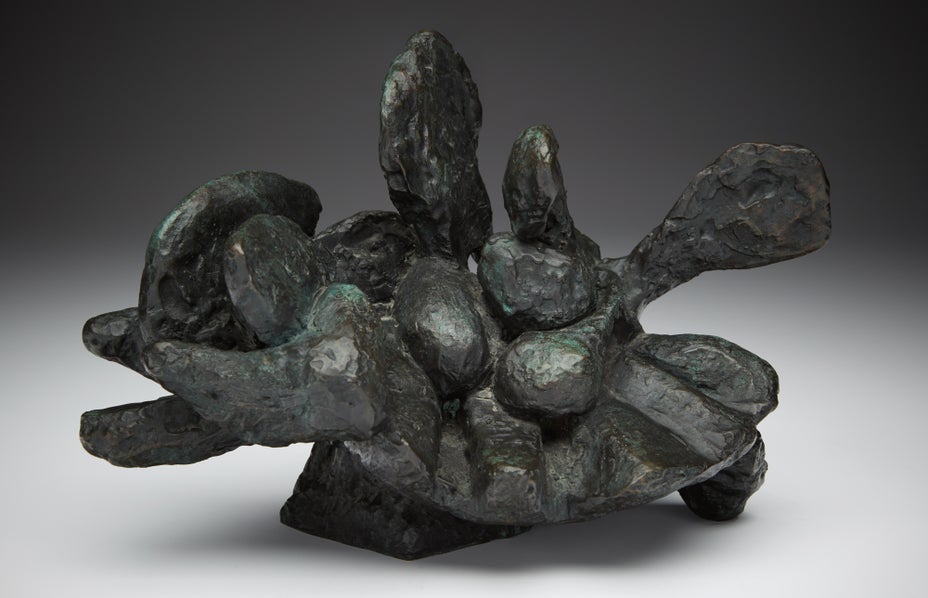
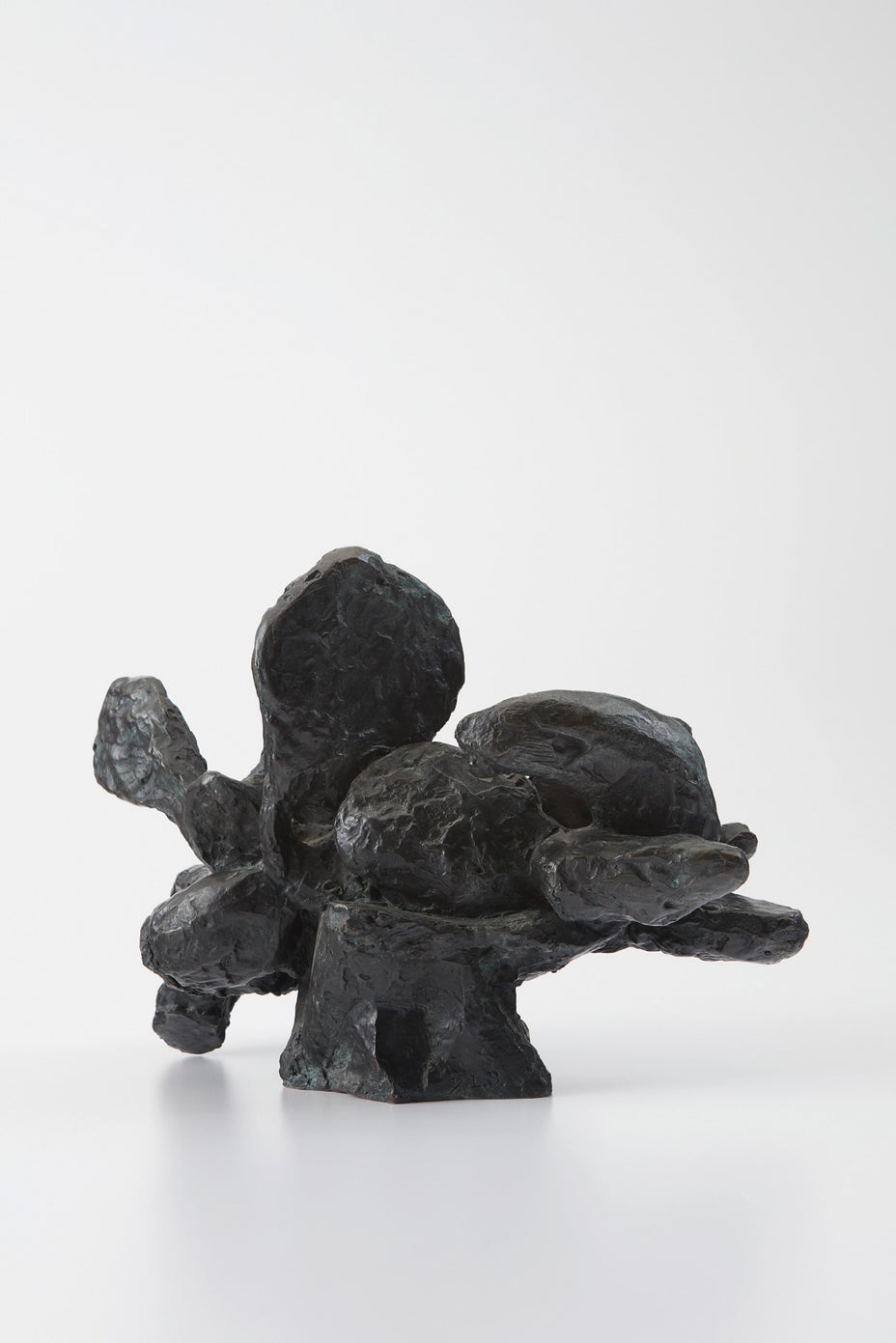
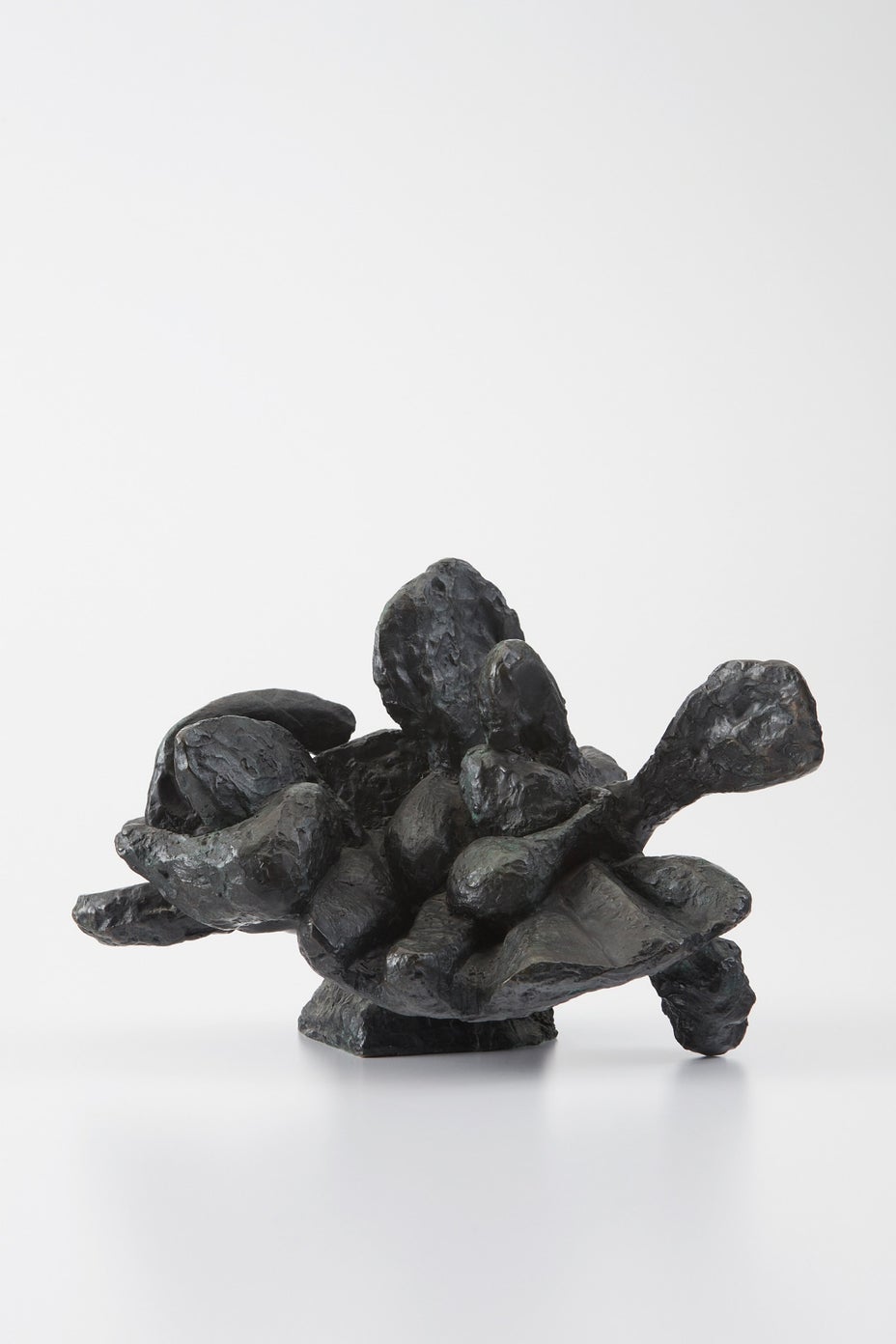
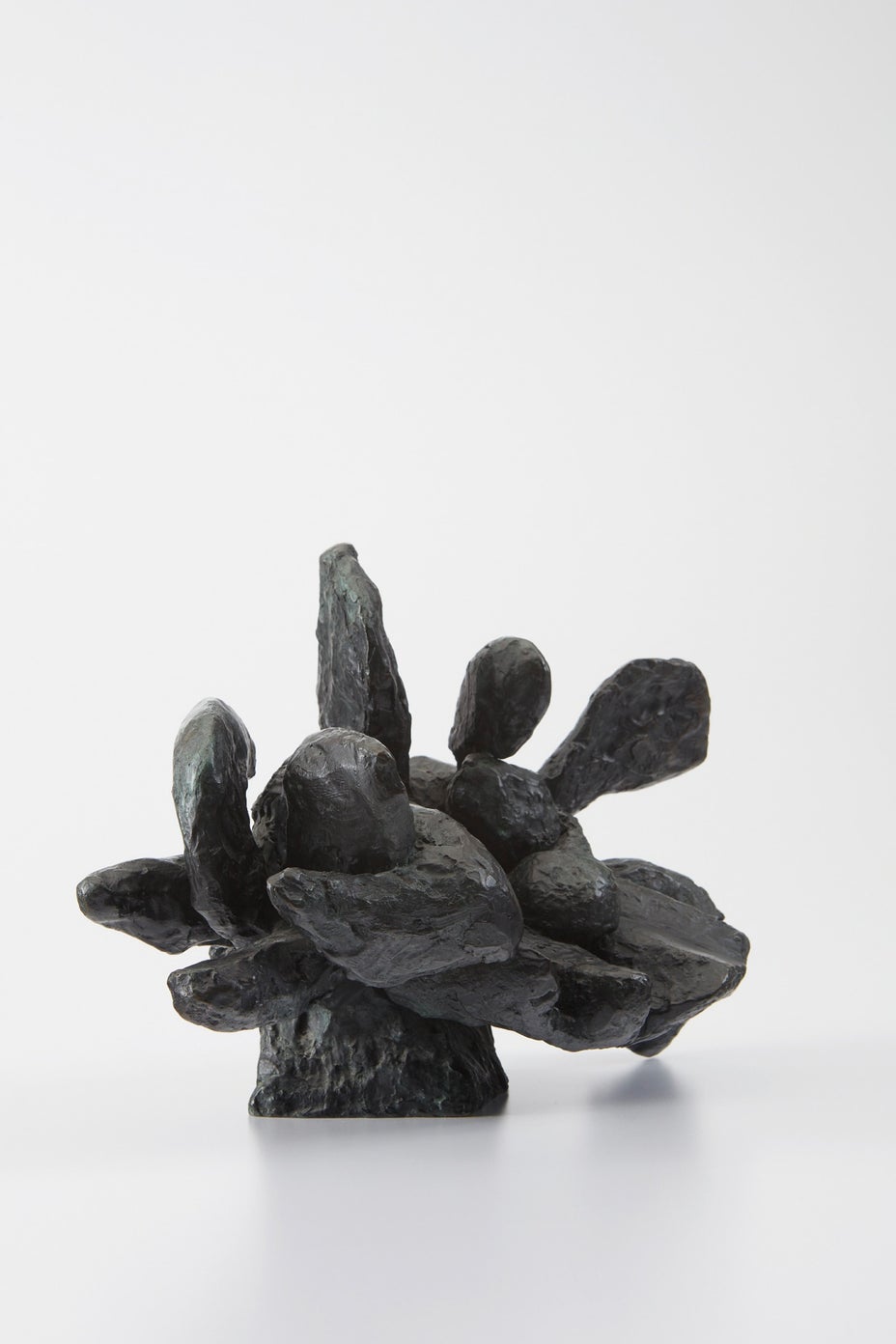
Residing in the same private collection since its acquisition in 1990, the present lot belongs to a pivotal, transitional period in Louise Bourgeois’s sculptural career. In the early 1960s, Bourgeois began to move away from her upright Personages in favor of more flexible mediums, like plaster and latex. The present example, titled The Loved Hand is a bronze variant of the original plaster and shellac sculpture from 1967, cast in 1990, examples of which have been exhibited around the globe and a variant of which is housed in the permanent collection of the Dia:Beacon. The decade of the 1960s marked an increasingly introspective time in Bourgeois’s life, one which was mirrored by her evolving multi-disciplinary practice. As she declared of this period, “[the] trembling and random quality of these materials reflected the polarities of feelings I needed to say” (The Artist, quoted in Christine Meyer-Thoss, Designing for Free Fall, New York, 1992, p. 126).
These new effects are particularly evident in the present lot. With its greenish patina and varied surface, the protruding elements of the sculpture extend from the base support like a blossoming flower. The intricate arrangement of these “fingers” of the hand, as suggested by the work’s title, reflects the complex emotions Bourgeois was attempting to depict, exploring psychological states like vulnerability and loss of control. When looking at the piece as a whole, the viewer is confronted with an energetic cluster that evokes a sense of dynamism from within, the fingers intertwining as if attempting to find a way out. The enigma of these depicted emotions is further complicated by the work’s title. Suggesting a feeling of belonging that is distinctly feminine, The Loved Hand, in its form’s complexities, actually suggests what might be the opposite—something which is searching for love, or separate parts of a whole fighting for the same affection. In its direct reference to figuration, this work is also one of the few works from this period which explicitly references a part of the human body. With its almost phallic shapes, the present lot perhaps foreshadows what would come to be known as the artist’s “erotic period” of the late 1960s and early 1970s, when Bourgeois became more and more involved with the feminist movement. The Loved Hand thus occupies a unique place in the sculptor’s prolific body of work, which is itself characterized by a feminine specificity that makes her one of the most important women female of the 20th Century.
These new effects are particularly evident in the present lot. With its greenish patina and varied surface, the protruding elements of the sculpture extend from the base support like a blossoming flower. The intricate arrangement of these “fingers” of the hand, as suggested by the work’s title, reflects the complex emotions Bourgeois was attempting to depict, exploring psychological states like vulnerability and loss of control. When looking at the piece as a whole, the viewer is confronted with an energetic cluster that evokes a sense of dynamism from within, the fingers intertwining as if attempting to find a way out. The enigma of these depicted emotions is further complicated by the work’s title. Suggesting a feeling of belonging that is distinctly feminine, The Loved Hand, in its form’s complexities, actually suggests what might be the opposite—something which is searching for love, or separate parts of a whole fighting for the same affection. In its direct reference to figuration, this work is also one of the few works from this period which explicitly references a part of the human body. With its almost phallic shapes, the present lot perhaps foreshadows what would come to be known as the artist’s “erotic period” of the late 1960s and early 1970s, when Bourgeois became more and more involved with the feminist movement. The Loved Hand thus occupies a unique place in the sculptor’s prolific body of work, which is itself characterized by a feminine specificity that makes her one of the most important women female of the 20th Century.
Louise Bourgeois
French-American | B. 1911 D. 2010Known for her idiosyncratic style, Louise Bourgeois was a pioneering and iconic figure of twentieth and early twenty-first century art. Untied to an art historical movement, Bourgeois was a singular voice, both commanding and quiet.
Bourgeois was a prolific printmaker, draftsman, sculptor and painter. She employed diverse materials including metal, fabric, wood, plaster, paper and paint in a range of scale — both monumental and intimate. She used recurring themes and subjects (animals, insects, architecture, the figure, text and abstraction) as form and metaphor to explore the fragility of relationships and the human body. Her artworks are meditations of emotional states: loneliness, jealousy, pride, anger, fear, love and longing.