31
KAWS
UNTITLED
canvas: 15.4 x 13 cm. (6 1/8 x 5 1/8 in.)
Full-Cataloguing
(KAWS, quoted in Tobey Maguire, ‘KAWS’, Interview Magazine, 27 April 2010, online)
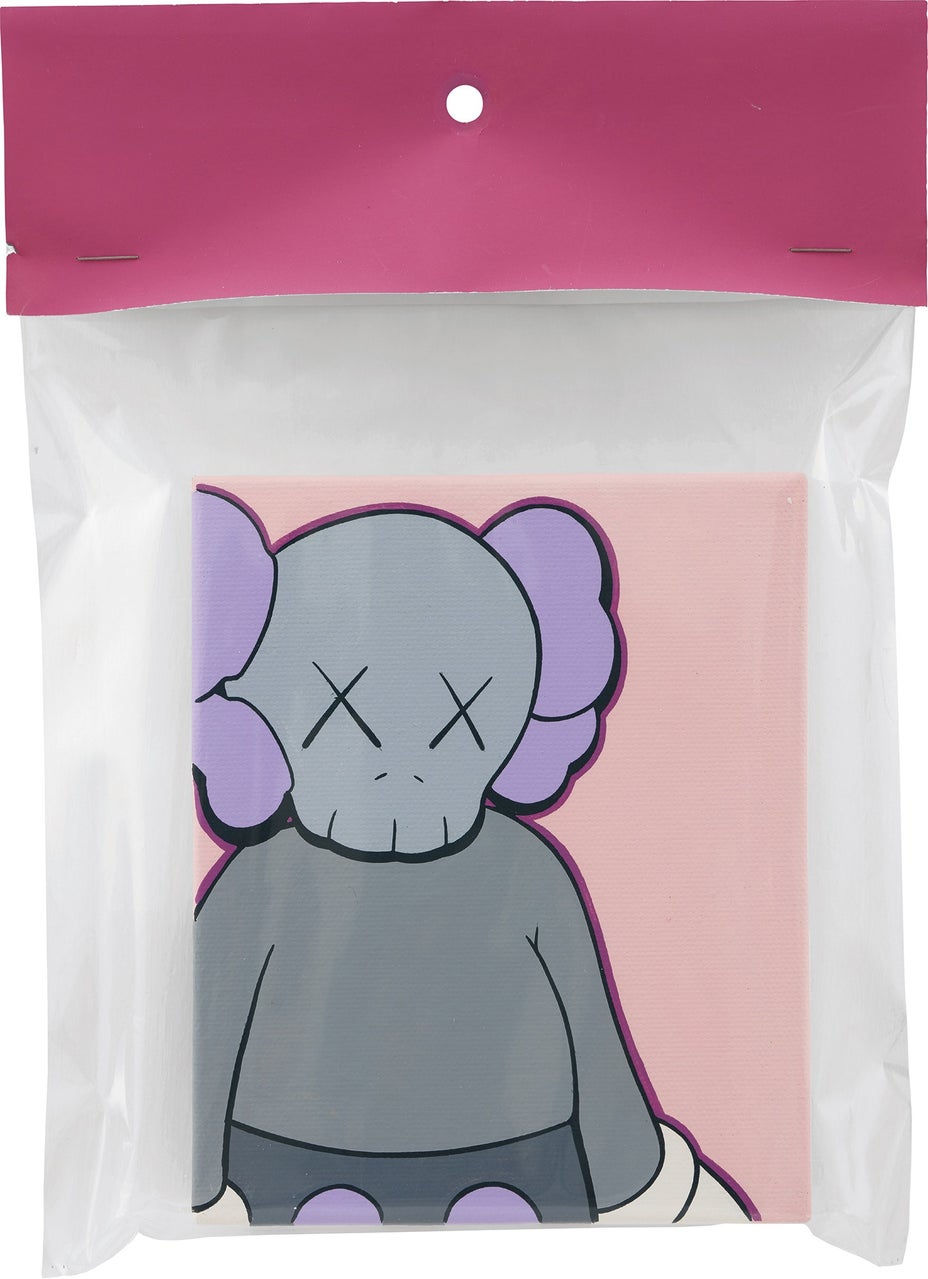
A few of the first 40 package paintings ever created for the 2003 Original Fake exhibition at the BAPE Gallery in Tokyo, these works were inspired by Japan’s toy collecting scene – KAWS’ unique attempt to bridge the gap between the toy and art collecting realms. Whilst the plastic packaging was mass-produced, each painting was created individually, reflecting on how similar toy collectors were to their art counterparts in seeing value in items produced in limited quantities.
Reinterpreting recognisable characters from popular culture with his signature skull and crossed eyes, the CHUM character is also one of the KAWS’s oldest and most iconic characters. Having been exhibited by NIGO (founder of A Bathing Ape, one of the most notorious names in Japanese street fashion in the 90s) also highlights how the artist emerged from an urban streetwear and commercial culture into art in the same way the packaged painting was conceptualised.
KAWS
American | 1974To understand the work of KAWS is to understand his roots in the skateboard and graffiti crews of New York City. Brian Donnelly chose KAWS as his moniker to tag city streets beginning in the 1990s, and quickly became a celebrated standout in the scene. Having swapped spray paint for explorations in fine art spanning sculpture, painting and collage, KAWS has maintained a fascination with classic cartoons, including Garfield, SpongeBob SquarePants and The Simpsons, and reconfigured familiar subjects into a world of fantasy.
Perhaps he is most known for his larger-than-life fiberglass sculptures that supplant the body of Mickey Mouse onto KAWS' own imagined creatures, often with 'x'-ed out eyes or ultra-animated features. However, KAWS also works frequently in neon and vivid paint, adding animation and depth to contemporary paintings filled with approachable imagination. There is mass appeal to KAWS, who exhibits globally and most frequently in Asia, Europe and the United States.