Property of a Manhattan Collector
47
John Dickinson
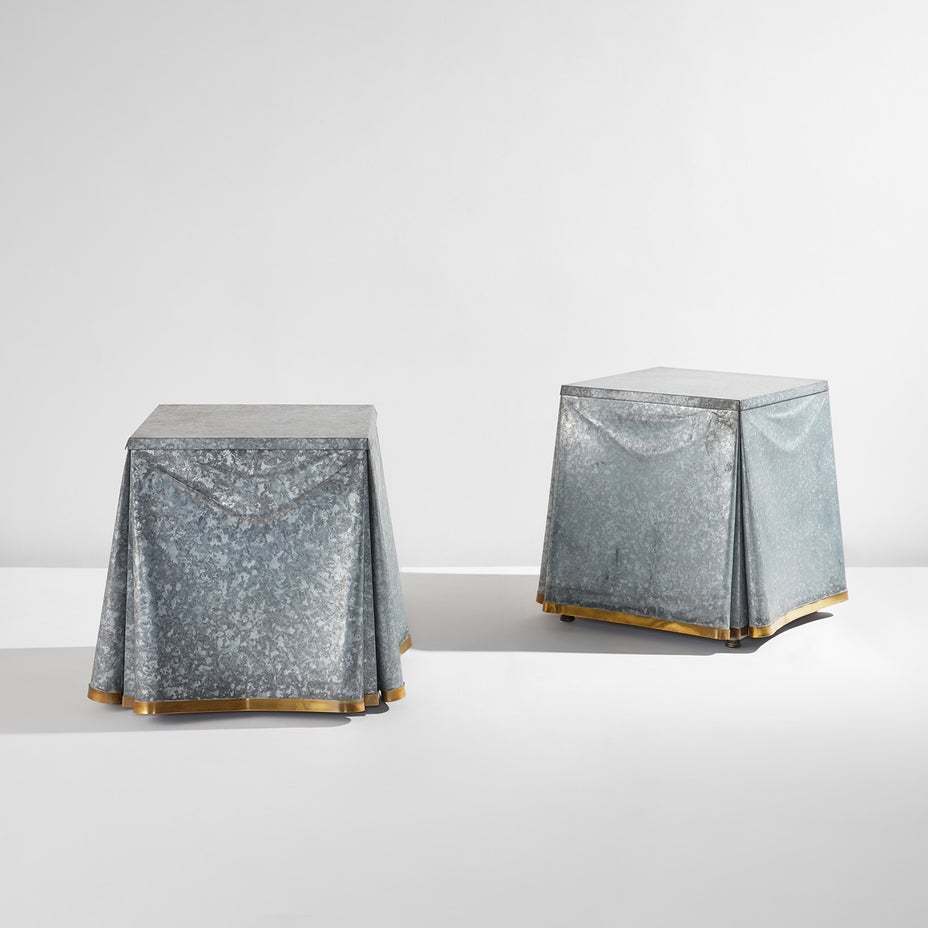
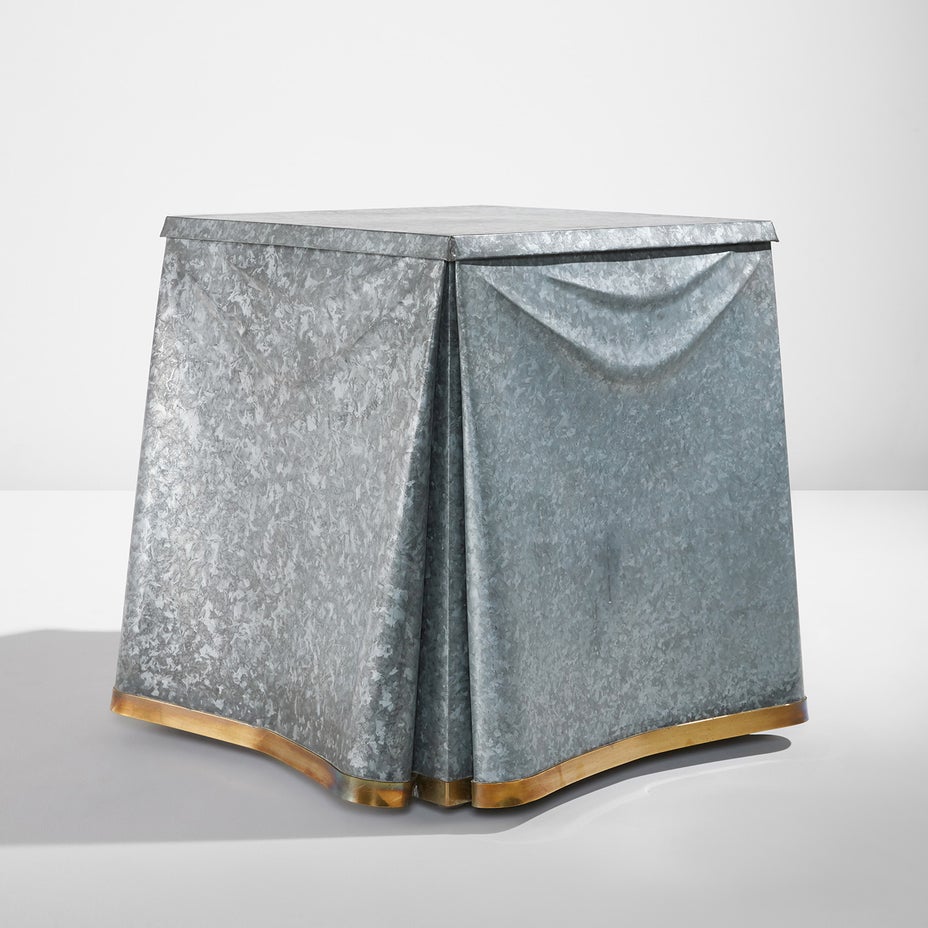
Pair of "Draped" tables
Estimate
$10,000–15,000
Sold For
$17,640
designed 1972, produced 1970s
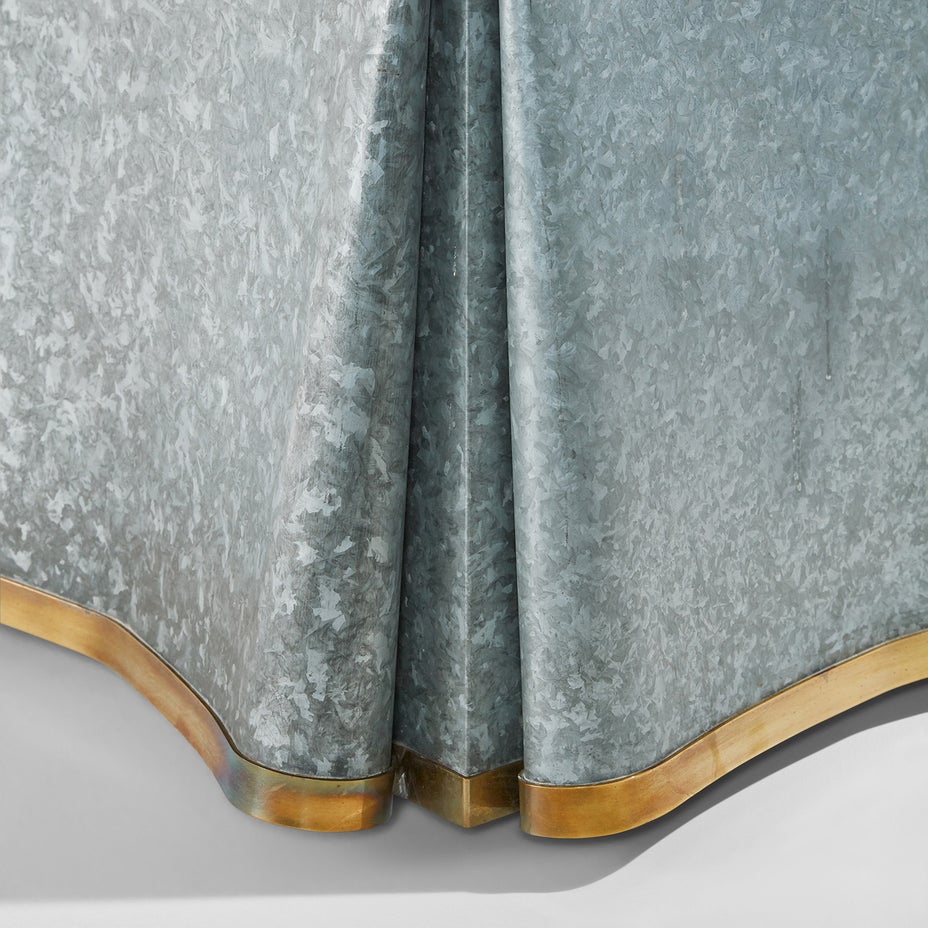
Galvanized steel, brass.
Each: 24 3/8 x 25 x 26 in. (61.9 x 63.5 x 66 cm)
Produced by John Dickinson & Associates, San Francisco, California. One table with brass plaque incised John Dickinson XXXV.
Full-Cataloguing
Long considered a designer’s designer, John Dickinson trained at the Parsons School of Design in New York and opened his San Francisco firm in the late 1950s. Department stores and esteemed private clients took immediate note of his practice, drawn to his approach that was at once fantastical, humorous and subdued. Known for working in muted tones, Dickinson preferred robust forms over bright, possibly distracting colors. Although his formal inclinations suggested his affiliation with adherents to modernism, Dickinson’s salient references to Georgian and other bygone periods of design placed him firmly within the early postmodern era.
The present lot, produced during the 1970s, preserves Dickinson’s interest in reinterpreting past design. Most scholars attribute the influence behind the draped tables to the skirted furnishings of Syrie Maugham. During the Victorian period, homeowners relied on skirting to cover the legs of various pieces of furniture, considering their open display immodest and too evocative of a woman’s legs. Dickinson playfully subverts this morally farcical practice, building a table stabilized on the skirting itself, executed in galvanized steel with brass trim.
Angelo Donghia—the original owner of the present tables—was a revered interior designer in New York and an early supporter and friend to Dickinson. In a 1973 New York Times article, the art critic Rita Reif announced the arrival of Dickinson’s trompe l'œil furniture, including the present model table, noting, “So realistic is the cloth-covered table effect that Angelo Donghia…had to touch the corner folds to be convinced they are of steel.”
The present lot, produced during the 1970s, preserves Dickinson’s interest in reinterpreting past design. Most scholars attribute the influence behind the draped tables to the skirted furnishings of Syrie Maugham. During the Victorian period, homeowners relied on skirting to cover the legs of various pieces of furniture, considering their open display immodest and too evocative of a woman’s legs. Dickinson playfully subverts this morally farcical practice, building a table stabilized on the skirting itself, executed in galvanized steel with brass trim.
Angelo Donghia—the original owner of the present tables—was a revered interior designer in New York and an early supporter and friend to Dickinson. In a 1973 New York Times article, the art critic Rita Reif announced the arrival of Dickinson’s trompe l'œil furniture, including the present model table, noting, “So realistic is the cloth-covered table effect that Angelo Donghia…had to touch the corner folds to be convinced they are of steel.”