227
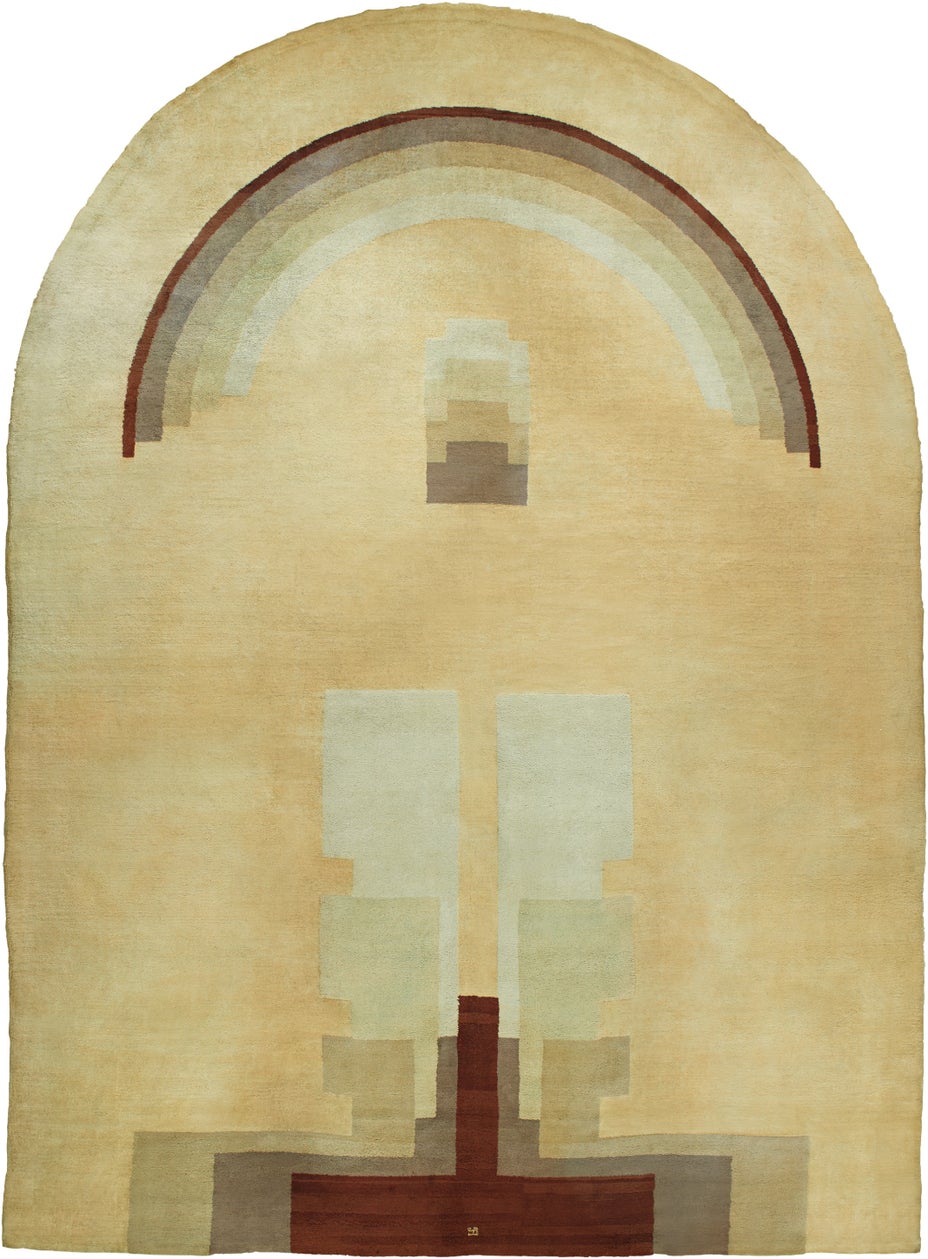
Ivan da Silva Bruhns
Carpet
Estimate
$80,000–120,000
circa 1932
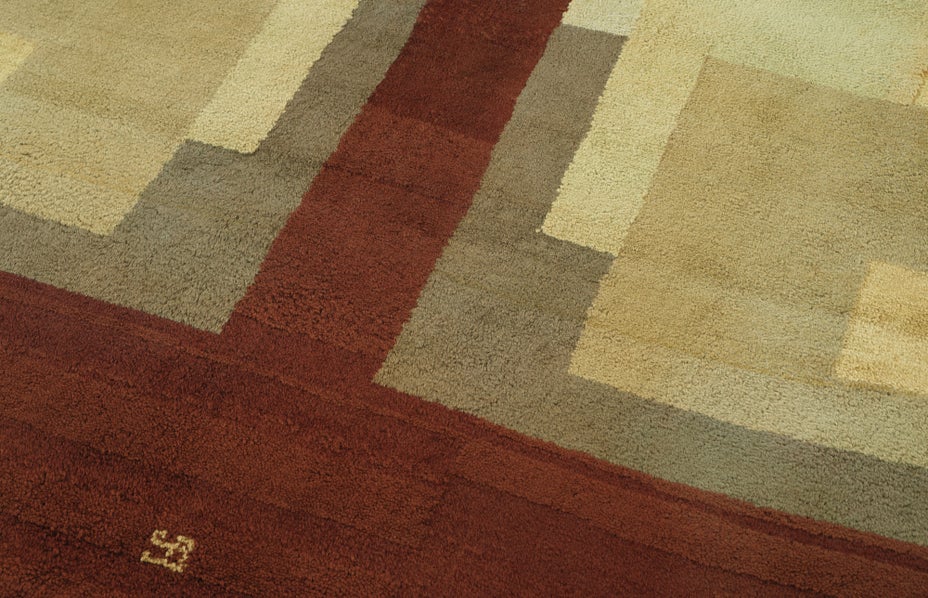
Hand-knotted wool on wool warp.
241 1/2 x 177 5/8 in. (613.4 x 451.2 cm)
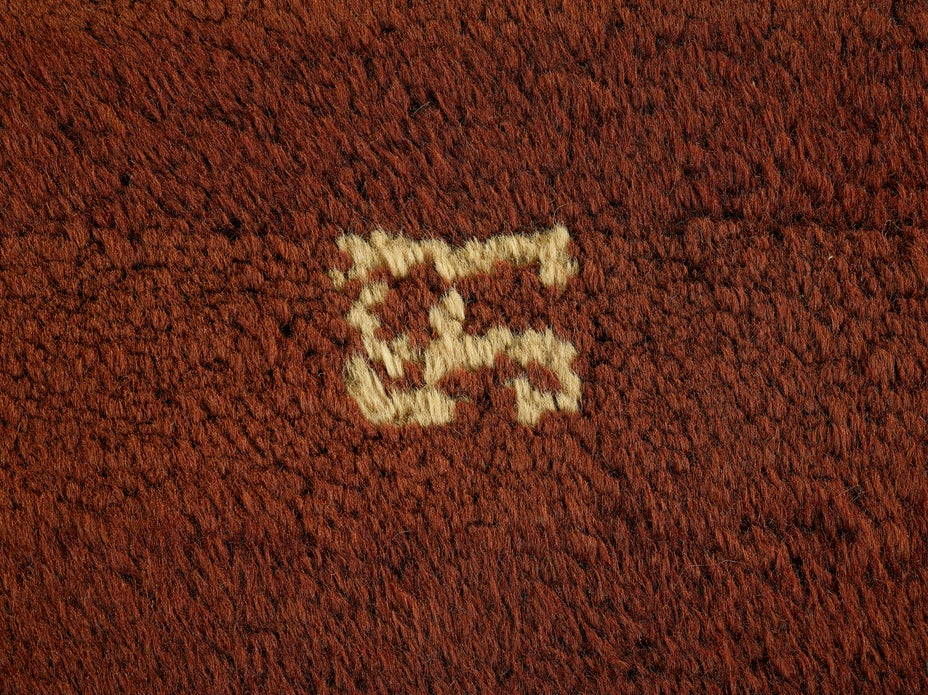
Produced by Manufacture de Savigny, Savigny-sur-Orge, France. Woven with artist's monogram SB.
Full-Cataloguing
Ivan Da Silva Bruhns is renowned for his seamless weaving together of pre-Columbian motifs, Modernist rationalism, and French Art Deco luxury. Born in Paris to Brazilian parents, Da Silva Bruhns first studied medicine and painting before entering into the textile business; the dual parts of his identity--both French and Latin American, scientist and artist--are unified in his carpets. He began making carpets piece-by-piece with a weaver north of Paris, and by 1925 he had established a full factory in the suburb of Savigny-sur-Orge, as well as a showroom in Paris. After being discovered by Louis Majorelle just before 1920, Da Silva Bruhns worked frequently with top designers like Ruhlmann and Jules Leleu, creating carpets for the most complex and influential interiors of the period.
Da Silva Bruhns was part of a school of craftsmen who used strong geometric forms in their carpets, breaking away from the past and leaning more towards the abstracting principles that were guiding the major art movements of the period. While Da Silva Bruhns’ work is within the visual lexicon of Cubism, his carpets show a major attention to the materiality of textiles themselves. Da Silva Bruhns taught himself how to make carpets by unraveling other rugs, learning everything about their construction before creating his own variation on the traditional Savonnerie knot. His geometric patterns show him following the natural grid created by the warp and weft of the loom, allowing the structure of the medium to dictate its own decoration.
Beginning with the rugs that he unraveled in his early career, Da Silva Bruhns looked to the art and products of many different cultures for inspiration, studying Middle Eastern, African, and Asian art throughout his career. Most notably, Da Silva Bruhns was influenced by pre-Columbian art, incorporating arrangements into his works that reflect his Latin American heritage. His carpets are both asymmetrical and balanced, often combining many visual references to pre-Columbian forms. His depictions of these forms are at times very literal, but Da Silva Bruhns often used abstraction to modify the motifs to fit his own aesthetic.
On the border between Art Deco and Modernist, and with innovative patterns and excellent construction, Da Silva Bruhns’s carpets remain today among the most important decorative art of the period.
Da Silva Bruhns was part of a school of craftsmen who used strong geometric forms in their carpets, breaking away from the past and leaning more towards the abstracting principles that were guiding the major art movements of the period. While Da Silva Bruhns’ work is within the visual lexicon of Cubism, his carpets show a major attention to the materiality of textiles themselves. Da Silva Bruhns taught himself how to make carpets by unraveling other rugs, learning everything about their construction before creating his own variation on the traditional Savonnerie knot. His geometric patterns show him following the natural grid created by the warp and weft of the loom, allowing the structure of the medium to dictate its own decoration.
Beginning with the rugs that he unraveled in his early career, Da Silva Bruhns looked to the art and products of many different cultures for inspiration, studying Middle Eastern, African, and Asian art throughout his career. Most notably, Da Silva Bruhns was influenced by pre-Columbian art, incorporating arrangements into his works that reflect his Latin American heritage. His carpets are both asymmetrical and balanced, often combining many visual references to pre-Columbian forms. His depictions of these forms are at times very literal, but Da Silva Bruhns often used abstraction to modify the motifs to fit his own aesthetic.
On the border between Art Deco and Modernist, and with innovative patterns and excellent construction, Da Silva Bruhns’s carpets remain today among the most important decorative art of the period.