143
Irving Penn
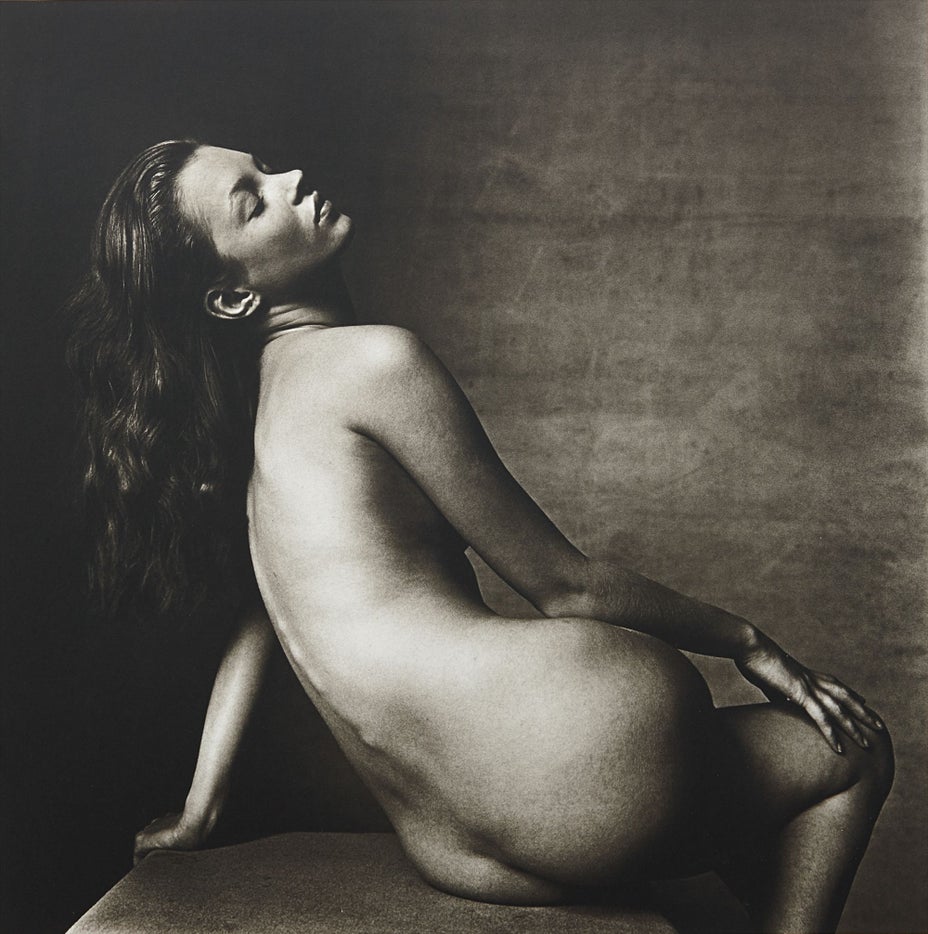
Kate Moss, New York
Full-Cataloguing
Irving Penn’s nudes of supermodels in the 1990s, be it of Gisele Bündchen, Naomi Campbell, Christy Turlington, Amber Valetta, or as seen in the current lot, millennial favorite Kate Moss, was the culmination of a lifetime’s dedication to studying the female form. While Penn’s nudes from the late 1940s are cropped abstractions of voluptuous female models, his nudes from the 1990s are notably Neoclassical. In the current lot, Moss is seen with her back turned to the camera but twisting her torso enough to engage the viewers. Penn’s soft lighting accentuates her tender skin and her rounded hips, imbuing the fashion icon with a sculptural quality that far transcends the era in which the photograph was taken.
Irving Penn
American | B. 1917 D. 2009Irving Penn was one of the 20th century’s most significant photographers, known for his arresting images, technical mastery, and quiet intensity. Though he gained widespread acclaim as a leading Vogue photographer for over sixty years, Penn remained a private figure devoted to his craft. Trained under legendary art director Alexey Brodovitch in Philadelphia, he began his career assisting at Harper’s Bazaar before joining Vogue in 1943, where editor and artist Alexander Liberman recognized Penn’s distinctive eye and encouraged him to pursue photography. Penn’s incomparably elegant fashion studies reset the standard for the magazine world, and his portraits, still lifes, and nude studies broke new ground. His 1960 book Moments Preserved redefined the photographic monograph with its dynamic layout and high-quality reproductions. In 1964, Penn began printing in platinum and palladium, reviving this 19th-century process to serve his own distinct vision. An innovator in every sense, Penn’s approach to photography was endlessly adventurous. Few photographers of his generation experimented as widely with both conventional and historic print processes, and none achieved Penn’s level of excellence in all.