
256
Irving Penn
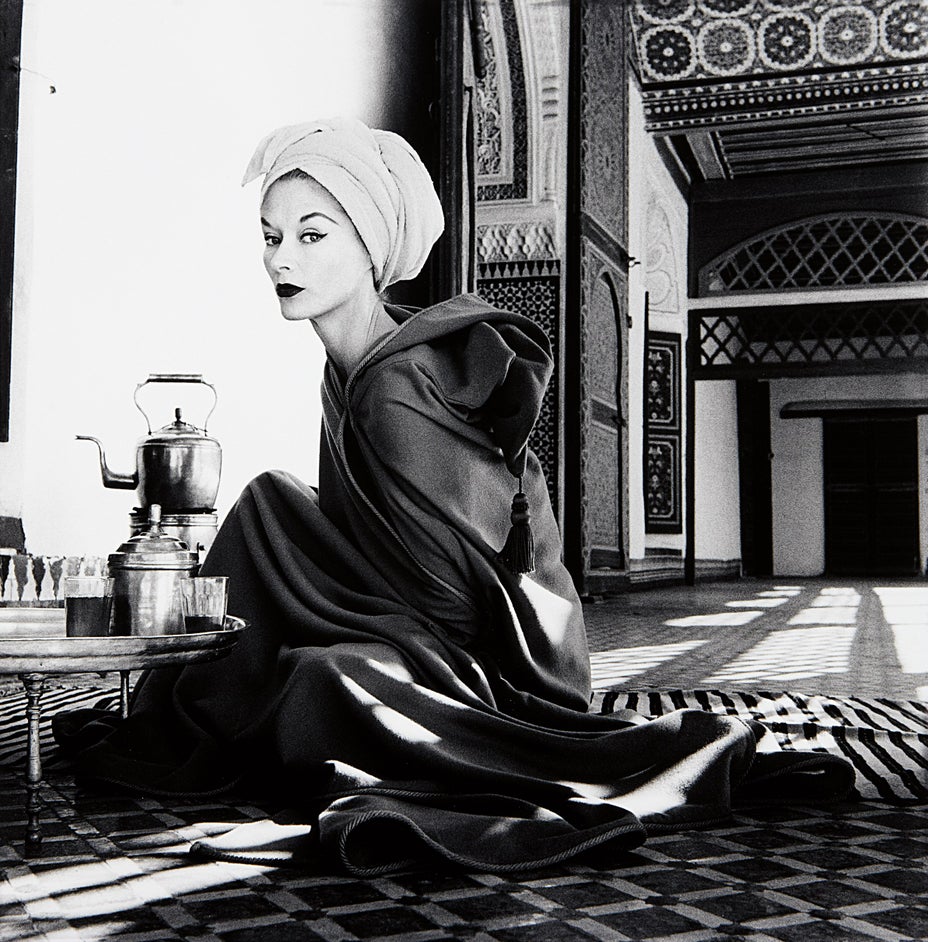
Woman in Palace, Marrakech, Morocco (Lisa Fonssagrives-Penn)
- Estimate
- $100,000 - 150,000
$122,500
Lot Details
Selenium toned gelatin silver print, printed 1992.
1951
15 1/2 x 15 1/4 in. (39.4 x 38.7 cm)
Signed, titled, dated, initialed, numbered in ink, Condé Nast copyright credit reproduction limitation, credit and edition stamps on the reverse of the mount. One from an edition of 40.
Specialist
Full-Cataloguing
Catalogue Essay
Irving Penn’s Woman in Palace, Marrakech, Morocco (Lisa Fonssagrives-Penn), 1951, is one of the most iconic images in the revered fashion photographer’s legacy. Taken a mere year after the nuptials between Penn and his muse, the image was originally published in Vogue in January of 1952 in an editorial titled “Moroccan Handbook.” By then, the statuesque Swedish-born Fonssagrives had cemented her status as one of the most successful models in the world, having become the first model to grace the cover of Time magazine in 1949. Moreover, notwithstanding two additional Vogue covers, this would be the last editorial shoot the famed beauty would do, marking her gracious exit from the fashion world. The image is also celebrated for being one of the very few outdoors that Penn would take in his entire illustrious career. Depicting his wife as an imagined, mysterious and seductive harem beauty within a lavish Orientalist setting, Penn’s image is as much an homage to his beloved wife as it is an embodiment of his own supremely elegant style.
Provenance
Literature
Irving Penn
American | B. 1917 D. 2009Irving Penn was one of the 20th century’s most significant photographers, known for his arresting images, technical mastery, and quiet intensity. Though he gained widespread acclaim as a leading Vogue photographer for over sixty years, Penn remained a private figure devoted to his craft. Trained under legendary art director Alexey Brodovitch in Philadelphia, he began his career assisting at Harper’s Bazaar before joining Vogue in 1943, where editor and artist Alexander Liberman recognized Penn’s distinctive eye and encouraged him to pursue photography. Penn’s incomparably elegant fashion studies reset the standard for the magazine world, and his portraits, still lifes, and nude studies broke new ground. His 1960 book Moments Preserved redefined the photographic monograph with its dynamic layout and high-quality reproductions. In 1964, Penn began printing in platinum and palladium, reviving this 19th-century process to serve his own distinct vision. An innovator in every sense, Penn’s approach to photography was endlessly adventurous. Few photographers of his generation experimented as widely with both conventional and historic print processes, and none achieved Penn’s level of excellence in all.
Browse Artist